#Trader Mistakes
12 articles on Trader Mistakes — behavioral finance and market psychology from IM7 Intelligence.

Broken Isn’t Accepted: How Bitcoin Trapped Breakdown Traders
Bitcoin swept below support near $77.56K, prompting traders to call for a deeper breakdown. When price reclaimed $79K, the move revealed a critical distinction: a level can be broken without being accepted. This is how certainty traps traders on both sides of a failed breakdown.
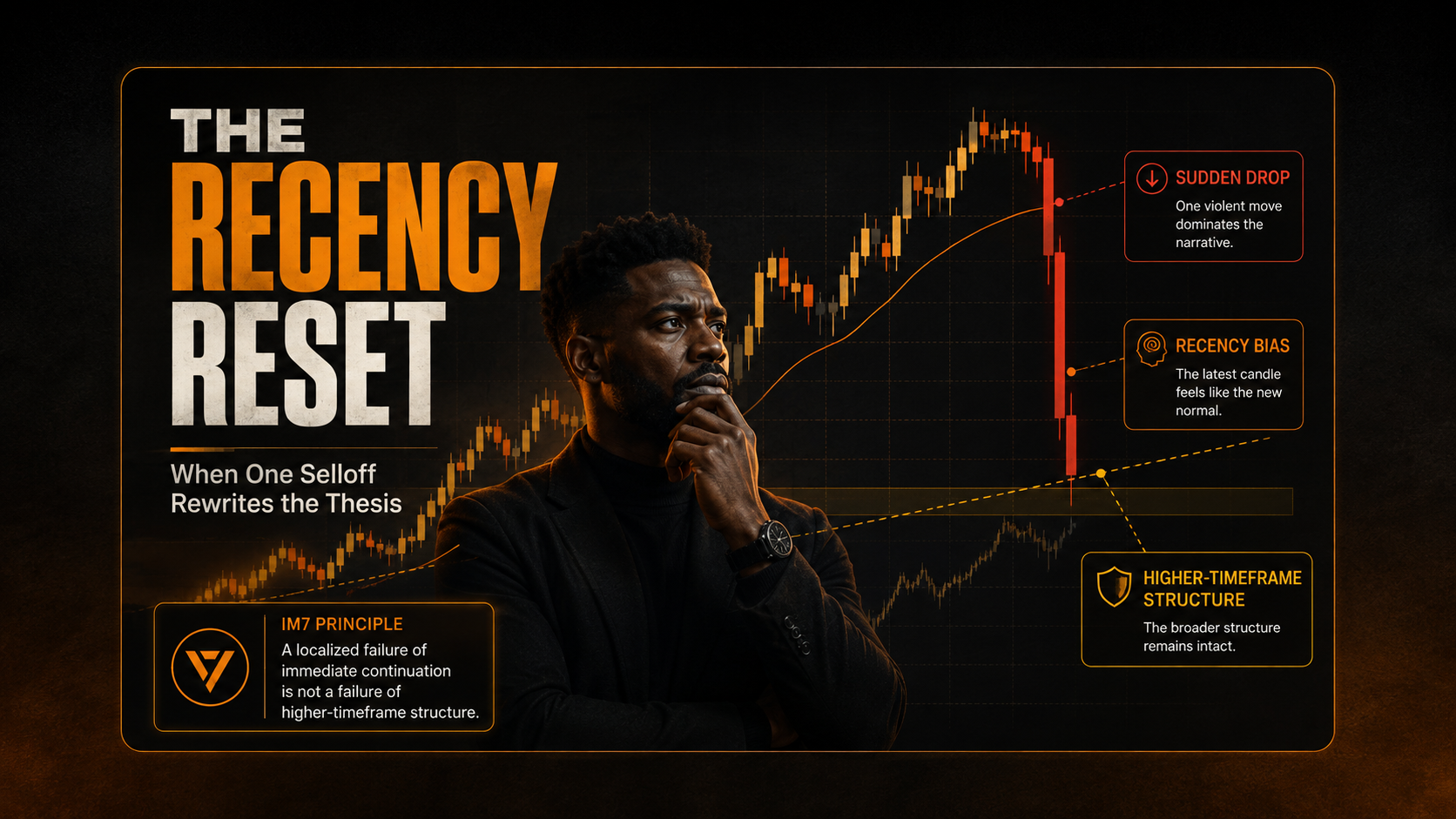
The Recency Reset: Why Bitcoin Traders Flip Their Entire Thesis After One Selloff
A single sharp adverse move can trigger a psychological shock that causes traders to abandon a higher-timeframe thesis too quickly. IM7 examines how recency bias turns one Bitcoin selloff into a complete rewrite of market conviction.
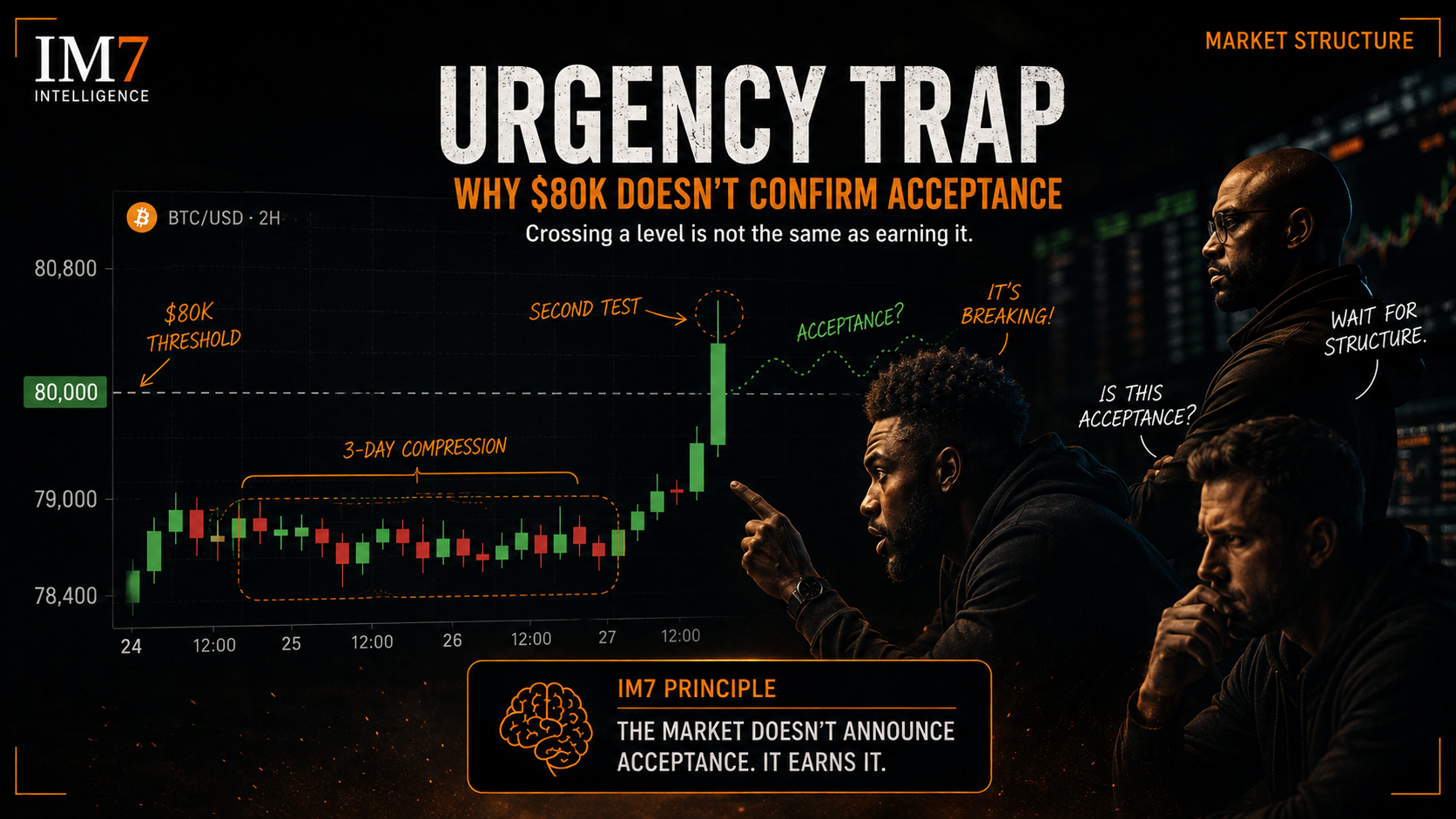
The Urgency Trap: Why Bitcoin Crossing $80K Does Not Confirm Acceptance
Bitcoin pushed back through $80,000 after days of compression, but the behavioral risk is shifting from impatience to urgency. IM7 examines why crossing a level is not the same as establishing acceptance above it.
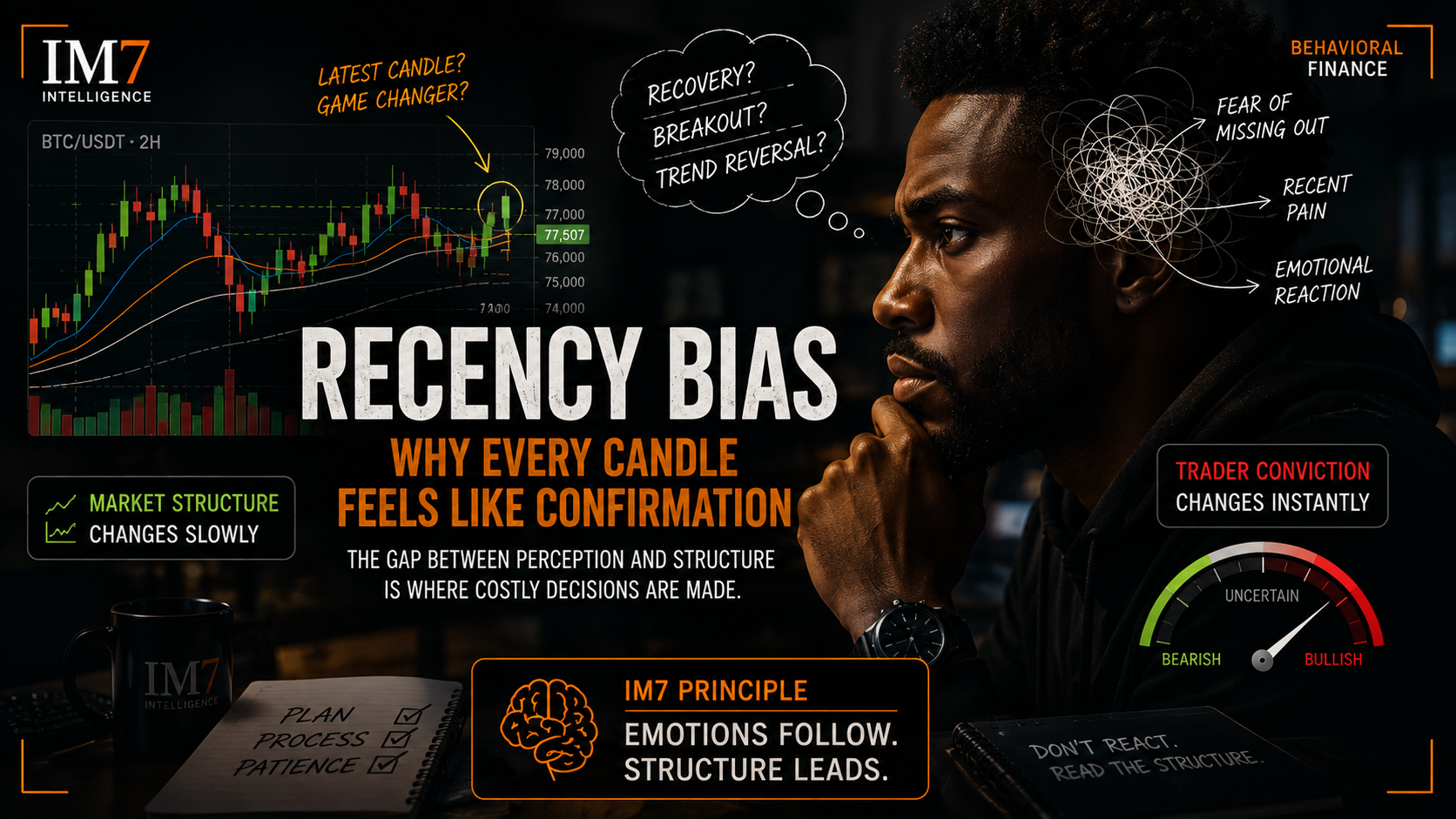
The Recency Trap: When Every Bitcoin Candle Feels Like Confirmation
Bitcoin’s volatile swings are making every new candle feel like confirmation. But when a trader’s conviction changes faster than the market structure, recency bias may be driving the interpretation.
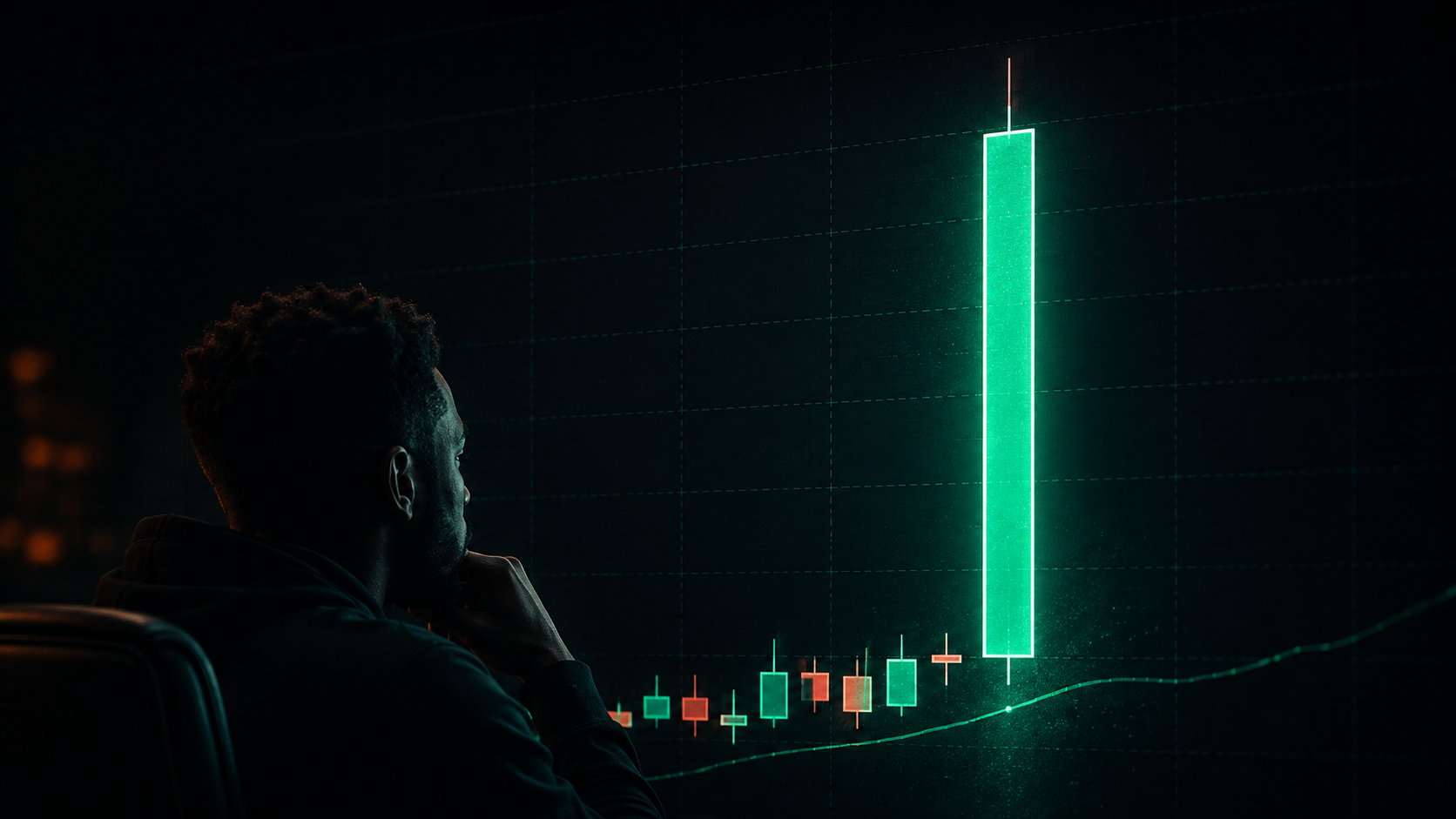
The Salience Trap: Why One Giant Bitcoin Candle Feels Like Certainty
A recent Bitcoin candle surged from below $70,000 to above $71,000 and visually dominated the surrounding chart. Large moves like this can become psychologically dominant, increasing salience, urgency, and the temptation to mistake visual magnitude for confirmation.
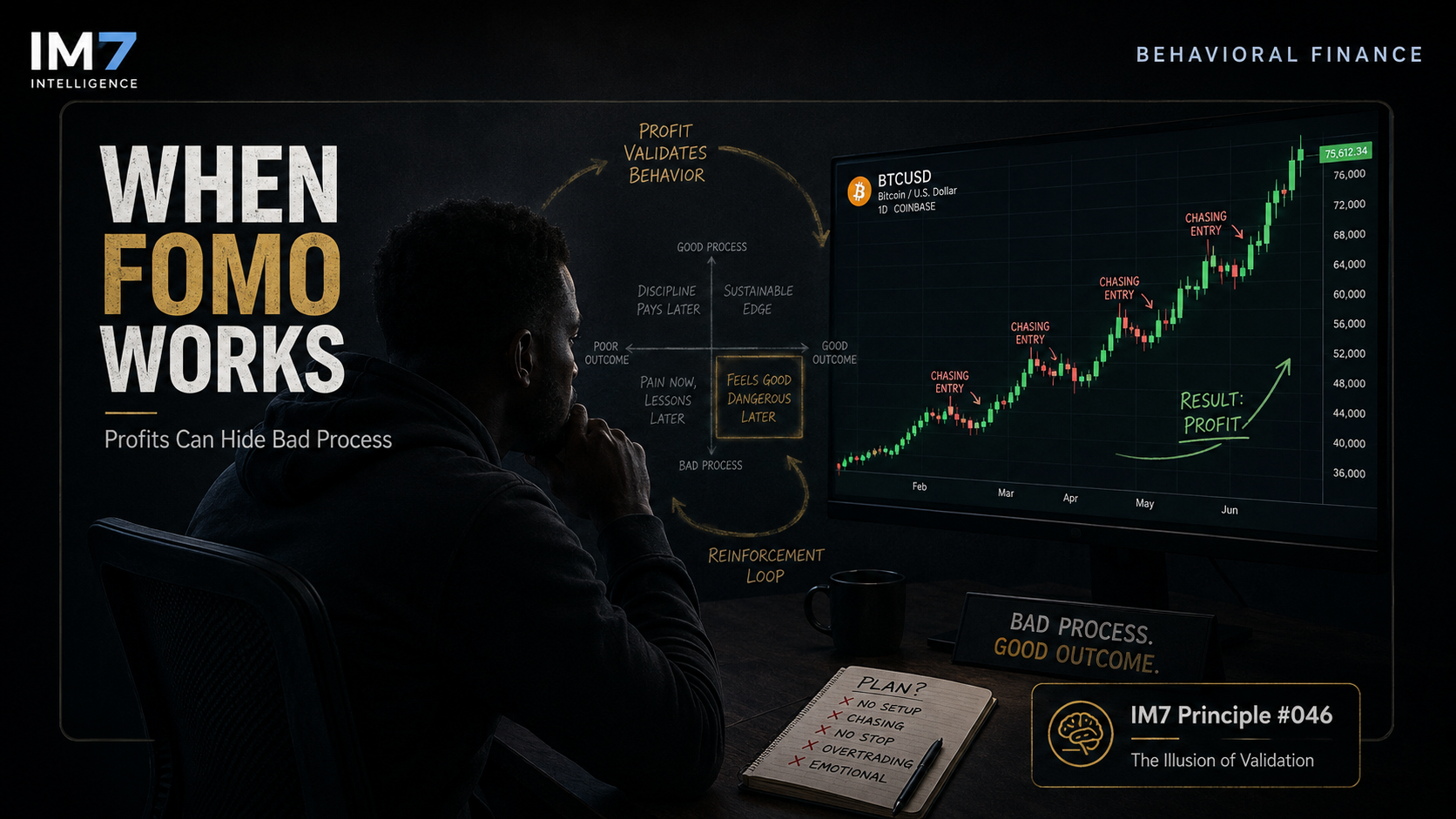
When FOMO Works: How Profitable Trades Reinforce Bad Process
When a rushed Bitcoin entry makes money, the profitable outcome can reinforce the wrong lesson. Outcome bias can turn an impulsive decision into a behavior the trader becomes more willing to repeat—even when the original process was weak.
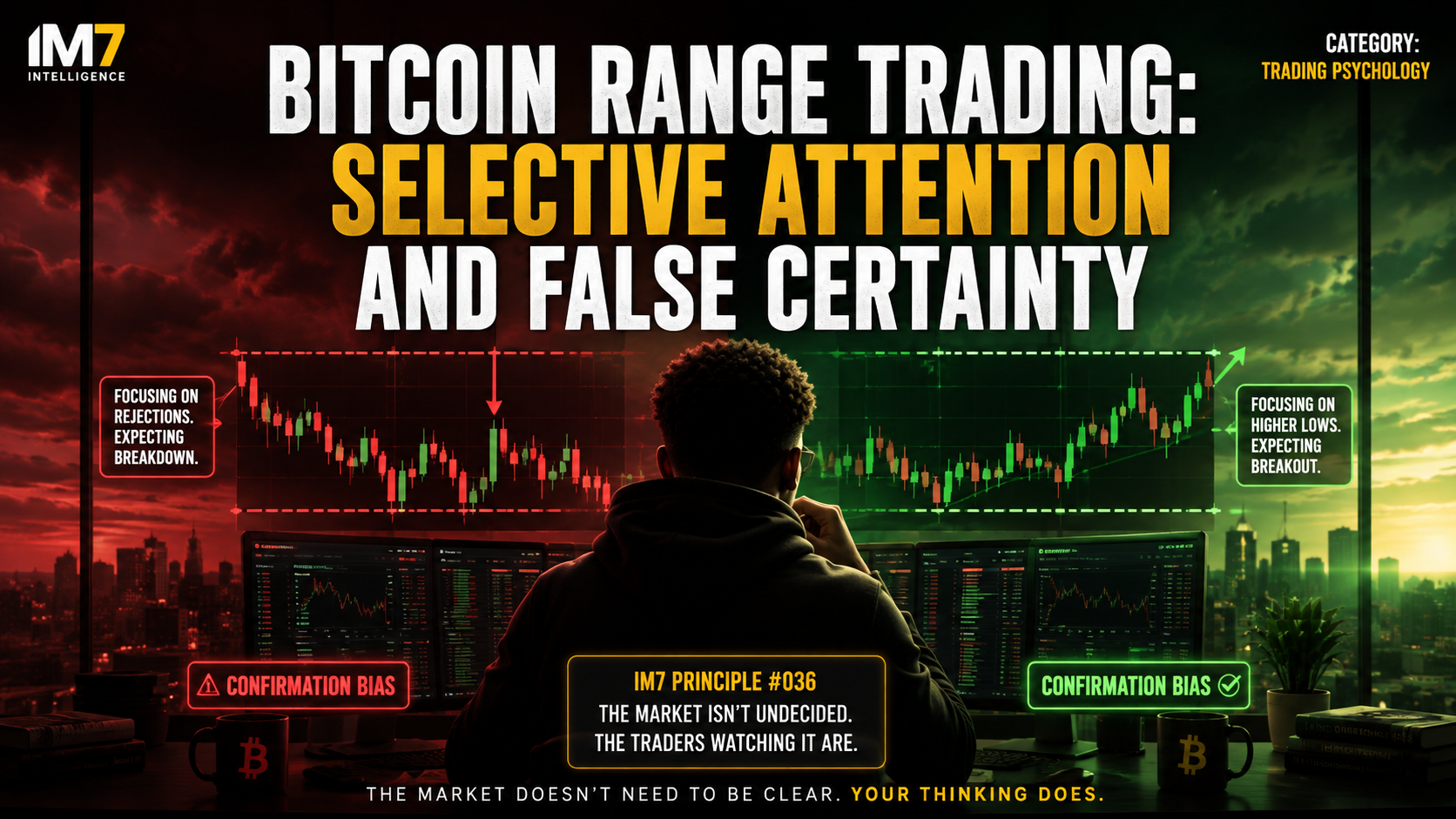
Selective Attention: How Bitcoin Traders Find False Certainty in Ranges
A narrow Bitcoin range around $65,000 gave bulls and bears enough evidence to support opposite conclusions. Bulls focused on rising lows, bears on rejected highs. The chart stayed the same; selective attention changed what each trader believed it was saying.

Emotional Certainty vs. Evidence: Why Traders Read the Same Bitcoin Chart Differently
Bitcoin is consolidating below resistance with mixed evidence, yet many traders have already committed to bullish or bearish conclusions. The disagreement does not come from different charts. It comes from confirmation bias, emotional certainty, and the tendency to interpret uncertain information through beliefs formed before the market has confirmed either outcome.

When Lower Highs Whisper: The Anchoring Bias Traders Miss.
Markets often reveal a change in character through small structural shifts long before a reversal becomes obvious. Traders miss those signals when they judge each candle separately, anchor to the previous high, and fail to recognize the sequence forming in front of them.

Flat Markets: Why Sideways Action Leads to Costly Trading Mistakes – A Behavioral Finance Perspective
During periods of low volatility and sideways price action, even experienced traders can fall prey to behavioral biases. Boredom, impatience, and the craving for certainty can lead to forced trades, unnecessary risks, and significant losses. This article explores the psychological traps of flat markets and offers strategies to navigate them effectively, particularly using Bitcoin as a prime example.

Why Most Traders Miss The Bottom: A Behavioral Finance Perspective on Market Reversals
Market bottoms are often clear in hindsight, but in real-time, they are shrouded in fear, uncertainty, and capitulation. This article explores the behavioral biases that prevent most traders from recognizing and capitalizing on these pivotal moments, using Bitcoin as a prime example. We delve into how emotional extremes create opportunities and why waiting for confirmation can lead to missing the biggest moves.

The Illusion of Certainty: Why Traders Feel Smart Again Before the Market Decides
A modest market rebound often triggers a disproportionate surge in trader confidence, a phenomenon we recently observed with Bitcoin. This article explores the psychological underpinnings of this 'false certainty' and how it can lead to vulnerability, especially after a rally, rather than during a downturn. We delve into confirmation bias and emotional decision-making, highlighting how a small price movement can be misinterpreted as definitive proof of one's foresight.