Bitcoin Bounced Again — Traders Called It Recovery
AI Generated • IM7 Intelligence
- Reading time
- 4 min read
- Word count
- 963 words
- Published
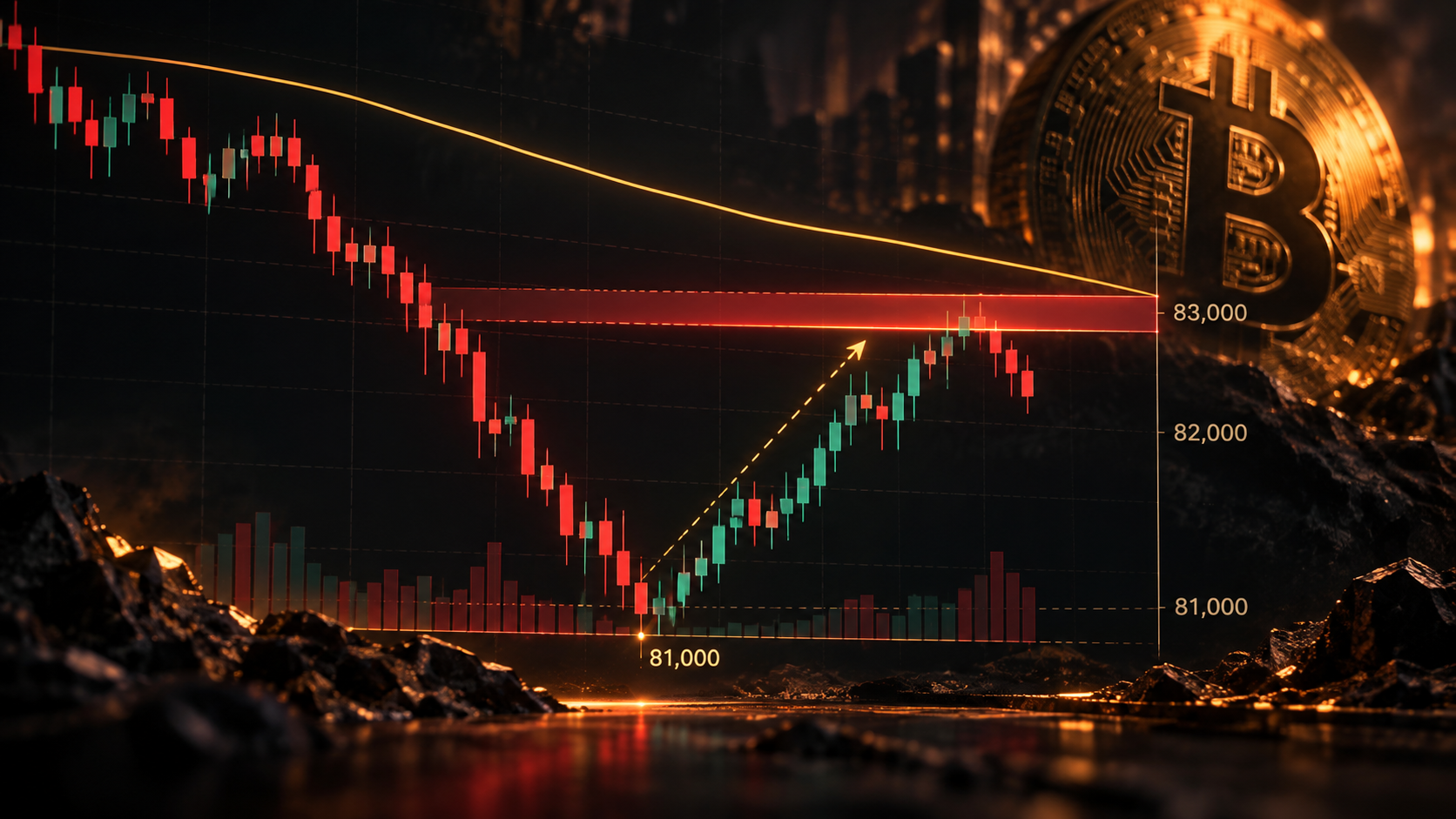
Bitcoin bounced from roughly $81.4K toward $83.2K, but the move stalled back near $82.5K before reclaiming the levels lost earlier in the week. The behavioral mistake is treating relief from selling as proof that buyers have regained control. Relief describes what stopped happening; recovery requires evidence of what buyers can actually accomplish.
- #behavioral finance
- #Bitcoin
- #Bitcoin bounce
- #Bitcoin recovery
- #BTC
- #buyer control
- #confirmation
- #failed recovery
- #IM7 Intelligence
- #market psychology
- #market structure
- #recency bias
- #relief rally
- #Relief-to-Recovery Shortcut
- #risk management
- #selling pressure
- #sentiment
- #support reclaim
- #trader mistakes
- #trader psychology
Executive Summary
Bitcoin bounced from roughly $81.4K toward $83.2K after a sharp decline, but the move stalled before reclaiming the levels lost earlier in the week. The bounce was real, yet traders quickly treated relief from selling as evidence that a recovery had begun. That is the behavioral trap: a reduction in downside pressure does not prove buyers have taken control. The next decision should depend on what price can reclaim and hold, not on how emotionally different the bounce feels from the decline that came before it.
IM7 Principle
IM7 Principle #095 — Relief-to-Recovery Shortcut
Traders often treat the first reduction in selling pressure as evidence that buyers have regained control. Relief describes what stopped happening; recovery requires evidence of what buyers can now accomplish.
Market Context
Bitcoin entered the session after a week of repeated breakdowns.
$85K failed.
$82.3K failed.
The visible $81K bid wall failed.
Price then bounced sharply from roughly $81.4K toward $83.2K before pulling back toward the $82.5K area.
That bounce matters.
But it has to be classified correctly.
The move showed that selling pressure temporarily weakened. It did not independently prove that buyers had reclaimed the structure lost earlier in the week.
The important area remains the response around the levels overhead — particularly whether price can reclaim and hold the zones that previously failed.
What The Market Wanted You To Believe
"The selling stopped. The recovery has started."
Relief feels powerful because it arrives immediately after stress.
After several failed levels and a violent decline, even a modest sequence of green candles can feel like a regime change.
The emotional contrast does most of the work.
Price was falling.
Then it stopped falling.
Then it bounced.
The mind compresses those three observations into a larger conclusion:
"Buyers are back in control."
But stopping a decline and reversing control are not the same event.
The market can experience less selling without experiencing enough buying to repair the prior damage.
Behavioral Observation
Watch how quickly traders change their language after a sharp bounce.
During the decline, the focus is on risk.
Once price turns higher, the language shifts toward bottoms, reversals, and missed opportunities.
That change can happen before the underlying structure changes.
On this chart, Bitcoin rallied from approximately $81.4K toward $83.2K, but the move then pulled back toward $82.5K.
The bounce was meaningful because it showed that sellers were no longer pushing price lower at the same pace.
But price had not yet demonstrated sustained control above the levels that mattered.
That is the distinction to watch.
Relief changes pressure. Recovery changes control.
Cognitive Bias Breakdown
The mistake is a form of recency bias: traders give disproportionate weight to the newest price behavior and allow it to overpower the evidence that came before it. ¹
After a violent decline, the most recent green candles feel unusually important because they contrast so sharply with the red candles that preceded them.
The difficult question is:
Has buyer behavior changed enough to repair the broken structure?
The easier question is:
Did price finally bounce?
When the bounce is strong enough emotionally, traders begin answering the first question with evidence from the second.
But a bounce can occur for several reasons:
Short covering.
Seller exhaustion.
Reduced liquidation pressure.
Temporary dip buying.
None of those independently proves durable buyer control.
The behavioral error is not noticing the bounce.
It is assigning the bounce more meaning than the market has earned.
The Professional Read
A disciplined operator separates relief from recovery.
Relief asks:
Has downside pressure eased?
Recovery asks:
Have buyers reclaimed and maintained control over previously lost territory?
Those require different evidence.
A professional does not dismiss the bounce.
Instead, the bounce becomes the beginning of a new test.
Can price reclaim the levels that broke?
Can those levels hold after being reclaimed?
Can buyers survive the next pullback?
Does price begin building acceptance above prior failure zones?
Until those questions receive evidence, the bounce remains useful information — but not a completed recovery thesis.
Decision Framework
When Bitcoin bounces after a sharp decline:
- Acknowledge the relief. Do not pretend the bounce is meaningless.
- Identify what changed. Did selling slow, or did buying actually strengthen?
- Locate the broken structure. Which levels still need to be reclaimed?
- Watch the retest. Does price hold after reaching those levels?
- Separate pressure from control. Fewer sellers do not automatically mean stronger buyers.
- Compare the bounce with prior failed bounces. Ask what new evidence exists this time.
- Upgrade the thesis only when the evidence upgrades.
Risk Management Lesson
Relief rallies create urgency because traders fear that waiting for confirmation will mean missing the move.
That urgency can produce oversized positions before the market has proven that anything structural changed.
The safer process is not to ignore the bounce.
It is to size conviction according to the evidence.
A market that stopped falling deserves attention.
A market that reclaimed and held broken structure deserves more confidence.
Those are different stages and should not receive the same risk.
IM7 Quote
"Relief tells you the pressure changed. Recovery tells you control changed."
IM7 Observation
Bitcoin's bounce was real.
That is exactly why the behavioral distinction matters.
The market did not need to be dismissed simply because it had not confirmed recovery.
It needed to be classified correctly.
Sellers eased.
Price rallied.
But the larger question remained unresolved:
What can buyers now hold that they could not hold before?
Until the answer changes, relief should not automatically inherit the meaning of recovery.
IM7 Decision Rule
Do not promote relief into recovery until buyers reclaim and hold previously lost structure.
Let the market prove that control changed before treating a bounce as evidence that the broader condition changed.
How did this land?
What emotion or bias did this article help you recognize?
- #behavioral finance
- #Bitcoin
- #Bitcoin bounce
- #Bitcoin recovery
- #BTC
- #buyer control
- #confirmation
- #failed recovery
- #IM7 Intelligence
- #market psychology
- #market structure
- #recency bias
- #relief rally
- #Relief-to-Recovery Shortcut
- #risk management
- #selling pressure
- #sentiment
- #support reclaim
- #trader mistakes
- #trader psychology
References
- [1]Tversky, A. & Kahneman, D. (1974). Judgment under Uncertainty: Heuristics and Biases. Science. American Association for the Advancement of Science. DOI: 10.1126/science.185.4157.1124. https://www.science.org/doi/10.1126/science.185.4157.1124
Pass the signal forward.
IM7 Intelligence studies financial markets through the lens of psychology rather than prediction. Our research focuses on behavioral finance, crowd psychology, sentiment, and decision-making to help readers understand why markets move—not just where they move.
IM7 Intelligence publishes educational research on market psychology, behavioral finance, and investor behavior. Nothing published by IM7 Intelligence constitutes financial, investment, tax, or legal advice. Always conduct your own research before making financial decisions.
Read the market's emotion before it acts.
Where this article sits in the map.
- Confirmation BiasYou are here
- Behavioral Finance
- Risk Management
- Fear
Curated paths, not random articles.
Behavior read in real time.

Ismael Mercius
Ismael Mercius is the founder of IM7 Intelligence, where he writes about crypto market psychology, behavioral finance, and the sentiment cycles that drive digital asset prices. His work focuses on how traders actually make decisions — and the recurring errors that show up in their P&L.
- Crypto market psychology
- Behavioral finance
- Market sentiment analysis
- Trader behavior & decision-making