#Recency Bias
28 articles on Recency Bias — behavioral finance and market psychology from IM7 Intelligence.
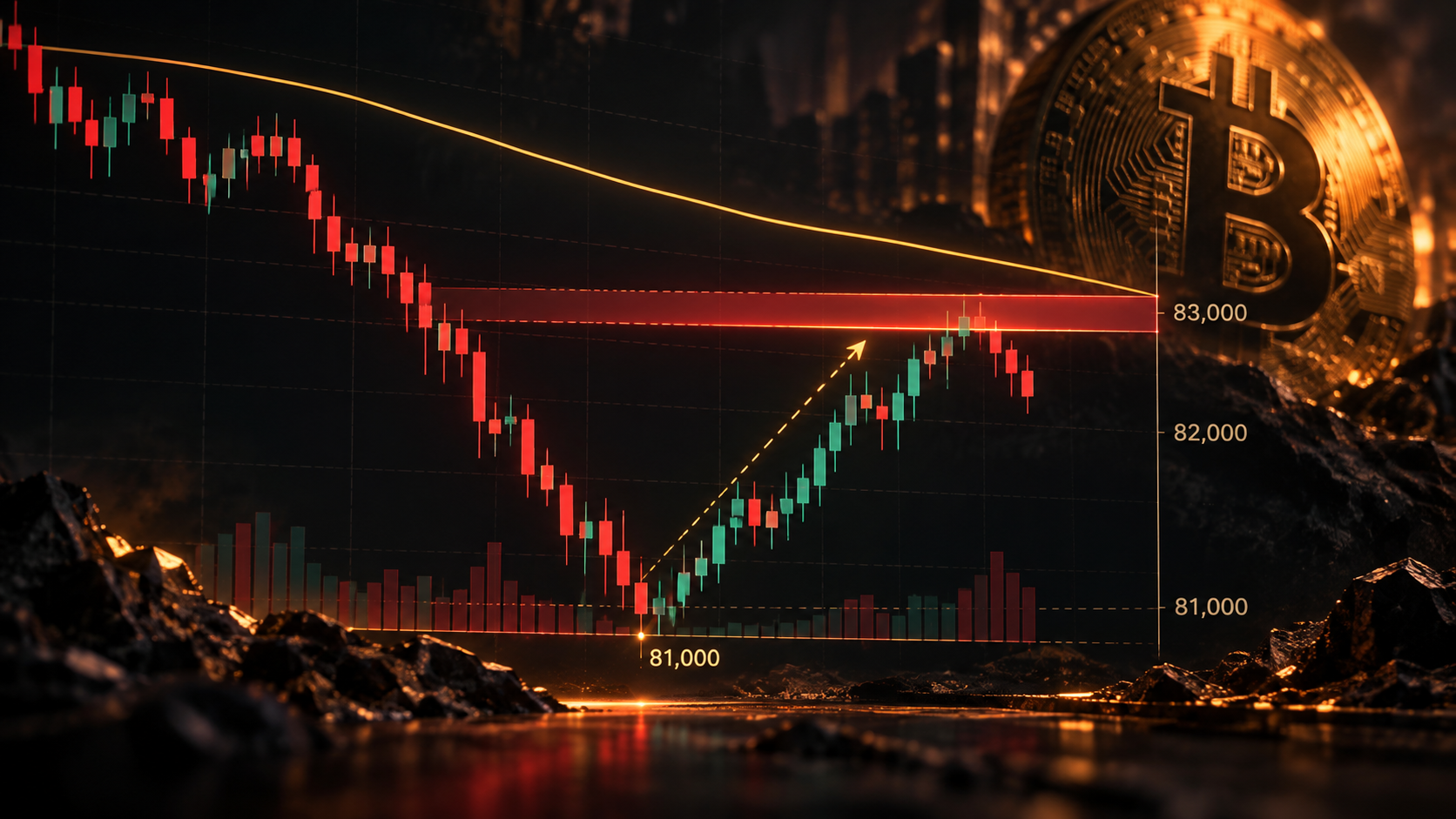
Bitcoin Bounced Again — Traders Called It Recovery
Bitcoin bounced from roughly $81.4K toward $83.2K, but the move stalled back near $82.5K before reclaiming the levels lost earlier in the week. The behavioral mistake is treating relief from selling as proof that buyers have regained control. Relief describes what stopped happening; recovery requires evidence of what buyers can actually accomplish.
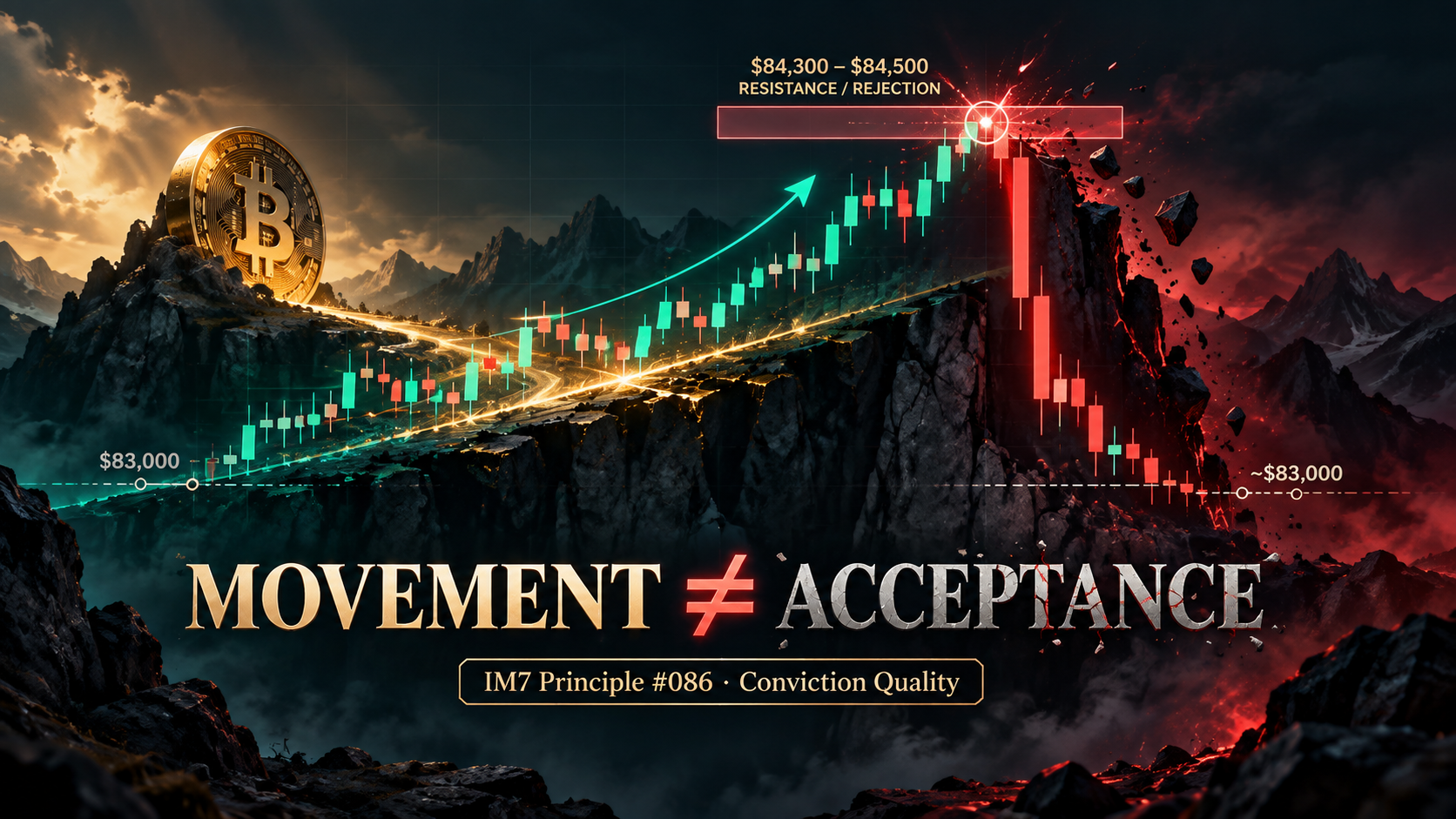
Bitcoin Spent Hours Rallying — One Candle Erased Almost All of It
Bitcoin rallied above $84K, then gave back nearly the entire move in one 2-hour candle. The lesson wasn’t about direction — it was about conviction quality. Traders often let fast price movement strengthen their confidence before the evidence actually improves.

You Got the Confirmation. Then One Pullback Made You Doubt It.
Bitcoin delivered the confirmation traders demanded, but the first uncomfortable pullback quickly changed how that evidence felt. Confirmation Fragility explains why traders often trust evidence only while price continues rewarding them—and mistake discomfort for invalidation.

You Needed Proof at $76K. At $86K, You Stopped Asking.
Bitcoin climbed from $76K toward $86K, but something changed faster than price: traders’ standards for confirmation. The higher Bitcoin went, the less proof they demanded. That isn’t greater certainty. It’s confirmation giving way to fear of missing out.
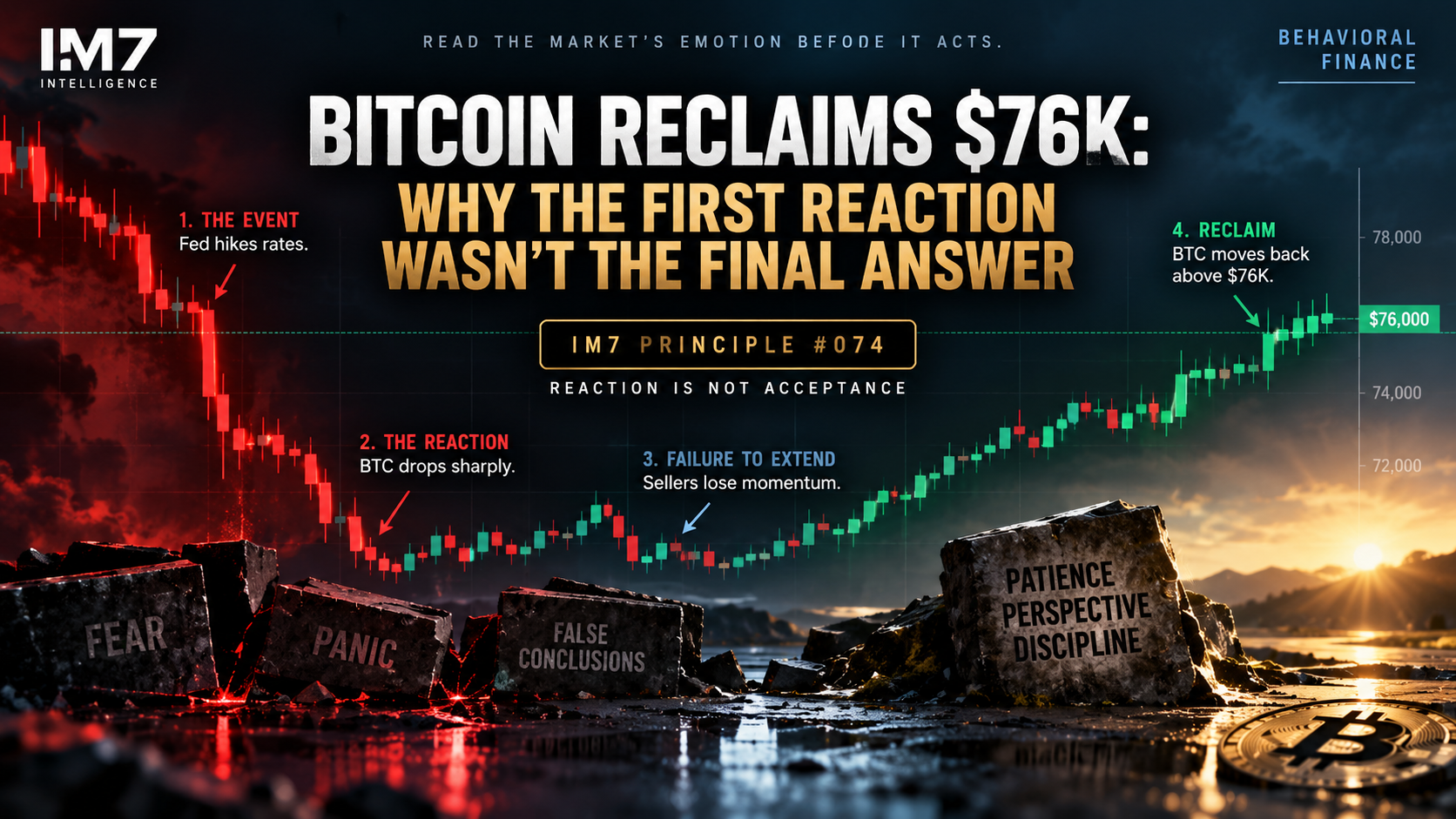
Bitcoin Reclaims $76K: Why the First Reaction Wasn't the Final Answer
Bitcoin dropped after the Fed decision, giving traders an immediate bearish story to believe. But price later reclaimed the $76K area. The behavioral mistake isn't reacting to new information — it's treating the first reaction as the market's final conclusion. This is why reaction should never be confused with acceptance.
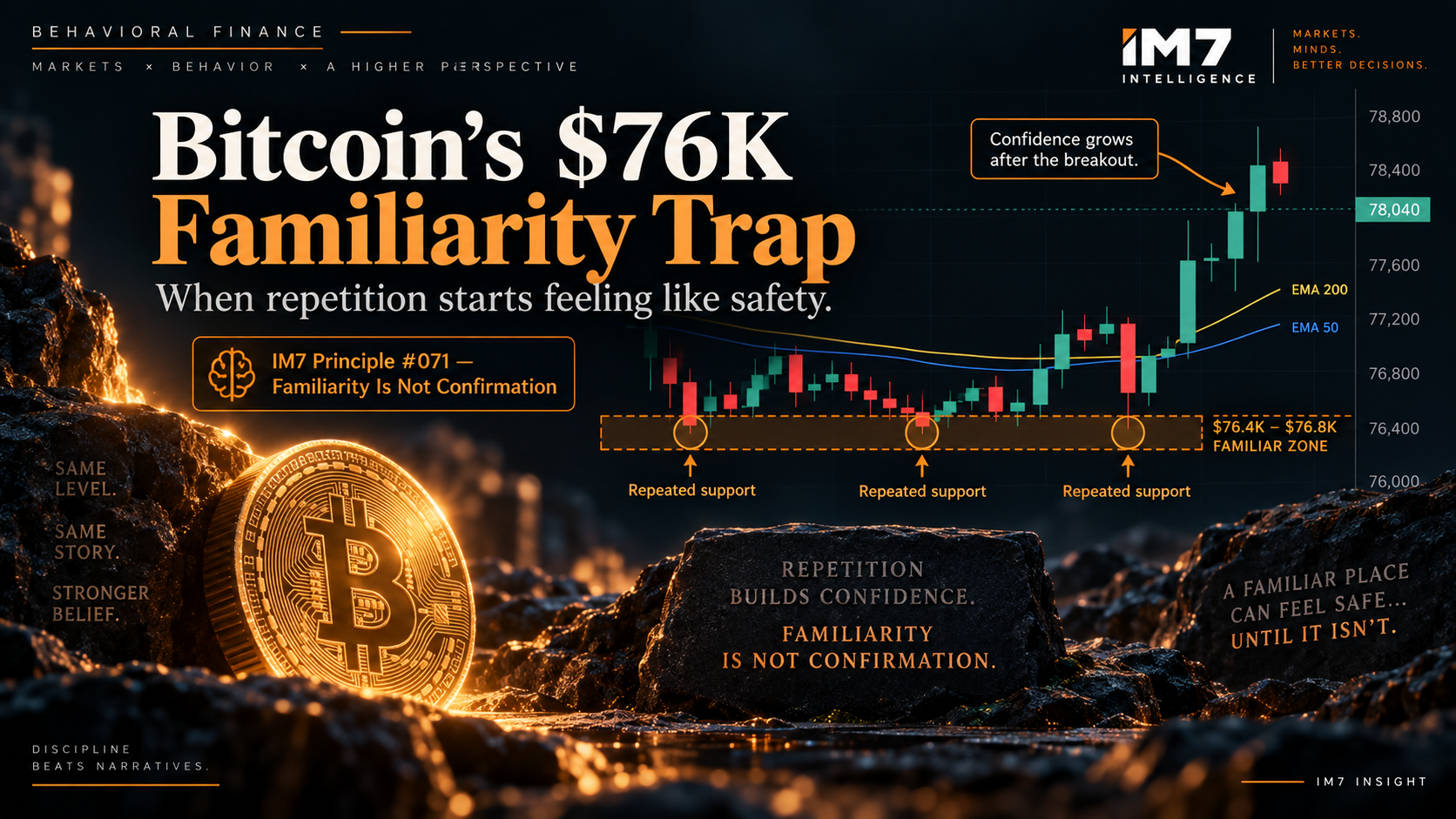
Bitcoin’s $76K Familiarity Trap: When Repetition Starts Feeling Like Safety
Bitcoin has defended the $76K area repeatedly, and each successful bounce makes traders more confident that the level is “safe.” But repetition can create false certainty. This article breaks down the familiarity trap behind repeated support tests and why a streak should never be mistaken for a rule.

Bitcoin Changed $2,000. Trader Certainty Changed Everything.
Bitcoin went from “breakout confirmed” above $81K to “breakout failed” near $79K in less than a day. The deeper behavioral signal is how quickly one jobs report and one large red candle overrode the market thesis traders had just formed.

Why Bitcoin Feels Safer at $81K Than It Did at $76K
Bitcoin surged from the upper-$79K area toward $81.9K, and traders who felt uneasy near $76K now feel increasingly comfortable buying higher. The behavioral trap is Price-Induced Safety: rising price can reduce perceived risk even when actual market risk has not fallen.
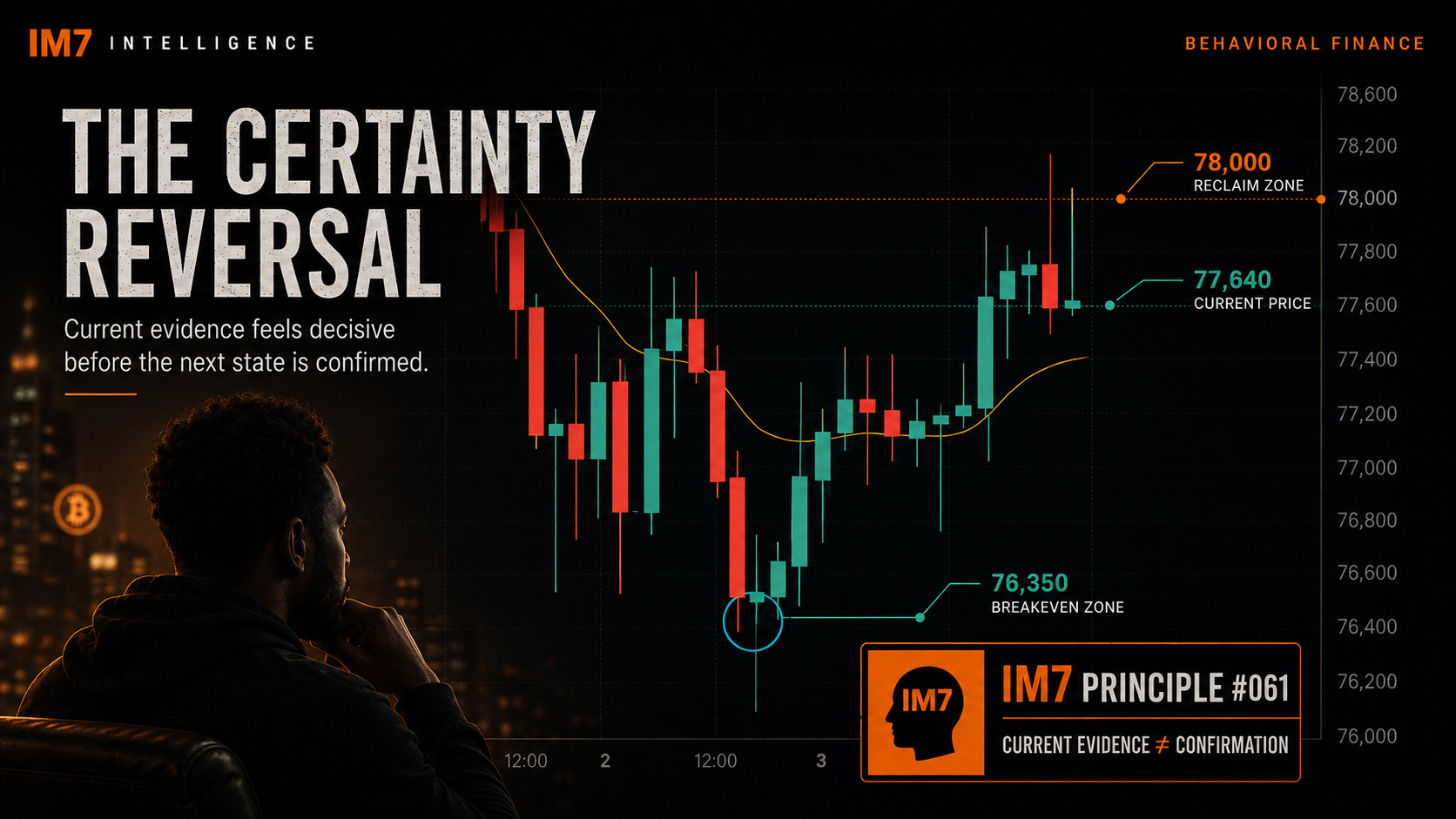
Yesterday Bears Were Certain. Today Bulls Are.
Bitcoin bounced from roughly $76.35K toward $77.64K after yesterday’s breakdown. The bigger behavioral risk is how quickly traders convert each new move into certainty about what comes next.
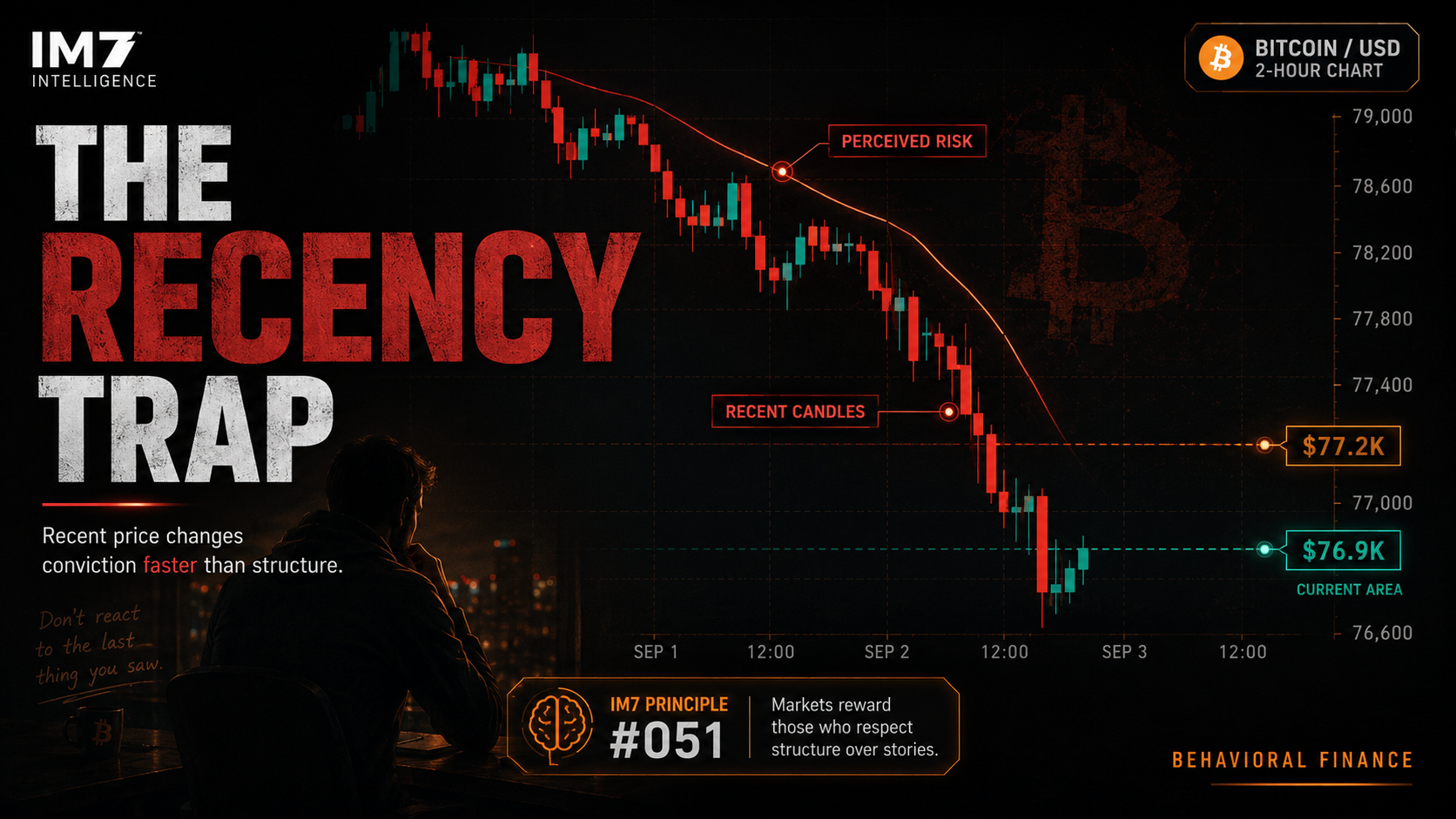
Why Bitcoin Felt Safe at $80K and Dangerous at $76K
Bitcoin fell from the upper-$78K range toward $76.9K, and trader perception shifted with it. IM7 examines the Bitcoin Recency Loop: how recent candles change perceived risk faster than market structure actually changes.
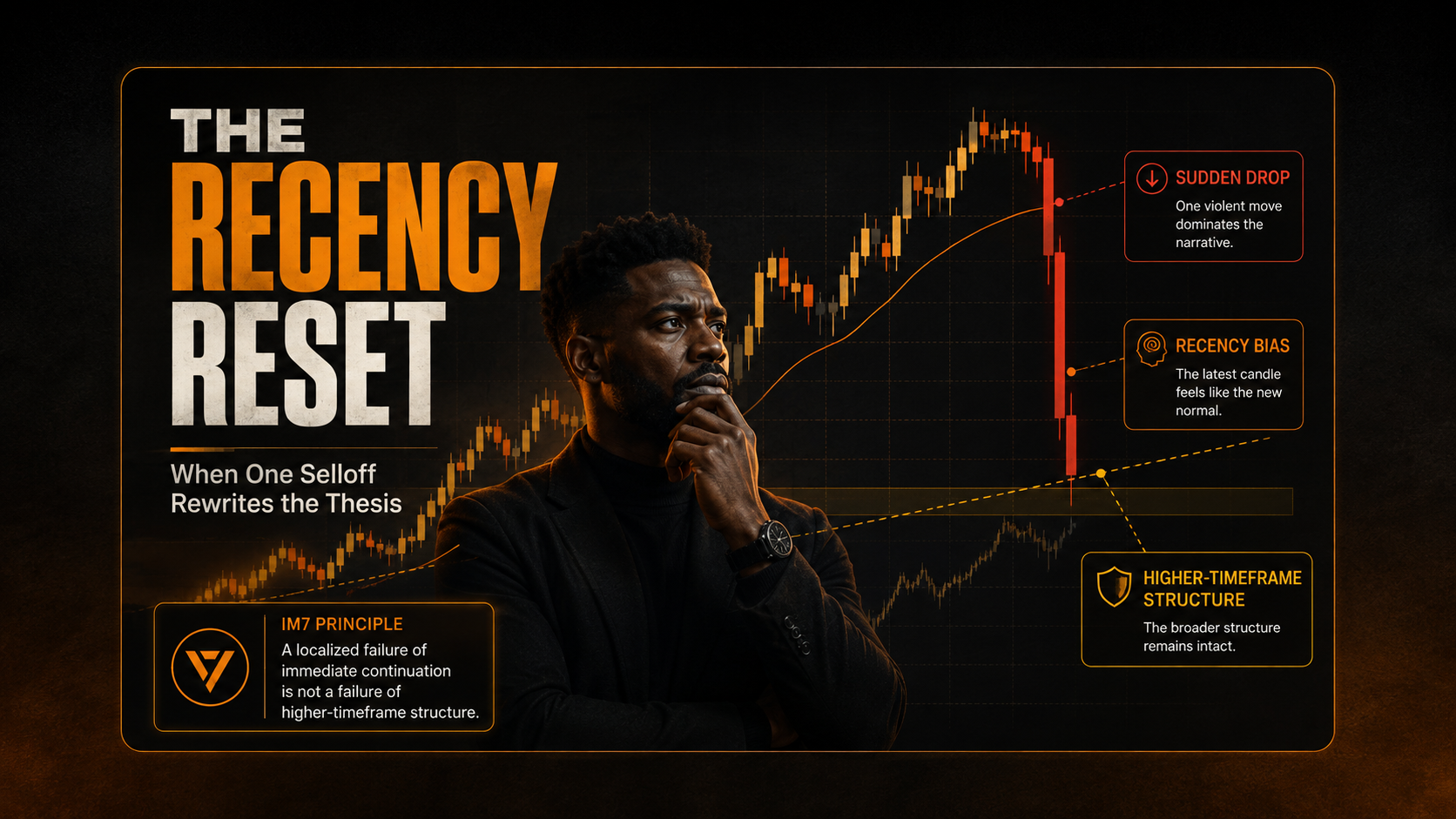
The Recency Reset: Why Bitcoin Traders Flip Their Entire Thesis After One Selloff
A single sharp adverse move can trigger a psychological shock that causes traders to abandon a higher-timeframe thesis too quickly. IM7 examines how recency bias turns one Bitcoin selloff into a complete rewrite of market conviction.
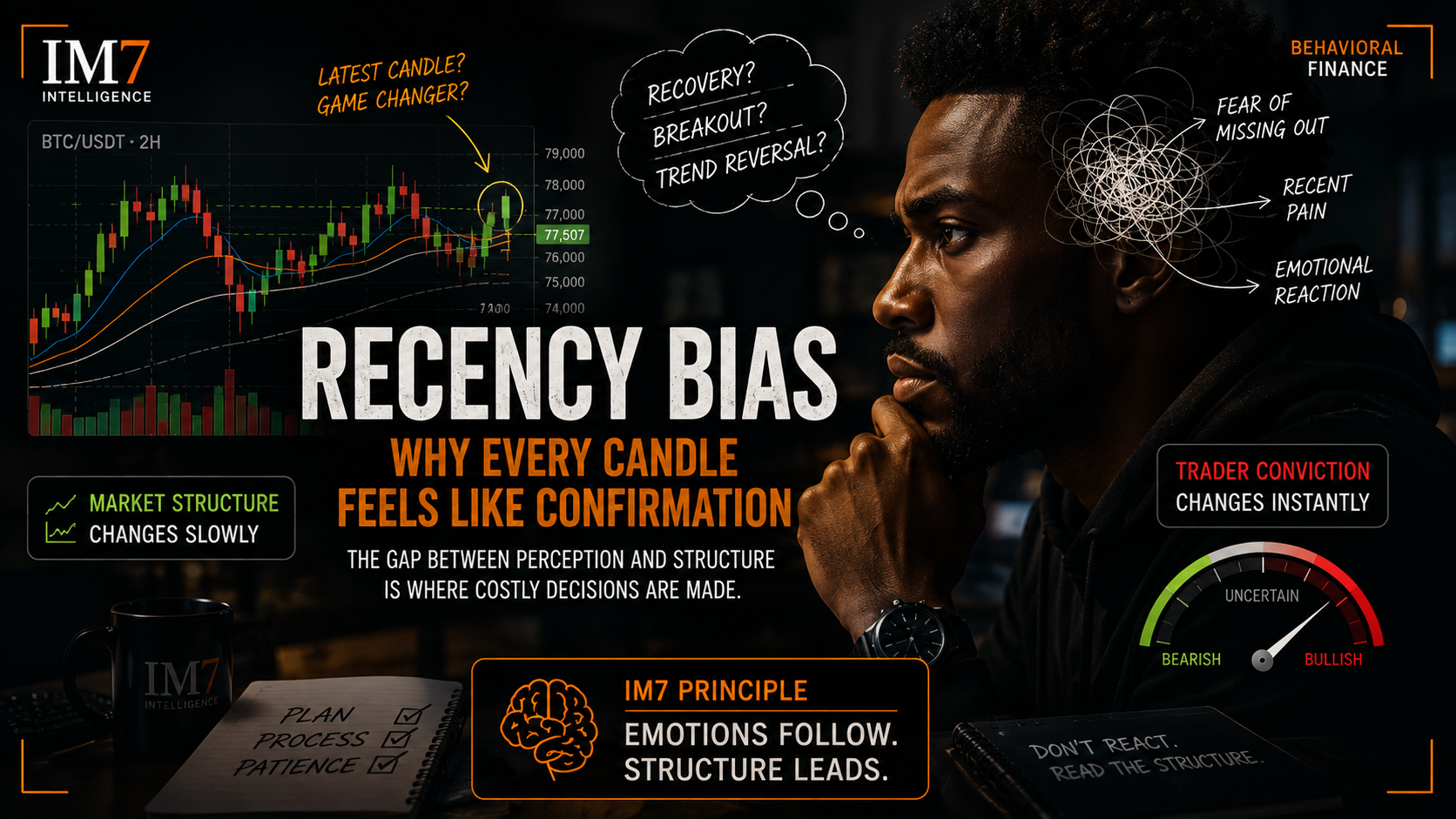
The Recency Trap: When Every Bitcoin Candle Feels Like Confirmation
Bitcoin’s volatile swings are making every new candle feel like confirmation. But when a trader’s conviction changes faster than the market structure, recency bias may be driving the interpretation.
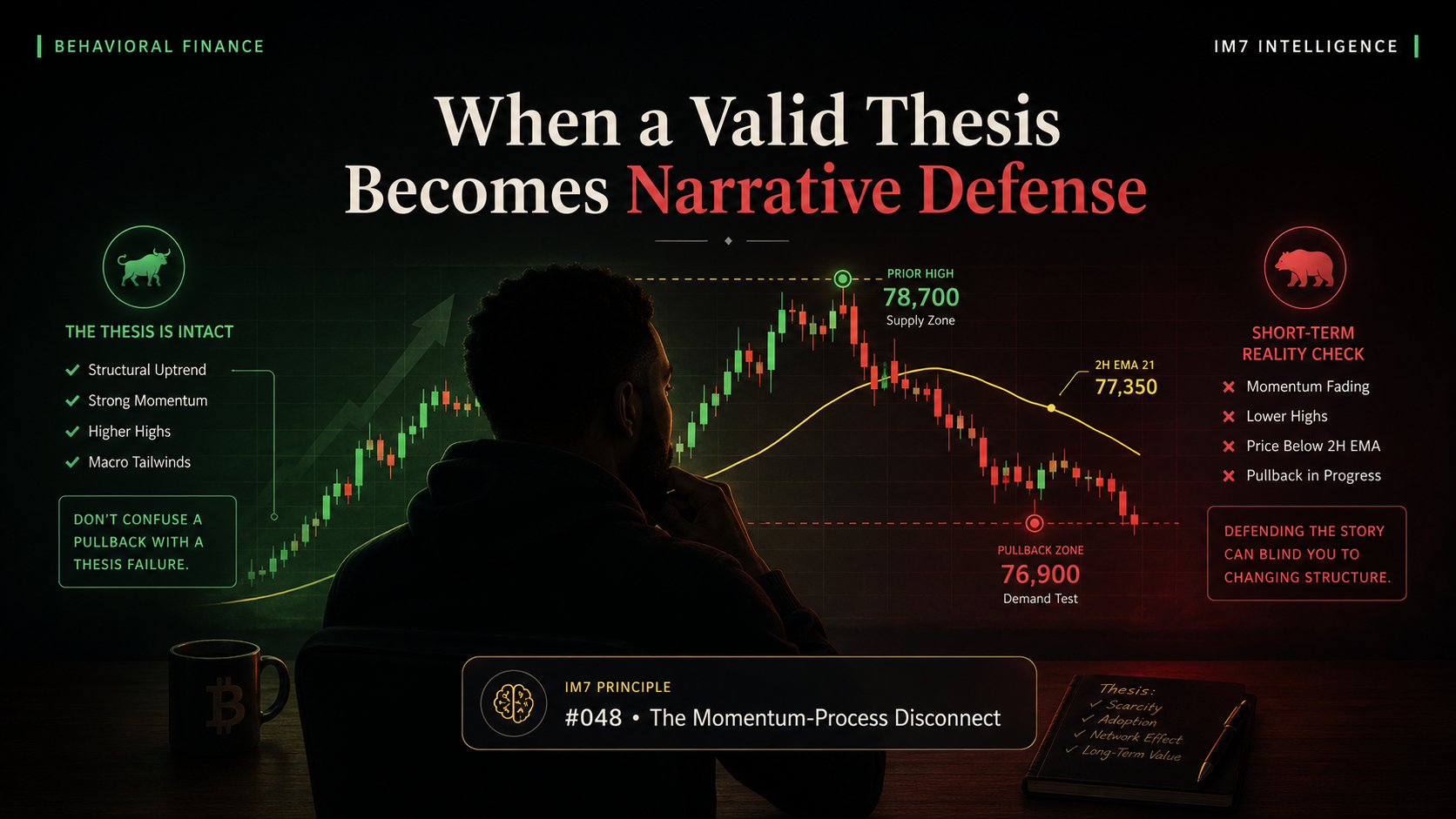
Yesterday’s Rally Was Real — Today’s Evidence Is Different
Bitcoin’s rally had real catalysts and genuine upside strength. But as price pulls back from recent highs, traders face a different behavioral test: whether they can update a previously rewarded thesis when new evidence begins to conflict with it.

Bitcoin's Strength: When Momentum Tests Process Discipline
Bitcoin is exhibiting considerable upside strength. That observable momentum can create psychological pressure for traders, especially when a strong move begins to feel like permission to loosen entry standards. The critical distinction is between acknowledging market strength and allowing that strength to dictate execution quality.
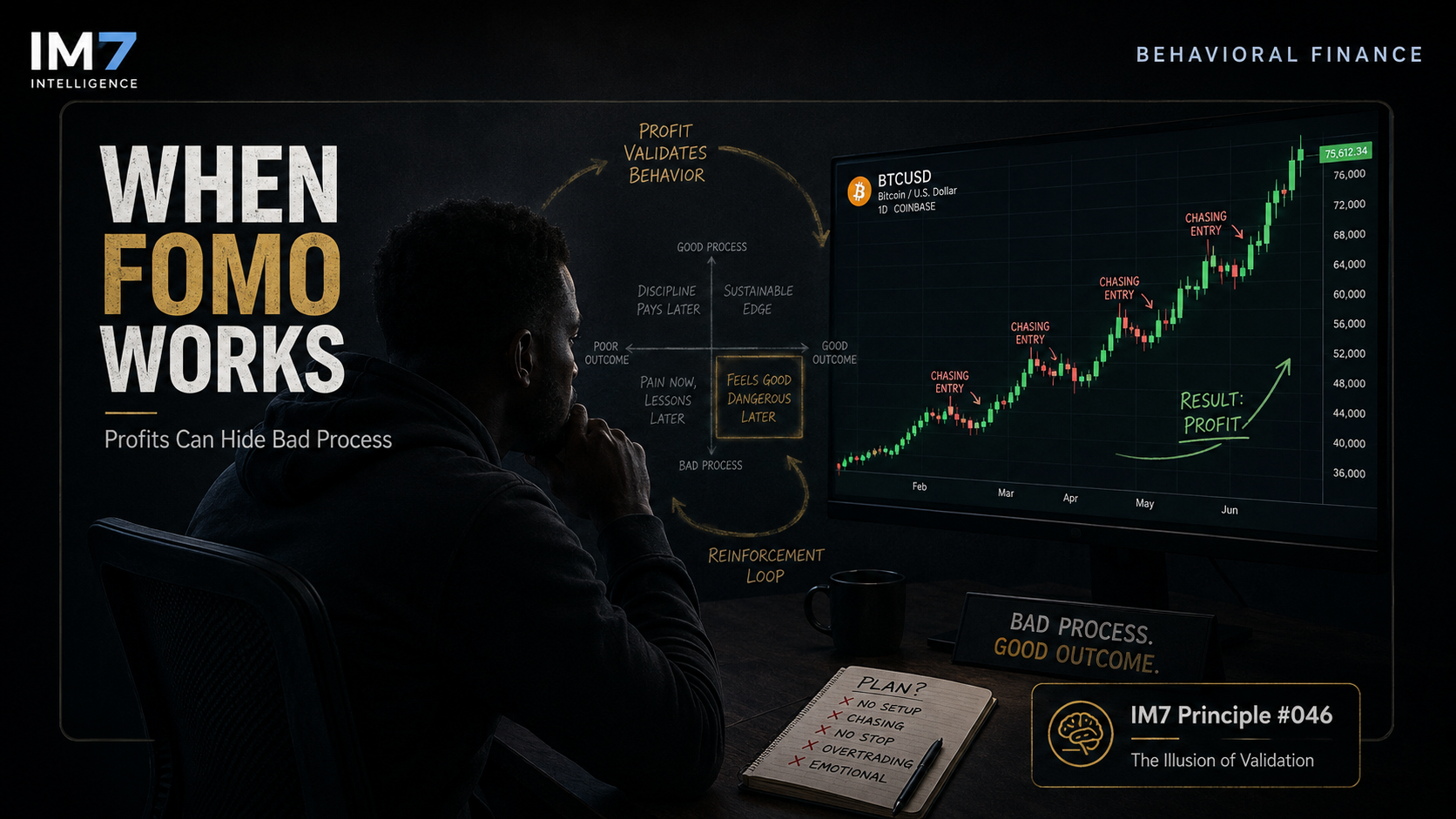
When FOMO Works: How Profitable Trades Reinforce Bad Process
When a rushed Bitcoin entry makes money, the profitable outcome can reinforce the wrong lesson. Outcome bias can turn an impulsive decision into a behavior the trader becomes more willing to repeat—even when the original process was weak.
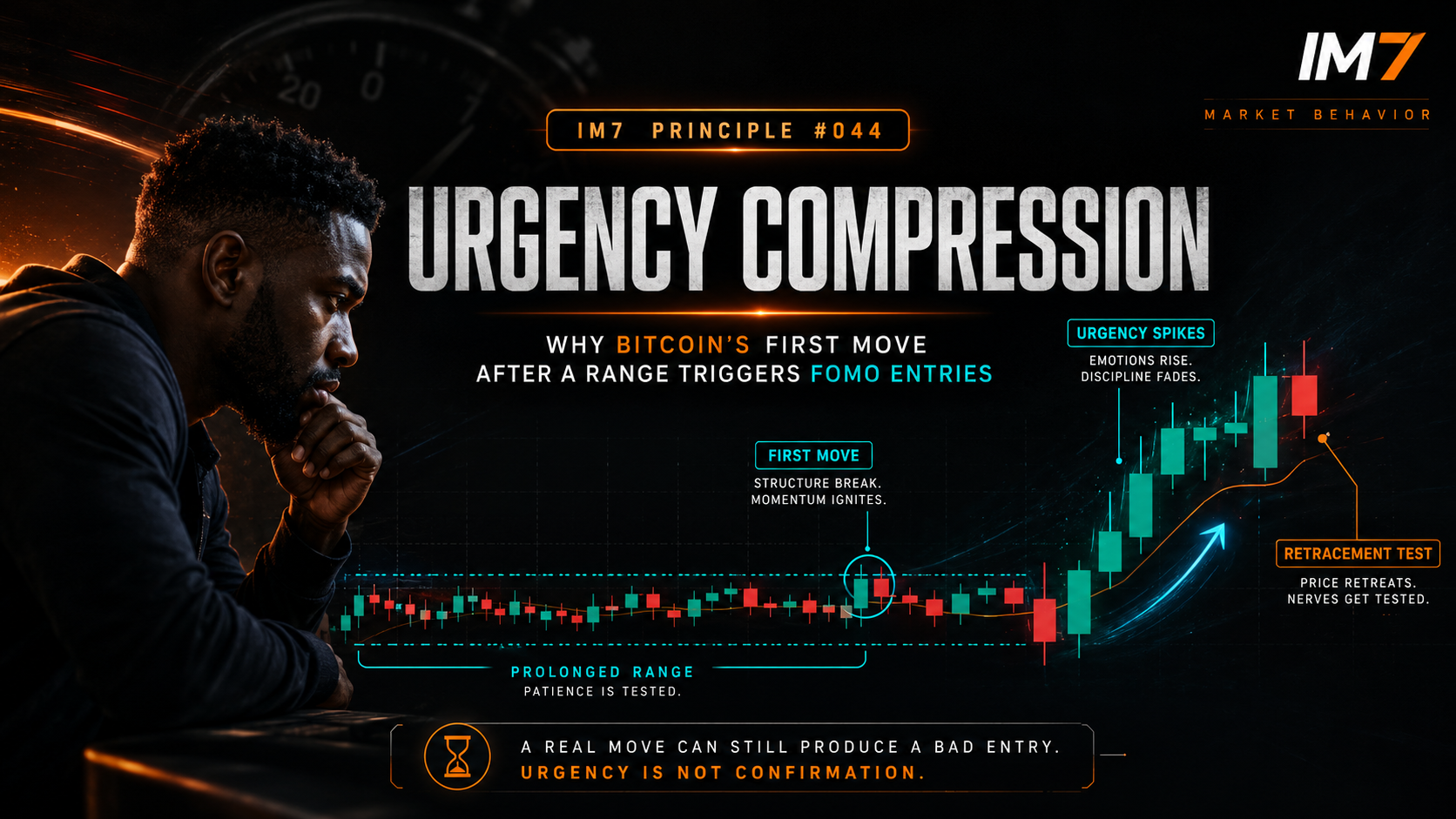
Urgency Compression: Why Bitcoin’s First Move After a Range Triggers FOMO Entries
After weeks of consolidation, a few green Bitcoin candles can make waiting feel unbearable. The move may be real, but urgency can still turn the first available entry into a poor one. A real move does not automatically make the first entry a good entry.
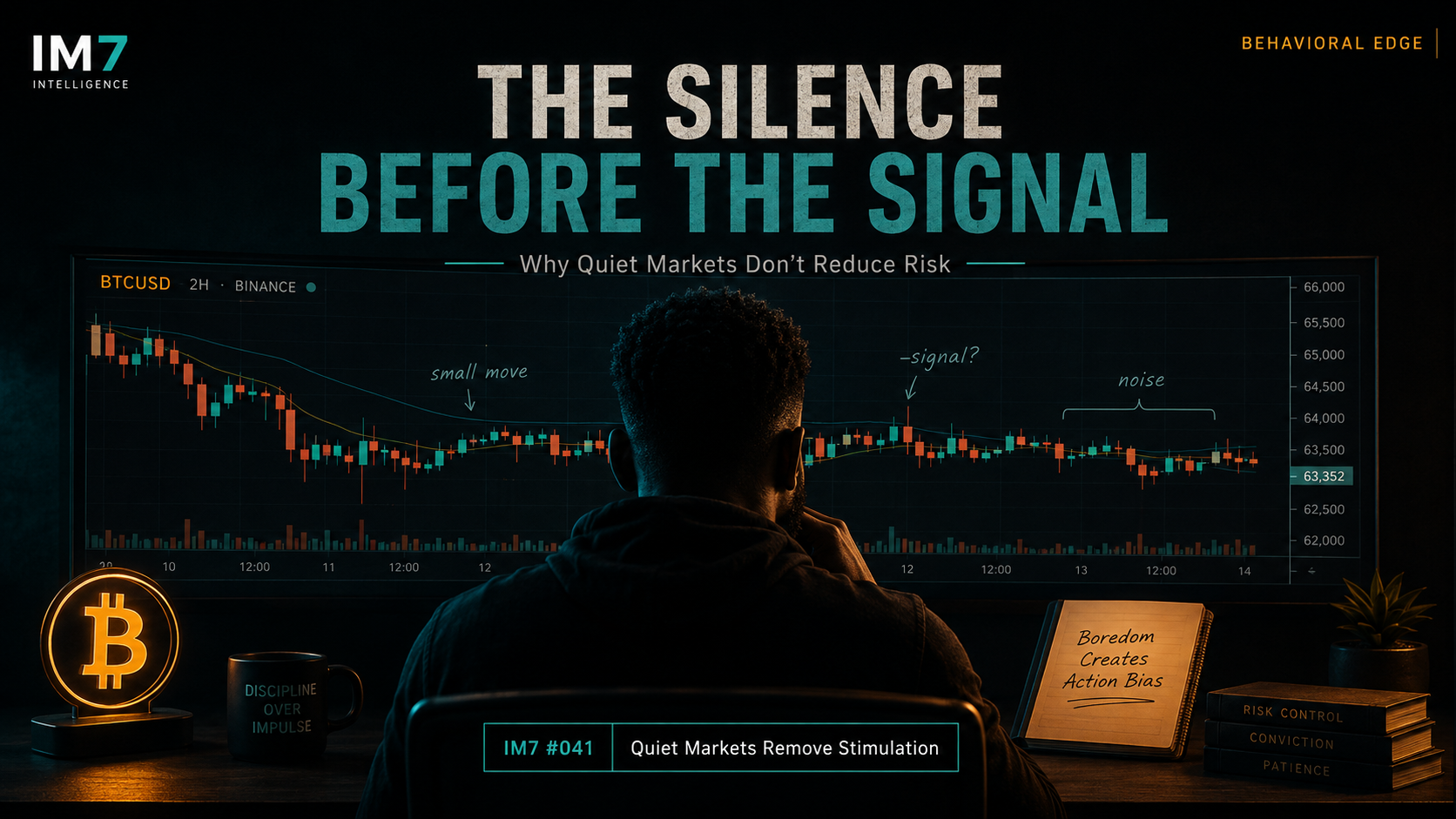
The Silence Before the Signal: Why Quiet Markets Don't Reduce Risk
Bitcoin perpetual trading activity recently fell to multi-year lows, creating an environment that can feel deceptively safe. But low stimulation changes trader behavior. Boredom, impatience, and action bias can lower setup standards and turn ordinary market noise into perceived opportunity. The professional challenge is not predicting what happens next, but recognizing when the urge to act is stronger than the evidence.
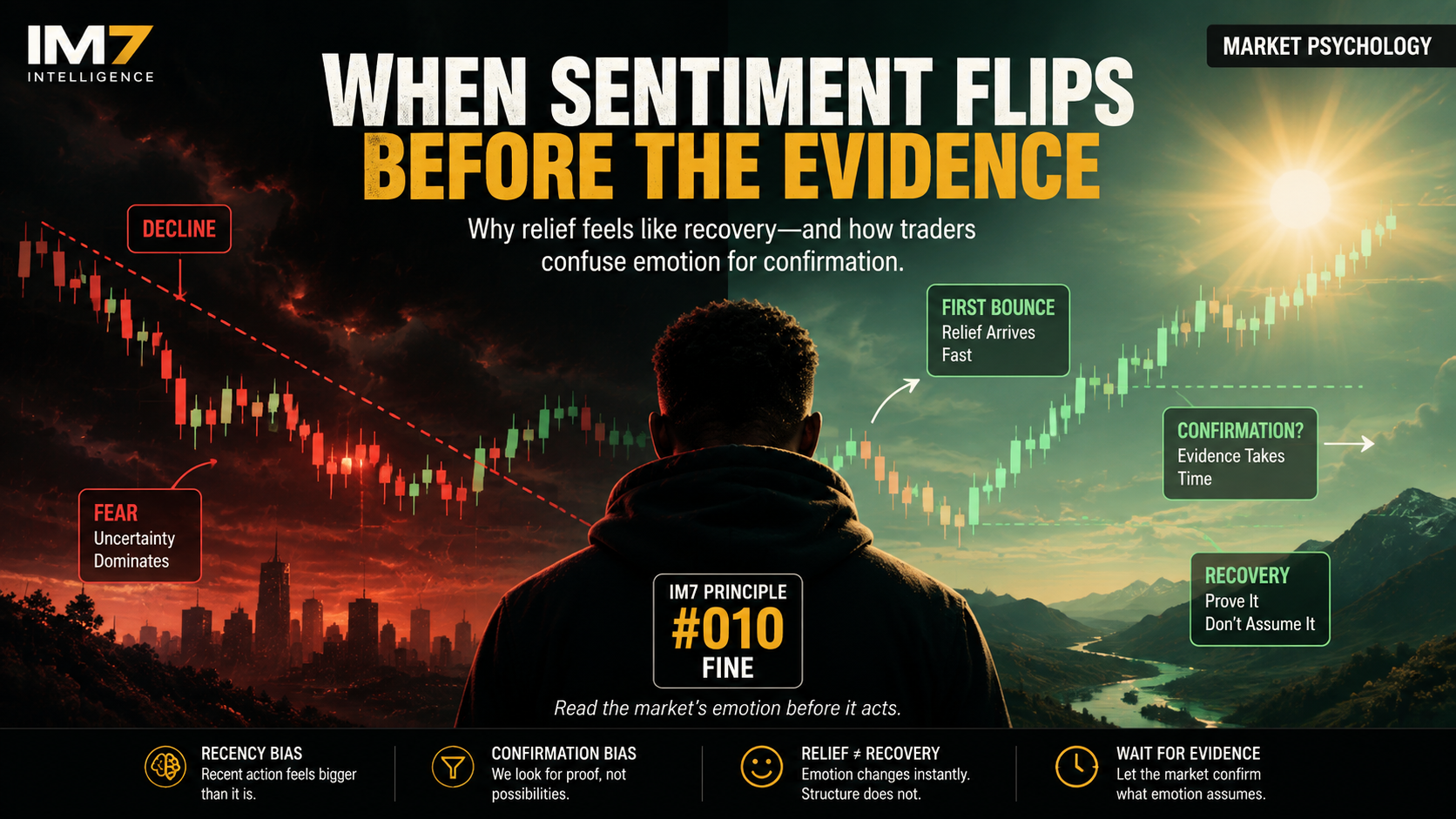
The First Bounce Fallacy: Why Bitcoin Traders Confuse Relief with Recovery
Bitcoin’s first bounce can feel like confirmation before the market has confirmed anything. Relief becomes conviction, and a temporary rebound becomes a recovery narrative. The danger isn’t the bounce—it’s how quickly traders decide what it means.
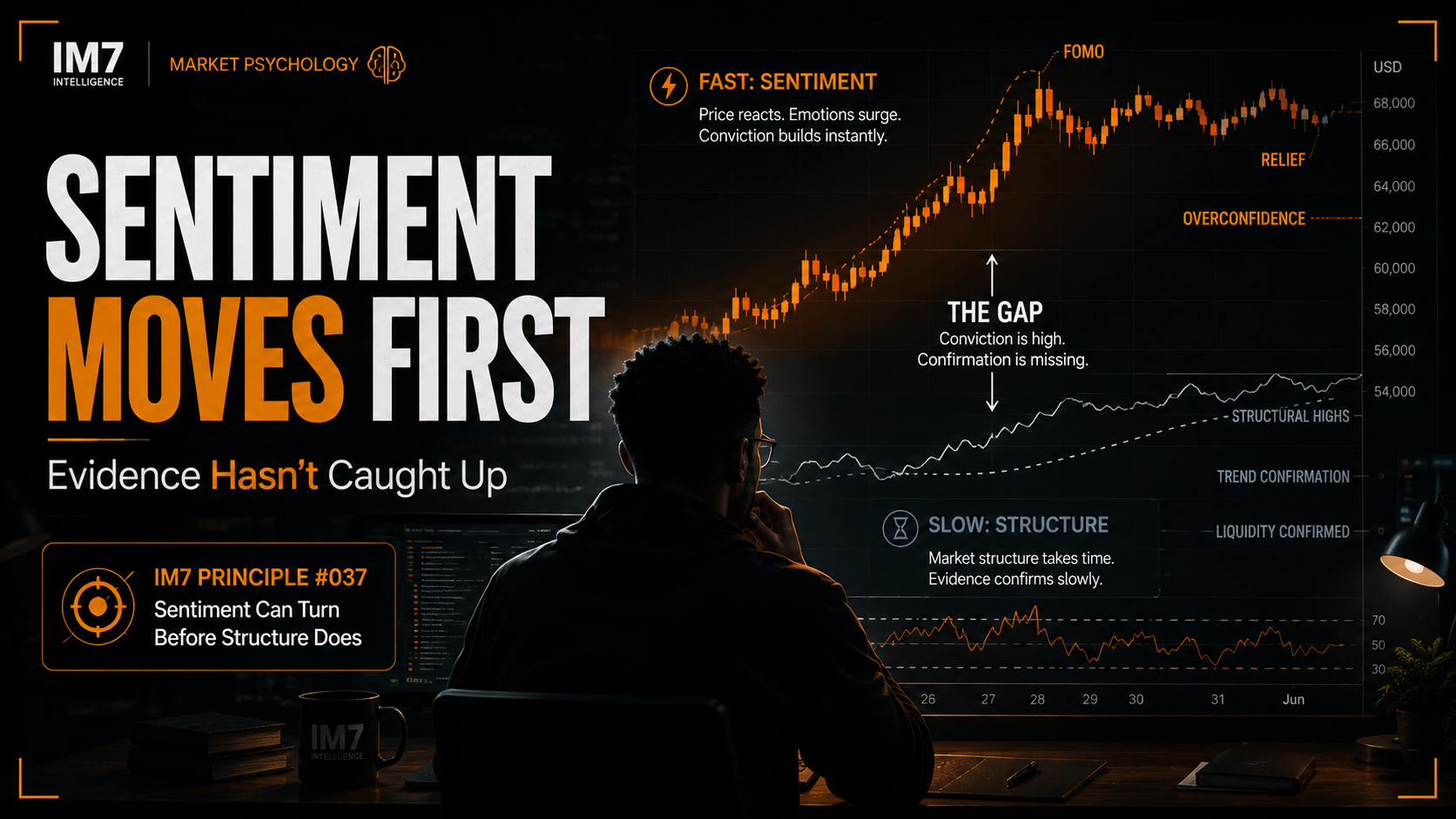
When Sentiment Flips Before Evidence: The Gap Between Feeling and Fact
A sharp market rally can flip sentiment faster than the underlying evidence changes. Traders may begin positioning for continuation while broader structural confirmation remains incomplete. That gap between feeling and fact reveals a core behavioral risk: sentiment can turn long before the evidence justifies conviction.

Why Traders Notice Opportunity Too Late
Markets often consolidate quietly for hours—or even days—while evidence steadily accumulates beneath the surface. Yet most traders remain disengaged until a single dramatic green candle captures their attention. This isn't a market phenomenon; it's a behavioral one. The first green candle rarely creates the opportunity—it simply makes it impossible for the crowd to ignore.

The Recovery Reached Resistance: Confidence Before Confirmation
Three green candles after a sharp decline can create a powerful sense of relief, but relief is not confirmation. Traders often mistake arriving at resistance for breaking through it, allowing emotions to outrun market structure. The recovery may feel convincing, yet the real test often begins where confidence returns.

When Liquidity Disappears: Why Markets Move Faster Than Emotions
Markets don't move because emotions suddenly change. More often, emotions change because liquidity disappears first. When buyers and sellers step away, even small orders can trigger outsized price movements, creating the fear, urgency, and volatility most traders mistakenly believe caused the move.

When Lower Highs Whisper: The Anchoring Bias Traders Miss.
Markets often reveal a change in character through small structural shifts long before a reversal becomes obvious. Traders miss those signals when they judge each candle separately, anchor to the previous high, and fail to recognize the sequence forming in front of them.

When Recovery Becomes the Risk: Why Relief Can Lead to Overconfidence
A sharp recovery often changes market psychology faster than market structure. Relief becomes confidence, confidence becomes certainty, and traders begin taking larger risks before objective confirmation arrives. The recovery doesn't erase the risk—it simply makes it harder to see.

Why Clean Trends Create Dangerous Confidence: The Psychology Behind Chasing Bitcoin Breakouts
When Bitcoin exhibits a 'clean' trend, breaking out from a period of moving average compression, it often triggers a powerful, yet potentially dangerous, psychological shift in traders. This article explores how such clear price action can lead to overconfidence, fueled by FOMO, recency bias, and confirmation bias, diverting focus from disciplined entry strategies to emotional decision-making.

Why the Biggest Candle Isn't the Most Important: Relief vs. Confirmation in Trading
One explosive candle can change how traders feel without changing the market itself. Learn why relief is often mistaken for confirmation, how outcome bias shapes trading decisions, and why real conviction is measured by follow-through—not one impressive move.

The Same Price Level, Different Story: Why Recency Bias Skews Trading Decisions
Traders often anchor their decisions to past price movements, mistaking familiar patterns for reliable indicators. This tendency, influenced by recency bias, can lead to costly misinterpretations of market dynamics. We explore how psychological factors can lead traders to misinterpret 'support' levels, focusing on the behavioral traps of memory-based trading versus observation-based analysis.

One Winning Trade Can Teach You the Wrong Lesson: The Perils of Overgeneralization in Markets
A single successful trade often feels like a revelation, teaching us a powerful lesson about market behavior. But what if that 'lesson' is actually a trap, leading to overconfidence and rigid strategies that eventually backfire? This article explores how our minds overgeneralize from limited data, using a dramatic Bitcoin chart example to illustrate how one profitable decision can implant a false conviction in trading.