Behavioral Finance

Behavioral finance studies why intelligent people make predictable mistakes with money. IM7 applies that tradition — Kahneman, Tversky, Thaler, Shiller — to the specific texture of Bitcoin and crypto markets, where fear and greed still write most of the tape.

Why behavior beats fundamentals in crypto

Crypto markets are dominated by reflexive positioning, thin liquidity, and 24/7 emotional decision-making. Classical finance assumes rational agents; behavioral finance takes the market as it actually is — a collective nervous system pricing narrative faster than reality. IM7 uses that lens as its primary tool.

The core biases we study

Loss aversion, anchoring, confirmation bias, recency, overconfidence, herd behavior, and the disposition effect. Each one shows up in specific parts of the tape — funding rates, order books, sentiment surveys, and price action — and each has a repeatable behavioral signature.

How IM7 uses behavioral finance

We do not predict prices. We describe the behavioral regime the market is in, and what disciplined operators tend to do inside it. Behavioral finance is the vocabulary; the IM7 Principles are the working checklist.
From the archive

ETF Flows: Conviction, Not Price, Moves Markets
ETF Flows

ETF Flows: Conviction, Not Price, Moves Markets

Most traders watch price. Professional capital leaves clues through ETF flows. While headlines explain yesterday's move, persistent inflows and outflows often reveal changing conviction before market psychology fully shifts. Learning to read capital—not just candles—helps traders understand the behavior driving market structure.

When Liquidity Disappears: Why Markets Move Faster Than Emotions
Liquidity

When Liquidity Disappears: Why Markets Move Faster Than Emotions

Markets don't move because emotions suddenly change. More often, emotions change because liquidity disappears first. When buyers and sellers step away, even small orders can trigger outsized price movements, creating the fear, urgency, and volatility most traders mistakenly believe caused the move.

When Waiting Becomes the Decision
Behavioral Finance

When Waiting Becomes the Decision

Most losses don't begin with panic—they begin with waiting. This article explores why uncertainty paralysis keeps traders frozen while markets quietly evolve, and how delaying decisions often becomes a decision itself.

When Lower Highs Whisper: The Anchoring Bias Traders Miss.
Behavioral Finance

When Lower Highs Whisper: The Anchoring Bias Traders Miss.

Markets often reveal a change in character through small structural shifts long before a reversal becomes obvious. Traders miss those signals when they judge each candle separately, anchor to the previous high, and fail to recognize the sequence forming in front of them.

When Recovery Becomes the Risk: Why Relief Can Lead to Overconfidence
Behavioral Finance

When Recovery Becomes the Risk: Why Relief Can Lead to Overconfidence

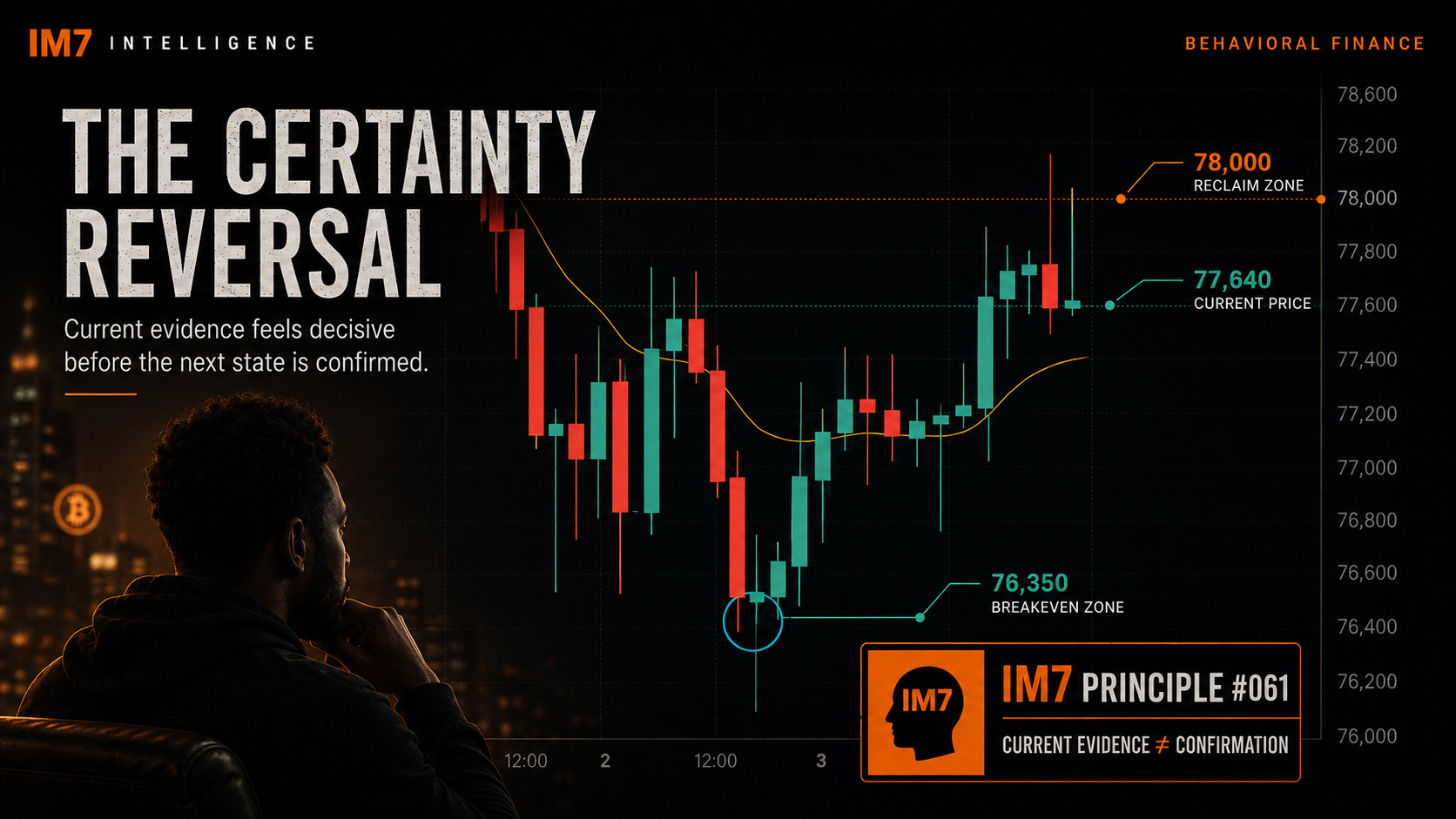
A sharp recovery often changes market psychology faster than market structure. Relief becomes confidence, confidence becomes certainty, and traders begin taking larger risks before objective confirmation arrives. The recovery doesn't erase the risk—it simply makes it harder to see.

Patience or Paralysis? When Waiting Helps—and When It Costs You
Behavioral Finance

Patience or Paralysis? When Waiting Helps—and When It Costs You

Patience is one of the most celebrated virtues in trading—but not every delay is discipline. Learn how to distinguish evidence-based patience from fear-driven hesitation before missed opportunities become expensive lessons.

Disposition Effect: Why Investors Sell Winners Too Soon and Hold Losers Too Long
Behavioral Finance

Disposition Effect: Why Investors Sell Winners Too Soon and Hold Losers Too Long

Most investors do the opposite of what long-term success requires. They sell winning investments too early, hold losing positions too long, and mistake emotional relief for disciplined investing. Learn how the Disposition Effect influences decision-making—and how to overcome it.

Commitment Bias: When Holding On Becomes More Expensive Than Letting Go
Behavioral Finance

Commitment Bias: When Holding On Becomes More Expensive Than Letting Go

Commitment Bias causes traders to defend yesterday's decisions with today's evidence. Learn why investors hold losing positions, ignore changing market conditions, and how disciplined decision frameworks help protect capital.

Stabilization Bias: Why Sideways Markets Feel Safer Than They Are
Behavioral Finance

Stabilization Bias: Why Sideways Markets Feel Safer Than They Are

After a sharp decline, markets often move sideways before making their next major decision. Traders mistake the absence of selling for the presence of buying, creating a dangerous sense of stability. Stabilization Bias explains why quiet markets frequently produce the most expensive decisions—not because the trend has changed, but because confidence has.