What counts as a Behavioral Model at IM7
Any diagram that structures a decision, describes a regime, or maps a repeating psychological trap. Models are educational and durable — they do not chase price or predict the next candle.
Behavioral models are the visual grammar of IM7. They turn abstract psychology into structured decision aids — regime maps, decision trees, psychological traps, and cycle diagrams — that an operator can consult under pressure without inventing the process from scratch.
Any diagram that structures a decision, describes a regime, or maps a repeating psychological trap. Models are educational and durable — they do not chase price or predict the next candle.
Every IM7 article that reaches a decision point references at least one Behavioral Model. The model shows the shape of the situation; the article's Recommendation shows the disciplined move inside it.
Readers are encouraged to save the models that describe conditions they meet repeatedly. Over time the models compound into a personal operating manual for how you behave when the market is expensive, cheap, quiet, or violent.
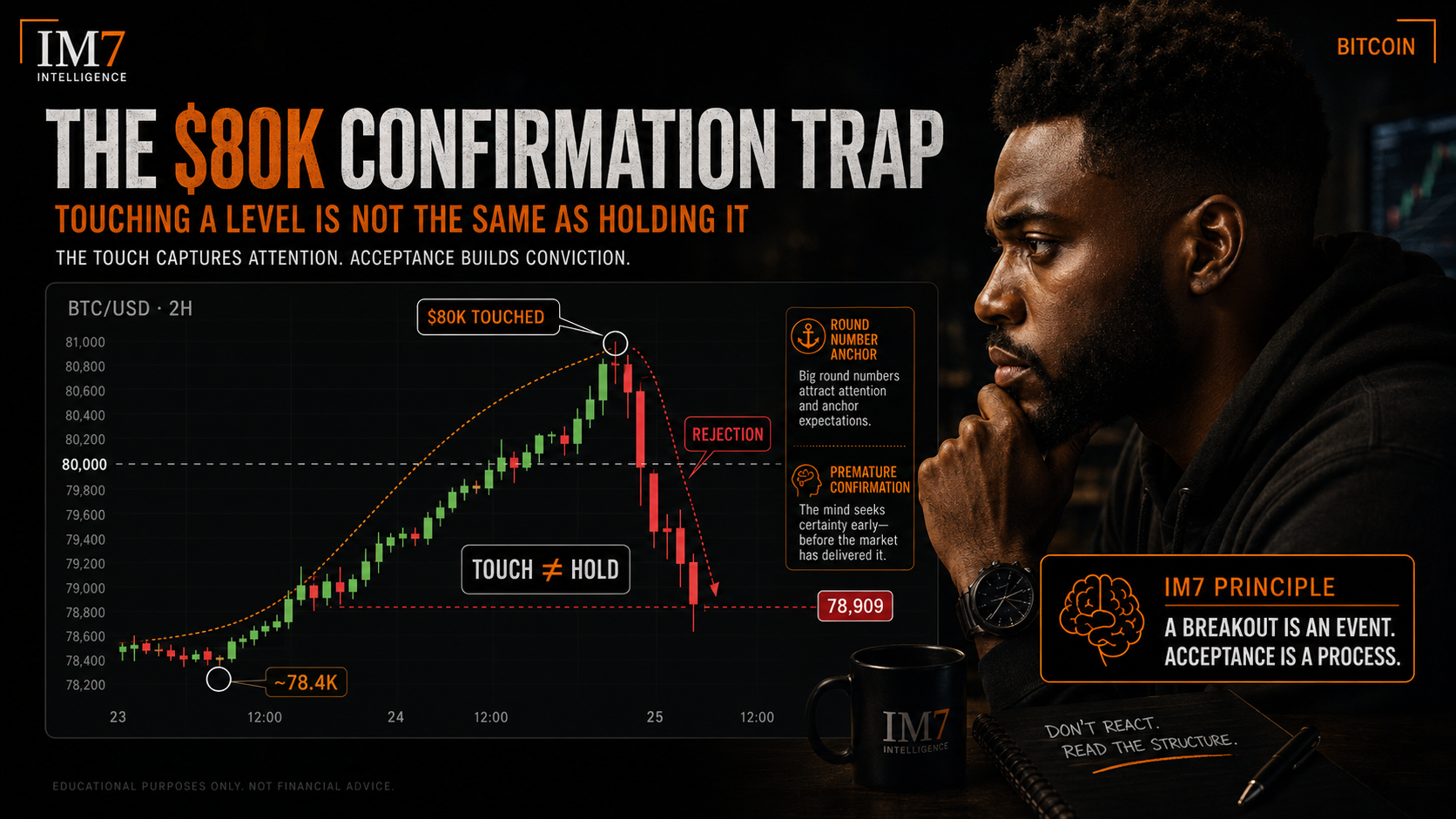
Bitcoin touched the $80K milestone, but the sharp rejection that followed exposed a behavioral trap: traders often confuse reaching a level with proving acceptance above it. A breakout is an event. Acceptance is a process.
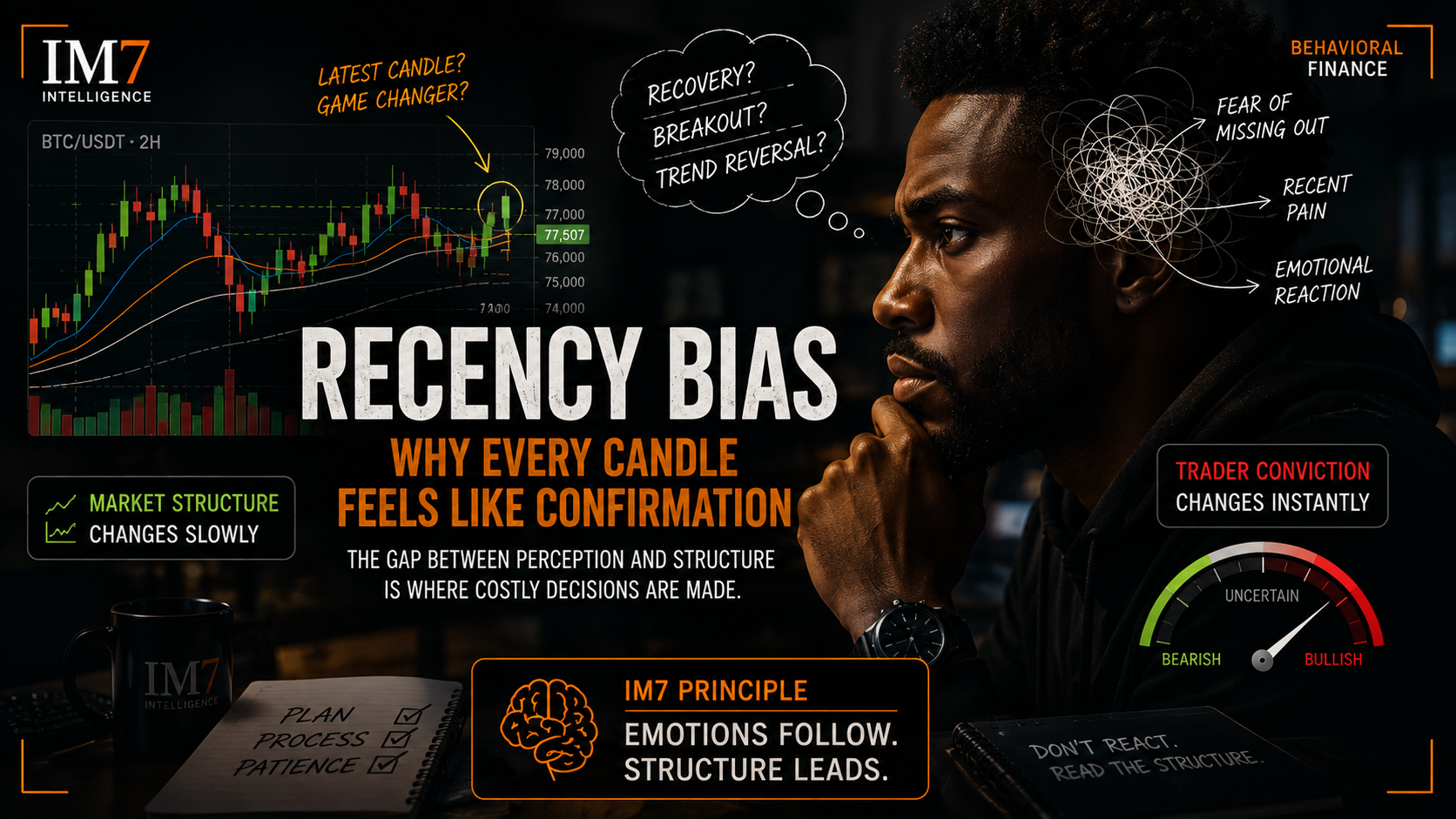
Bitcoin’s volatile swings are making every new candle feel like confirmation. But when a trader’s conviction changes faster than the market structure, recency bias may be driving the interpretation.

Bitcoin’s sharp pullback has turned yesterday’s narrative defense into a more expensive behavioral problem. When traders hold because exiting would make the loss feel real, sunk cost can replace objective reassessment.

Bitcoin’s rally had real catalysts and genuine upside strength. But as price pulls back from recent highs, traders face a different behavioral test: whether they can update a previously rewarded thesis when new evidence begins to conflict with it.

Bitcoin is exhibiting considerable upside strength. That observable momentum can create psychological pressure for traders, especially when a strong move begins to feel like permission to loosen entry standards. The critical distinction is between acknowledging market strength and allowing that strength to dictate execution quality.

A recent Bitcoin candle surged from below $70,000 to above $71,000 and visually dominated the surrounding chart. Large moves like this can become psychologically dominant, increasing salience, urgency, and the temptation to mistake visual magnitude for confirmation.

When a rushed Bitcoin entry makes money, the profitable outcome can reinforce the wrong lesson. Outcome bias can turn an impulsive decision into a behavior the trader becomes more willing to repeat—even when the original process was weak.

Regulatory progress for digital assets is visible through agency actions. Yet, market participants often conflate this progress with an enduring resolution. This behavioral dynamic creates a perception of settled clarity, even as foundational legal and political challenges persist. Understanding this distinction is crucial for navigating evolving market structures.
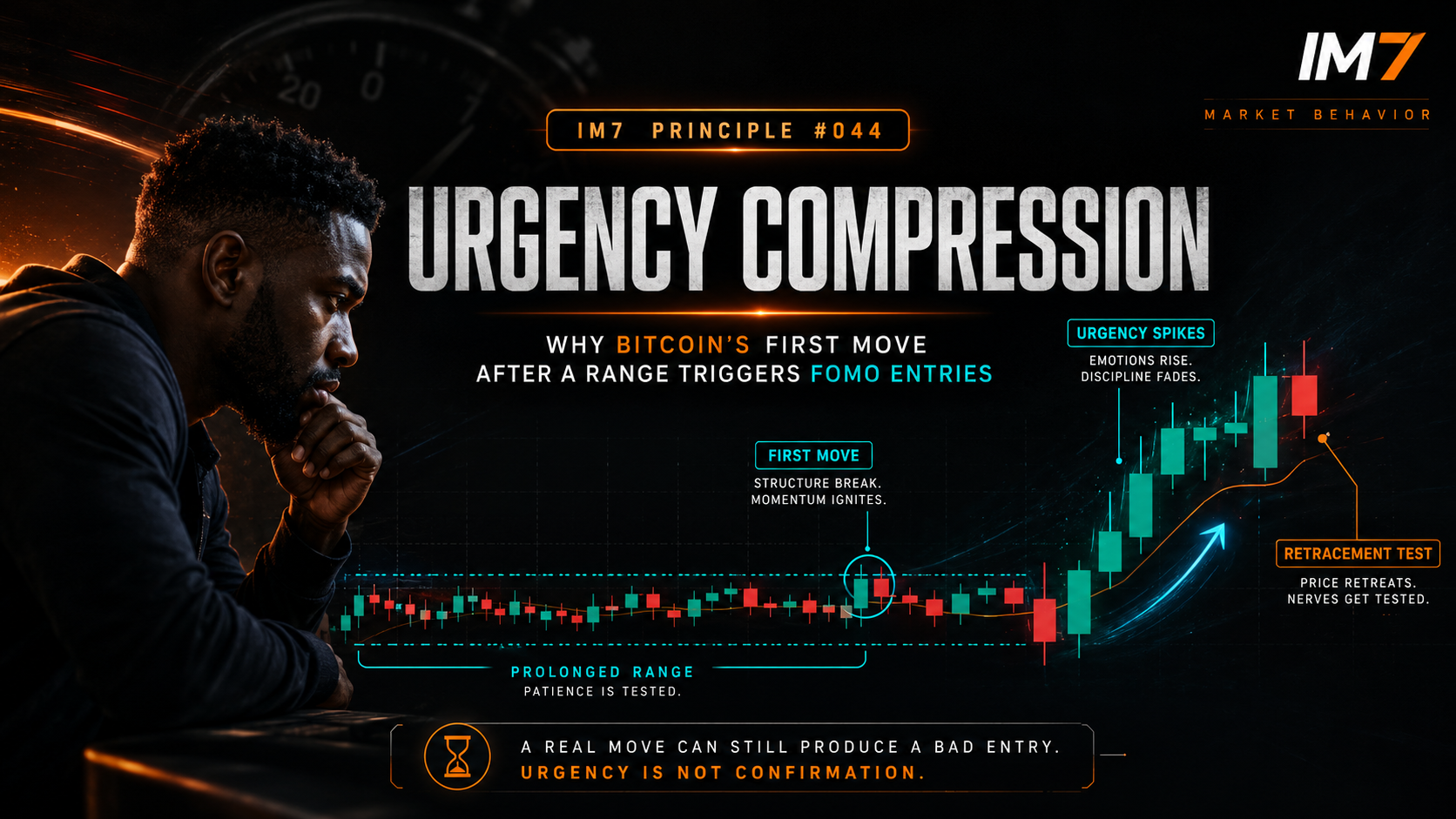
After weeks of consolidation, a few green Bitcoin candles can make waiting feel unbearable. The move may be real, but urgency can still turn the first available entry into a poor one. A real move does not automatically make the first entry a good entry.
The academic tradition behind IM7 — from Kahneman and Thaler to the biases that quietly govern every crypto cycle.
How fear, greed, and herd behavior shape every Bitcoin cycle. The pillar page for market psychology.
The full IM7 framework for reading Bitcoin sentiment — indicators, tape, positioning, and behavior.
The working vocabulary of behavioral finance — Anchoring, Loss Aversion, Confirmation Bias, and more.
One clear behavioral read before the open — regime, sentiment, liquidity, signal.
Long-form autopsies of specific cycles, crashes, and euphoria phases studied through the IM7 framework.