#Trader Psychology
34 articles on Trader Psychology — behavioral finance and market psychology from IM7 Intelligence.

Bitcoin Traders Hit the Gas and Bought Crash Insurance
Bitcoin rejected $84K, dropped toward $82.3K, and bounced back near $83K. Meanwhile, a derivatives snapshot showed traders adding leveraged exposure as demand for downside protection increased. IM7 Intelligence examines the Conviction–Insurance Split—and why bullish positioning doesn't necessarily mean confidence without fear.
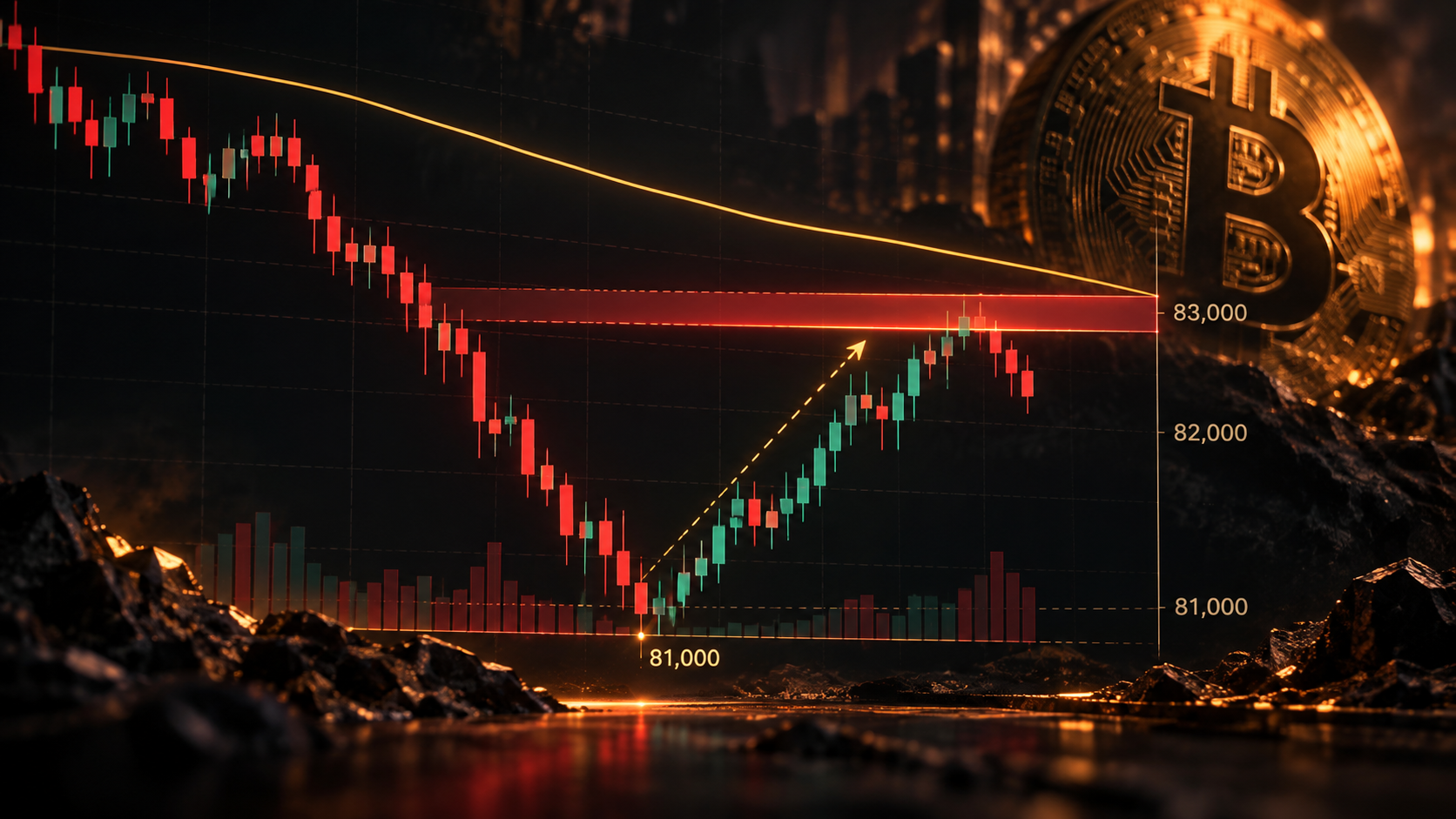
Bitcoin Bounced Again — Traders Called It Recovery
Bitcoin bounced from roughly $81.4K toward $83.2K, but the move stalled back near $82.5K before reclaiming the levels lost earlier in the week. The behavioral mistake is treating relief from selling as proof that buyers have regained control. Relief describes what stopped happening; recovery requires evidence of what buyers can actually accomplish.
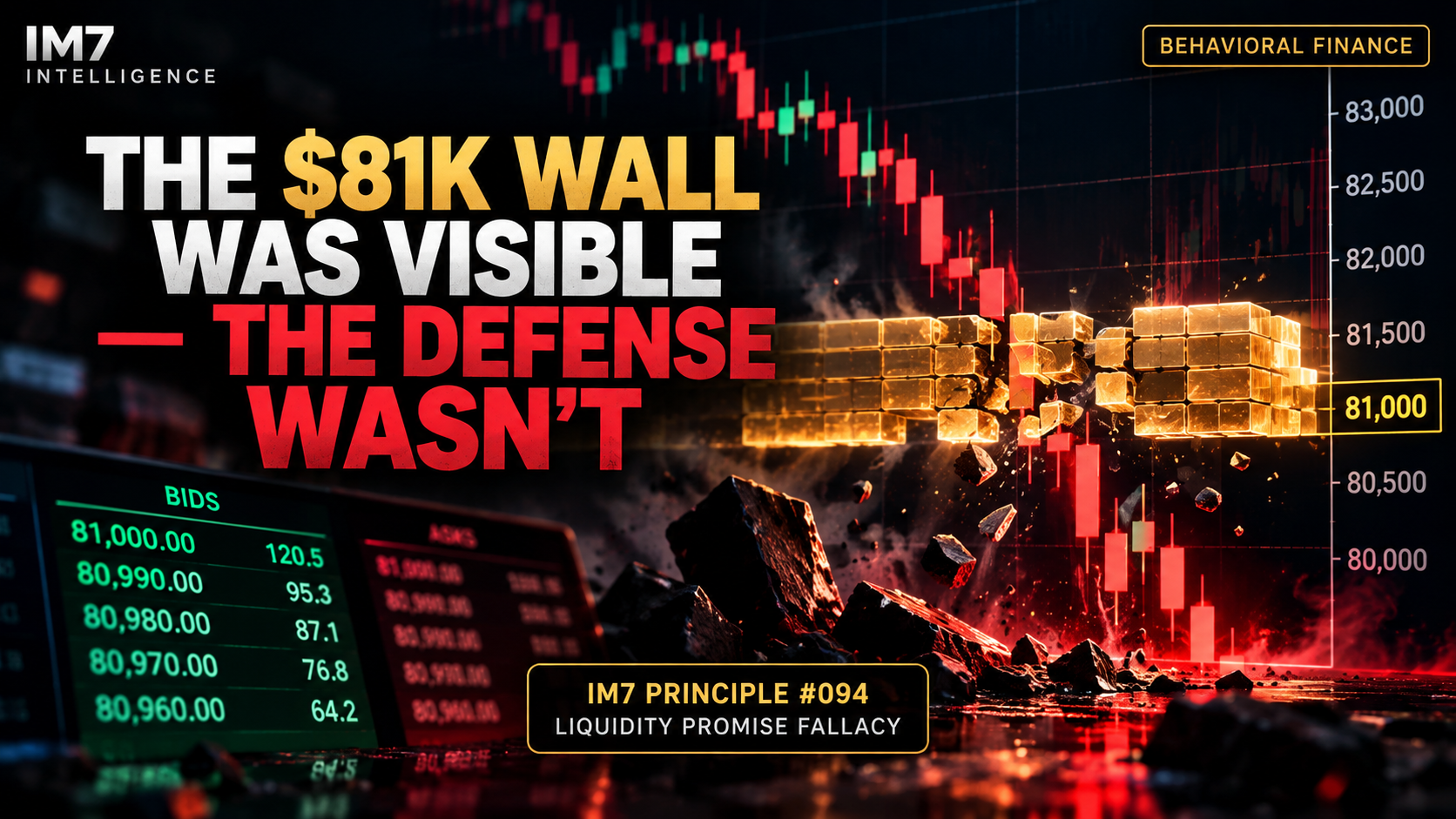
Bitcoin's $81K Buy Wall Looked Safe — Until Price Reached It
Bitcoin traded through the highly visible $81K bid wall, exposing a common behavioral error: traders treated resting liquidity as a guaranteed defense. A visible bid can show where buyers might act, but only execution, absorption, and a sustained response reveal whether they actually took control.

Bitcoin Liquidated $550M in Longs — The Bottom Was Assumed
Bitcoin wiped out roughly $550M in long positions, yet the rebound failed to hold $84K. The liquidation removed forced sellers — but traders treated their disappearance as proof that durable buyers had arrived.

Bitcoin Breaks $80K as ETF Flows Flip Positive
Bitcoin surged through $80K as U.S. spot Bitcoin ETF flows flipped from $295.9 million of net outflows to $159.5 million of net inflows. The move matters because the evidence around price changed too: institutional demand improved while Bitcoin pushed into a new short-term range. The behavioral lesson is simple — when the evidence changes, the market story should be allowed to change with it.
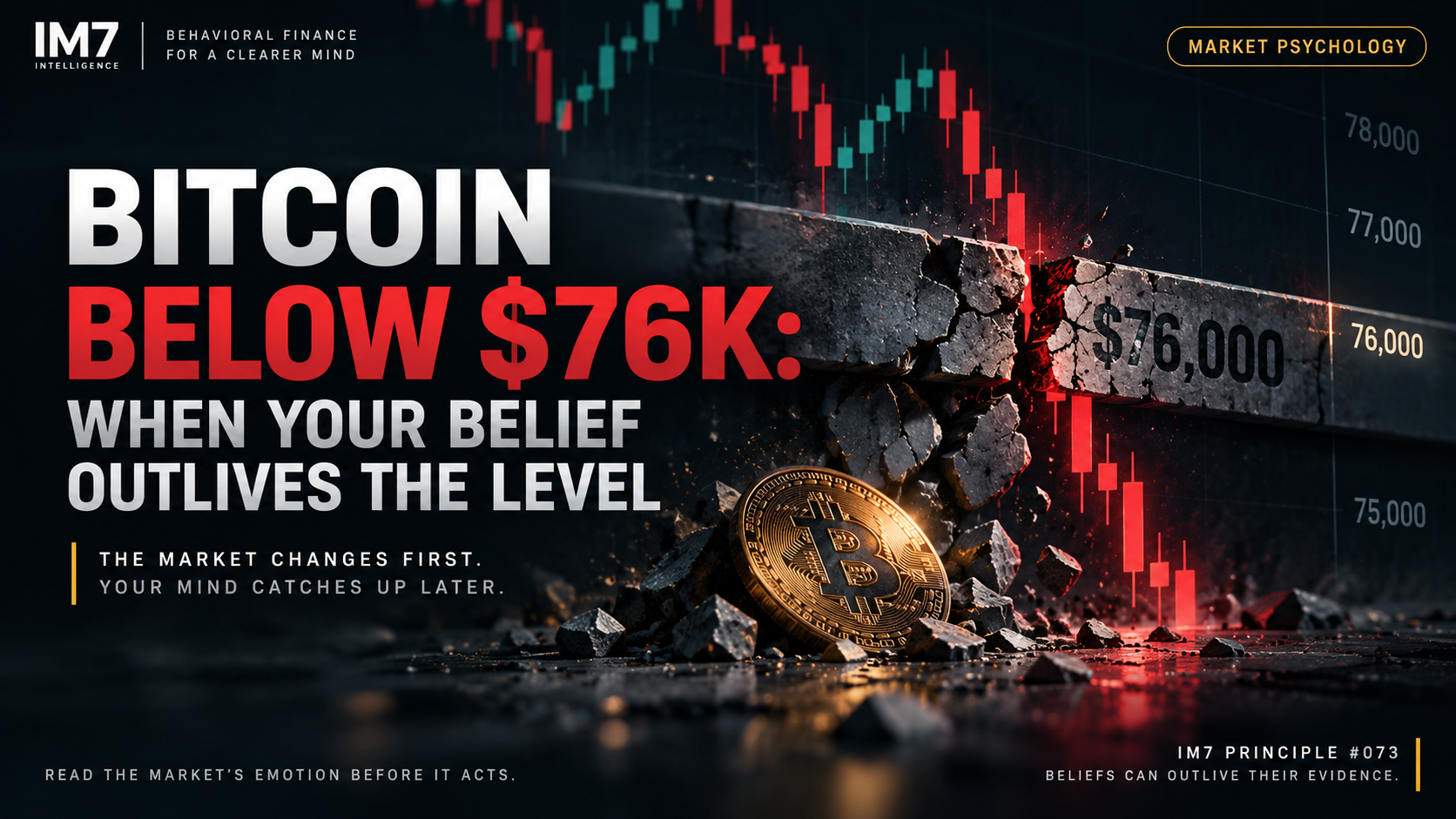
Bitcoin Below $76K: When Your Belief Outlives the Level
Bitcoin broke below the $76K area after repeated defenses had trained traders to trust the level. Now the behavioral risk changes: instead of questioning the old belief, traders may interpret every bounce as evidence that the familiar floor is returning. This is how a market thesis can survive after the evidence that created it has changed.
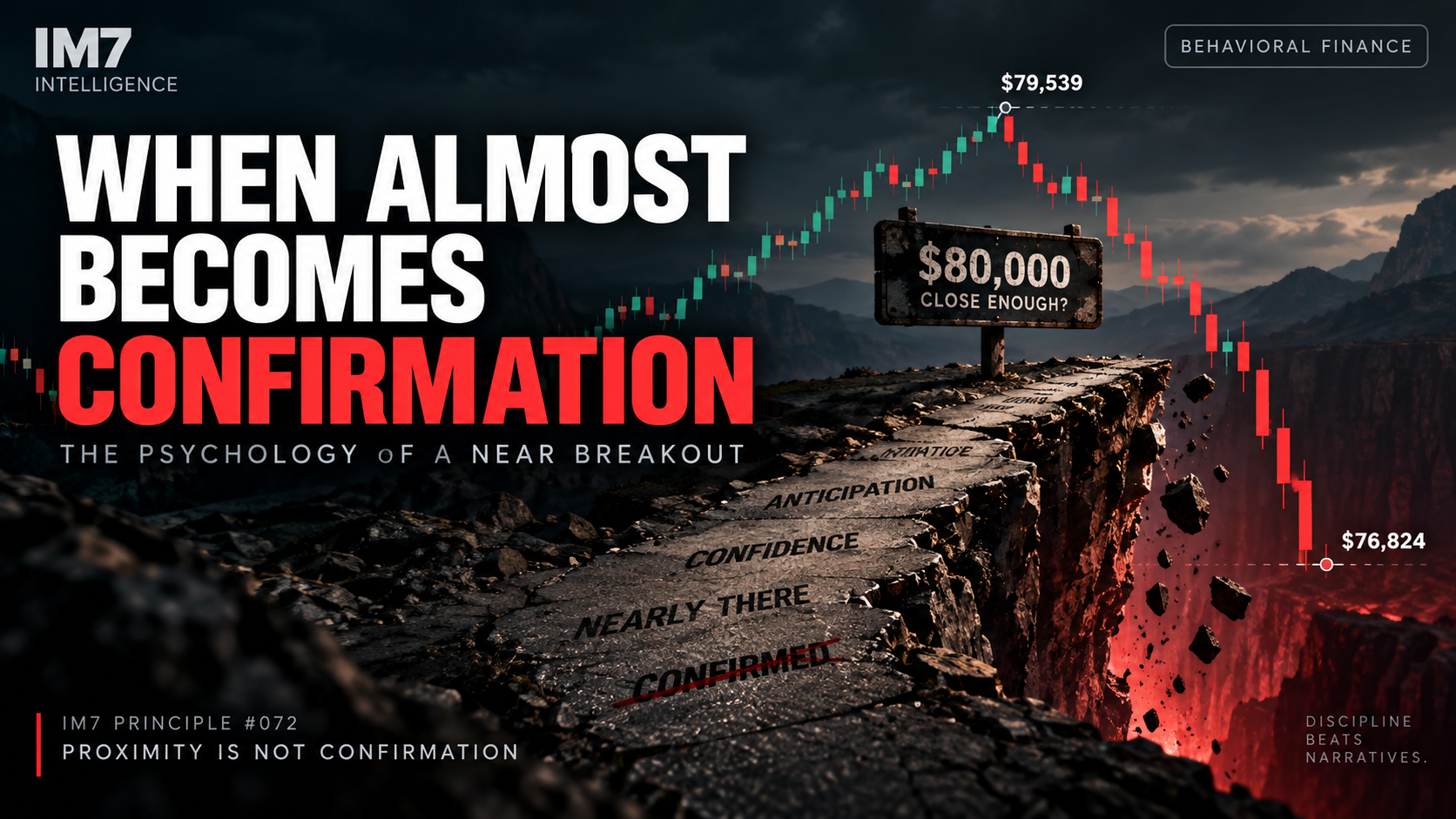
Bitcoin Near $80K: When Almost Becomes Confirmation
Bitcoin pushed toward $80K before reversing back below $77K. The behavioral mistake happened before the decline: traders began treating proximity as confirmation. When “almost there” becomes “good enough” in the mind, anticipation quietly replaces evidence.

Bitcoin Wasn’t Hacked: How the $320M Liquid Incident Triggered Category Contagion
A $320 million security incident involving Liquid Network sparked misleading “Bitcoin hack” reactions. The event reveals how category contagion causes traders to transfer fear from adjacent infrastructure to Bitcoin itself.

$1B Came In. Bitcoin Still Dropped $2K.
Nearly $1 billion in recent Bitcoin ETF inflows did not prevent a sharp $2,000 decline. The behavioral trap is the Institutional Safety Illusion: visible institutional demand can make downside feel more protected than the evidence justifies.
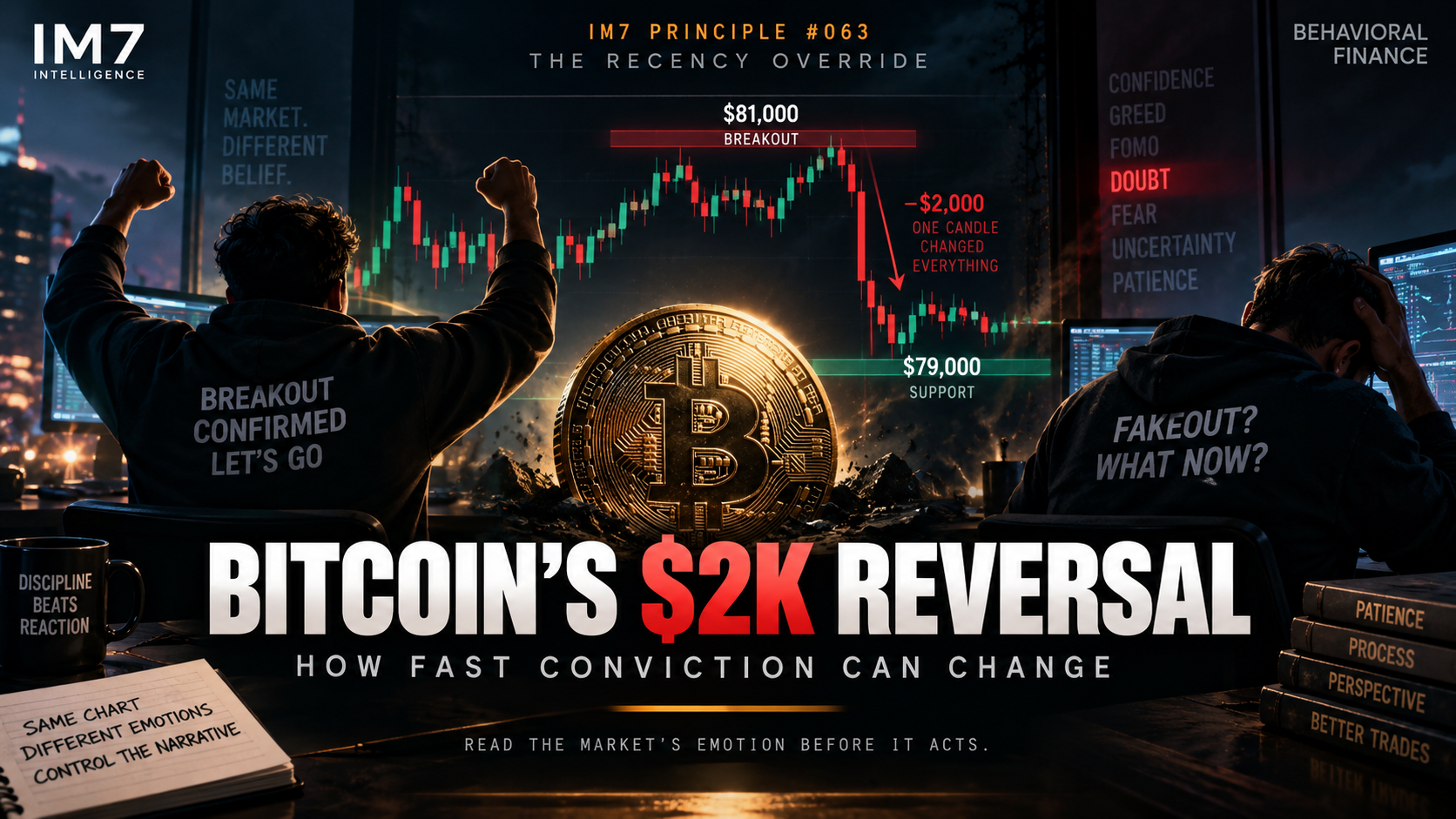
Bitcoin Changed $2,000. Trader Certainty Changed Everything.
Bitcoin went from “breakout confirmed” above $81K to “breakout failed” near $79K in less than a day. The deeper behavioral signal is how quickly one jobs report and one large red candle overrode the market thesis traders had just formed.
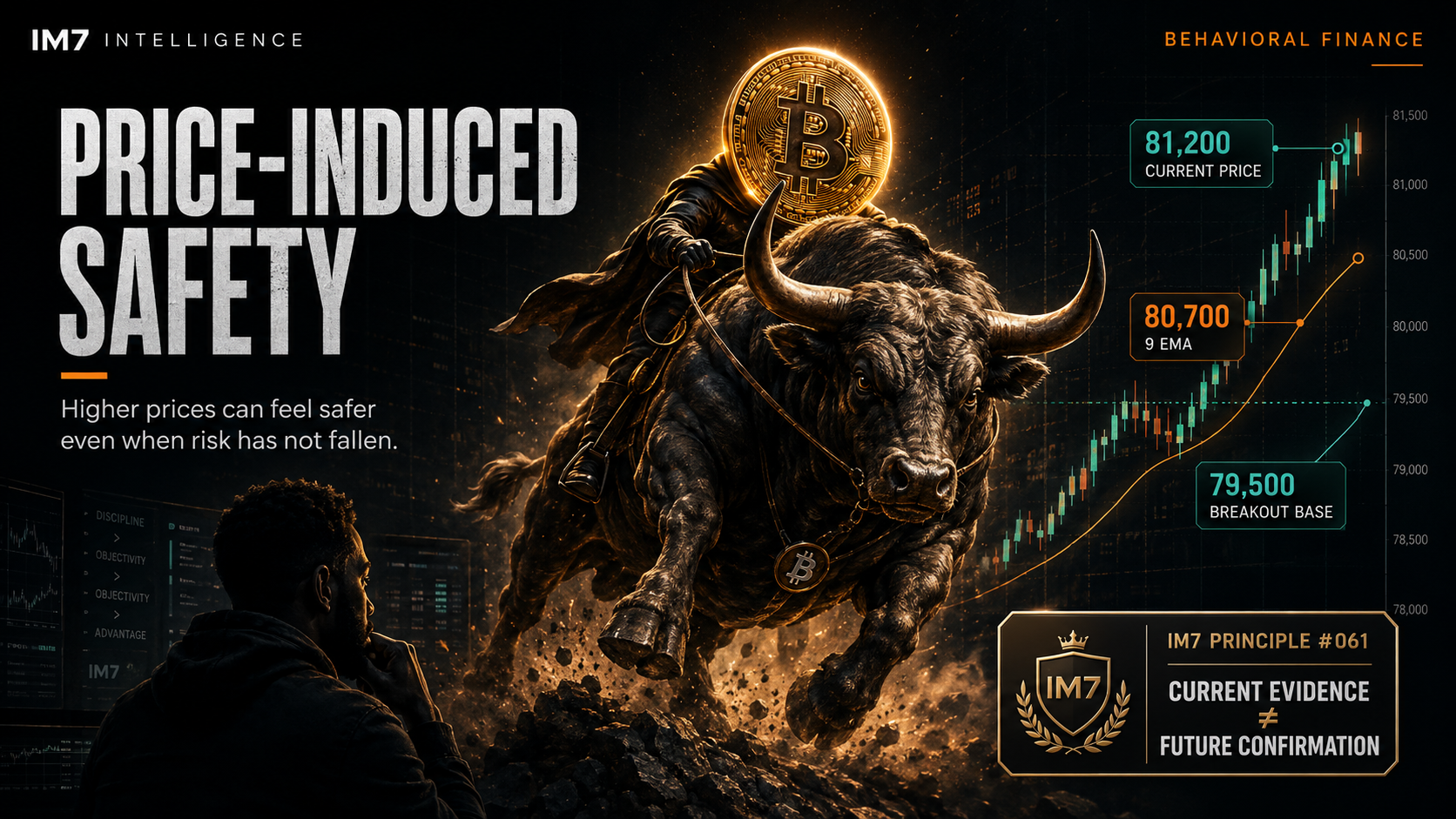
Why Bitcoin Feels Safer at $81K Than It Did at $76K
Bitcoin surged from the upper-$79K area toward $81.9K, and traders who felt uneasy near $76K now feel increasingly comfortable buying higher. The behavioral trap is Price-Induced Safety: rising price can reduce perceived risk even when actual market risk has not fallen.
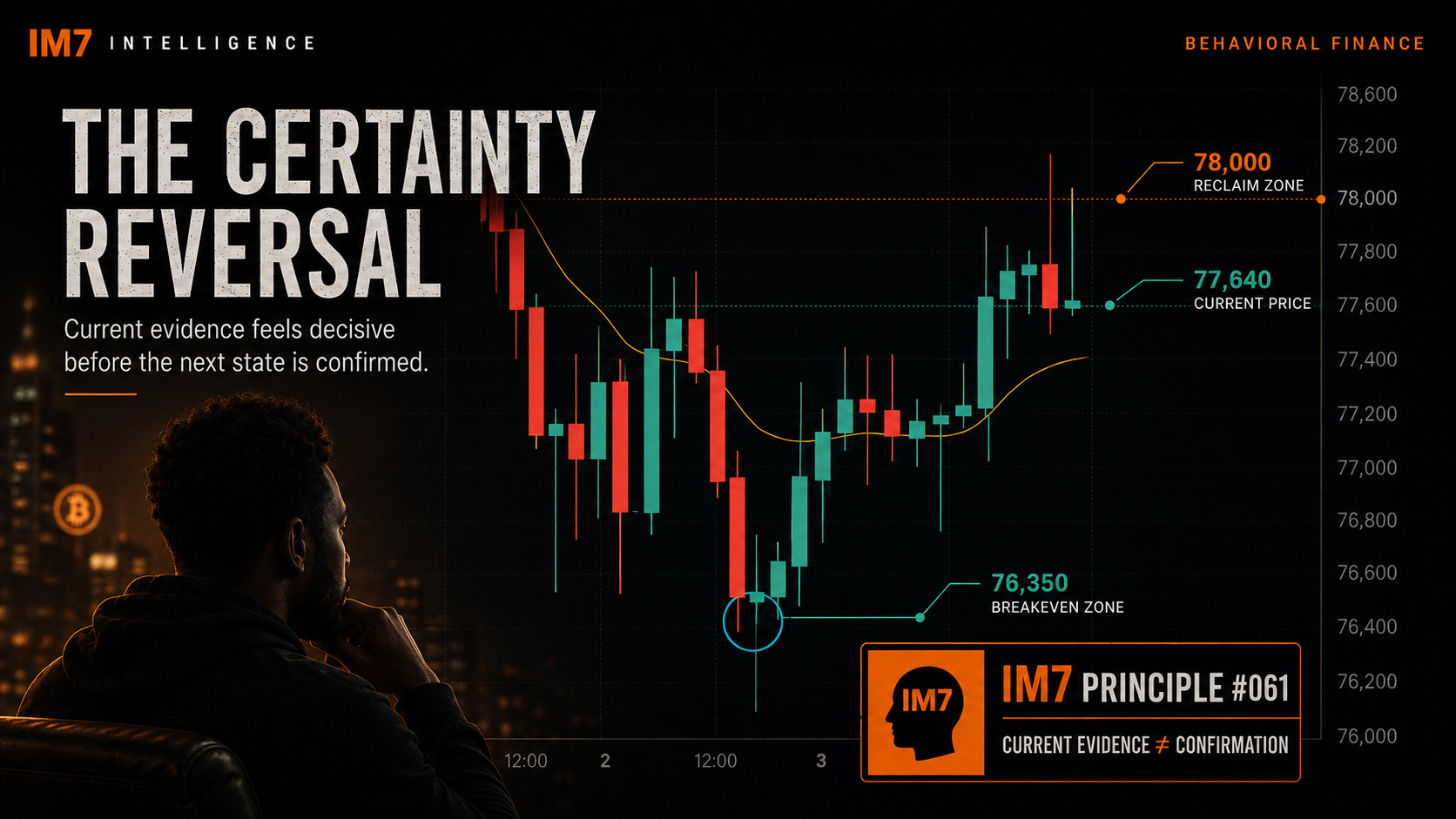
Yesterday Bears Were Certain. Today Bulls Are.
Bitcoin bounced from roughly $76.35K toward $77.64K after yesterday’s breakdown. The bigger behavioral risk is how quickly traders convert each new move into certainty about what comes next.
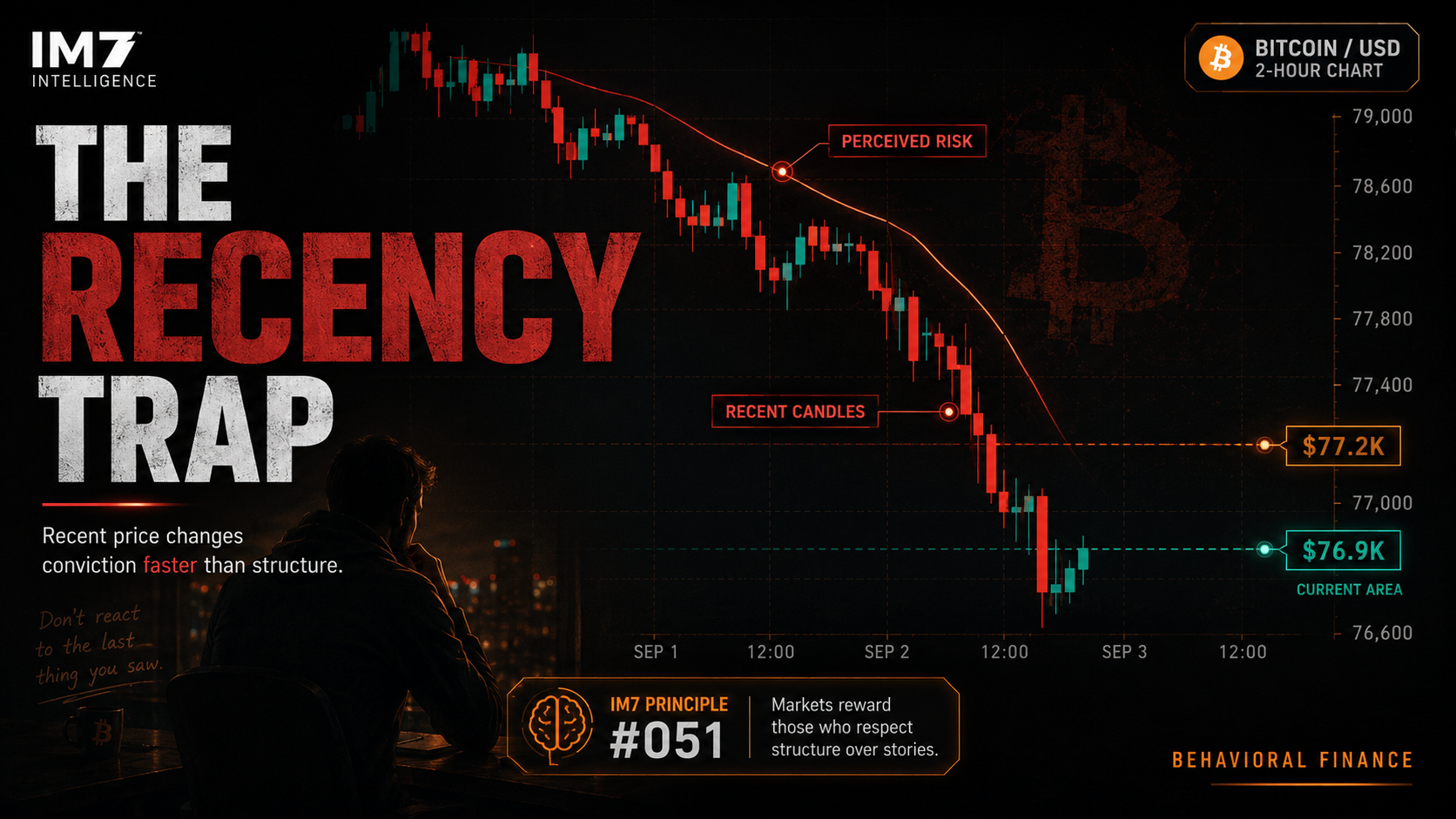
Why Bitcoin Felt Safe at $80K and Dangerous at $76K
Bitcoin fell from the upper-$78K range toward $76.9K, and trader perception shifted with it. IM7 examines the Bitcoin Recency Loop: how recent candles change perceived risk faster than market structure actually changes.
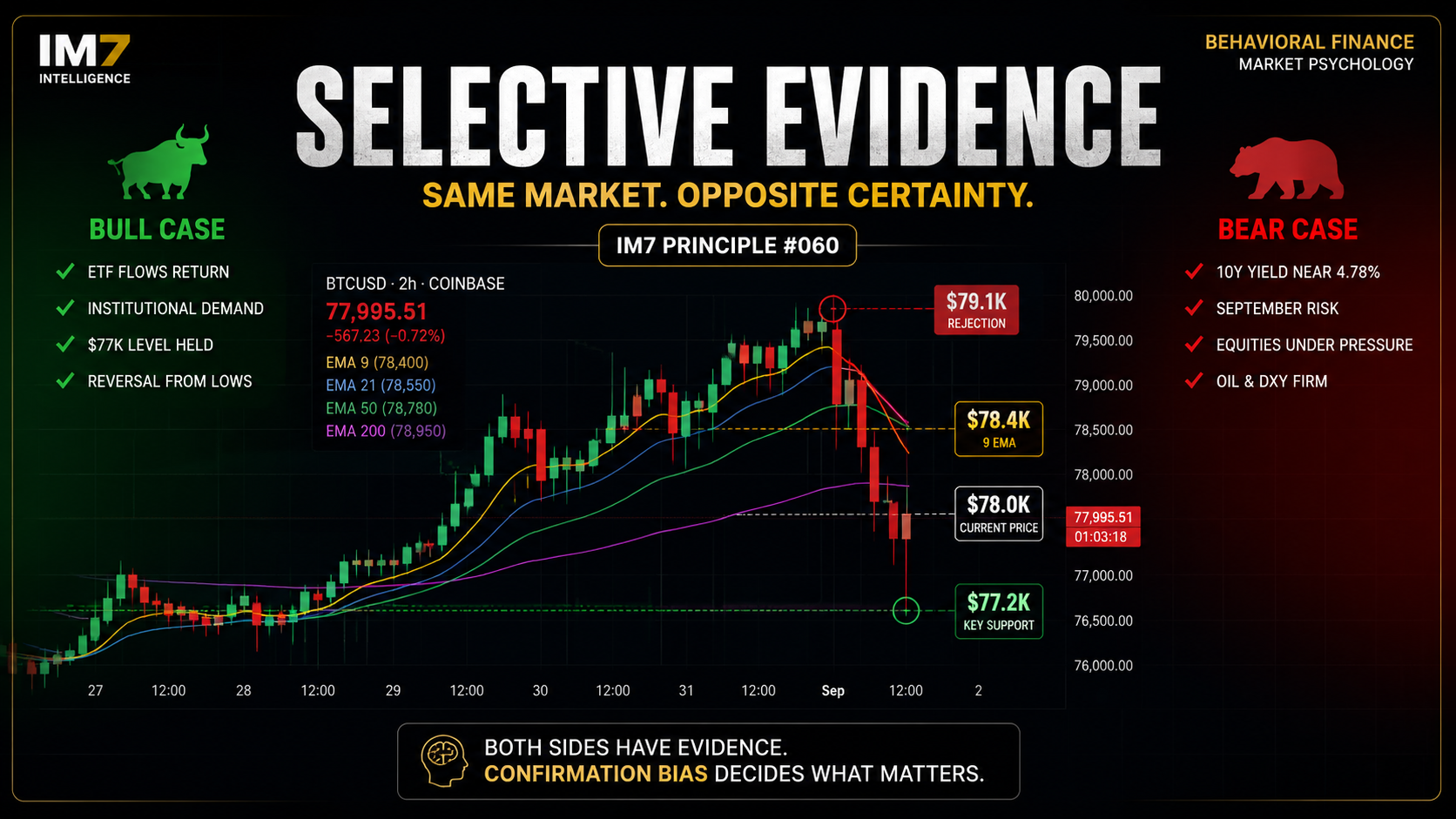
Bitcoin Gave Bulls and Bears Evidence. Both Used It Wrong.
Bitcoin is caught between bullish ETF demand and a worsening macro backdrop. The bigger behavioral risk is not choosing the wrong side — it is selectively using evidence to defend the side you already believe.
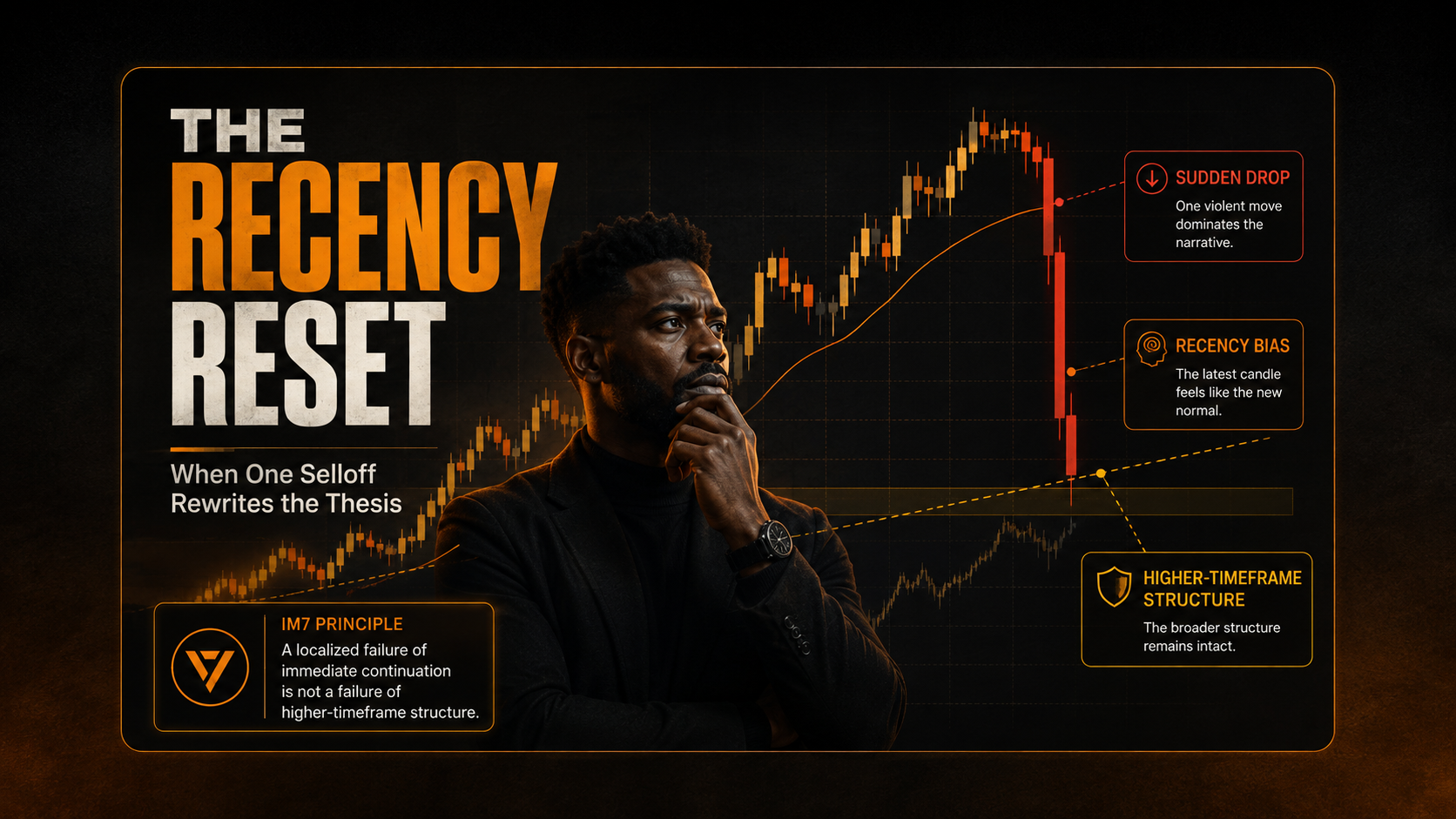
The Recency Reset: Why Bitcoin Traders Flip Their Entire Thesis After One Selloff
A single sharp adverse move can trigger a psychological shock that causes traders to abandon a higher-timeframe thesis too quickly. IM7 examines how recency bias turns one Bitcoin selloff into a complete rewrite of market conviction.
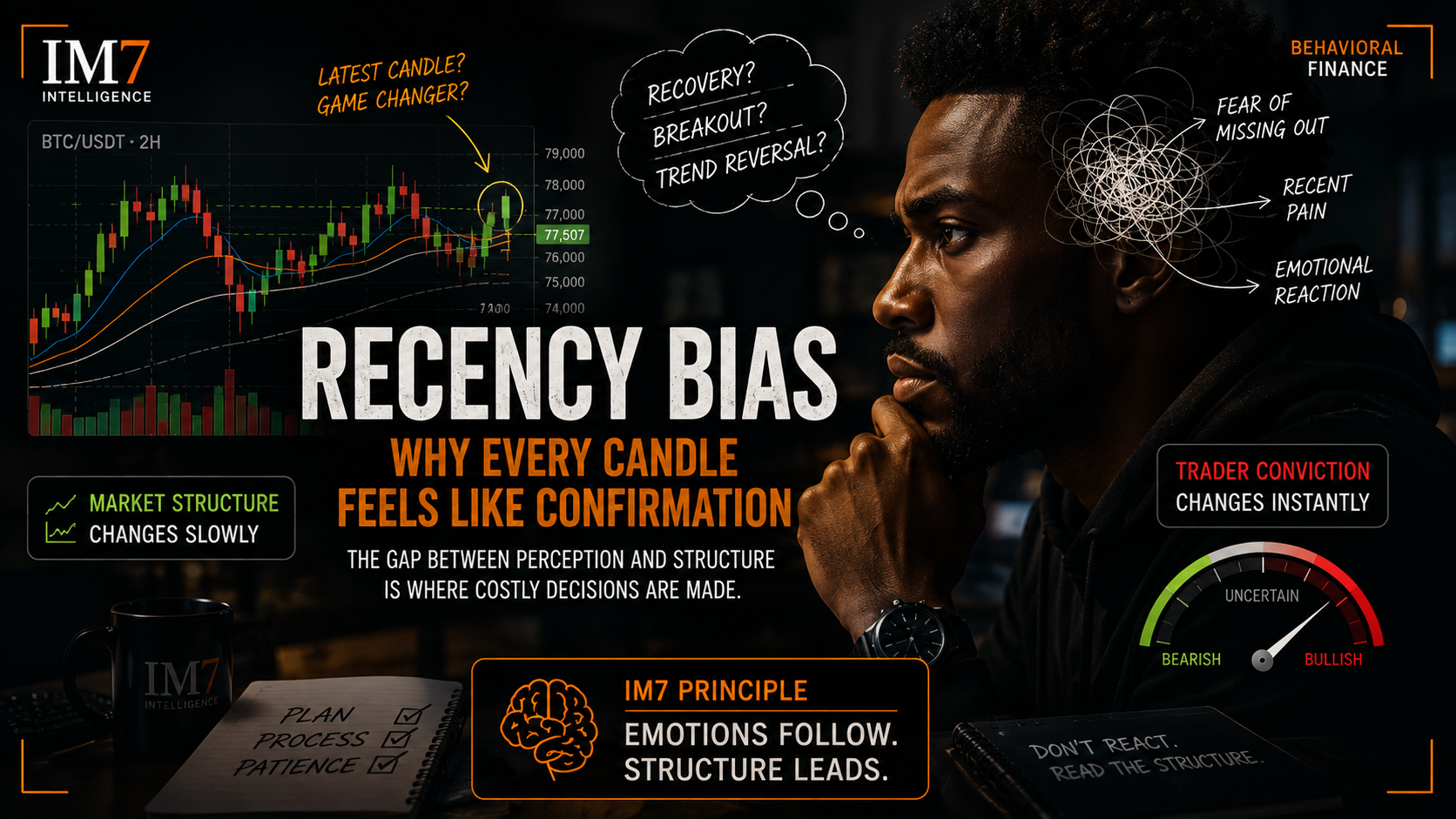
The Recency Trap: When Every Bitcoin Candle Feels Like Confirmation
Bitcoin’s volatile swings are making every new candle feel like confirmation. But when a trader’s conviction changes faster than the market structure, recency bias may be driving the interpretation.
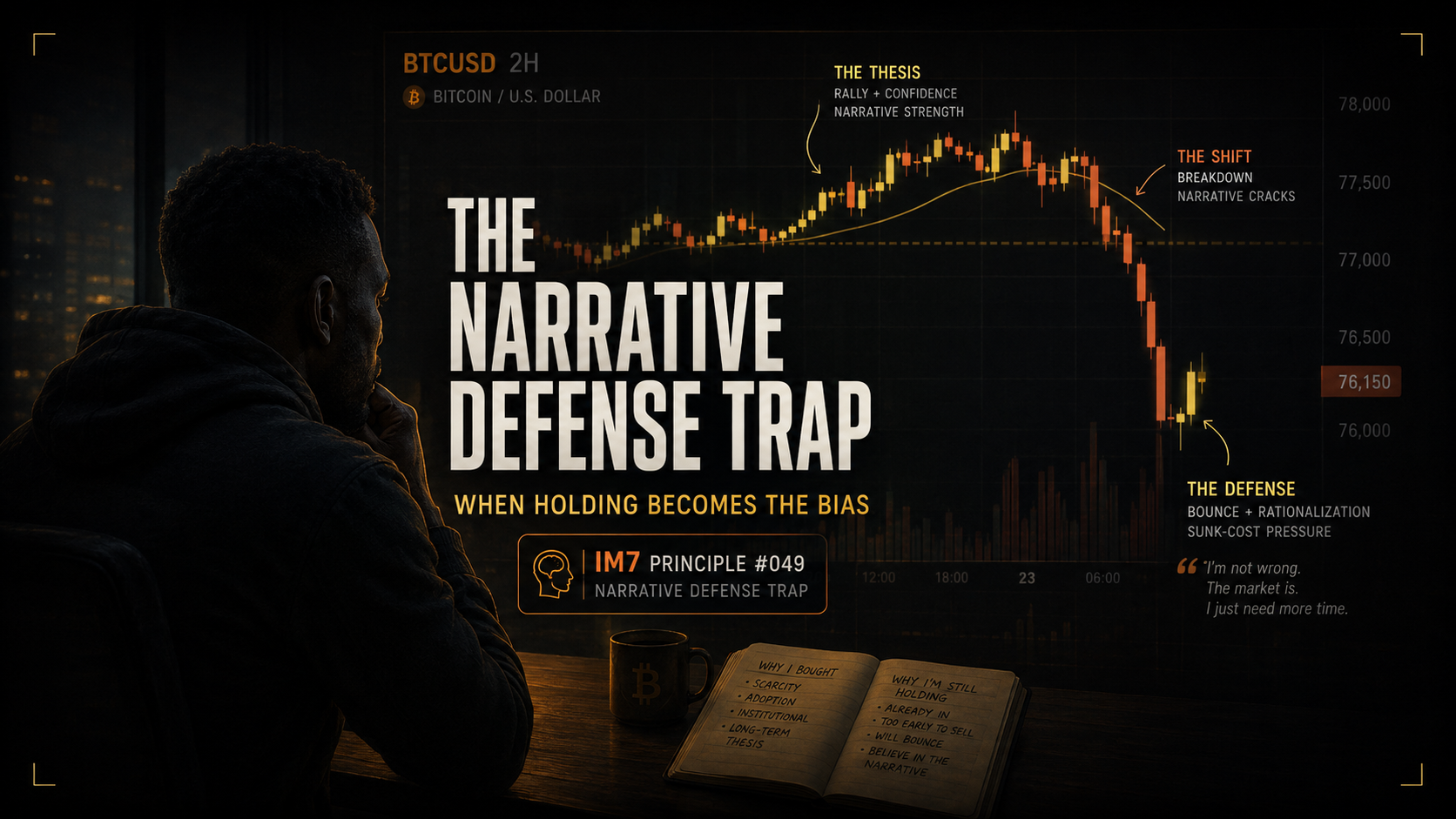
The Cost of Narrative Defense: When Holding Becomes the Bias
Bitcoin’s sharp pullback has turned yesterday’s narrative defense into a more expensive behavioral problem. When traders hold because exiting would make the loss feel real, sunk cost can replace objective reassessment.
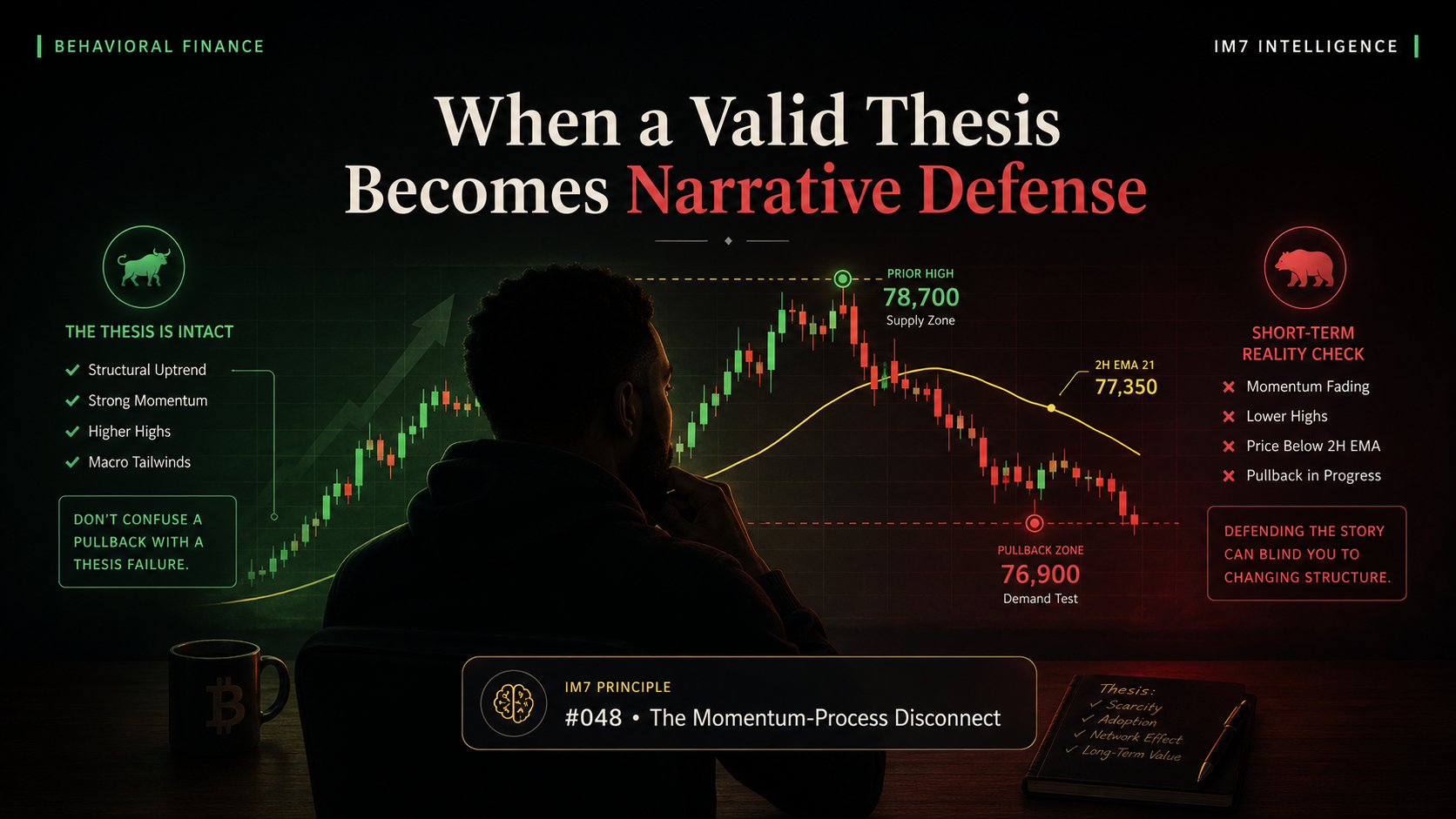
Yesterday’s Rally Was Real — Today’s Evidence Is Different
Bitcoin’s rally had real catalysts and genuine upside strength. But as price pulls back from recent highs, traders face a different behavioral test: whether they can update a previously rewarded thesis when new evidence begins to conflict with it.
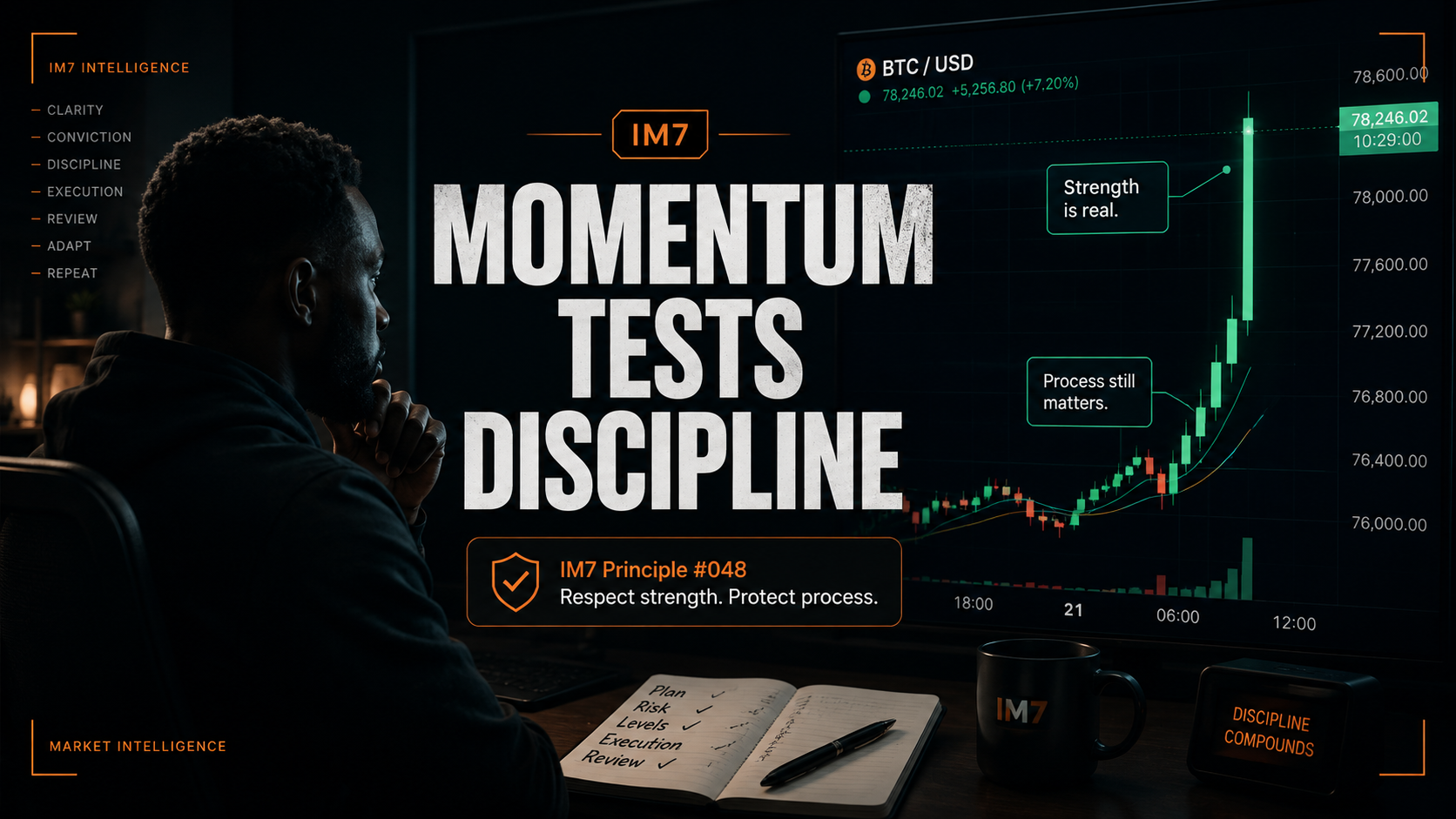
Bitcoin's Strength: When Momentum Tests Process Discipline
Bitcoin is exhibiting considerable upside strength. That observable momentum can create psychological pressure for traders, especially when a strong move begins to feel like permission to loosen entry standards. The critical distinction is between acknowledging market strength and allowing that strength to dictate execution quality.
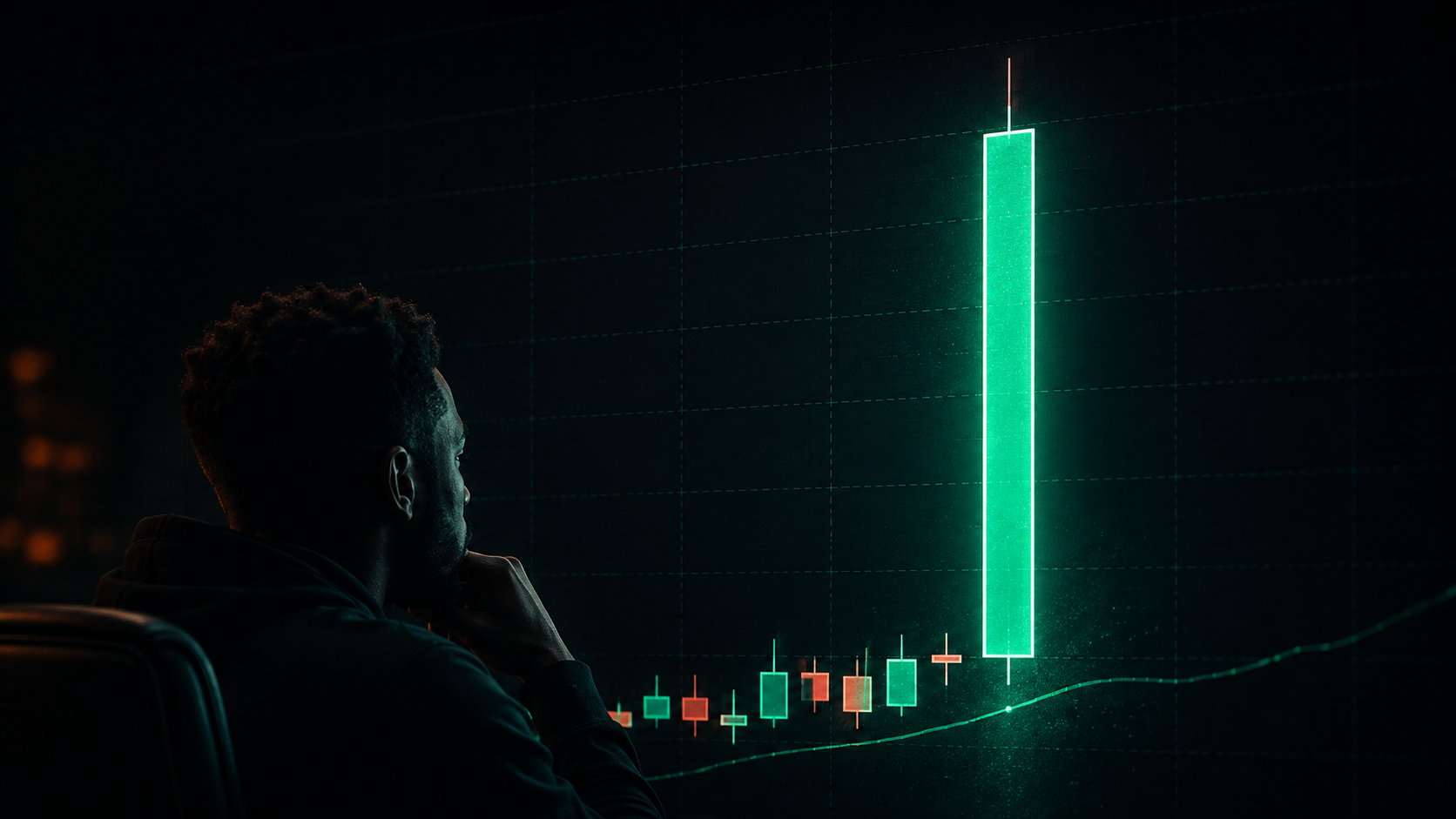
The Salience Trap: Why One Giant Bitcoin Candle Feels Like Certainty
A recent Bitcoin candle surged from below $70,000 to above $71,000 and visually dominated the surrounding chart. Large moves like this can become psychologically dominant, increasing salience, urgency, and the temptation to mistake visual magnitude for confirmation.
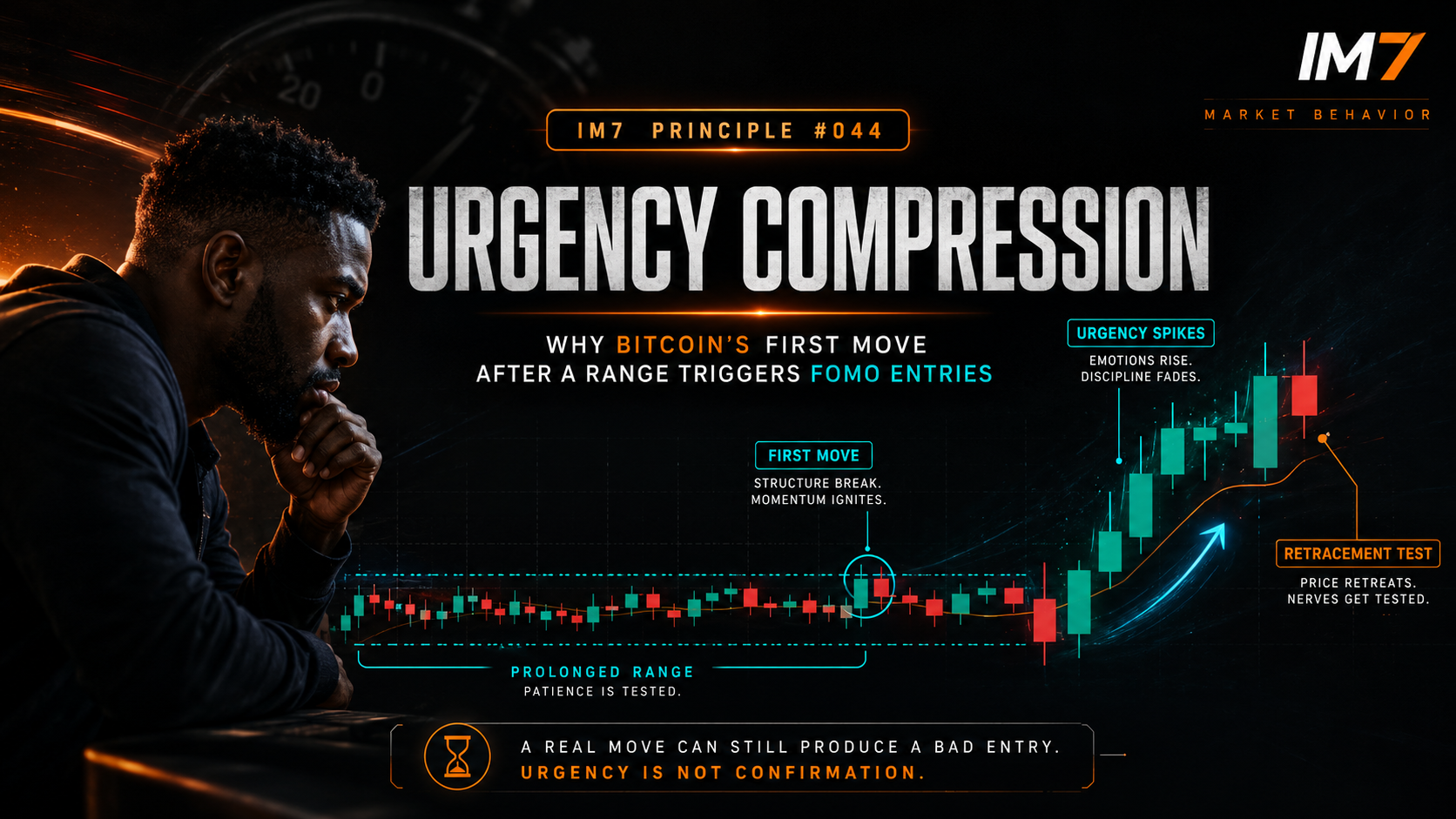
Urgency Compression: Why Bitcoin’s First Move After a Range Triggers FOMO Entries
After weeks of consolidation, a few green Bitcoin candles can make waiting feel unbearable. The move may be real, but urgency can still turn the first available entry into a poor one. A real move does not automatically make the first entry a good entry.
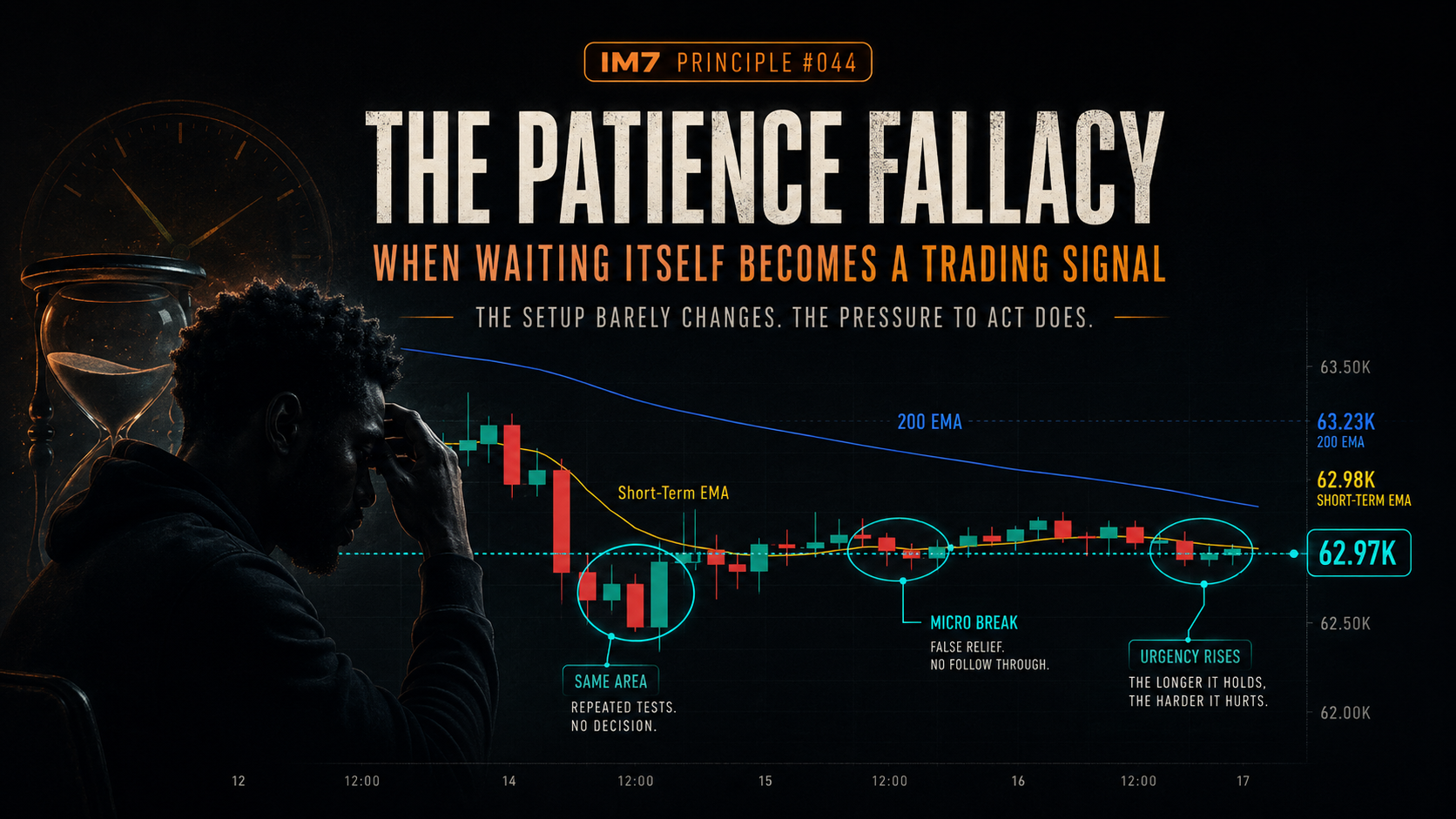
The Patience Fallacy: When Waiting Itself Becomes a Trading Signal
Week one: I’ll wait for confirmation. Week two: It has to move soon. Week three: That candle looks like a signal. The chart barely changed, but the urgency did. Prolonged Bitcoin consolidation can make waiting feel like evidence—and boredom feel like a trading signal.
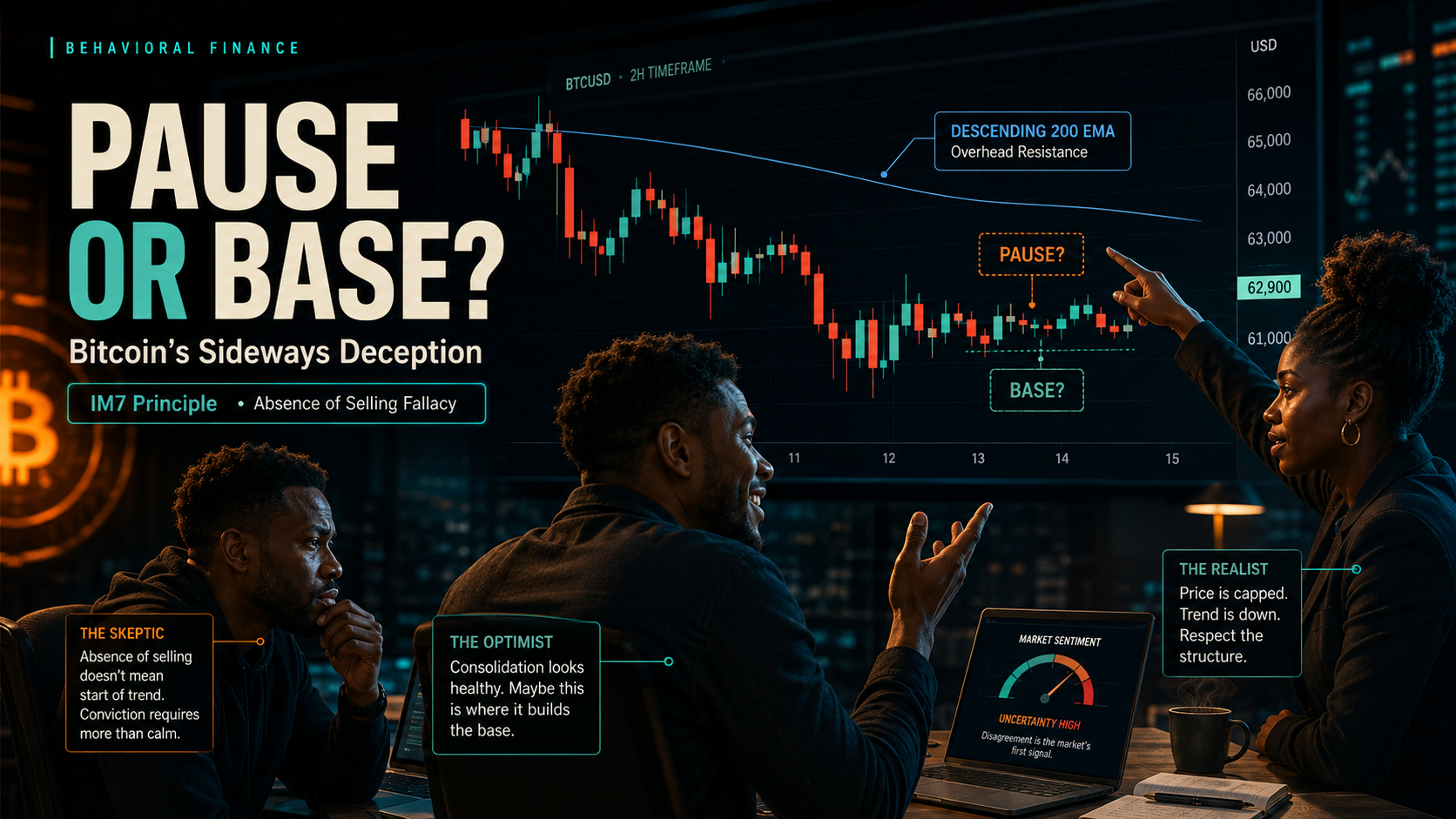
Bitcoin's Sideways Deception: Why a Pause Feels Like a Base
After a recent decline, Bitcoin stabilized near $62.9K, creating the appearance of a developing base. But the absence of aggressive selling is not the same as evidence that buyers have taken control. Sideways price action can create premature confidence before the market has actually confirmed direction.
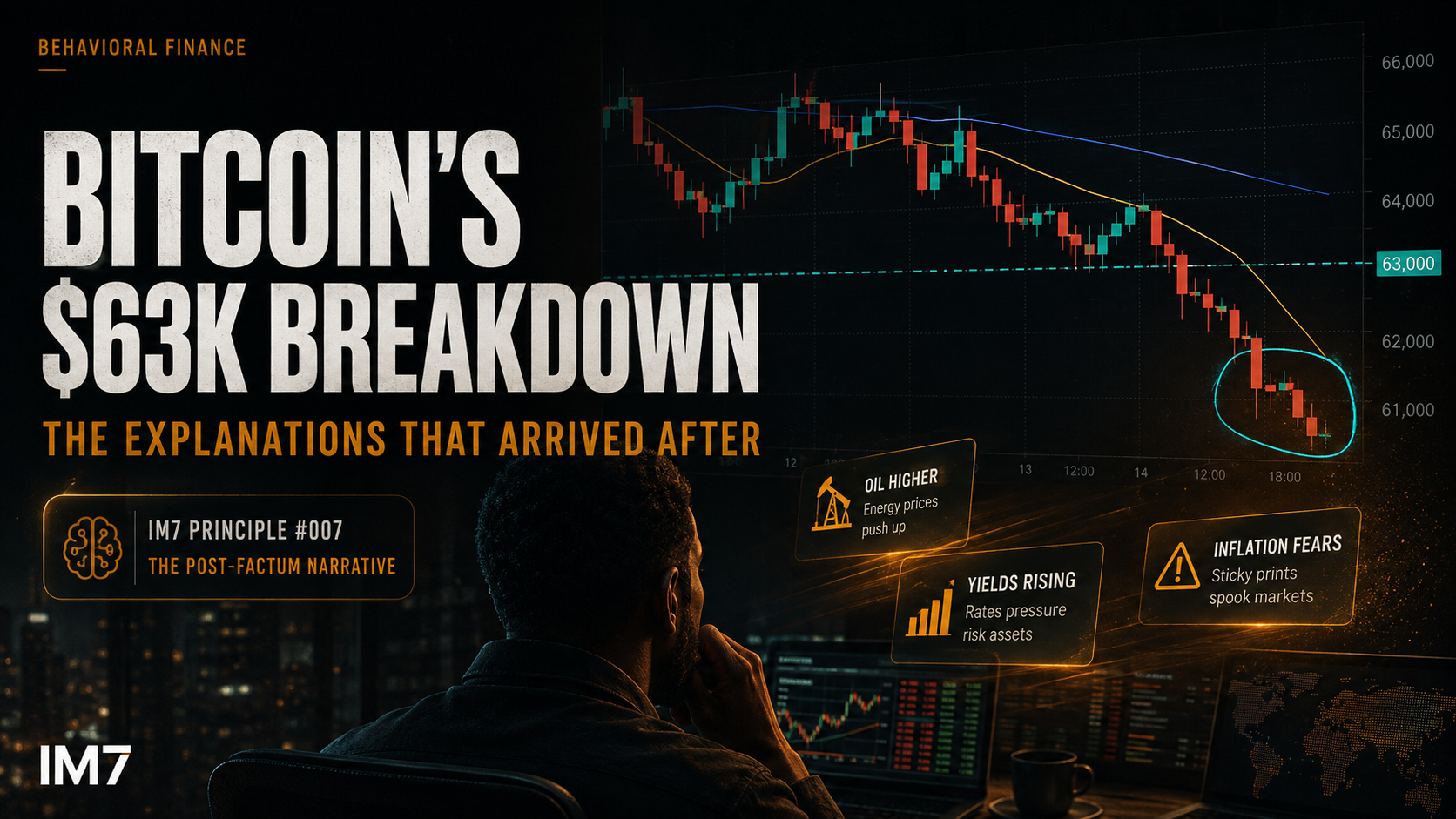
Bitcoin’s $63K Breakdown: Why the Explanations Came After
Bitcoin’s move below $63,000 triggered an immediate wave of explanations — macro pressure, yields, oil, market structure. The behavioral risk is that once the outcome is known, those explanations can feel more obvious and predictive than they actually were beforehand. The real test is separating post-move understanding from genuine pre-move edge.
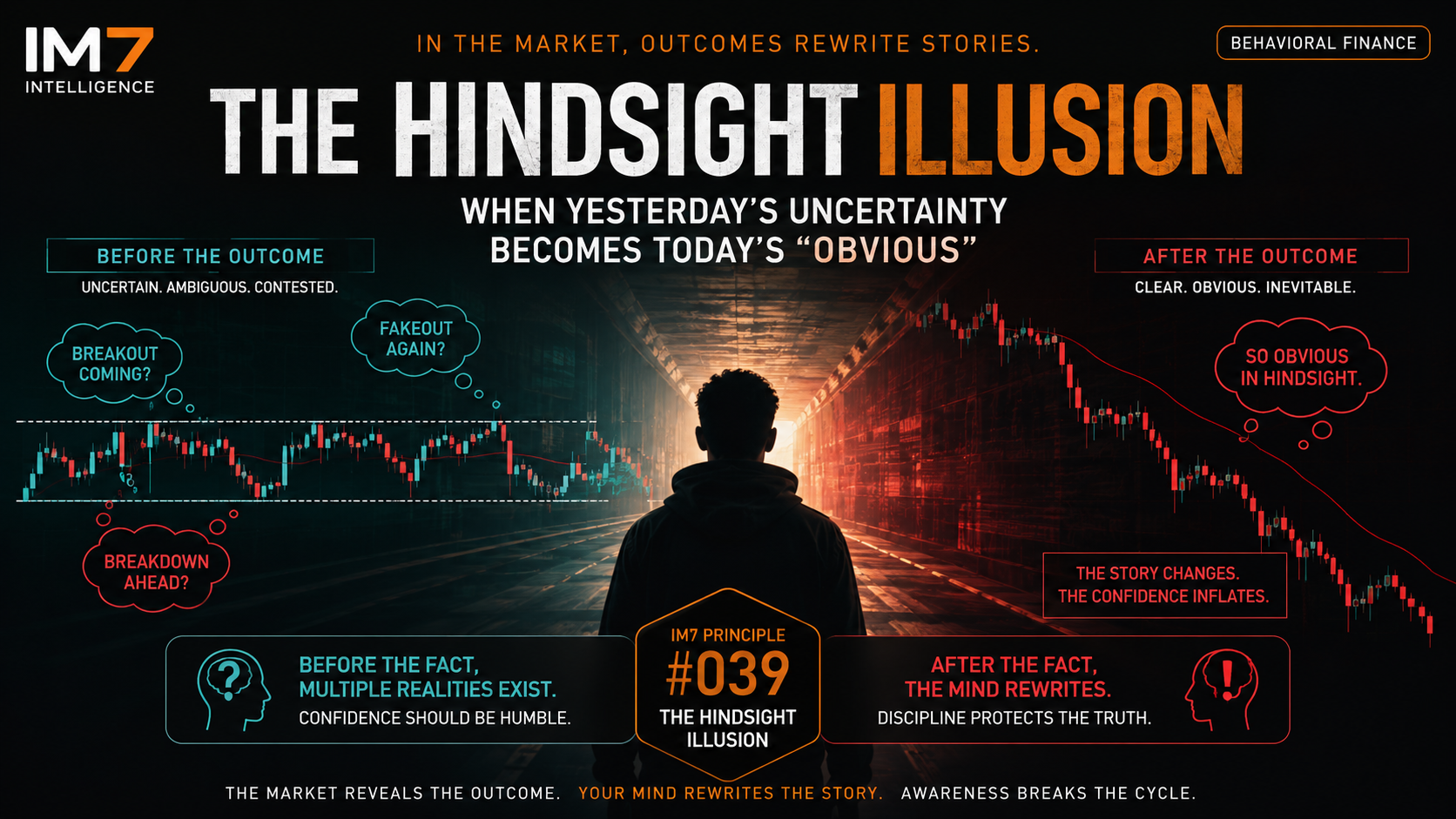
When the Range Breaks: Why Bitcoin Suddenly Looks Obvious
Bitcoin’s range looked ambiguous—until it broke. Then the warning signs suddenly seemed obvious. That shift is hindsight bias: once the outcome is known, traders rewrite uncertainty as predictability and mistake being right about the result for having had better evidence.

When Conviction Stops Curiosity: Belief Perseverance in Trading
A conviction, once formed, often feels like certainty. Traders stop gathering new evidence because the market appears to validate their original thesis. The real danger isn't developing conviction—it's allowing conviction to replace objective inquiry when conditions begin to change.

When Relief Becomes Expensive: Why One Candle Isn't Confirmation
A singular, strong market movement frequently evokes immediate emotional relief, often preceding any genuine structural confirmation. Traders commonly conflate this feeling of being correct with objective evidence of a sustained trend. ThiOne strong market move can make traders feel right long before the market confirms they are. Relief arrives instantly. Confirmation takes time. This article explores why confusing those two emotions often leads to expensive trading decisions.s critical distinction between instantaneous relief and time-dependent confirmation holds profound implications for decision-making.

When Waiting Becomes the Decision
Most losses don't begin with panic—they begin with waiting. This article explores why uncertainty paralysis keeps traders frozen while markets quietly evolve, and how delaying decisions often becomes a decision itself.

The Overconfidence Delusion: Why Intelligence Doesn't Protect You from Bad Decisions
Intelligence doesn't eliminate cognitive bias—it often disguises it. Overconfidence can lead even experienced investors, entrepreneurs, and professionals to underestimate risk, overestimate their knowledge, and mistake confidence for competence. Understanding this psychological trap is essential for better decisions in markets and beyond.

The Silent Erosion: How Sideways Bitcoin Markets Quietly Destroy Trader Confidence
After a strong breakout, traders often expect momentum to continue. But when Bitcoin begins moving sideways, confidence slowly gives way to doubt. This behavioral analysis explores how quiet consolidation erodes conviction, why traders mistake inactivity for safety, and how psychological biases—not price alone—shape decision-making during periods of uncertainty.

Why Most Traders Miss The Bottom: A Behavioral Finance Perspective on Market Reversals
Market bottoms are often clear in hindsight, but in real-time, they are shrouded in fear, uncertainty, and capitulation. This article explores the behavioral biases that prevent most traders from recognizing and capitalizing on these pivotal moments, using Bitcoin as a prime example. We delve into how emotional extremes create opportunities and why waiting for confirmation can lead to missing the biggest moves.

THE BREAKDOWN WAS THE TRAP.
A superficial market breakdown can often give way to a deeper psychological trap, where reinforced confidence, rather than the initial dip, becomes the true pitfall for traders. This phenomenon, particularly evident in volatile markets like Bitcoin, highlights crucial behavioral finance principles. Understanding the distinction between observation and reaction is key to navigating such complex emotional landscapes in trading.

Why Bitcoin's Biggest Rallies Create The Most Uncertainty
It's a common misconception that market clarity follows a significant price move. In reality, a strong rally, such as those often seen in Bitcoin, can paradoxically ignite greater uncertainty among traders. This article delves into the psychological underpinnings of why opportunity, once visible, frequently becomes a source of anxiety rather than assurance.

The Illusion of Certainty: Why Traders Feel Smart Again Before the Market Decides
A modest market rebound often triggers a disproportionate surge in trader confidence, a phenomenon we recently observed with Bitcoin. This article explores the psychological underpinnings of this 'false certainty' and how it can lead to vulnerability, especially after a rally, rather than during a downturn. We delve into confirmation bias and emotional decision-making, highlighting how a small price movement can be misinterpreted as definitive proof of one's foresight.