Fear
The reflex that ends cycles before logic does.
Fear compresses time horizons and outsources decisions to the crowd. In markets, it looks like capitulation, forced selling, and the sudden disappearance of bids. IM7 tracks fear as a behavioral regime — not a headline — because the conditions that produce it are readable long before the panic itself.
Most Read

When Waiting Becomes the Decision
Most losses don't begin with panic—they begin with waiting. This article explores why uncertainty paralysis keeps traders frozen while markets quietly evolve, and how delaying decisions often becomes a decision itself.
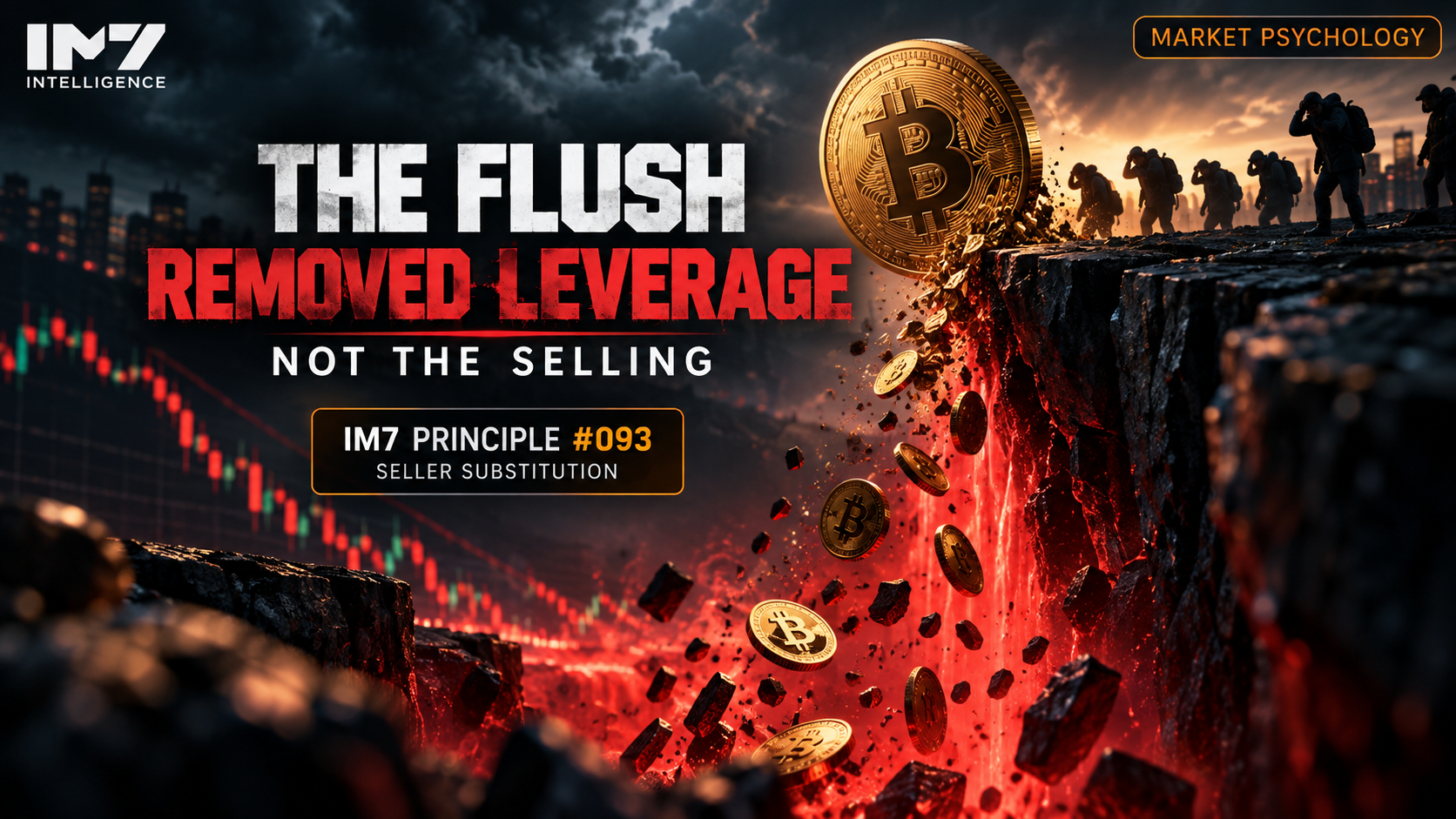
Bitcoin Liquidated $550M in Longs — The Bottom Was Assumed
Bitcoin wiped out roughly $550M in long positions, yet the rebound failed to hold $84K. The liquidation removed forced sellers — but traders treated their disappearance as proof that durable buyers had arrived.
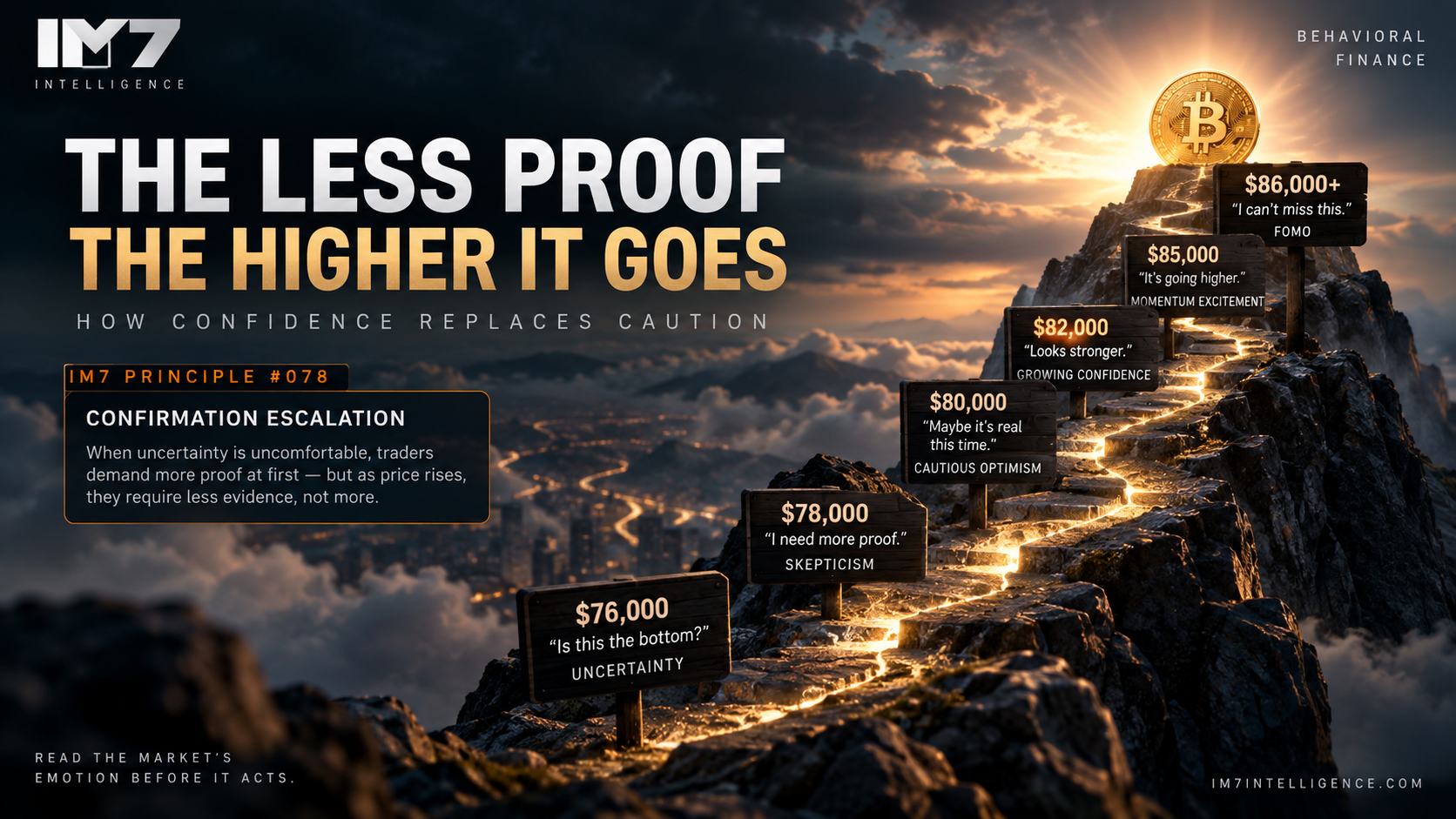
You Needed Proof at $76K. At $86K, You Stopped Asking.
Bitcoin climbed from $76K toward $86K, but something changed faster than price: traders’ standards for confirmation. The higher Bitcoin went, the less proof they demanded. That isn’t greater certainty. It’s confirmation giving way to fear of missing out.
Latest
Bitcoin Liquidated $550M in Longs — The Bottom Was Assumed
Bitcoin wiped out roughly $550M in long positions, yet the rebound failed to hold $84K. The liquidation removed forced sellers — but traders treated their disappearance as proof that durable buyers had arrived.
You Needed Proof at $76K. At $86K, You Stopped Asking.
Bitcoin climbed from $76K toward $86K, but something changed faster than price: traders’ standards for confirmation. The higher Bitcoin went, the less proof they demanded. That isn’t greater certainty. It’s confirmation giving way to fear of missing out.
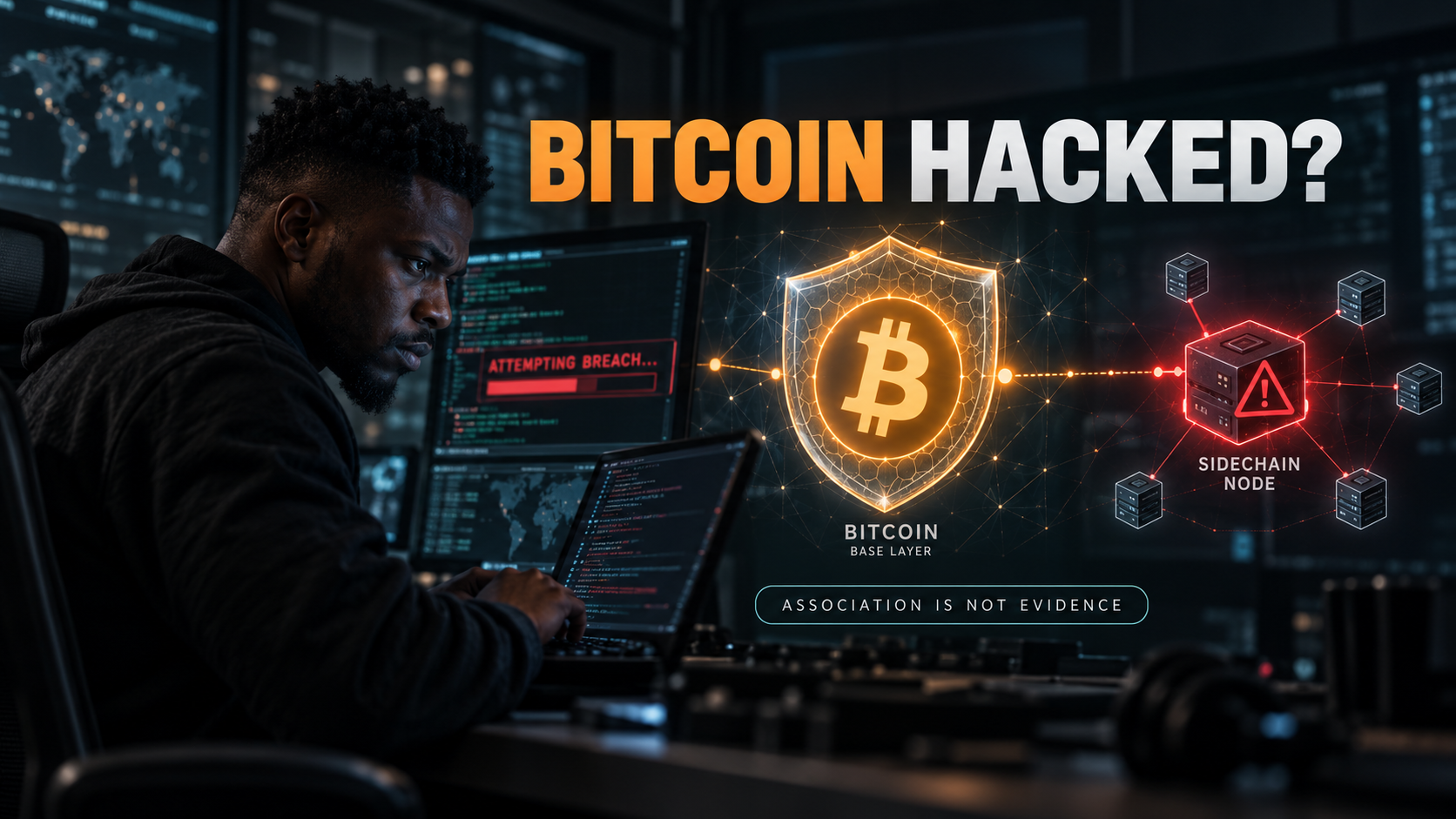
Bitcoin Wasn’t Hacked: How the $320M Liquid Incident Triggered Category Contagion
A $320 million security incident involving Liquid Network sparked misleading “Bitcoin hack” reactions. The event reveals how category contagion causes traders to transfer fear from adjacent infrastructure to Bitcoin itself.
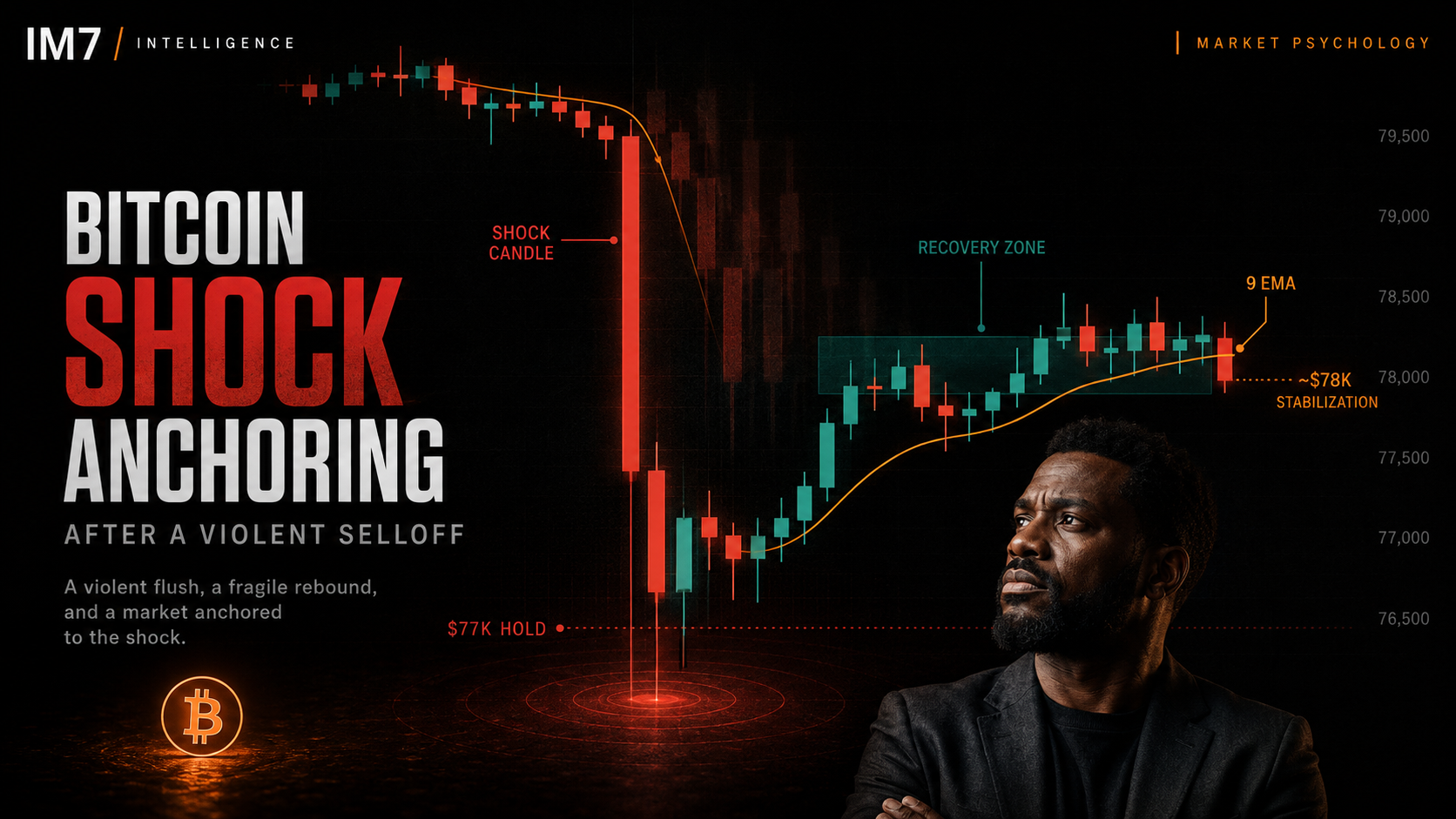
The Shock Anchor: Why Bitcoin Traders Keep Trading the Crash After It Ends
Bitcoin’s violent selloff may be over, but traders can remain psychologically anchored to the shock candle long after price enters a new phase. IM7 examines why recent fear can distort how every bounce and consolidation is interpreted.

When Selling Doesn't Mean Losing Confidence
Markets reward interpretation, but investors often mistake transactions for conviction. A company selling Bitcoin doesn't automatically signal fear, just as buying doesn't always signal confidence. Understanding the difference separates disciplined analysis from emotional assumptions.

When Liquidity Disappears: Why Markets Move Faster Than Emotions
Markets don't move because emotions suddenly change. More often, emotions change because liquidity disappears first. When buyers and sellers step away, even small orders can trigger outsized price movements, creating the fear, urgency, and volatility most traders mistakenly believe caused the move.
When Waiting Becomes the Decision
Most losses don't begin with panic—they begin with waiting. This article explores why uncertainty paralysis keeps traders frozen while markets quietly evolve, and how delaying decisions often becomes a decision itself.

Patience or Paralysis? When Waiting Helps—and When It Costs You
Patience is one of the most celebrated virtues in trading—but not every delay is discipline. Learn how to distinguish evidence-based patience from fear-driven hesitation before missed opportunities become expensive lessons.

Panic Wicks: Why Short-Lived Crashes Lead to Long-Lasting Regret in Trading
Temporary price volatility, often seen as 'panic wicks' on charts, can trigger a flood of emotional decisions leading to significant losses. This article explores the psychological mechanisms behind these reactions, using a recent Bitcoin price movement as a case study. Understanding these behaviors is crucial for making more rational trading choices.

The Quiet Zone: Why Boredom Is More Dangerous Than Volatility
Many traders fear market volatility, but often the greatest danger lies in the quiet, seemingly uneventful periods. These 'quiet zones' can lead to decreased attention, causing traders to miss crucial market turns and opportunities. It's a behavioral trap where boredom, not panic, becomes the ultimate undoing.

Why Most Traders Miss The Bottom: A Behavioral Finance Perspective on Market Reversals
Market bottoms are often clear in hindsight, but in real-time, they are shrouded in fear, uncertainty, and capitulation. This article explores the behavioral biases that prevent most traders from recognizing and capitalizing on these pivotal moments, using Bitcoin as a prime example. We delve into how emotional extremes create opportunities and why waiting for confirmation can lead to missing the biggest moves.