Volatility
Not the enemy — the environment.
Volatility is the market's heartbeat. Compressed volatility usually precedes expansion; expanded volatility usually precedes exhaustion. The signal is rarely the level itself — it's the direction of change.
Most Read
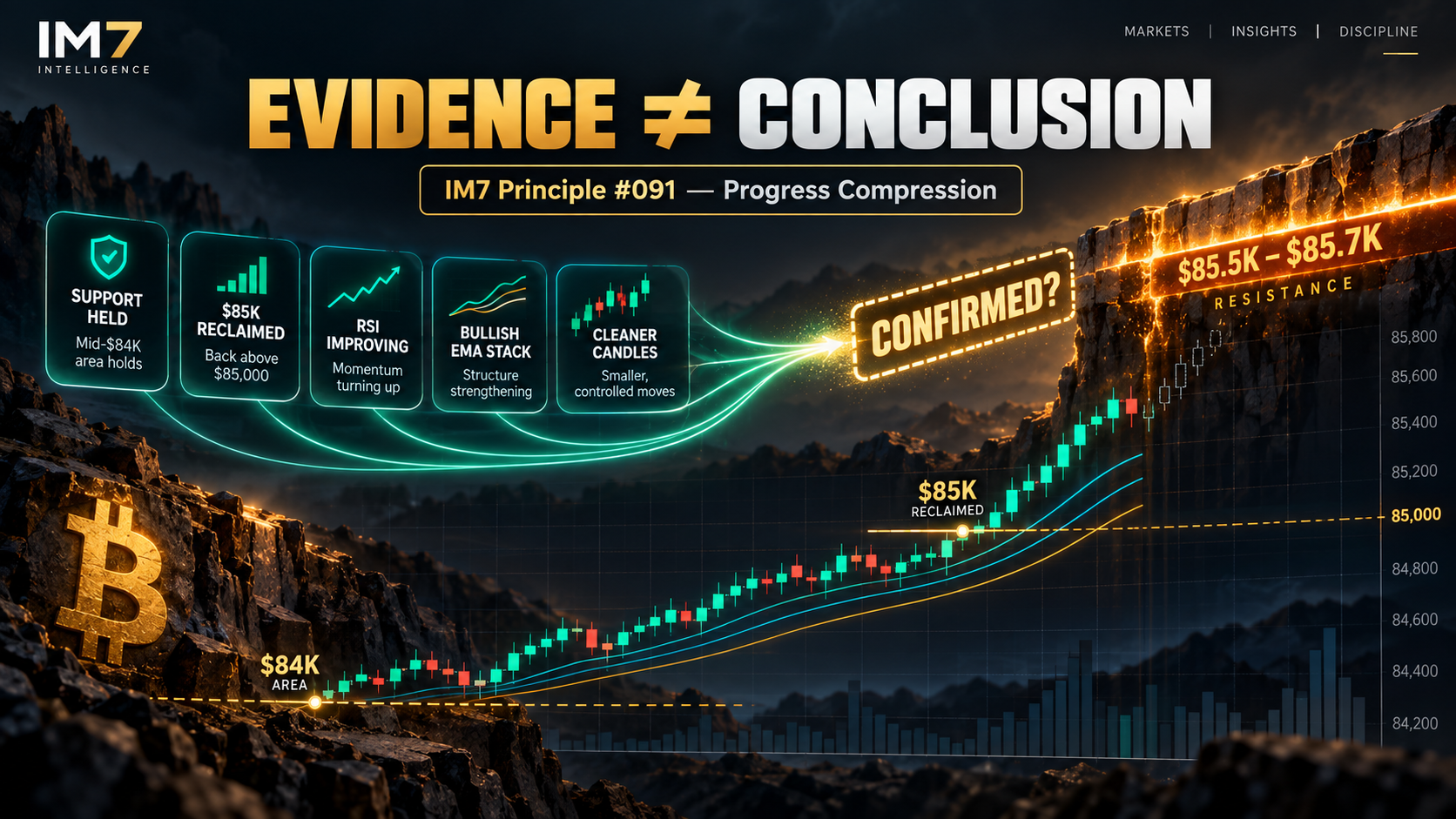
Bitcoin Improved Everywhere — Except Where It Mattered
Bitcoin reclaimed $85K and continued a controlled recovery, but the prior $85.5K–$85.7K rejection zone remained unresolved. The behavioral trap is Progress Compression: combining several legitimate improvements into one conclusion that the market has not actually earned. Progress can accumulate without confirmation.

The Silent Killer of Trading Accounts: Why Sideways Markets Are More Dangerous Than Crashes
While dramatic market crashes often grab headlines, it's the prolonged, range-bound sideways markets that silently decimate more trading accounts. This article explores the psychological pitfalls that make low-volatility periods uniquely challenging for traders, using a recent Bitcoin 2-hour chart as a case study to illustrate these behavioral traps.

The Peril of Compression: When Normalcy Bias Obscures Imminent Volatility
Perceptions of market stability, often arising from periods of suppressed volatility, frequently precede abrupt shifts in price dynamics. The quiet uniformity of recent trading sessions created an illusion of safety, a behavioral trap for those who mistook absence of movement for absence of risk. This observation highlights a common human tendency to extrapolate recent calm into future certainty, amplifying exposure to latent volatility.
Latest
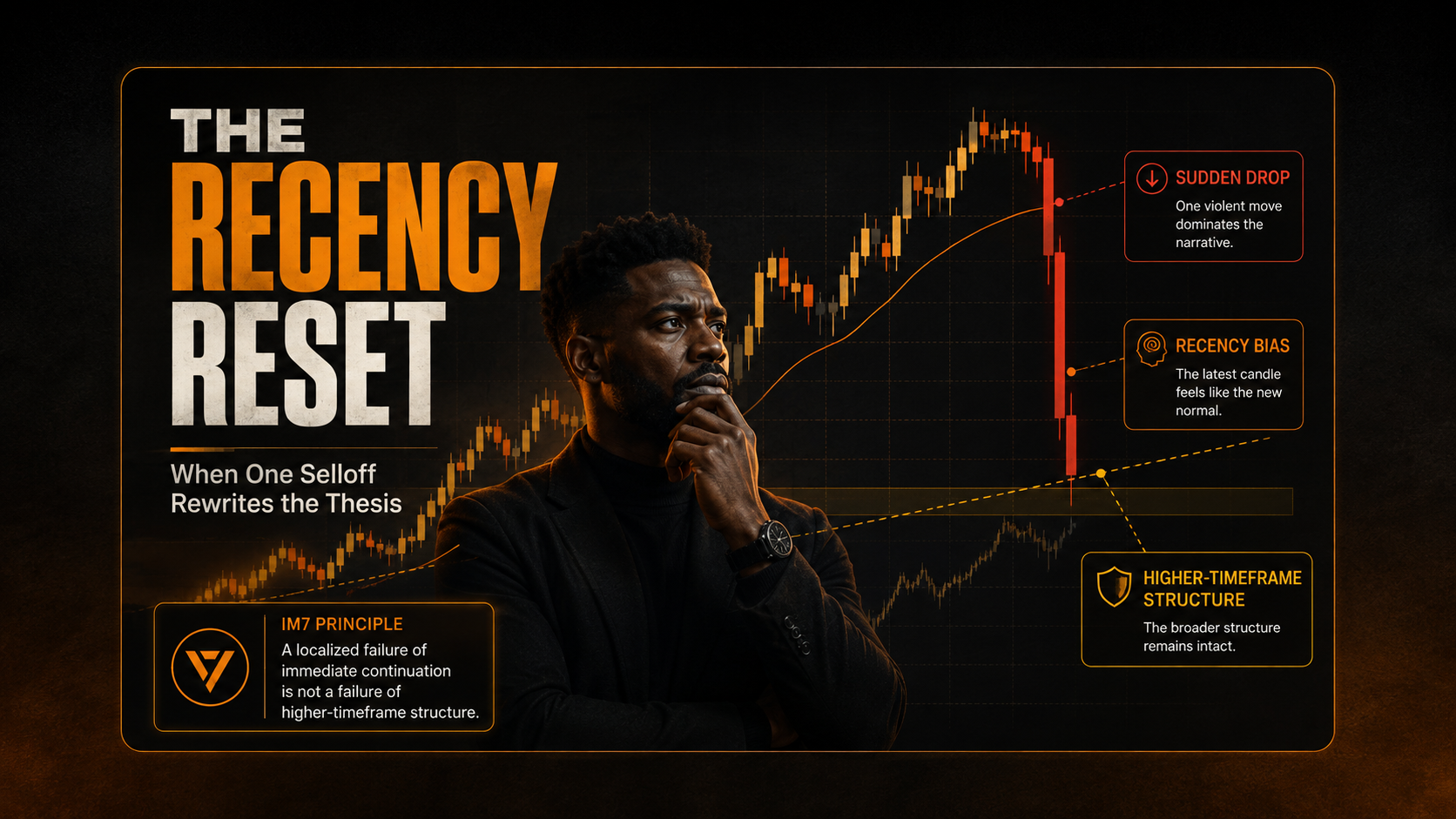
The Recency Reset: Why Bitcoin Traders Flip Their Entire Thesis After One Selloff
A single sharp adverse move can trigger a psychological shock that causes traders to abandon a higher-timeframe thesis too quickly. IM7 examines how recency bias turns one Bitcoin selloff into a complete rewrite of market conviction.
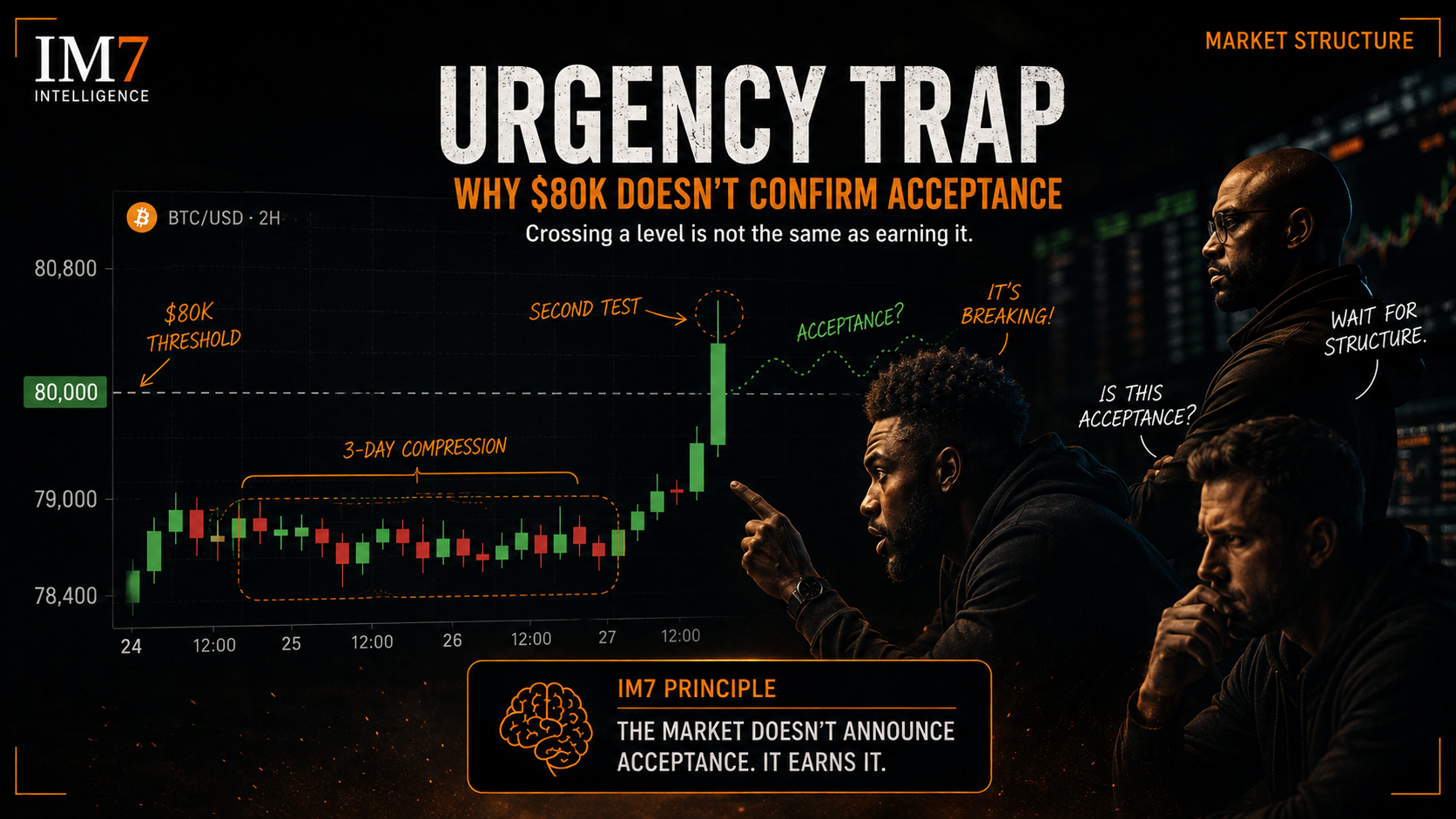
The Urgency Trap: Why Bitcoin Crossing $80K Does Not Confirm Acceptance
Bitcoin pushed back through $80,000 after days of compression, but the behavioral risk is shifting from impatience to urgency. IM7 examines why crossing a level is not the same as establishing acceptance above it.
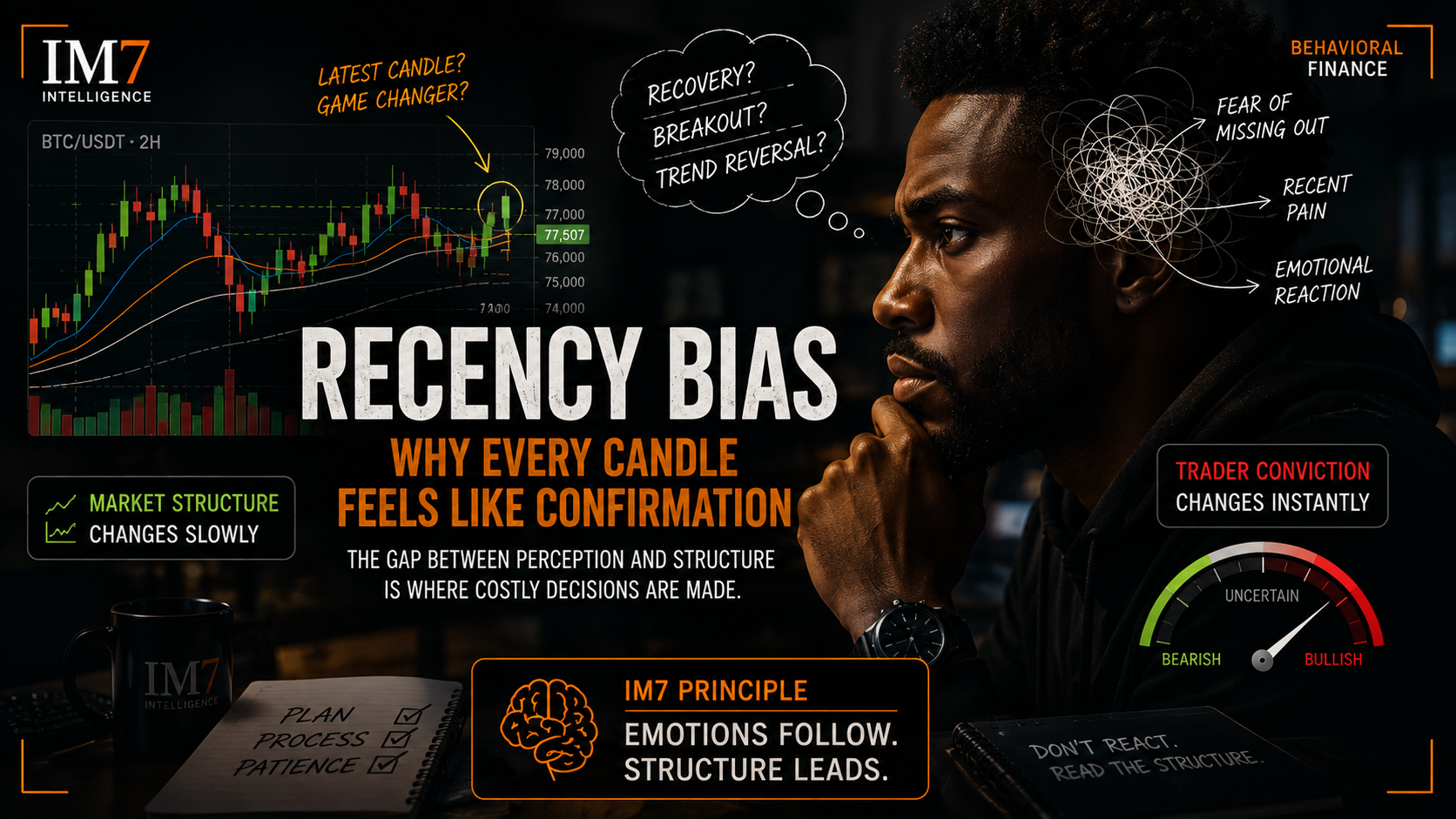
The Recency Trap: When Every Bitcoin Candle Feels Like Confirmation
Bitcoin’s volatile swings are making every new candle feel like confirmation. But when a trader’s conviction changes faster than the market structure, recency bias may be driving the interpretation.
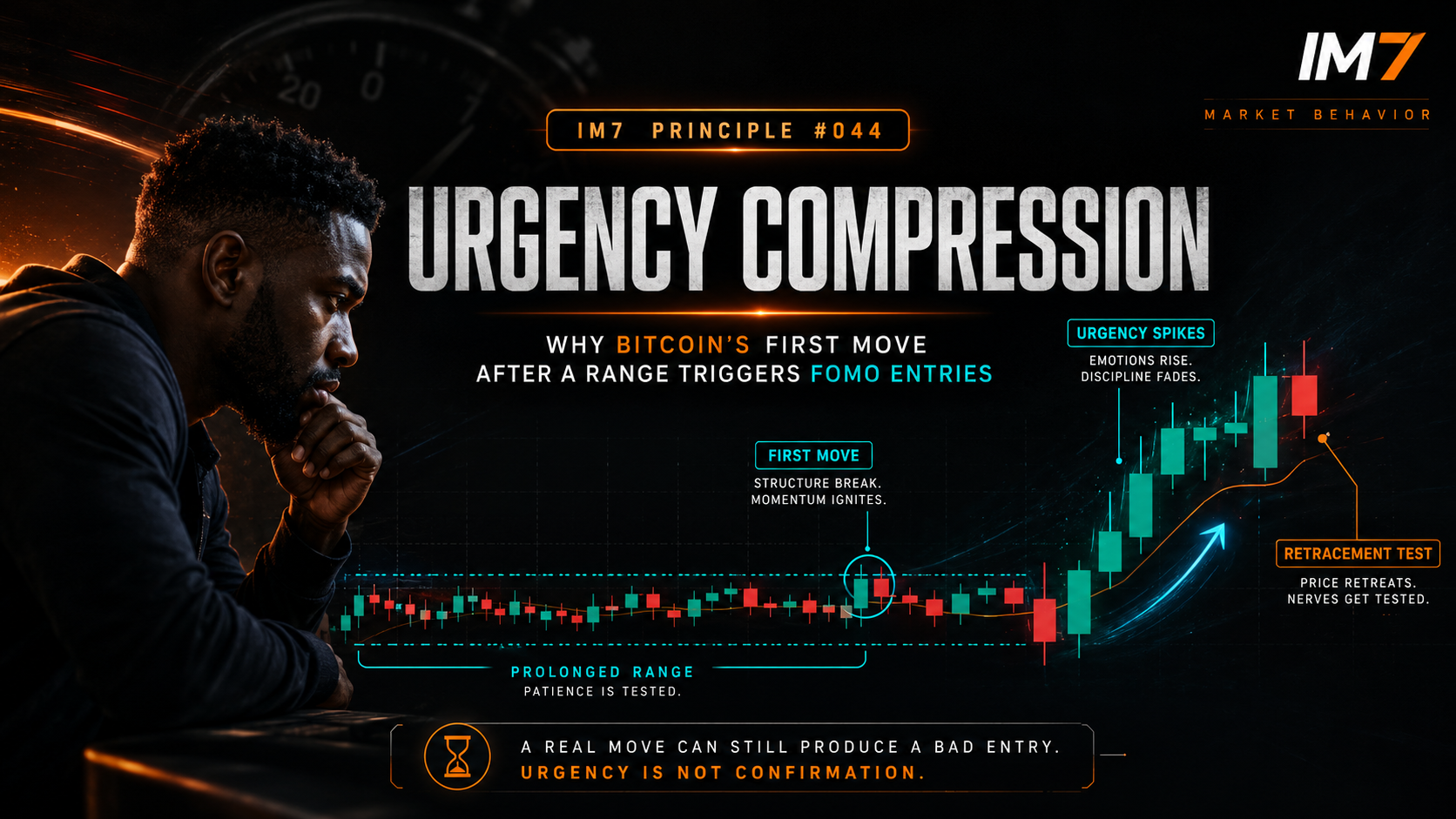
Urgency Compression: Why Bitcoin’s First Move After a Range Triggers FOMO Entries
After weeks of consolidation, a few green Bitcoin candles can make waiting feel unbearable. The move may be real, but urgency can still turn the first available entry into a poor one. A real move does not automatically make the first entry a good entry.
The Peril of Compression: When Normalcy Bias Obscures Imminent Volatility
Perceptions of market stability, often arising from periods of suppressed volatility, frequently precede abrupt shifts in price dynamics. The quiet uniformity of recent trading sessions created an illusion of safety, a behavioral trap for those who mistook absence of movement for absence of risk. This observation highlights a common human tendency to extrapolate recent calm into future certainty, amplifying exposure to latent volatility.

Normalcy Bias: The Illusion of Stability in Quiet Markets
After periods of intense market volatility, the sudden onset of tight-range trading can induce a potent psychological illusion. Market participants often interpret the absence of dramatic movement as a return to safety, rather than recognizing it as a potential precursor to renewed market expansion. This perceptual error, rooted in cognitive biases, frequently leads to suboptimal decision-making.

When Liquidity Disappears: Why Markets Move Faster Than Emotions
Markets don't move because emotions suddenly change. More often, emotions change because liquidity disappears first. When buyers and sellers step away, even small orders can trigger outsized price movements, creating the fear, urgency, and volatility most traders mistakenly believe caused the move.

Why Clean Trends Create Dangerous Confidence: The Psychology Behind Chasing Bitcoin Breakouts
When Bitcoin exhibits a 'clean' trend, breaking out from a period of moving average compression, it often triggers a powerful, yet potentially dangerous, psychological shift in traders. This article explores how such clear price action can lead to overconfidence, fueled by FOMO, recency bias, and confirmation bias, diverting focus from disciplined entry strategies to emotional decision-making.

Why EMA Compression Creates Maximum Uncertainty: The Behavioral Psychology Behind Bitcoin's Decision Points
While technical indicators like Exponential Moving Averages (EMAs) are often used to identify trends, their compression can indicate something far more profound: concentrated market uncertainty. This article explores the psychological underpinnings of why traders often misinterpret EMA compression as a signal for impending price movement, rather than a reflection of deep indecision.
The Silent Killer of Trading Accounts: Why Sideways Markets Are More Dangerous Than Crashes
While dramatic market crashes often grab headlines, it's the prolonged, range-bound sideways markets that silently decimate more trading accounts. This article explores the psychological pitfalls that make low-volatility periods uniquely challenging for traders, using a recent Bitcoin 2-hour chart as a case study to illustrate these behavioral traps.

Panic Wicks: Why Short-Lived Crashes Lead to Long-Lasting Regret in Trading
Temporary price volatility, often seen as 'panic wicks' on charts, can trigger a flood of emotional decisions leading to significant losses. This article explores the psychological mechanisms behind these reactions, using a recent Bitcoin price movement as a case study. Understanding these behaviors is crucial for making more rational trading choices.