Confirmation Bias
The trader's most expensive comfort.
Confirmation bias filters the market for reasons to believe what we already believe. It is invisible while it works and obvious only after the drawdown. The remedy is process, not willpower.

Most Read

Bitcoin Got Good News — Then Gave Half the Move Back
Bitcoin broke higher after cooler PCE data, then quickly gave back a large part of the move. The behavioral mistake was treating one resolved uncertainty as full confirmation. Good news can justify a breakout without proving the market will accept higher prices.

Bitcoin Bounced From $82.6K—But a Correct Thesis Still Became a Bad Trade
Bitcoin’s bounce from $82.6K exposed a distinction traders often learn too late: a correct market thesis cannot rescue poor entry, excessive leverage, or weak position sizing. The first bounce showed relief. The retest will reveal whether buyers actually returned.

Bitcoin Finally Gave Traders Proof — Then Made Them Pay for It
Bitcoin broke through the level traders had been watching and pushed toward $87K, only to pull back sharply afterward. The behavioral trap is Proof-Chasing: traders often wait for the market to look obvious before acting, then confuse confirmation with urgency. Proof should improve confidence — not make the decision more expensive.
Latest

Bitcoin Got Macro Relief. Why Didn't Buyers Take Control?
Bitcoin rebounded from the $81K area but stalled near $84K despite easing macro pressure. IM7 Intelligence explores the Relief–Proof Inversion: why reduced selling pressure doesn't automatically create sustained buying demand.

Bitcoin Traders Hit the Gas and Bought Crash Insurance
Bitcoin rejected $84K, dropped toward $82.3K, and bounced back near $83K. Meanwhile, a derivatives snapshot showed traders adding leveraged exposure as demand for downside protection increased. IM7 Intelligence examines the Conviction–Insurance Split—and why bullish positioning doesn't necessarily mean confidence without fear.

Bitcoin Bounced Again — Traders Called It Recovery
Bitcoin bounced from roughly $81.4K toward $83.2K, but the move stalled back near $82.5K before reclaiming the levels lost earlier in the week. The behavioral mistake is treating relief from selling as proof that buyers have regained control. Relief describes what stopped happening; recovery requires evidence of what buyers can actually accomplish.

Bitcoin's $81K Buy Wall Looked Safe — Until Price Reached It
Bitcoin traded through the highly visible $81K bid wall, exposing a common behavioral error: traders treated resting liquidity as a guaranteed defense. A visible bid can show where buyers might act, but only execution, absorption, and a sustained response reveal whether they actually took control.

Bitcoin Liquidated $550M in Longs — The Bottom Was Assumed
Bitcoin wiped out roughly $550M in long positions, yet the rebound failed to hold $84K. The liquidation removed forced sellers — but traders treated their disappearance as proof that durable buyers had arrived.
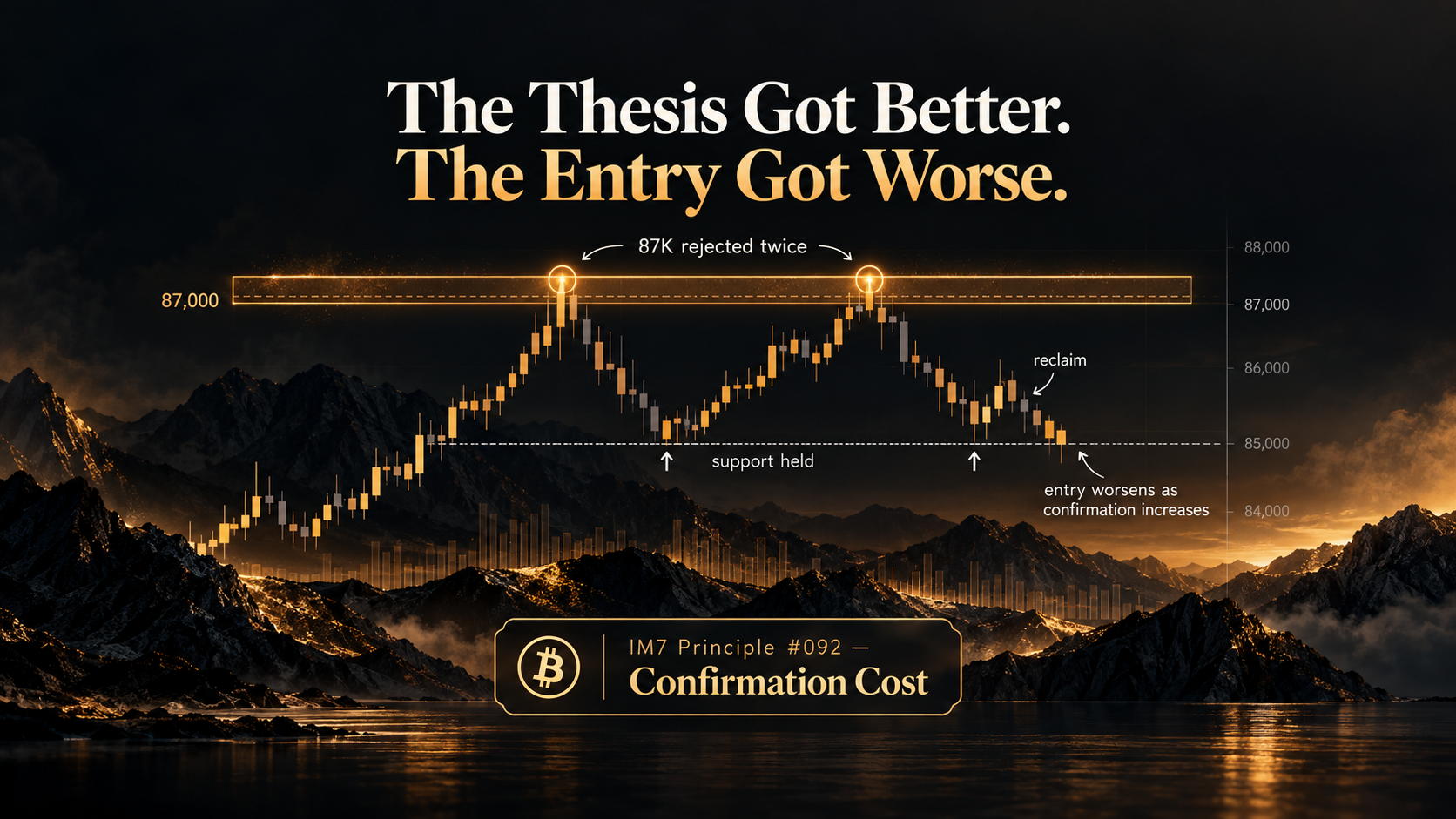
Bitcoin Got More Proof — And a Worse Entry
Bitcoin’s evidence improved as price climbed back toward the $87K area, but the trade location deteriorated at the same time. The behavioral trap is Confirmation Cost: waiting for more certainty can improve conviction while shrinking the margin for error. Better evidence does not automatically mean a better entry.
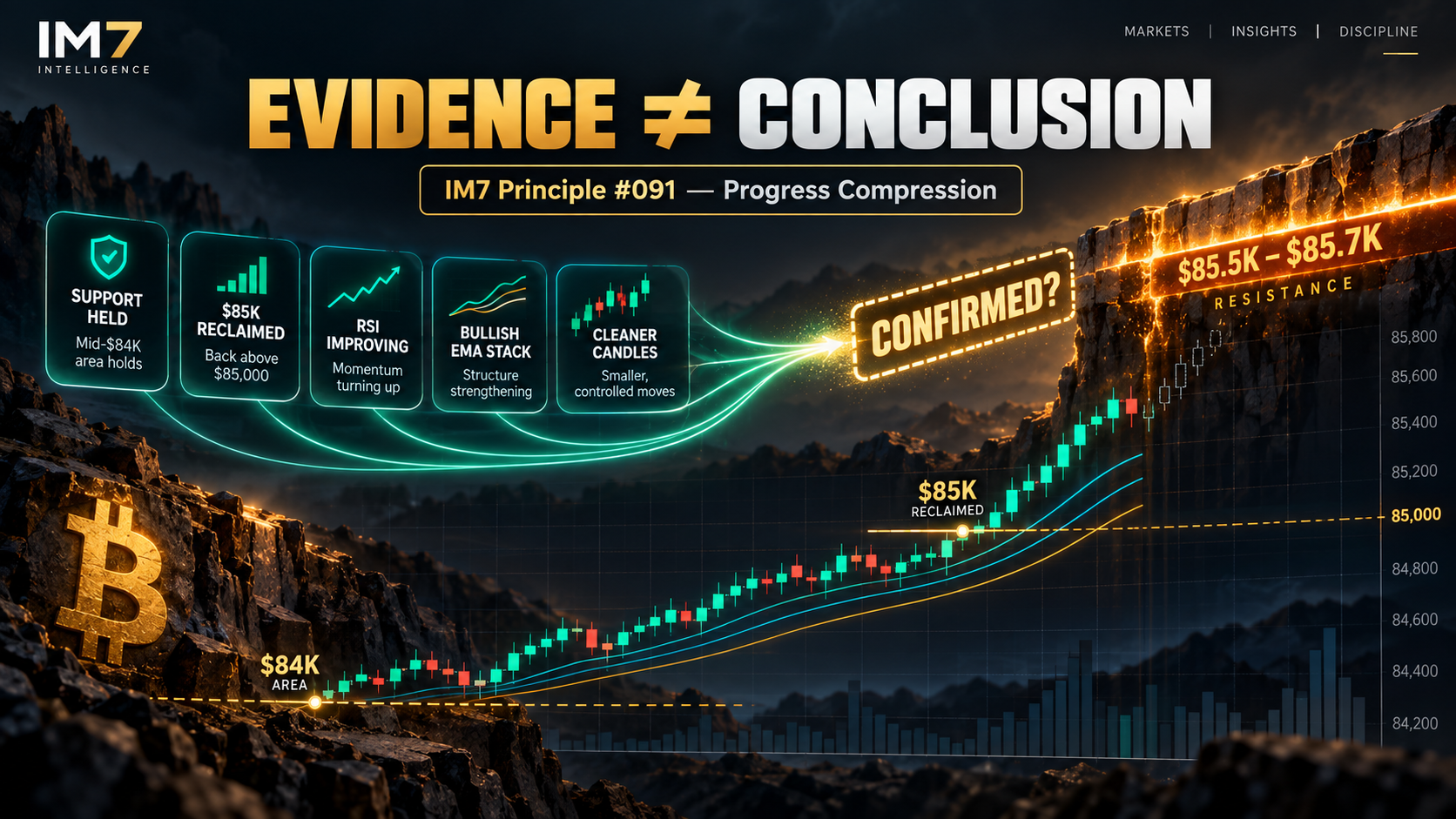
Bitcoin Improved Everywhere — Except Where It Mattered
Bitcoin reclaimed $85K and continued a controlled recovery, but the prior $85.5K–$85.7K rejection zone remained unresolved. The behavioral trap is Progress Compression: combining several legitimate improvements into one conclusion that the market has not actually earned. Progress can accumulate without confirmation.
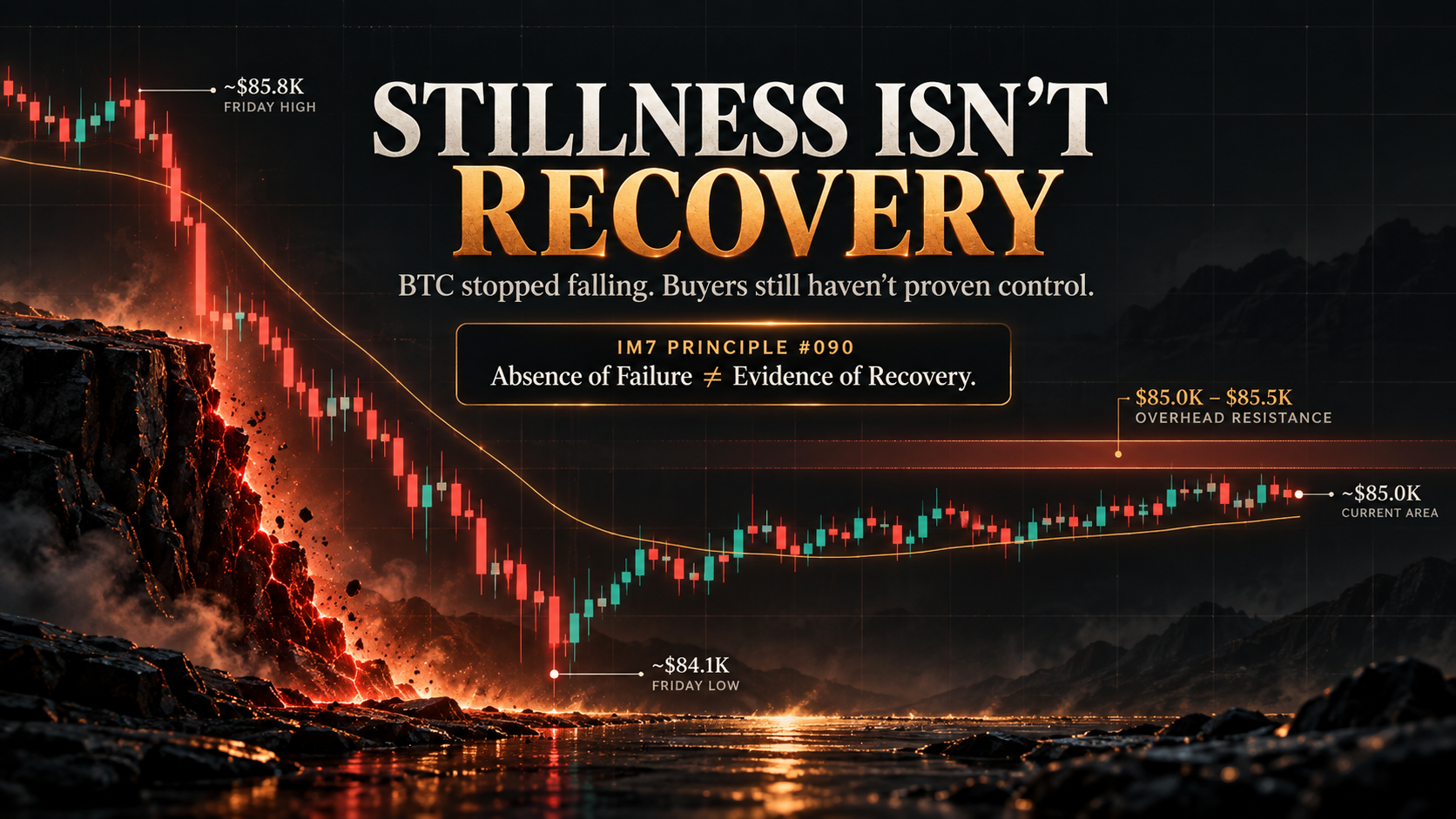
Bitcoin Stopped Falling — Traders Called It Bullish
Bitcoin stopped falling after Friday’s sharp flush and spent hours stabilizing around the mid-$84K area. The behavioral trap is treating the absence of further downside as proof that buyers have regained control. Calm can reduce uncertainty without confirming recovery.
Bitcoin Finally Gave Traders Proof — Then Made Them Pay for It
Bitcoin broke through the level traders had been watching and pushed toward $87K, only to pull back sharply afterward. The behavioral trap is Proof-Chasing: traders often wait for the market to look obvious before acting, then confuse confirmation with urgency. Proof should improve confidence — not make the decision more expensive.
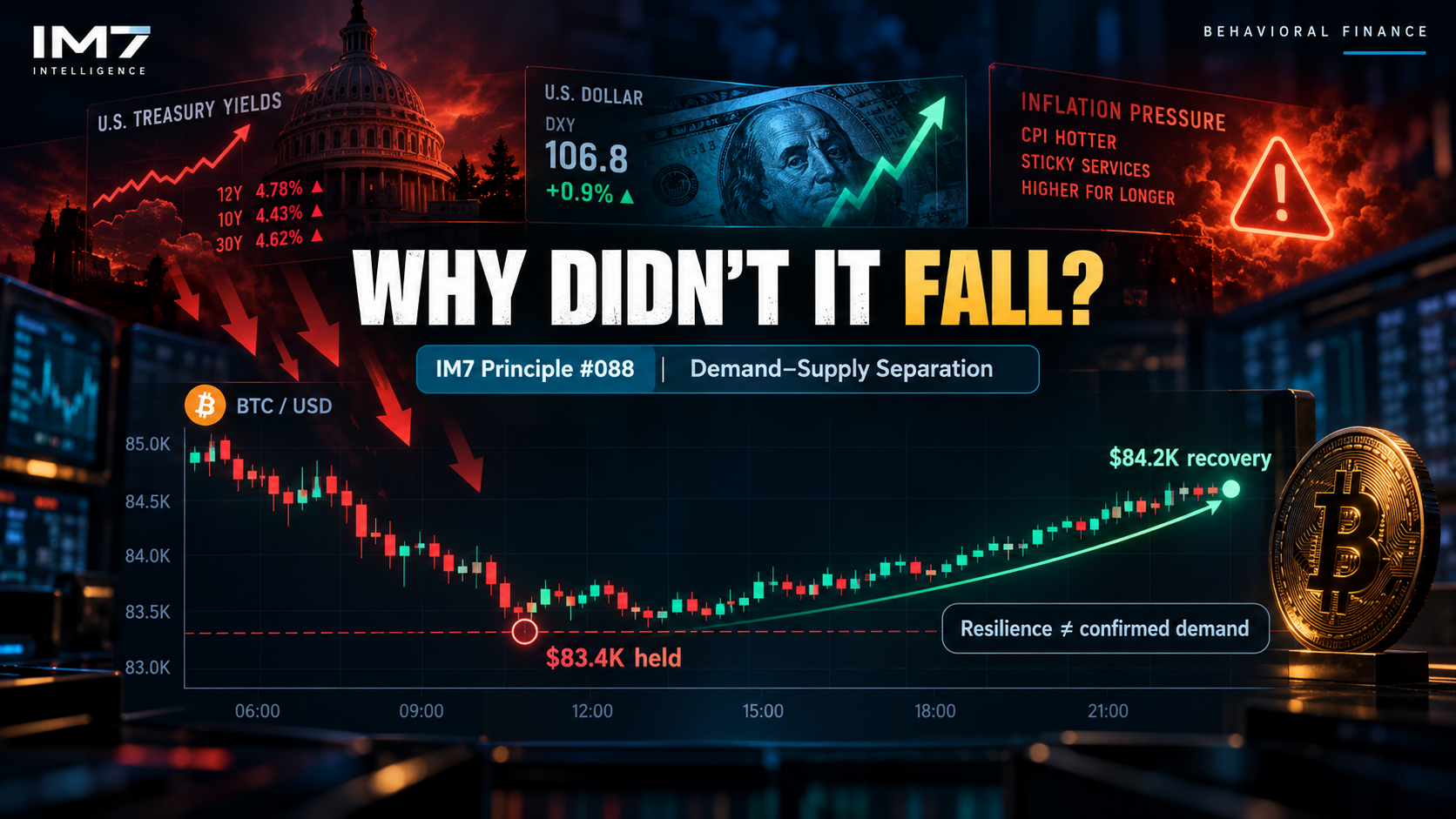
Bitcoin Had Every Reason to Fall — So Why Didn’t It?
Bitcoin faced a hostile macro backdrop — higher Treasury yields, stronger economic data, and a firmer dollar — yet price refused to break lower. The behavioral trap is assuming that “not falling” automatically means buyers are in control. Sometimes resilience reflects real demand; other times it simply means sellers are absent.
Bitcoin Got Good News — Then Gave Half the Move Back
Bitcoin broke higher after cooler PCE data, then quickly gave back a large part of the move. The behavioral mistake was treating one resolved uncertainty as full confirmation. Good news can justify a breakout without proving the market will accept higher prices.