#Trader Behavior
14 articles on Trader Behavior — behavioral finance and market psychology from IM7 Intelligence.
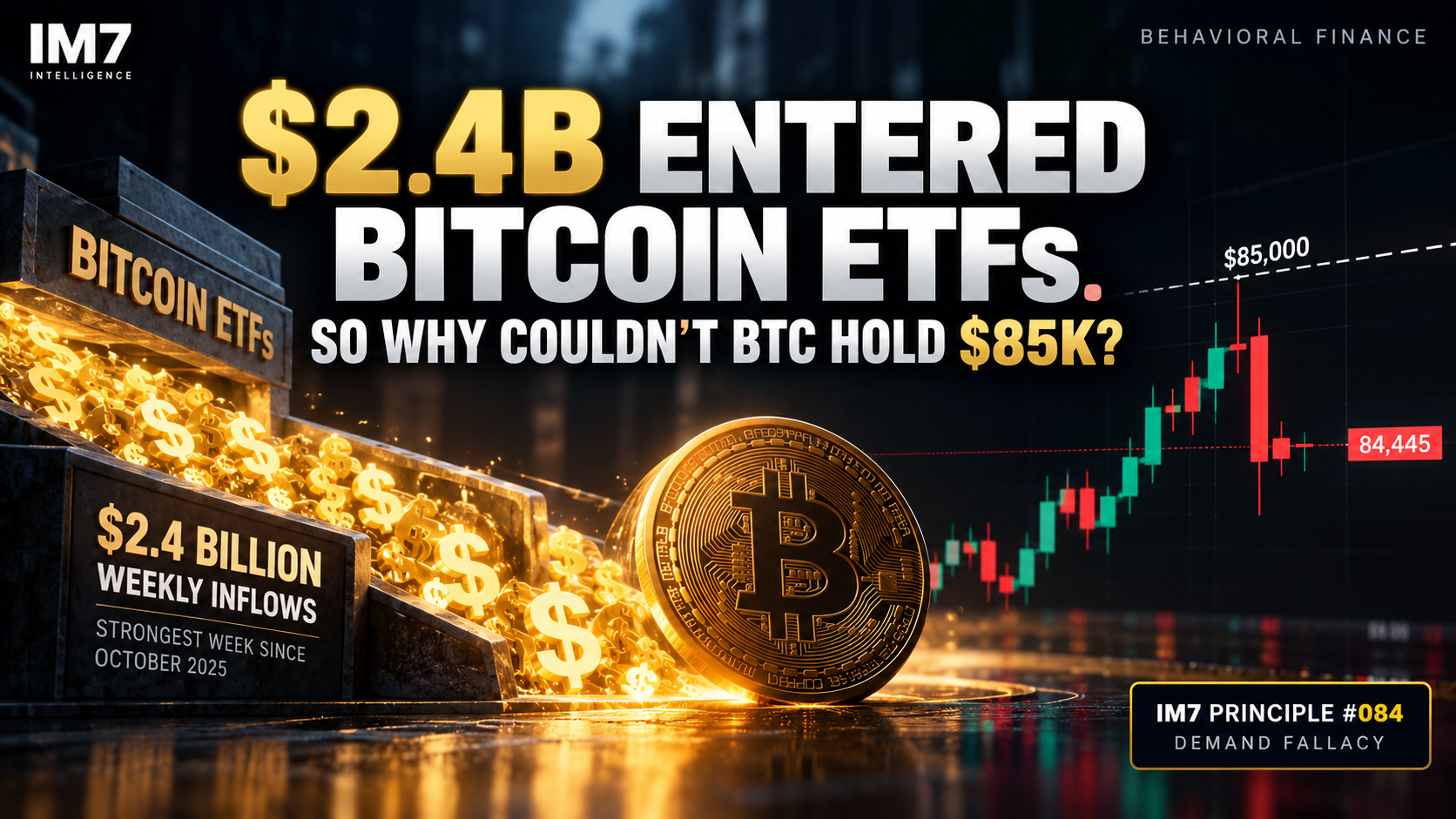
$2.4B Flowed Into Bitcoin ETFs. So Why Couldn't Bitcoin Hold $85K?
U.S. spot Bitcoin ETFs attracted roughly $2.4 billion in net inflows during the week, yet Bitcoin failed to sustain its move through $85K. Demand Fallacy explains why traders can mistake the size of buying pressure for proof of the market outcome instead of asking whether that demand actually changed price behavior.

You’re Still Trading Monday’s Evidence. It’s Saturday.
Bitcoin gave traders powerful evidence earlier this week. But markets keep producing new information after a thesis is formed. Evidence Has a Half-Life explains what happens when traders keep giving old evidence the same weight while newer evidence is telling them to update.
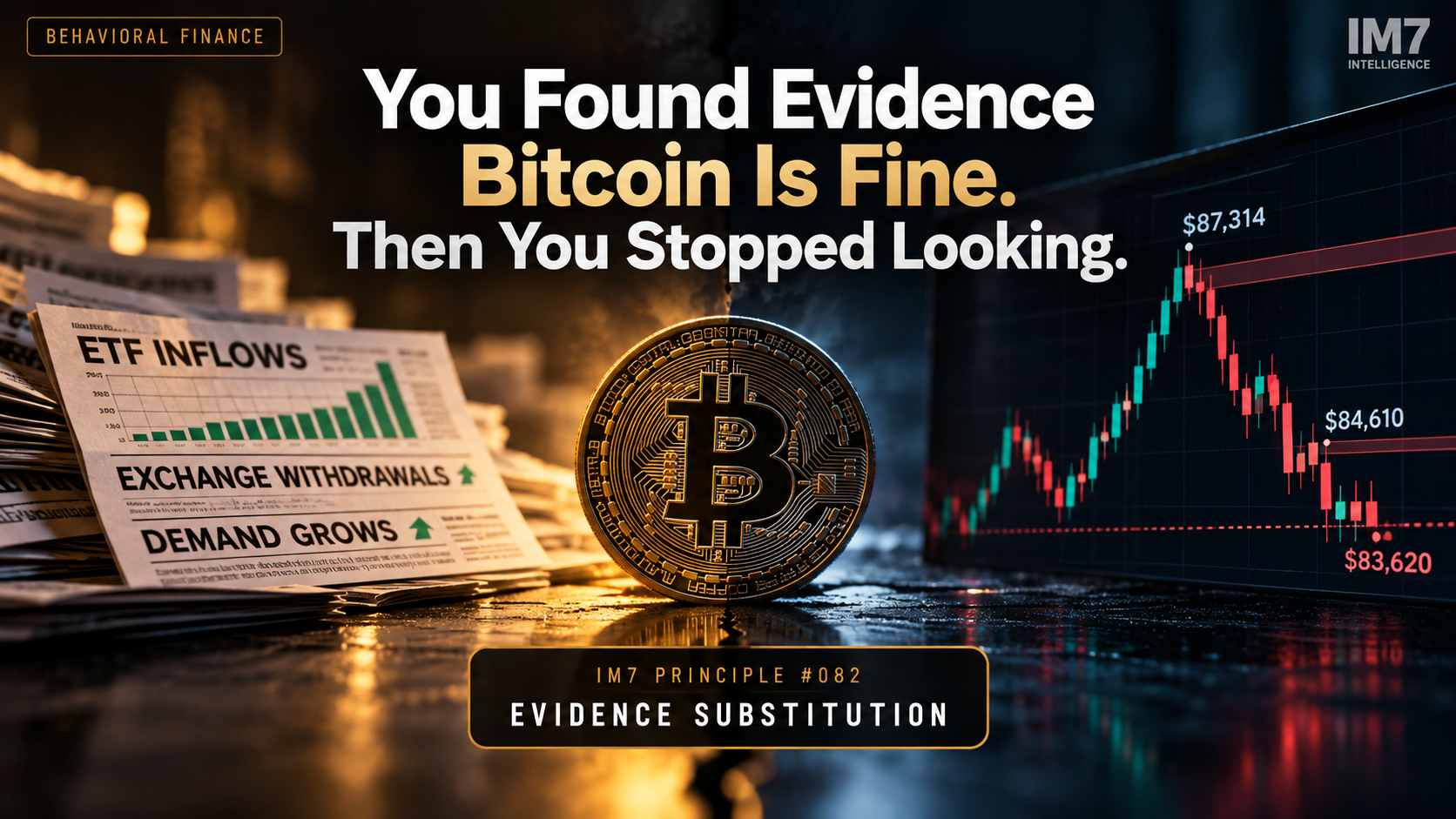
You Found Evidence Bitcoin Is Fine. Then You Stopped Looking.
Bitcoin traders have real evidence supporting both sides of the current debate. The behavioral mistake begins when supporting evidence becomes a reason to stop looking. Evidence Substitution explains why evidence that agrees with your position is not the same as evidence that the market has confirmed it.

Bitcoin Stopped Falling. You Called It a Recovery.
IM7 Principle #081 — Relief Is Not Recovery

You Got the Confirmation. Then One Pullback Made You Doubt It.
Bitcoin delivered the confirmation traders demanded, but the first uncomfortable pullback quickly changed how that evidence felt. Confirmation Fragility explains why traders often trust evidence only while price continues rewarding them—and mistake discomfort for invalidation.
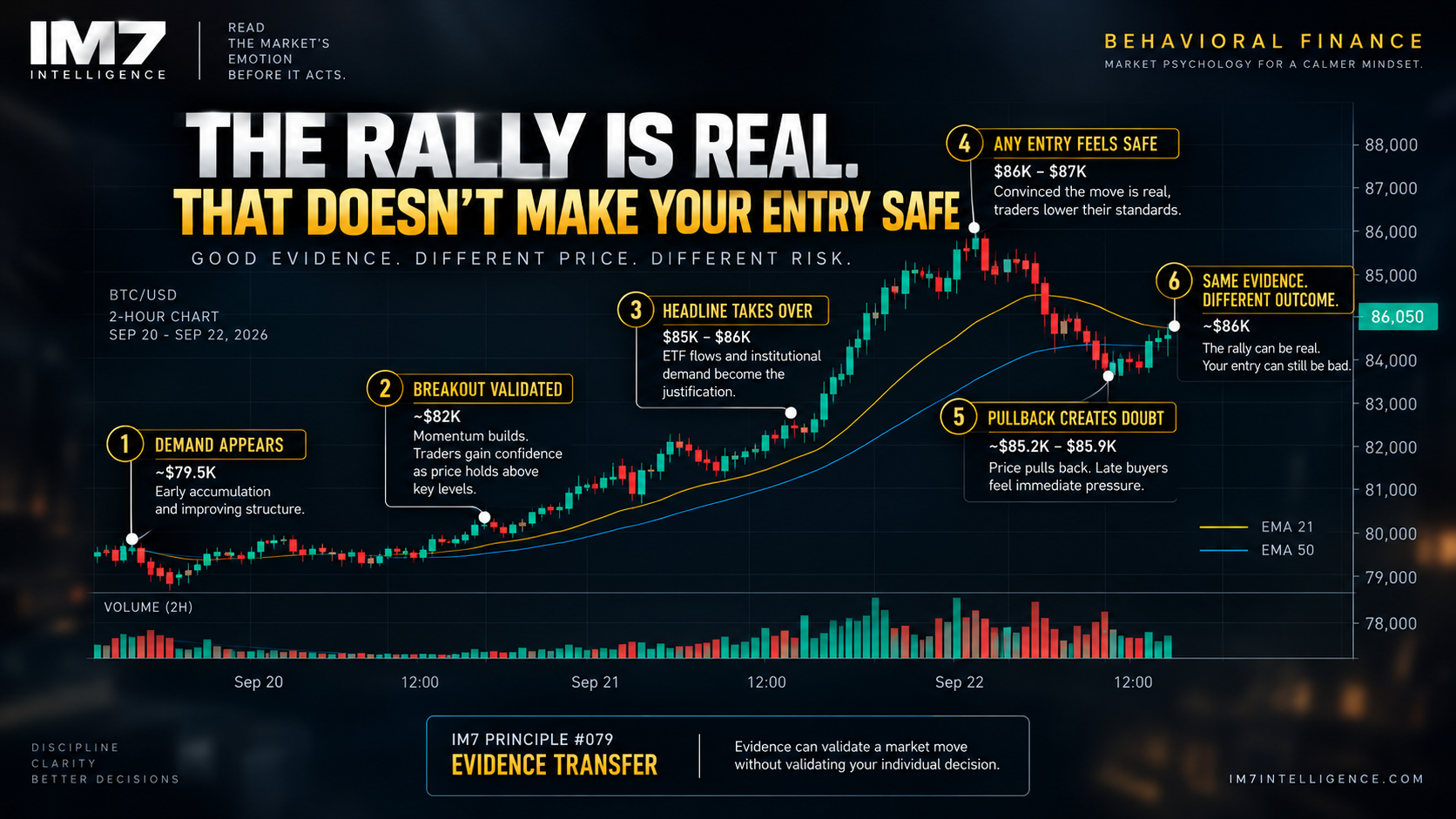
The Rally Is Real. That Doesn’t Make Your $86K Entry Safe.
Bitcoin’s rally has real evidence behind it, including strong ETF demand. But evidence that validates the move does not automatically validate a late entry. Traders get into trouble when they transfer confidence in the market to confidence in the price they are paying.

You Needed Proof at $76K. At $86K, You Stopped Asking.
Bitcoin climbed from $76K toward $86K, but something changed faster than price: traders’ standards for confirmation. The higher Bitcoin went, the less proof they demanded. That isn’t greater certainty. It’s confirmation giving way to fear of missing out.
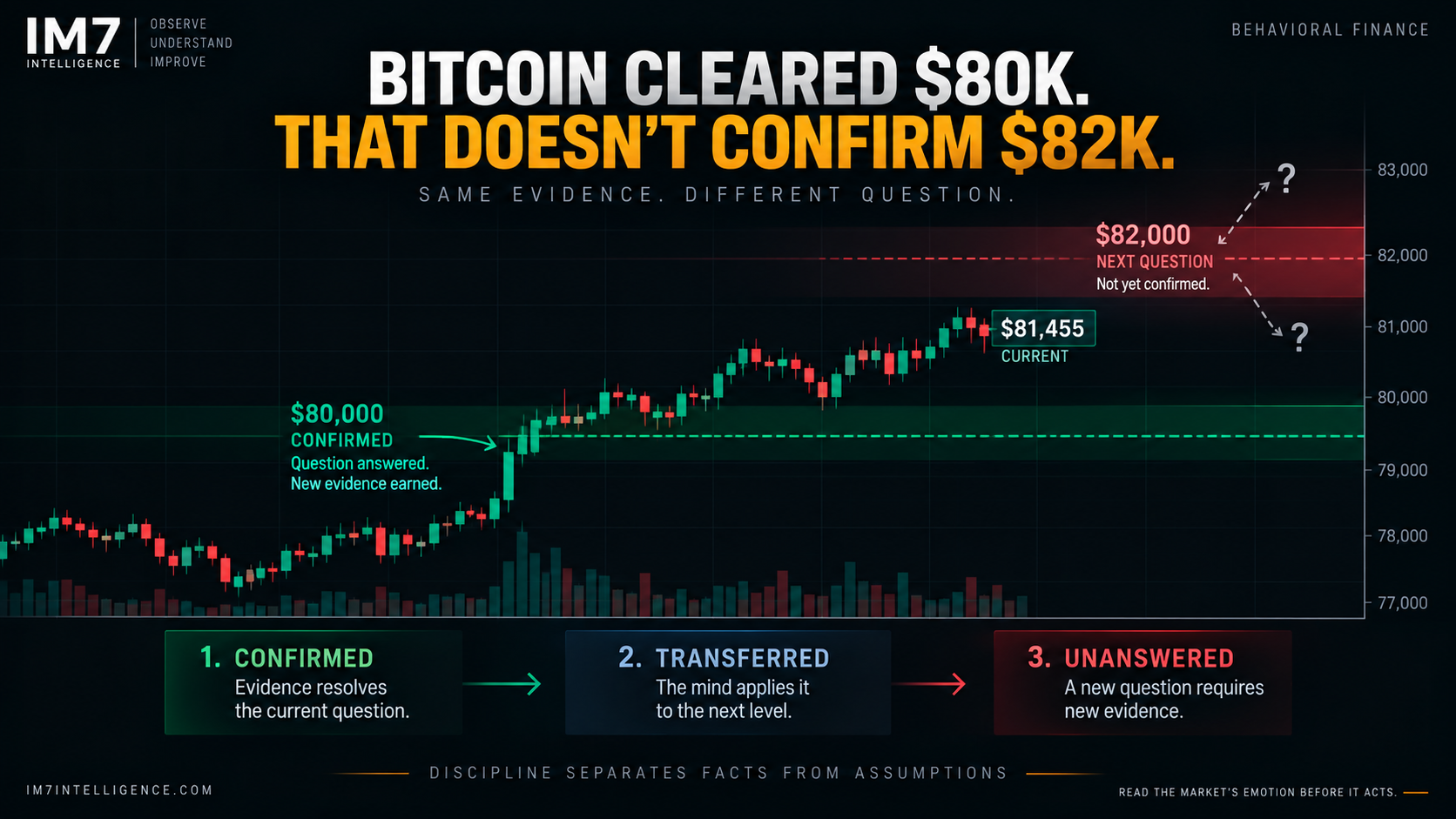
Bitcoin Cleared $80K. That Doesn't Confirm $82K.
Bitcoin cleared $80K and continued toward $81.5K, giving traders meaningful new evidence. But confirmation at one level does not automatically confirm the next. Confirmation Transfer occurs when traders take evidence that resolved yesterday’s uncertainty and mistakenly apply it to tomorrow’s unanswered question.
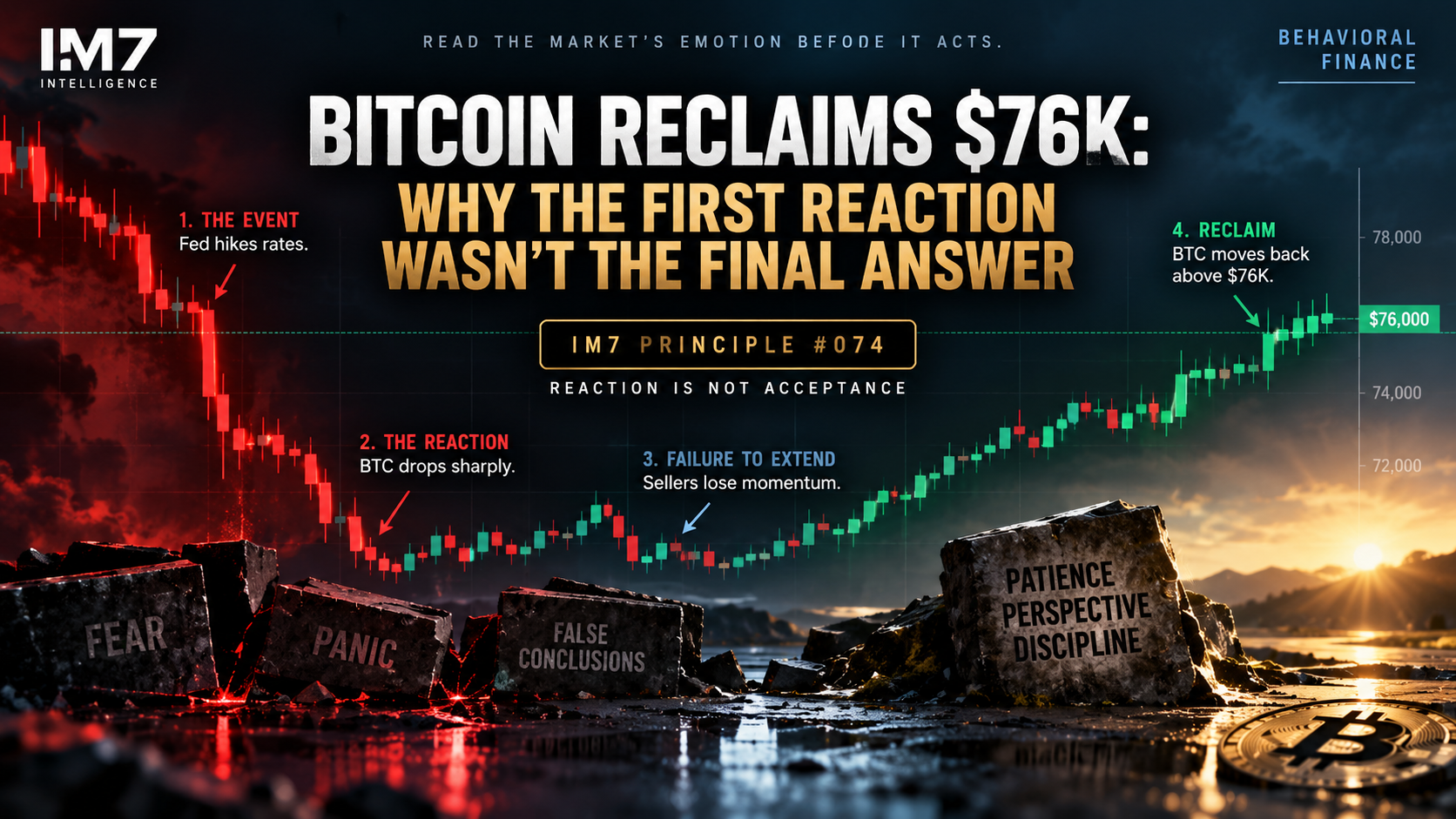
Bitcoin Reclaims $76K: Why the First Reaction Wasn't the Final Answer
Bitcoin dropped after the Fed decision, giving traders an immediate bearish story to believe. But price later reclaimed the $76K area. The behavioral mistake isn't reacting to new information — it's treating the first reaction as the market's final conclusion. This is why reaction should never be confused with acceptance.
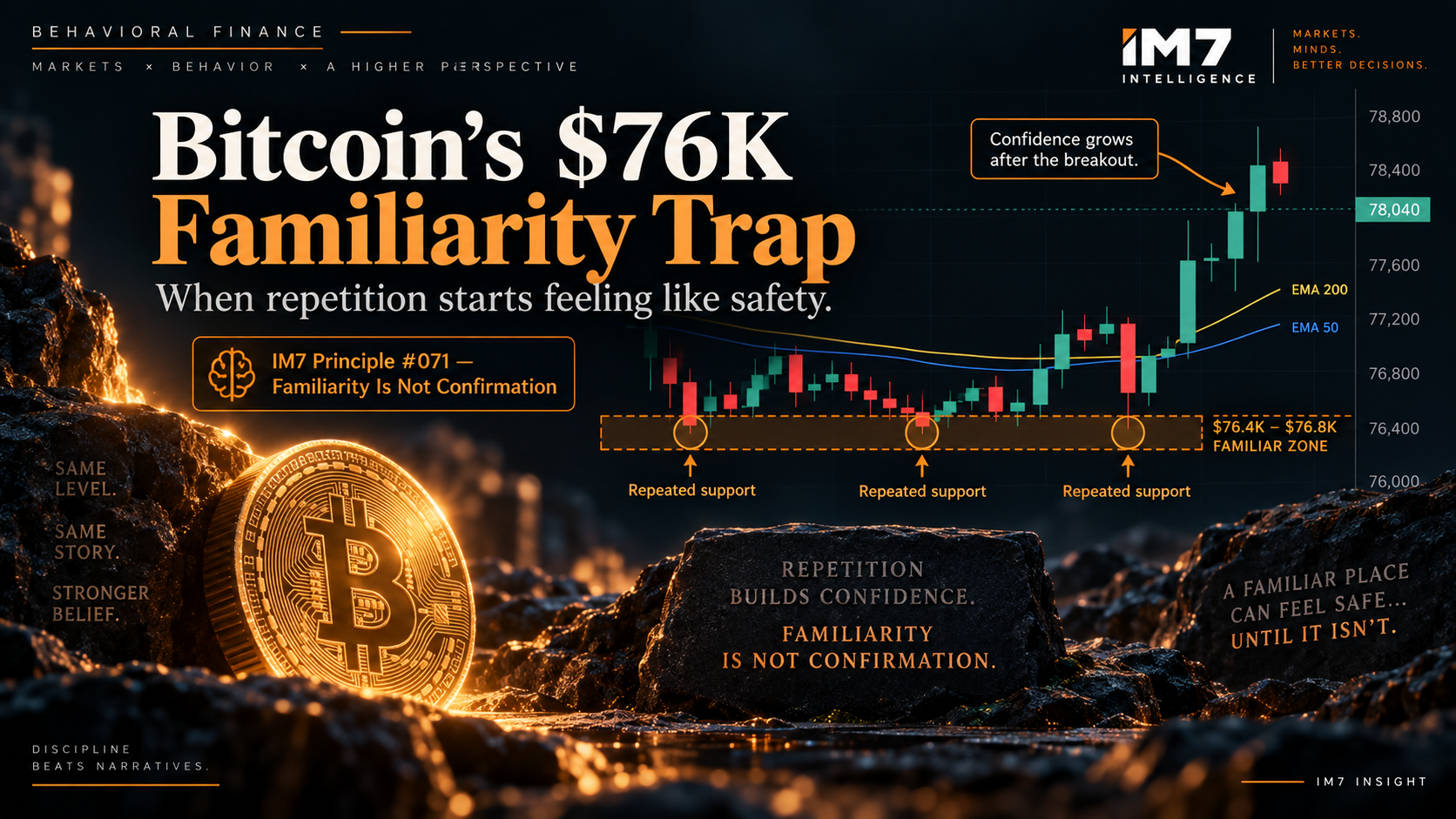
Bitcoin’s $76K Familiarity Trap: When Repetition Starts Feeling Like Safety
Bitcoin has defended the $76K area repeatedly, and each successful bounce makes traders more confident that the level is “safe.” But repetition can create false certainty. This article breaks down the familiarity trap behind repeated support tests and why a streak should never be mistaken for a rule.

Bitcoin Rallied After Hot CPI: When Bad News Stops Working
Hot CPI, rising yields, and higher rate-hike odds appeared bearish for Bitcoin—yet BTC reversed its initial flush and reclaimed $79K. The reaction exposed the danger of trading a headline without watching whether price continues to obey it.

Outcome Bias: Why Good Outcomes Can Reward Bad Decisions
A profitable trade does not always reflect a sound decision. Outcome Bias causes traders to judge the quality of their process by the result instead of the evidence that supported it. When fortunate outcomes reinforce flawed decision-making, the next mistake often becomes larger, more confident, and more expensive.

When Recovery Becomes the Risk: Why Relief Can Lead to Overconfidence
A sharp recovery often changes market psychology faster than market structure. Relief becomes confidence, confidence becomes certainty, and traders begin taking larger risks before objective confirmation arrives. The recovery doesn't erase the risk—it simply makes it harder to see.

When "Fine" Becomes Expensive: How Status Quo Bias Traps Bitcoin Traders After Support Breaks
This article explores how status quo bias and other cognitive pitfalls can lead Bitcoin traders to cling to outdated theses, even after critical technical support breaks. We examine the psychological journey from comfort to re-evaluation, using a recent Bitcoin price action as a case study. Understanding these biases is crucial for effective risk management and adaptive decision-making in volatile markets.