#Cognitive Bias
30 articles on Cognitive Bias — behavioral finance and market psychology from IM7 Intelligence.
Library TopicConfirmation Bias →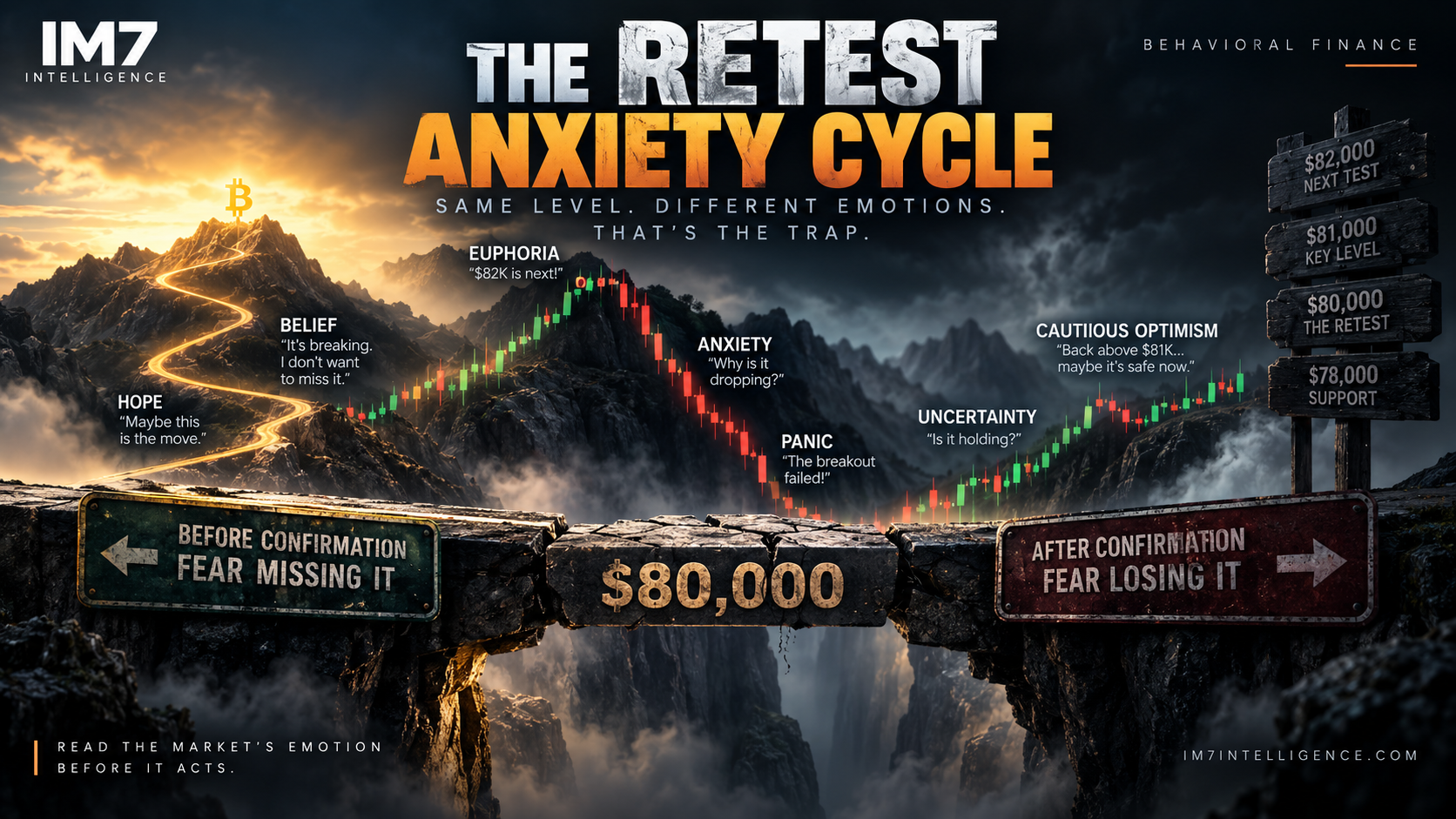
Bitcoin Retests $80K: When Discomfort Feels Like Invalidation
Bitcoin pulled back toward $80K after advancing toward $82K, then recovered above $81K. The Retest Anxiety Trap begins when traders mistake the discomfort of renewed uncertainty for evidence that the breakout has failed.
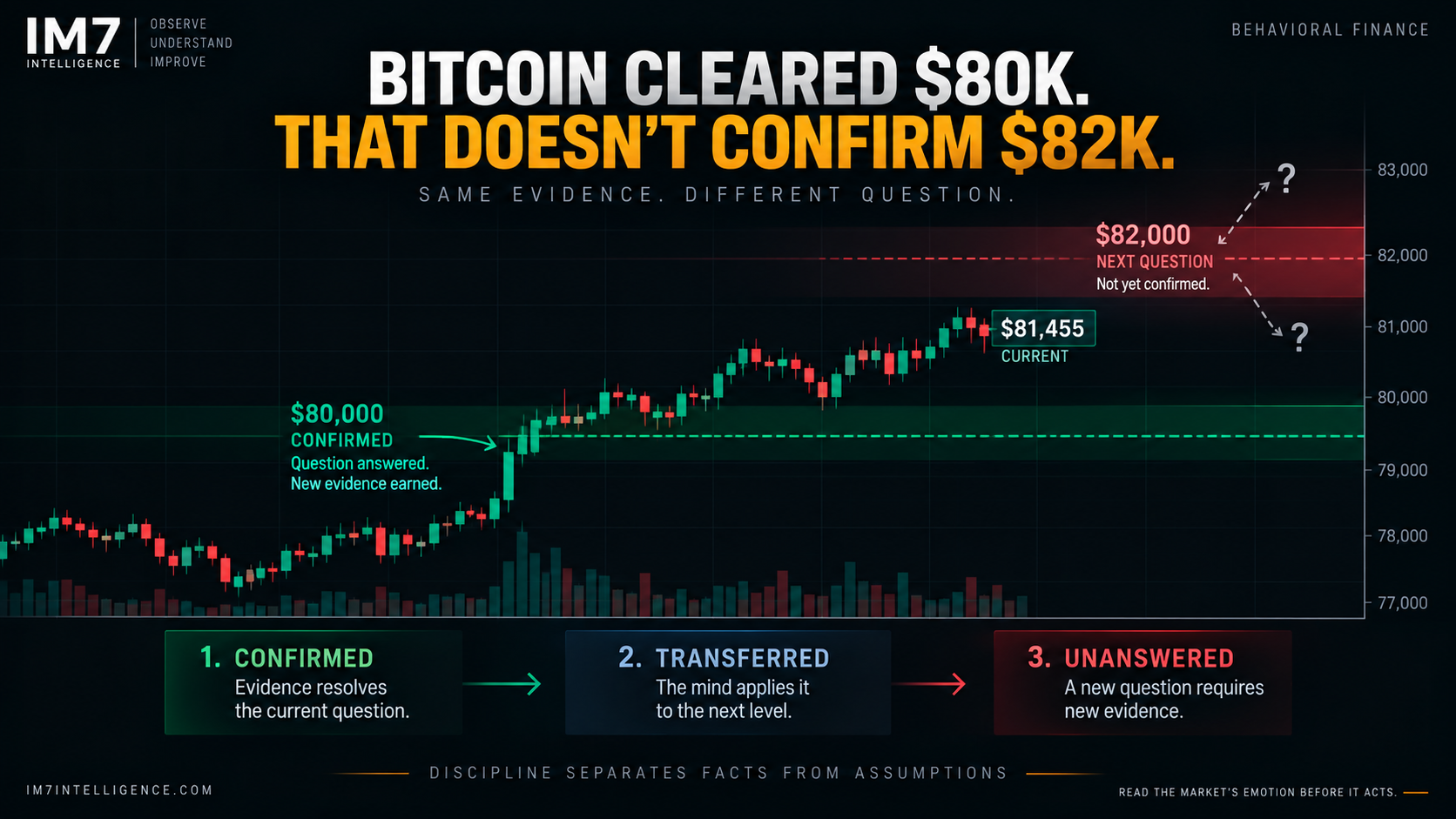
Bitcoin Cleared $80K. That Doesn't Confirm $82K.
Bitcoin cleared $80K and continued toward $81.5K, giving traders meaningful new evidence. But confirmation at one level does not automatically confirm the next. Confirmation Transfer occurs when traders take evidence that resolved yesterday’s uncertainty and mistakenly apply it to tomorrow’s unanswered question.

Bitcoin Breaks $80K as ETF Flows Flip Positive
Bitcoin surged through $80K as U.S. spot Bitcoin ETF flows flipped from $295.9 million of net outflows to $159.5 million of net inflows. The move matters because the evidence around price changed too: institutional demand improved while Bitcoin pushed into a new short-term range. The behavioral lesson is simple — when the evidence changes, the market story should be allowed to change with it.
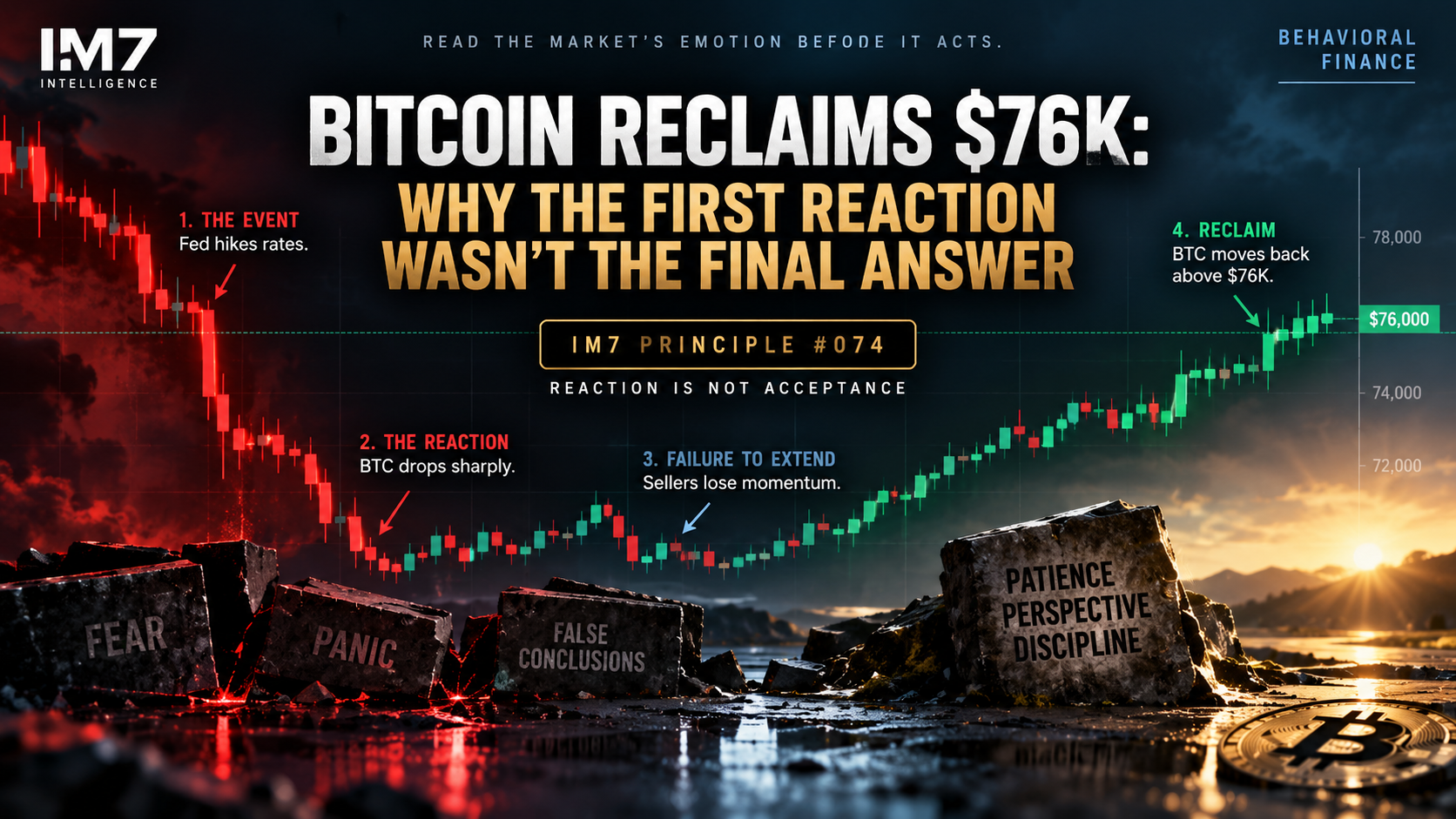
Bitcoin Reclaims $76K: Why the First Reaction Wasn't the Final Answer
Bitcoin dropped after the Fed decision, giving traders an immediate bearish story to believe. But price later reclaimed the $76K area. The behavioral mistake isn't reacting to new information — it's treating the first reaction as the market's final conclusion. This is why reaction should never be confused with acceptance.
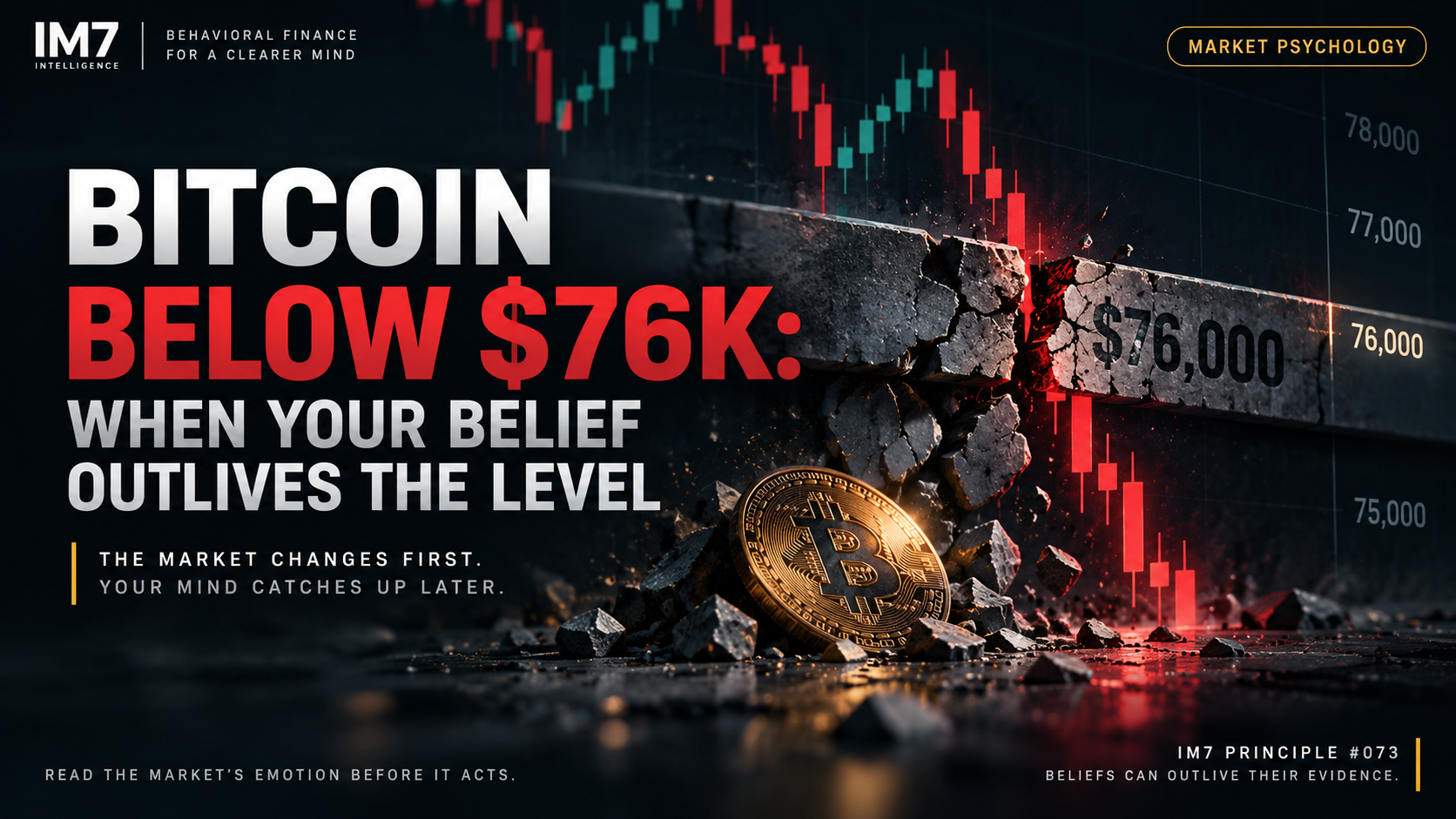
Bitcoin Below $76K: When Your Belief Outlives the Level
Bitcoin broke below the $76K area after repeated defenses had trained traders to trust the level. Now the behavioral risk changes: instead of questioning the old belief, traders may interpret every bounce as evidence that the familiar floor is returning. This is how a market thesis can survive after the evidence that created it has changed.
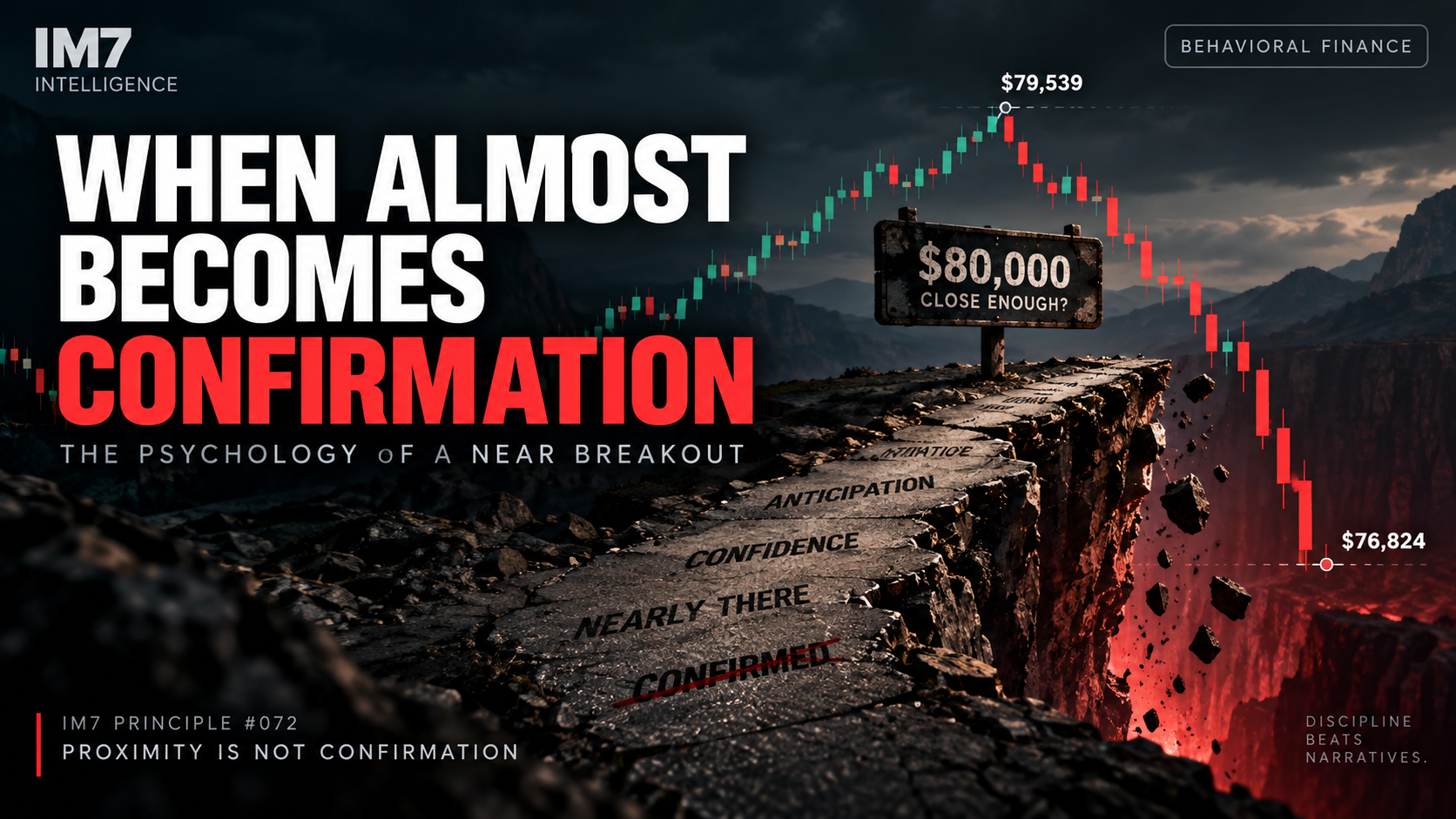
Bitcoin Near $80K: When Almost Becomes Confirmation
Bitcoin pushed toward $80K before reversing back below $77K. The behavioral mistake happened before the decline: traders began treating proximity as confirmation. When “almost there” becomes “good enough” in the mind, anticipation quietly replaces evidence.
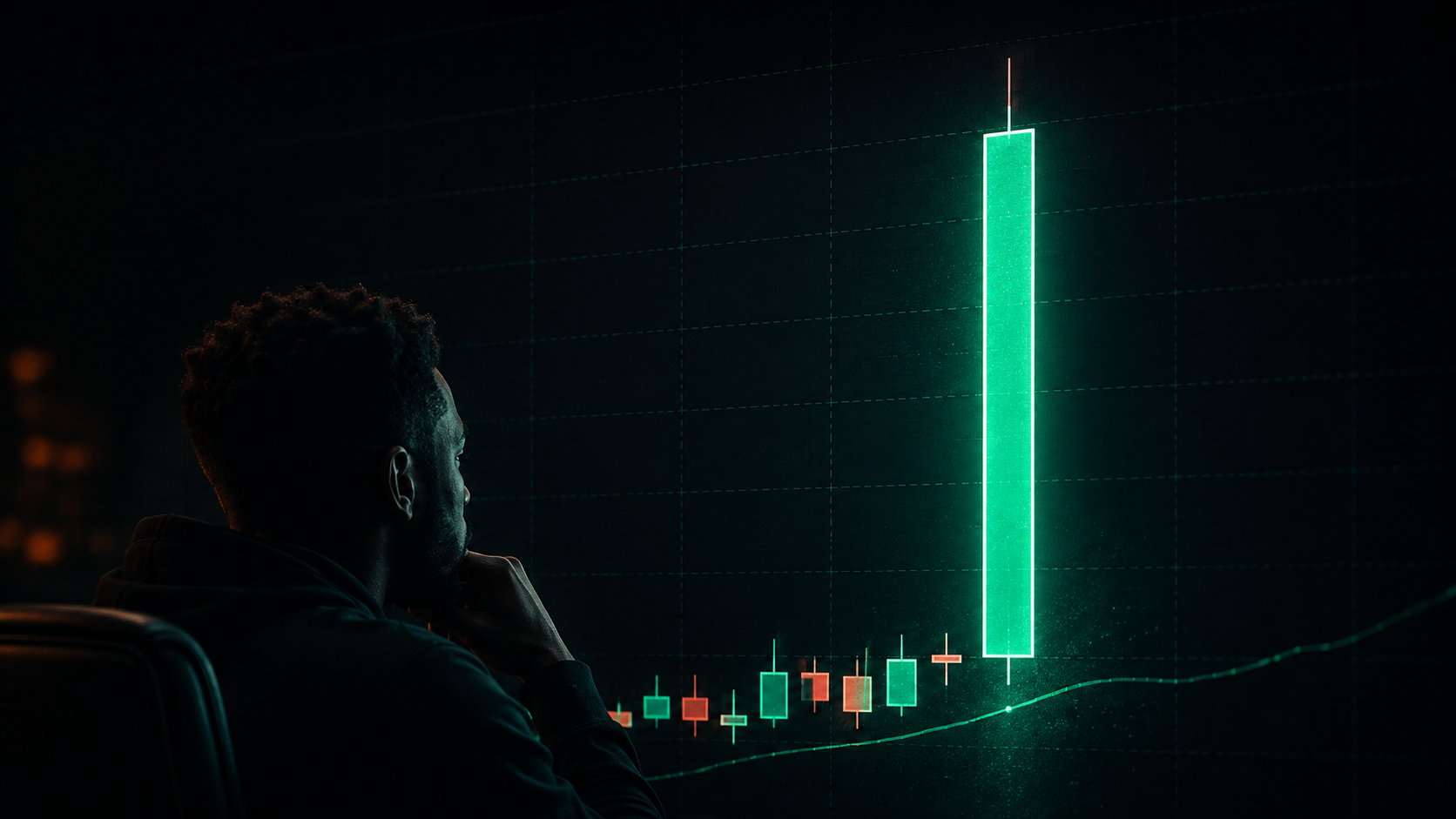
The Salience Trap: Why One Giant Bitcoin Candle Feels Like Certainty
A recent Bitcoin candle surged from below $70,000 to above $71,000 and visually dominated the surrounding chart. Large moves like this can become psychologically dominant, increasing salience, urgency, and the temptation to mistake visual magnitude for confirmation.
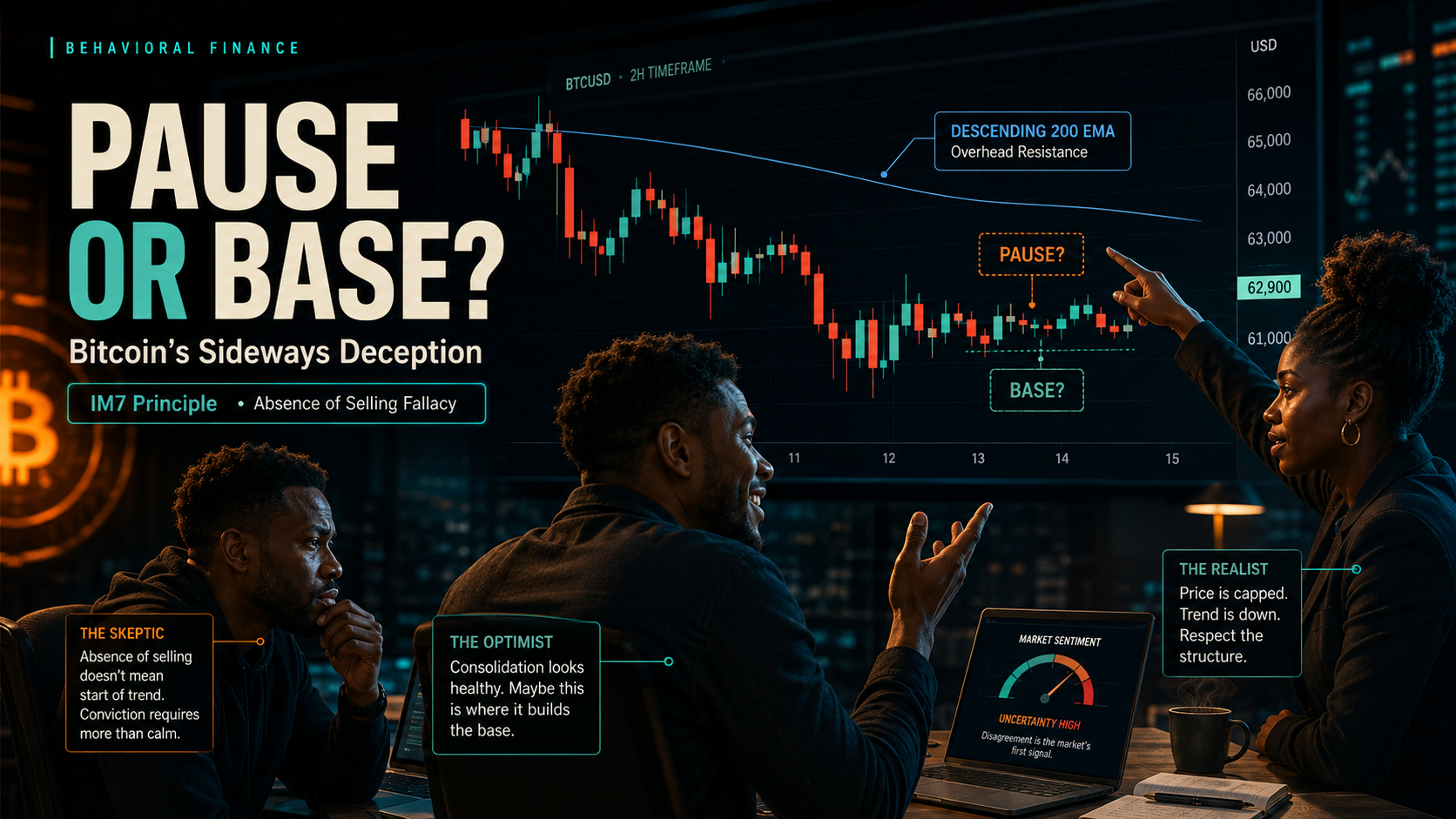
Bitcoin's Sideways Deception: Why a Pause Feels Like a Base
After a recent decline, Bitcoin stabilized near $62.9K, creating the appearance of a developing base. But the absence of aggressive selling is not the same as evidence that buyers have taken control. Sideways price action can create premature confidence before the market has actually confirmed direction.
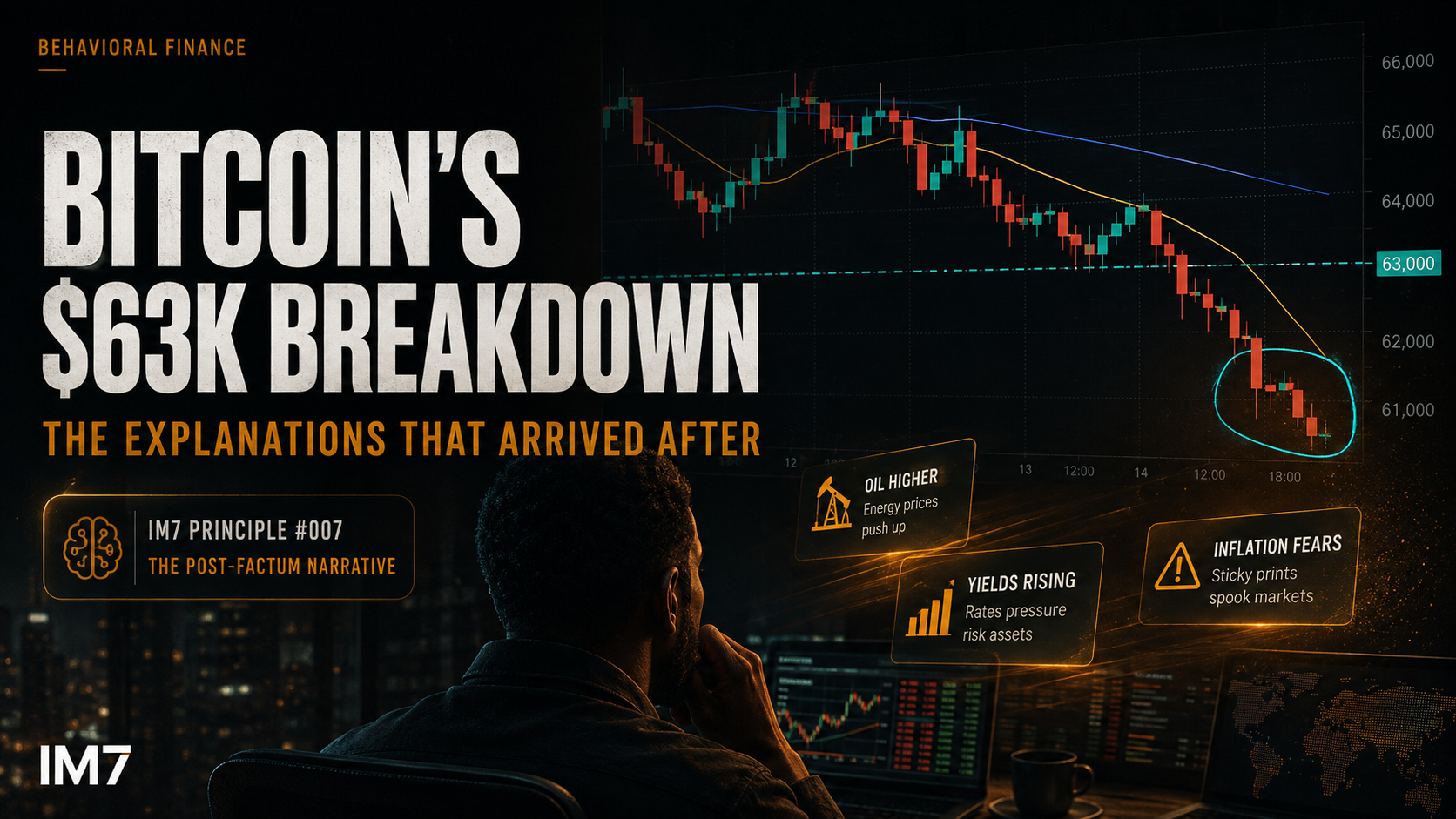
Bitcoin’s $63K Breakdown: Why the Explanations Came After
Bitcoin’s move below $63,000 triggered an immediate wave of explanations — macro pressure, yields, oil, market structure. The behavioral risk is that once the outcome is known, those explanations can feel more obvious and predictive than they actually were beforehand. The real test is separating post-move understanding from genuine pre-move edge.
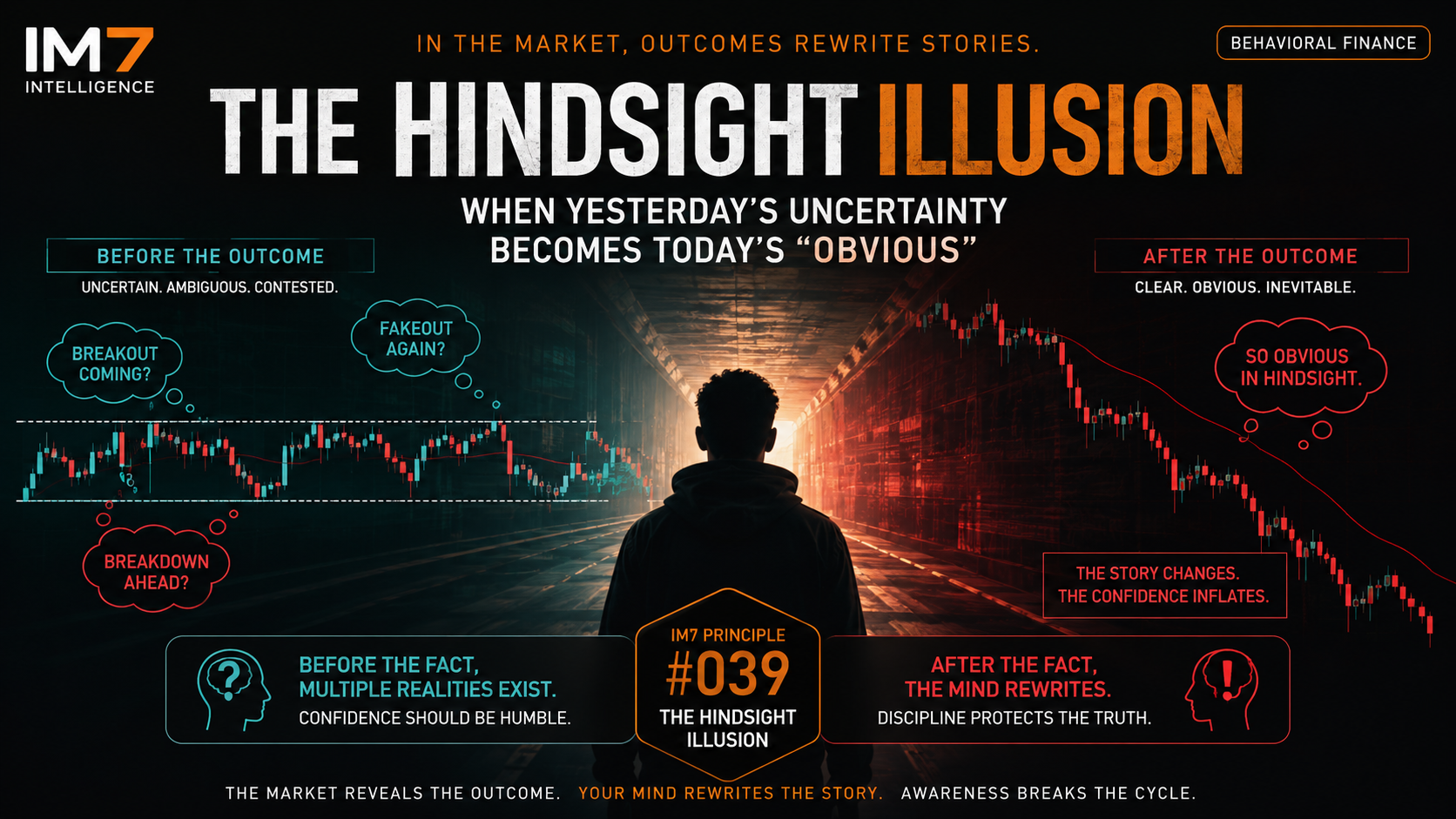
When the Range Breaks: Why Bitcoin Suddenly Looks Obvious
Bitcoin’s range looked ambiguous—until it broke. Then the warning signs suddenly seemed obvious. That shift is hindsight bias: once the outcome is known, traders rewrite uncertainty as predictability and mistake being right about the result for having had better evidence.
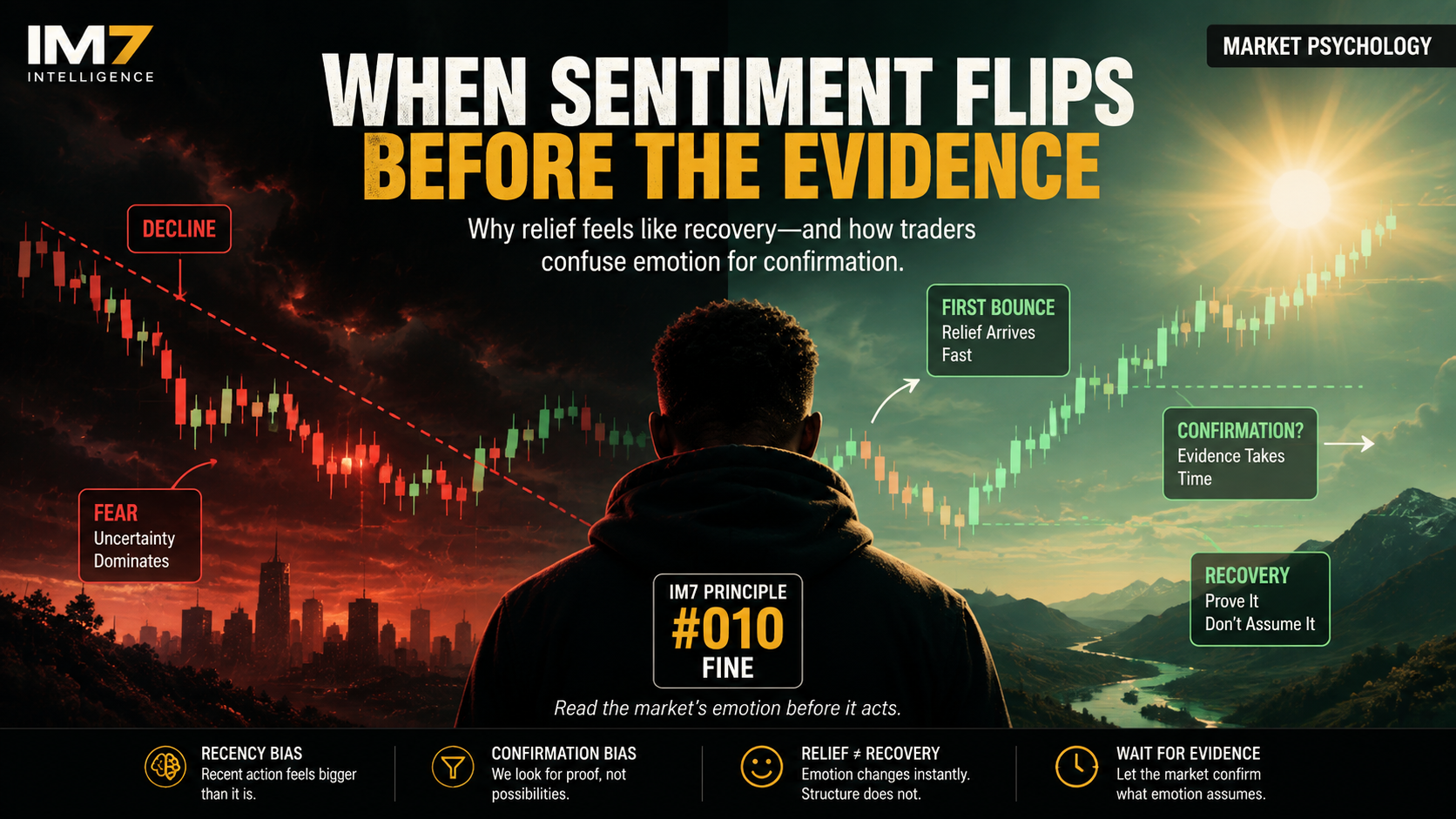
The First Bounce Fallacy: Why Bitcoin Traders Confuse Relief with Recovery
Bitcoin’s first bounce can feel like confirmation before the market has confirmed anything. Relief becomes conviction, and a temporary rebound becomes a recovery narrative. The danger isn’t the bounce—it’s how quickly traders decide what it means.
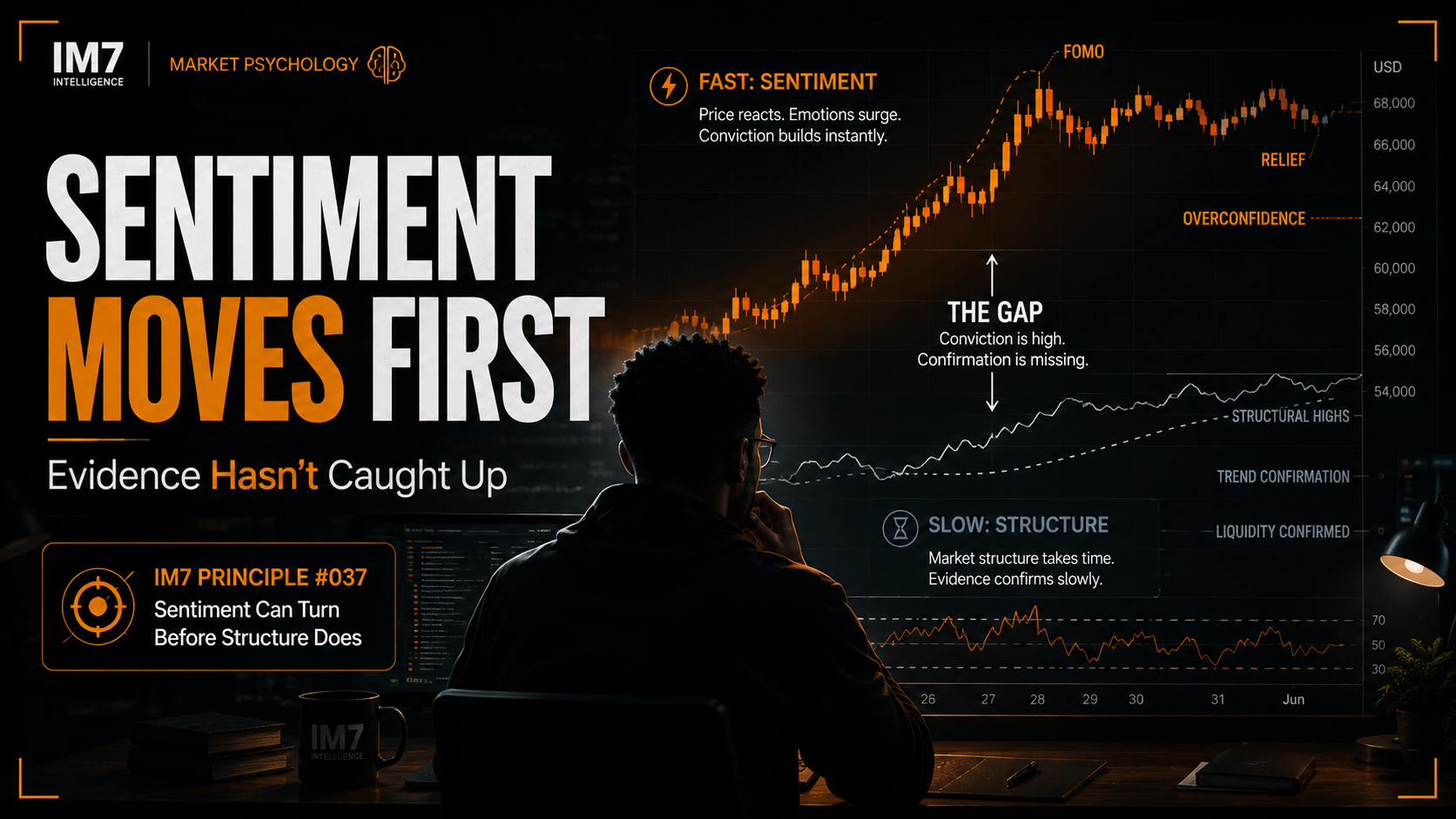
When Sentiment Flips Before Evidence: The Gap Between Feeling and Fact
A sharp market rally can flip sentiment faster than the underlying evidence changes. Traders may begin positioning for continuation while broader structural confirmation remains incomplete. That gap between feeling and fact reveals a core behavioral risk: sentiment can turn long before the evidence justifies conviction.
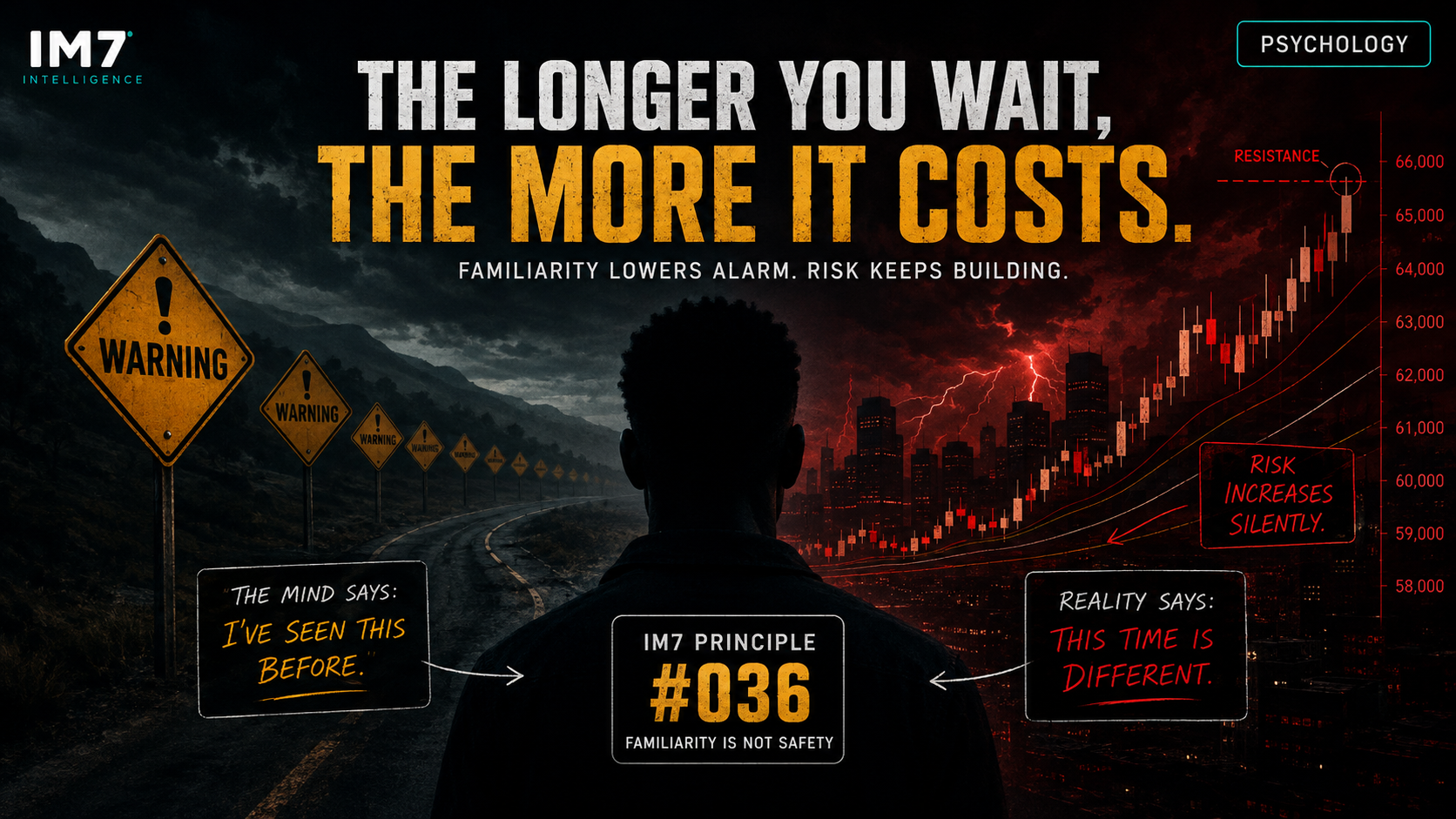
The Familiarity Trap: Why Smart Decisions Miss Obvious Red Flags
Repeated exposure doesn't make danger disappear—it makes it feel normal. The Familiarity Trap explains why intelligent people overlook obvious warning signs, not because they're incapable of seeing them, but because familiarity quietly replaces caution.

Emotional Certainty vs. Evidence: Why Traders Read the Same Bitcoin Chart Differently
Bitcoin is consolidating below resistance with mixed evidence, yet many traders have already committed to bullish or bearish conclusions. The disagreement does not come from different charts. It comes from confirmation bias, emotional certainty, and the tendency to interpret uncertain information through beliefs formed before the market has confirmed either outcome.

One Green Candle Doesn't Confirm a Recovery
One powerful green candle can change how traders feel long before it changes the market itself. Relief often arrives before confirmation, causing investors to mistake a temporary rebound for the beginning of a new trend. This article explores why our brains trust dramatic price moves more than the quieter evidence that follows.

When Selling Doesn't Mean Losing Confidence
Markets reward interpretation, but investors often mistake transactions for conviction. A company selling Bitcoin doesn't automatically signal fear, just as buying doesn't always signal confidence. Understanding the difference separates disciplined analysis from emotional assumptions.

Outcome Bias: Why Good Outcomes Can Reward Bad Decisions
A profitable trade does not always reflect a sound decision. Outcome Bias causes traders to judge the quality of their process by the result instead of the evidence that supported it. When fortunate outcomes reinforce flawed decision-making, the next mistake often becomes larger, more confident, and more expensive.

When Conviction Stops Curiosity: Belief Perseverance in Trading
A conviction, once formed, often feels like certainty. Traders stop gathering new evidence because the market appears to validate their original thesis. The real danger isn't developing conviction—it's allowing conviction to replace objective inquiry when conditions begin to change.

When Relief Becomes Expensive: Why One Candle Isn't Confirmation
A singular, strong market movement frequently evokes immediate emotional relief, often preceding any genuine structural confirmation. Traders commonly conflate this feeling of being correct with objective evidence of a sustained trend. ThiOne strong market move can make traders feel right long before the market confirms they are. Relief arrives instantly. Confirmation takes time. This article explores why confusing those two emotions often leads to expensive trading decisions.s critical distinction between instantaneous relief and time-dependent confirmation holds profound implications for decision-making.

The Recovery Reached Resistance: Confidence Before Confirmation
Three green candles after a sharp decline can create a powerful sense of relief, but relief is not confirmation. Traders often mistake arriving at resistance for breaking through it, allowing emotions to outrun market structure. The recovery may feel convincing, yet the real test often begins where confidence returns.

ETF Flows: Conviction, Not Price, Moves Markets
Most traders watch price. Professional capital leaves clues through ETF flows. While headlines explain yesterday's move, persistent inflows and outflows often reveal changing conviction before market psychology fully shifts. Learning to read capital—not just candles—helps traders understand the behavior driving market structure.

When Recovery Becomes the Risk: Why Relief Can Lead to Overconfidence
A sharp recovery often changes market psychology faster than market structure. Relief becomes confidence, confidence becomes certainty, and traders begin taking larger risks before objective confirmation arrives. The recovery doesn't erase the risk—it simply makes it harder to see.

Stabilization Bias: Why Sideways Markets Feel Safer Than They Are
After a sharp decline, markets often move sideways before making their next major decision. Traders mistake the absence of selling for the presence of buying, creating a dangerous sense of stability. Stabilization Bias explains why quiet markets frequently produce the most expensive decisions—not because the trend has changed, but because confidence has.

The Overconfidence Delusion: Why Intelligence Doesn't Protect You from Bad Decisions
Intelligence doesn't eliminate cognitive bias—it often disguises it. Overconfidence can lead even experienced investors, entrepreneurs, and professionals to underestimate risk, overestimate their knowledge, and mistake confidence for competence. Understanding this psychological trap is essential for better decisions in markets and beyond.

The Allure of the Oracle: Why We Over-rely on Technical Indicators
Despite frequent evidence of their fallibility, market participants often exhibit profound trust in technical indicators. This persistent belief in predictive patterns, even when statistically tenuous, reveals deep-seated cognitive biases. Understanding the subconscious mechanisms driving this over-reliance is crucial for disciplined decision-making.

The Behavioral Misconception: Why Relief Rallies Aren't Structural Recovery
A bounce can restore confidence long before it restores market structure. After Bitcoin defended the $62,000 support level, many traders interpreted relief as recovery. This research examines why temporary rebounds often create false optimism, how cognitive biases distort decision-making during relief rallies, and why rebuilding structure requires far more evidence than surviving a single level.

When "Fine" Becomes Expensive: How Status Quo Bias Traps Bitcoin Traders After Support Breaks
This article explores how status quo bias and other cognitive pitfalls can lead Bitcoin traders to cling to outdated theses, even after critical technical support breaks. We examine the psychological journey from comfort to re-evaluation, using a recent Bitcoin price action as a case study. Understanding these biases is crucial for effective risk management and adaptive decision-making in volatile markets.

Why Relief Bounces Fail: What Bitcoin's $62,000 Breakdown Is Really Telling Traders
Often, what looks like a potential market reversal is merely a temporary reprieve – a "relief bounce" that ultimately fizzles out. This article delves into the psychological traps that lead traders to misinterpret these bounces, using a recent Bitcoin price action example to illustrate core behavioral finance principles. We'll explore how anchoring, confirmation bias, and other cognitive biases cloud judgment, turning fleeting optimism into financial frustration.

The Same Price Level, Different Story: Why Recency Bias Skews Trading Decisions
Traders often anchor their decisions to past price movements, mistaking familiar patterns for reliable indicators. This tendency, influenced by recency bias, can lead to costly misinterpretations of market dynamics. We explore how psychological factors can lead traders to misinterpret 'support' levels, focusing on the behavioral traps of memory-based trading versus observation-based analysis.

The Unassuming Peak: Why the Most Dangerous Candle Never Looks Dangerous
In the volatile world of finance, market tops often manifest not with dramatic crashes, but with small, ordinary-looking candles on a chart. This article explores the psychological reasons why these subtle signals are consistently missed by even experienced investors and traders. We delve into hindsight bias, confirmation bias, and the emotional biases that cloud our judgment at critical junctures.