#Etf Flows
11 articles on Etf Flows — behavioral finance and market psychology from IM7 Intelligence.

Support Felt Certain: How Repeated Tests Trapped Bitcoin Bulls
Bitcoin repeatedly defended $78K until traders began treating support as inevitable. When oil approached $100 and macro pressure intensified, that confidence became vulnerable—revealing how repetition creates false certainty before structure actually confirms it.

$1B Came In. Bitcoin Still Dropped $2K.
Nearly $1 billion in recent Bitcoin ETF inflows did not prevent a sharp $2,000 decline. The behavioral trap is the Institutional Safety Illusion: visible institutional demand can make downside feel more protected than the evidence justifies.

Bitcoin Changed $2,000. Trader Certainty Changed Everything.
Bitcoin went from “breakout confirmed” above $81K to “breakout failed” near $79K in less than a day. The deeper behavioral signal is how quickly one jobs report and one large red candle overrode the market thesis traders had just formed.

Why Bitcoin Feels Safer at $81K Than It Did at $76K
Bitcoin surged from the upper-$79K area toward $81.9K, and traders who felt uneasy near $76K now feel increasingly comfortable buying higher. The behavioral trap is Price-Induced Safety: rising price can reduce perceived risk even when actual market risk has not fallen.
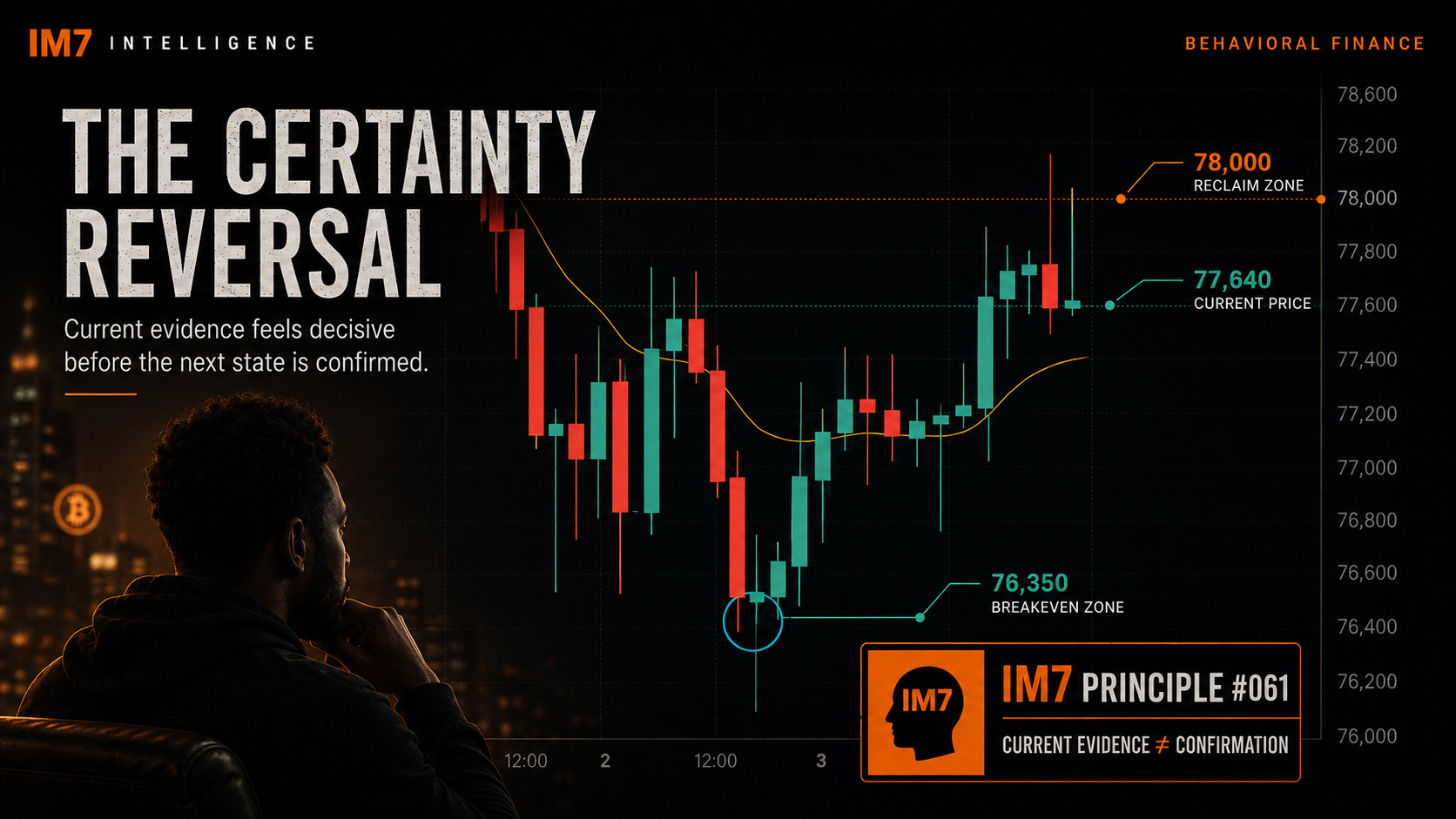
Yesterday Bears Were Certain. Today Bulls Are.
Bitcoin bounced from roughly $76.35K toward $77.64K after yesterday’s breakdown. The bigger behavioral risk is how quickly traders convert each new move into certainty about what comes next.
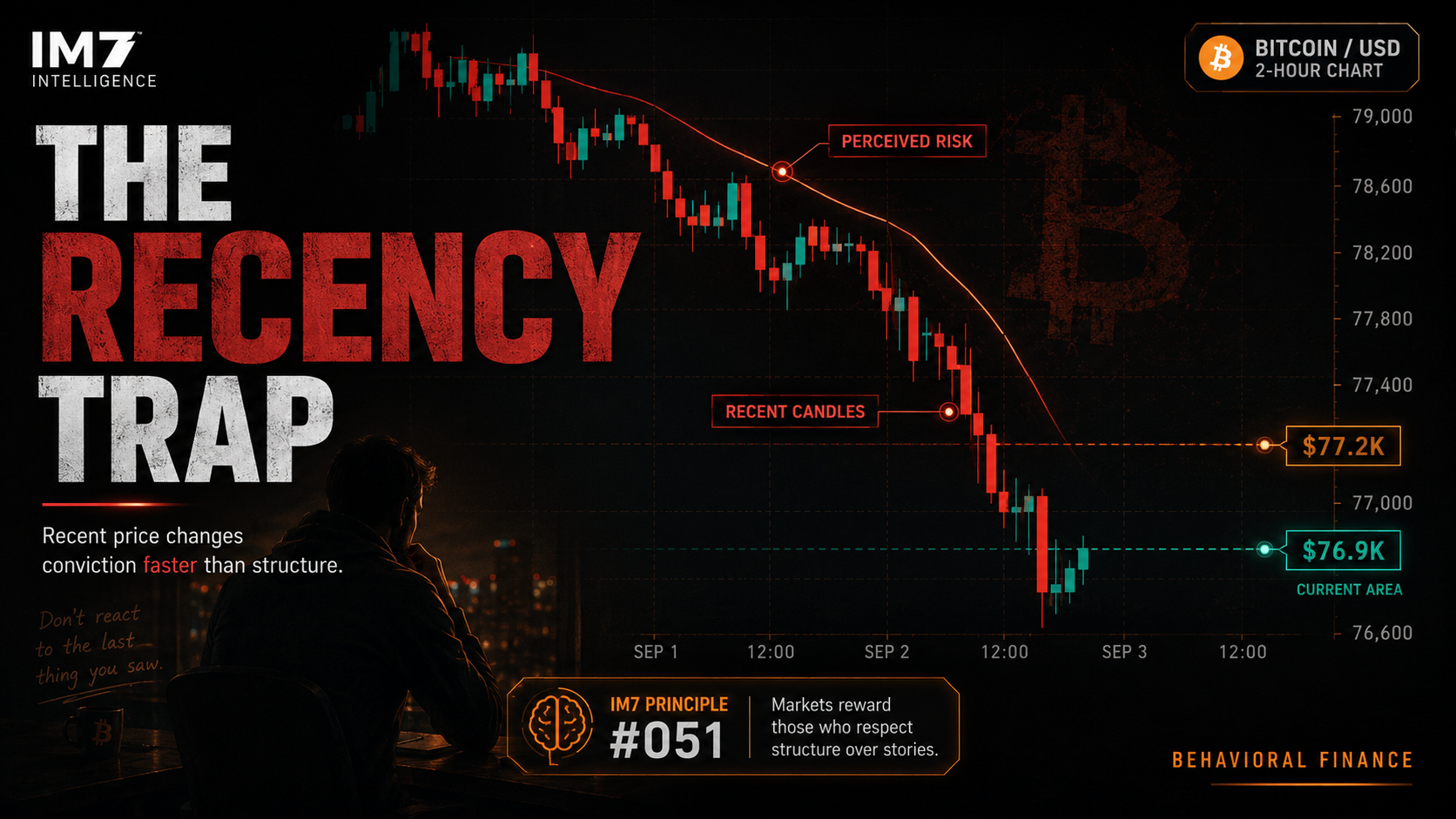
Why Bitcoin Felt Safe at $80K and Dangerous at $76K
Bitcoin fell from the upper-$78K range toward $76.9K, and trader perception shifted with it. IM7 examines the Bitcoin Recency Loop: how recent candles change perceived risk faster than market structure actually changes.
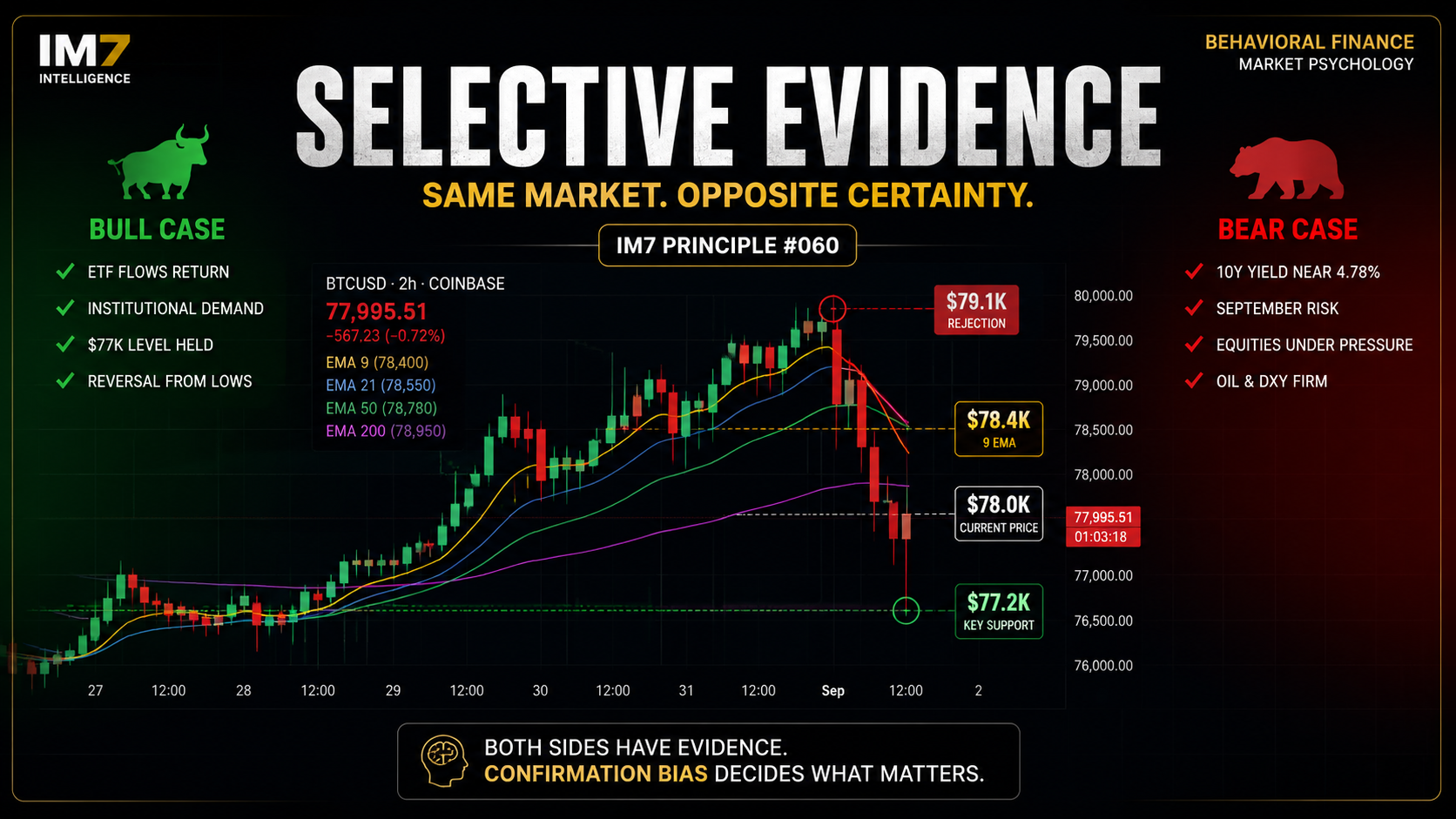
Bitcoin Gave Bulls and Bears Evidence. Both Used It Wrong.
Bitcoin is caught between bullish ETF demand and a worsening macro backdrop. The bigger behavioral risk is not choosing the wrong side — it is selectively using evidence to defend the side you already believe.
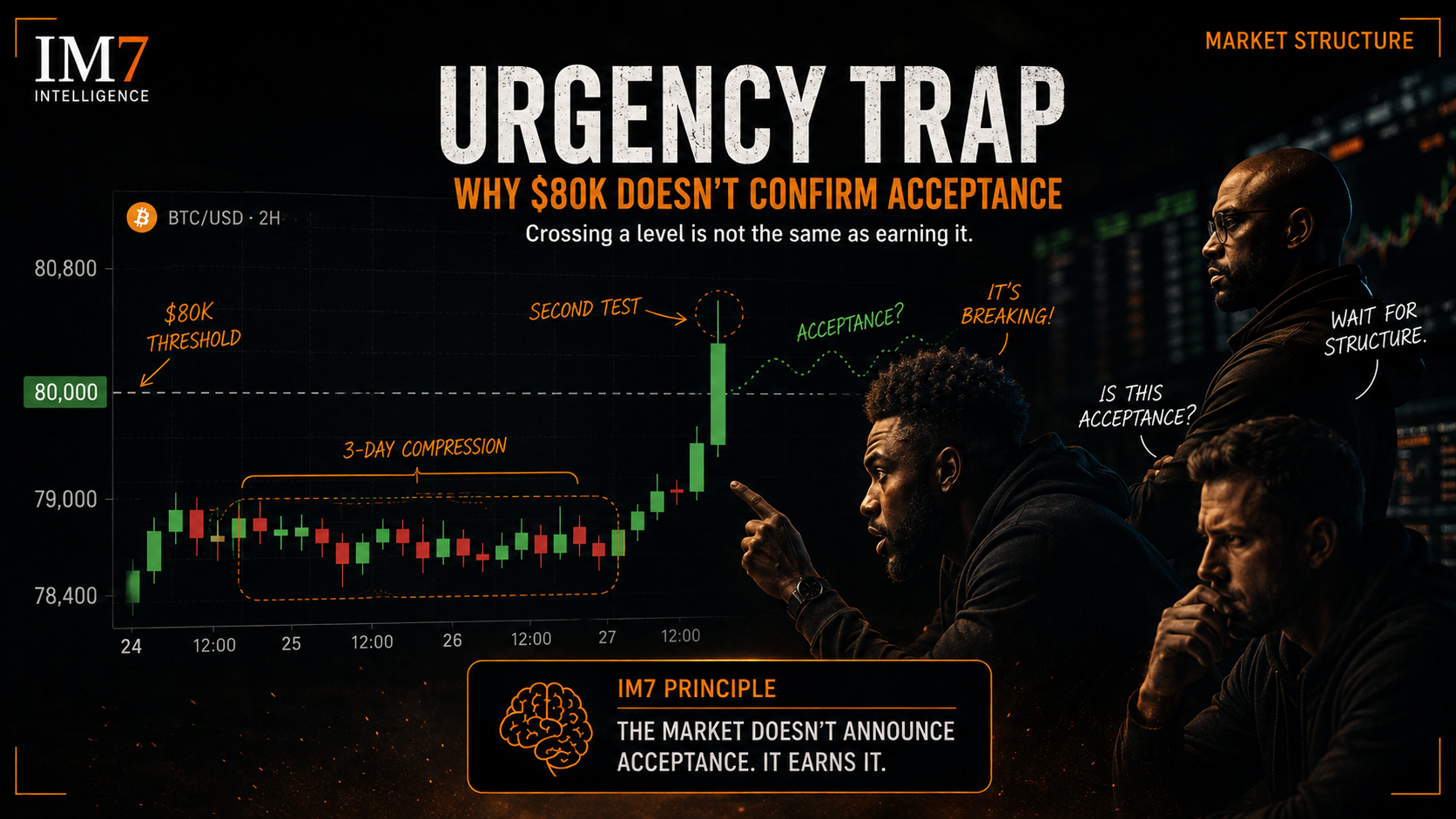
The Urgency Trap: Why Bitcoin Crossing $80K Does Not Confirm Acceptance
Bitcoin pushed back through $80,000 after days of compression, but the behavioral risk is shifting from impatience to urgency. IM7 examines why crossing a level is not the same as establishing acceptance above it.
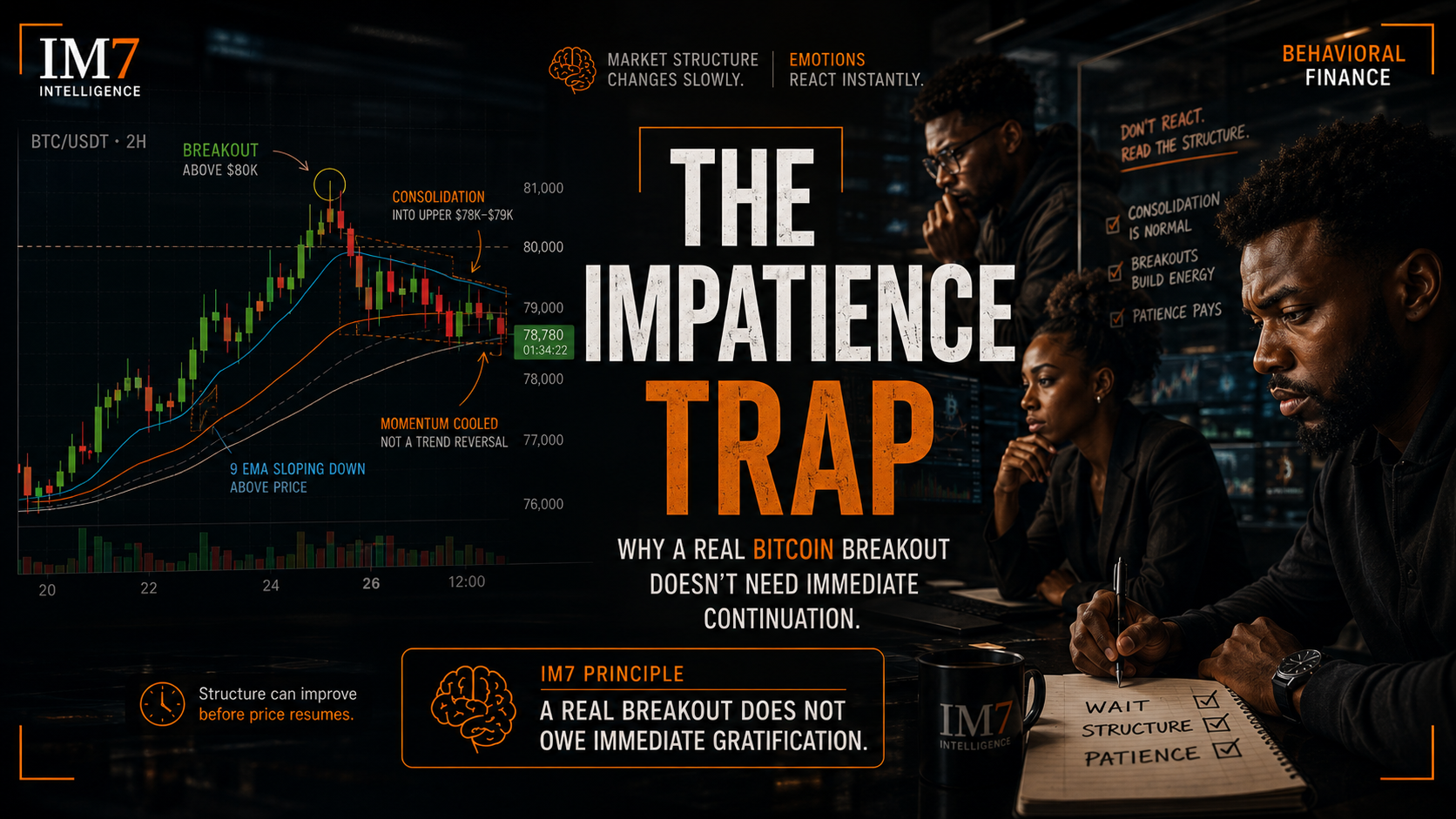
The Impatience Trap: Why a Real Bitcoin Breakout Doesn't Need Immediate Continuation
Bitcoin broke above major structure and briefly cleared $80K, but the pause that followed exposed a new behavioral trap: traders often mistake the absence of immediate continuation for evidence that the breakout failed.

When Sentiment Flips Before Evidence: The Gap Between Feeling and Fact
A sharp market rally can flip sentiment faster than the underlying evidence changes. Traders may begin positioning for continuation while broader structural confirmation remains incomplete. That gap between feeling and fact reveals a core behavioral risk: sentiment can turn long before the evidence justifies conviction.

ETF Flows: Conviction, Not Price, Moves Markets
Most traders watch price. Professional capital leaves clues through ETF flows. While headlines explain yesterday's move, persistent inflows and outflows often reveal changing conviction before market psychology fully shifts. Learning to read capital—not just candles—helps traders understand the behavior driving market structure.