#Btcusd
6 articles on Btcusd — behavioral finance and market psychology from IM7 Intelligence.

$1B Came In. Bitcoin Still Dropped $2K.
Nearly $1 billion in recent Bitcoin ETF inflows did not prevent a sharp $2,000 decline. The behavioral trap is the Institutional Safety Illusion: visible institutional demand can make downside feel more protected than the evidence justifies.
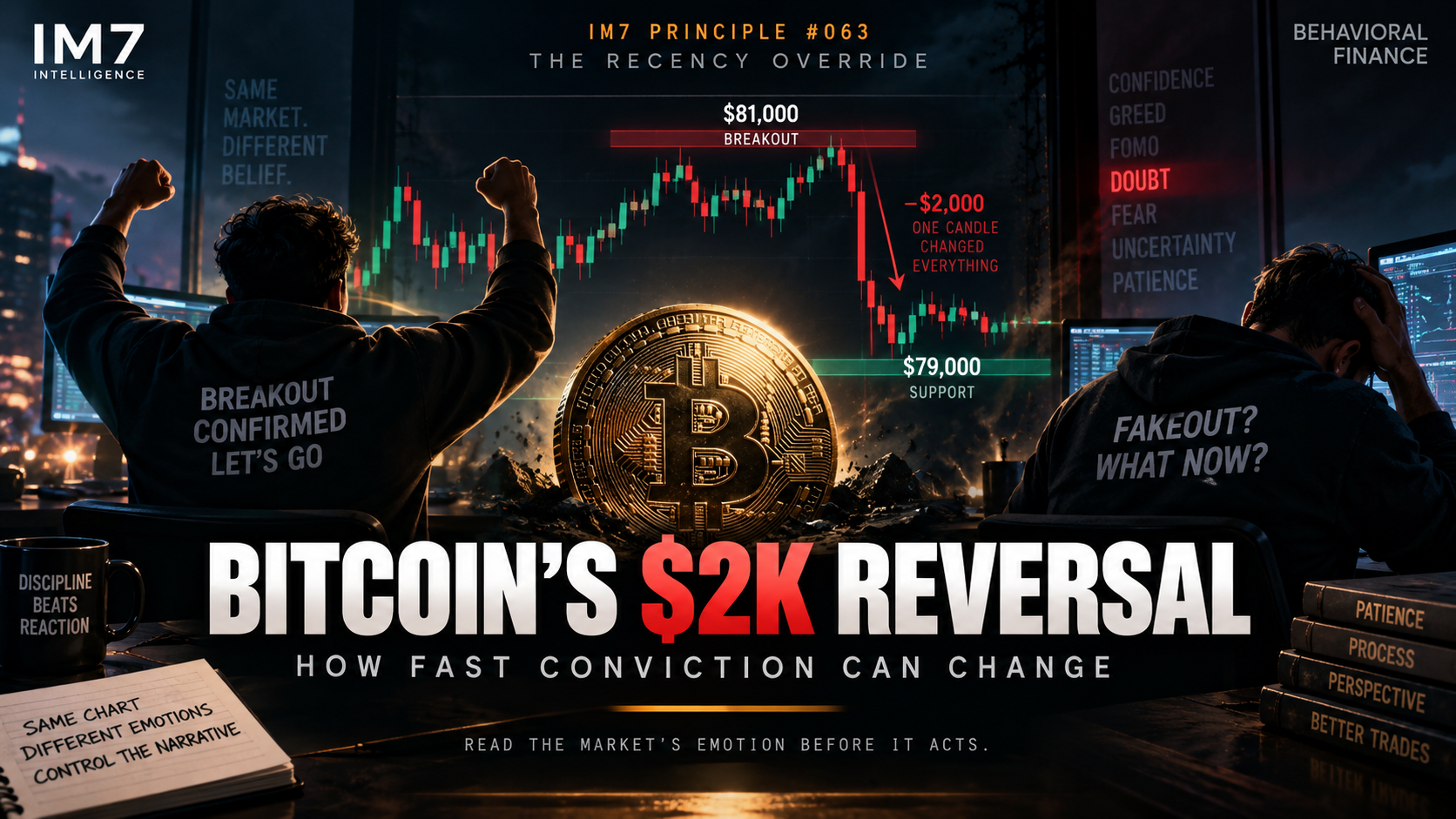
Bitcoin Changed $2,000. Trader Certainty Changed Everything.
Bitcoin went from “breakout confirmed” above $81K to “breakout failed” near $79K in less than a day. The deeper behavioral signal is how quickly one jobs report and one large red candle overrode the market thesis traders had just formed.
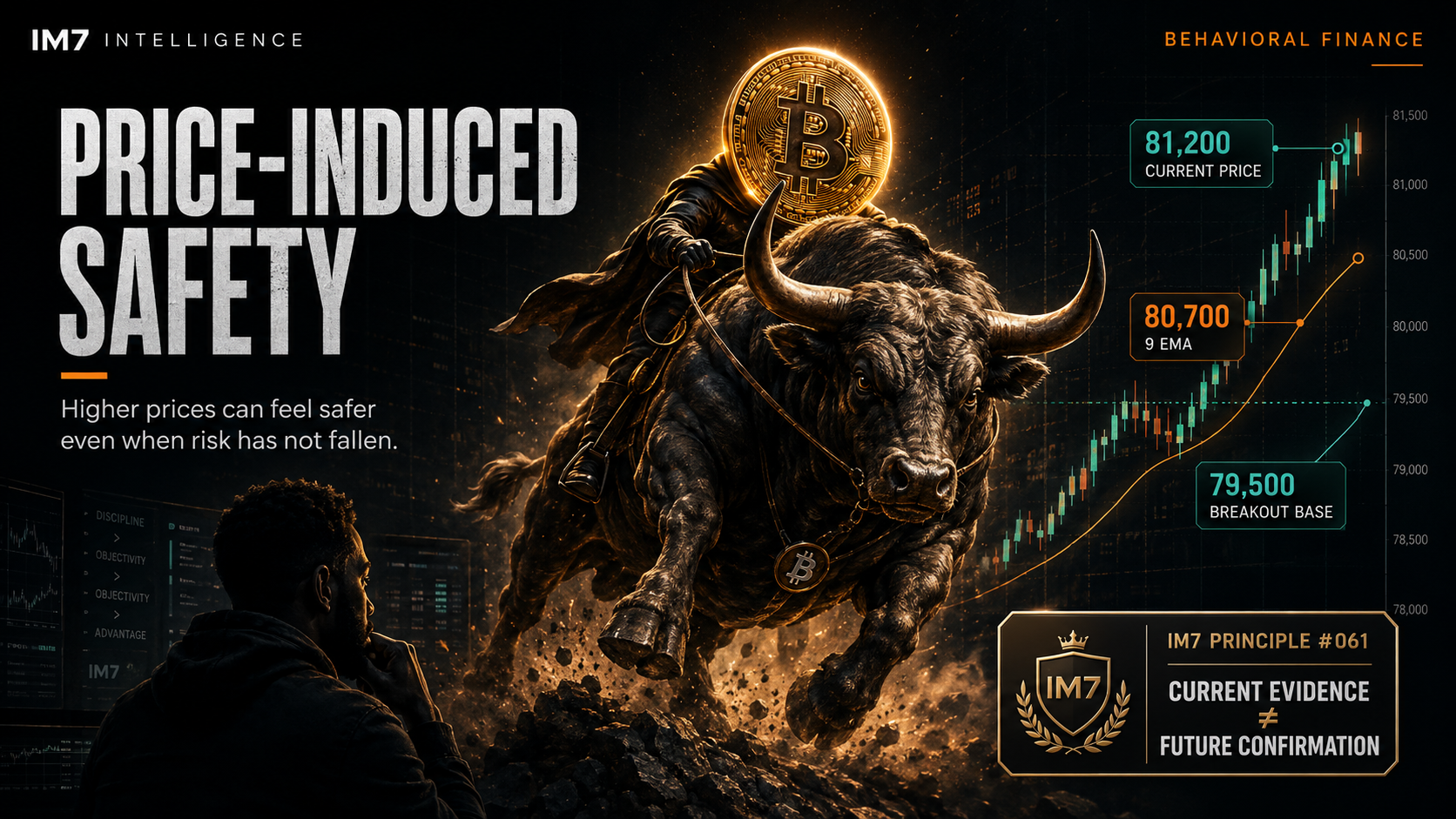
Why Bitcoin Feels Safer at $81K Than It Did at $76K
Bitcoin surged from the upper-$79K area toward $81.9K, and traders who felt uneasy near $76K now feel increasingly comfortable buying higher. The behavioral trap is Price-Induced Safety: rising price can reduce perceived risk even when actual market risk has not fallen.
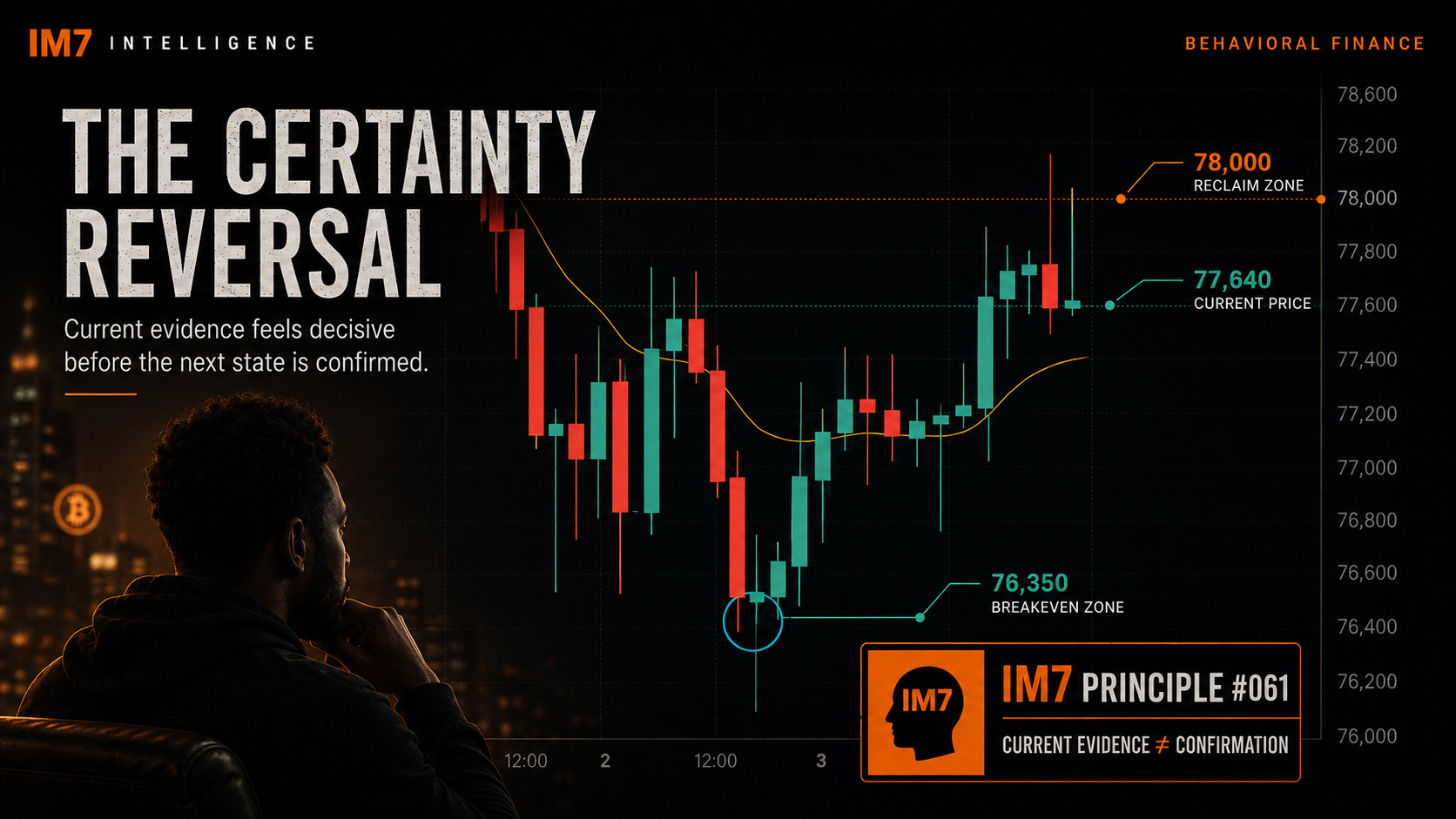
Yesterday Bears Were Certain. Today Bulls Are.
Bitcoin bounced from roughly $76.35K toward $77.64K after yesterday’s breakdown. The bigger behavioral risk is how quickly traders convert each new move into certainty about what comes next.
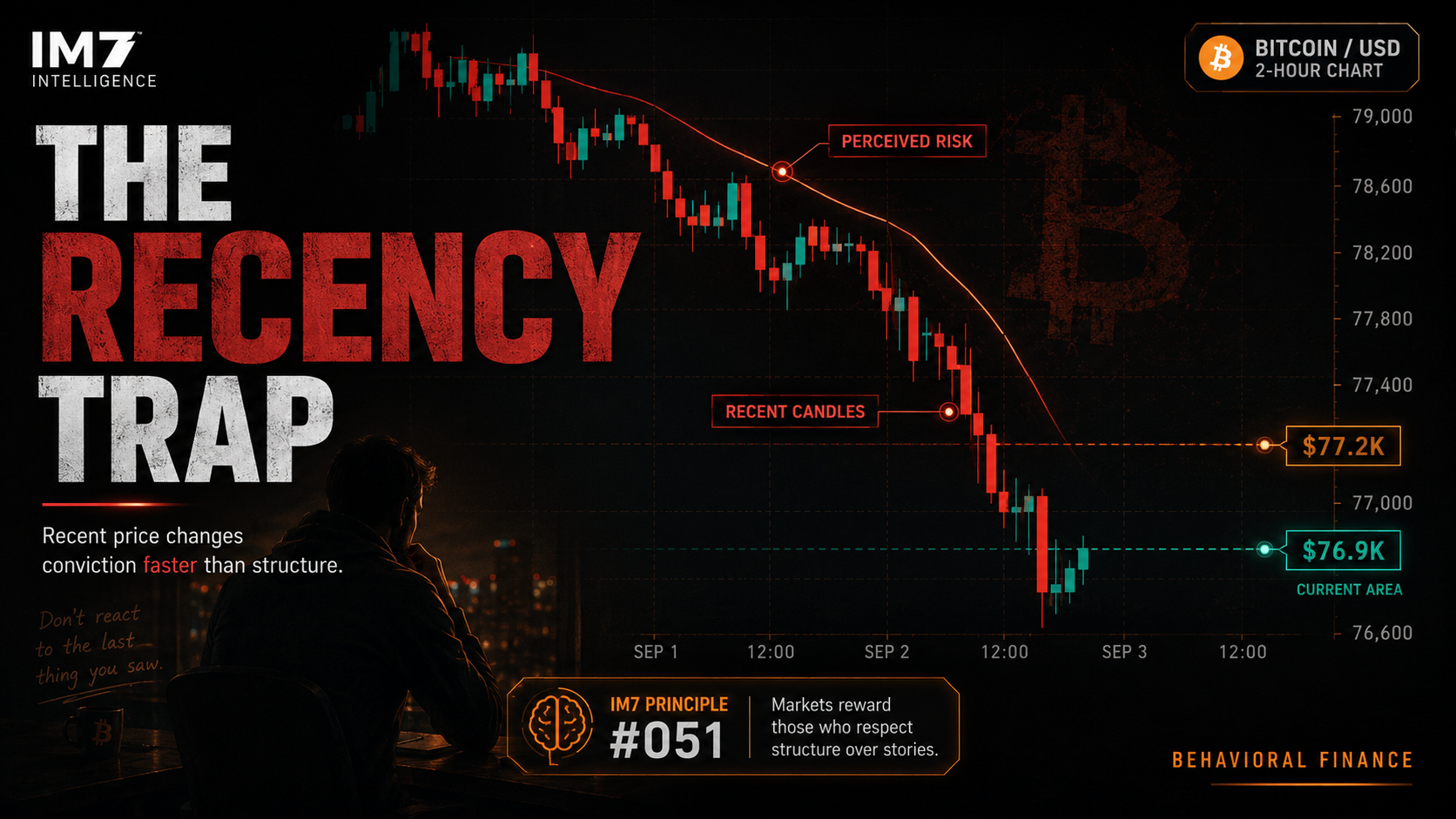
Why Bitcoin Felt Safe at $80K and Dangerous at $76K
Bitcoin fell from the upper-$78K range toward $76.9K, and trader perception shifted with it. IM7 examines the Bitcoin Recency Loop: how recent candles change perceived risk faster than market structure actually changes.
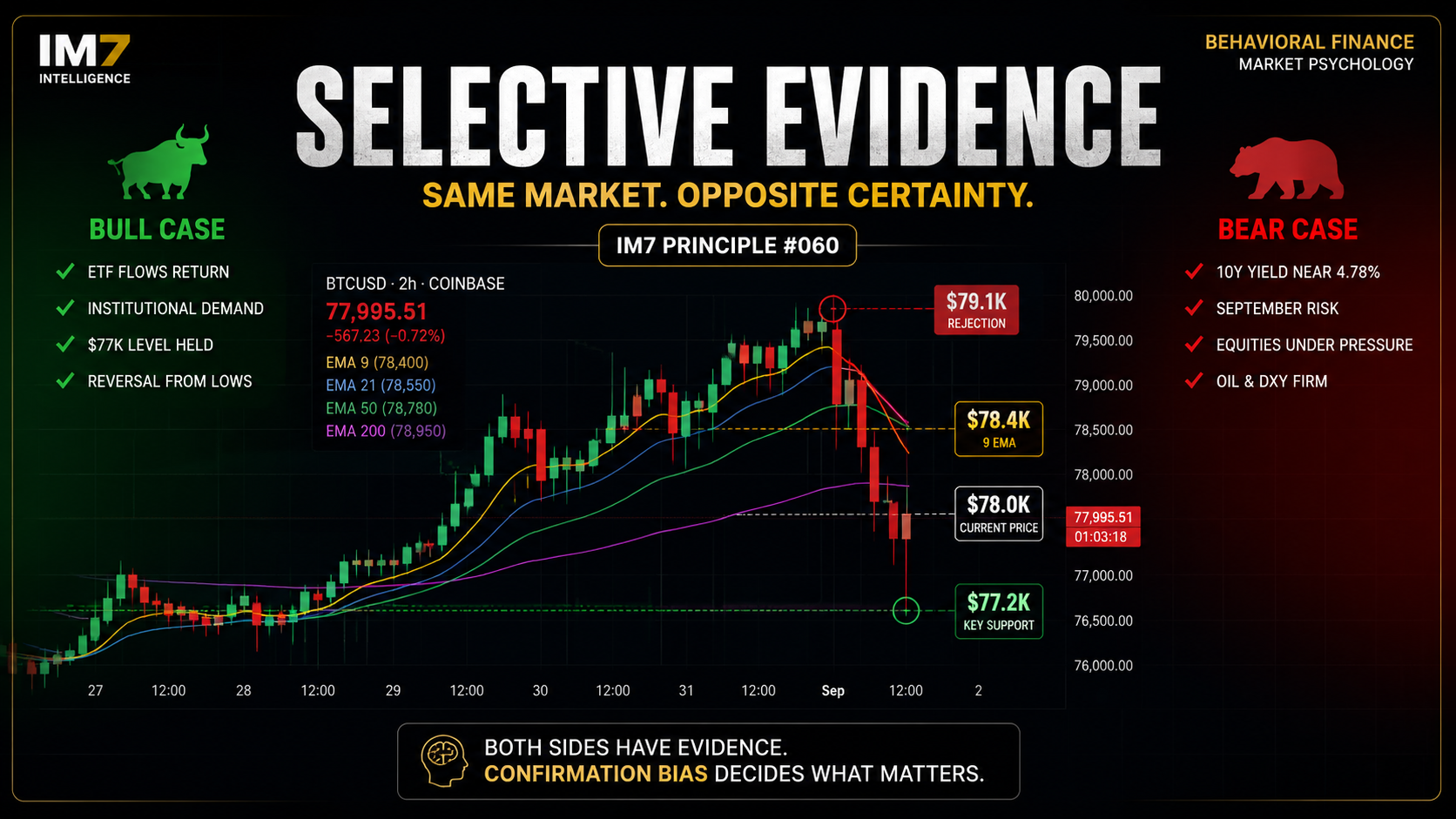
Bitcoin Gave Bulls and Bears Evidence. Both Used It Wrong.
Bitcoin is caught between bullish ETF demand and a worsening macro backdrop. The bigger behavioral risk is not choosing the wrong side — it is selectively using evidence to defend the side you already believe.