Sentiment
What participants feel — and what that says about price.
Sentiment is a leading indicator when it's extreme and a lagging one when it's average. IM7 reads it as behavioral positioning, not as opinion polling: the emotional distance between the crowd and the trade.
Most Read

$1B Came In. Bitcoin Still Dropped $2K.
Nearly $1 billion in recent Bitcoin ETF inflows did not prevent a sharp $2,000 decline. The behavioral trap is the Institutional Safety Illusion: visible institutional demand can make downside feel more protected than the evidence justifies.
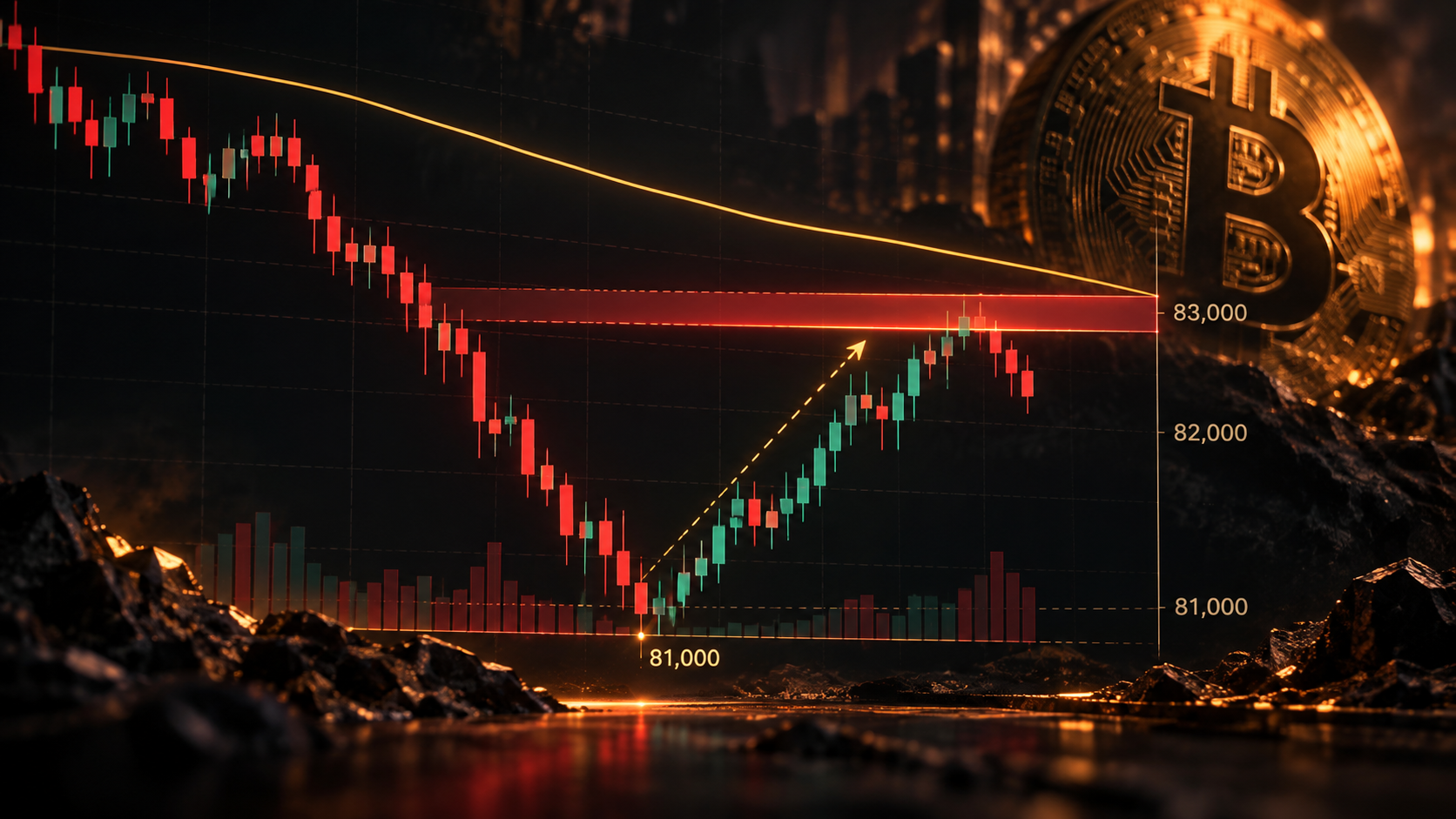
Bitcoin Bounced Again — Traders Called It Recovery
Bitcoin bounced from roughly $81.4K toward $83.2K, but the move stalled back near $82.5K before reclaiming the levels lost earlier in the week. The behavioral mistake is treating relief from selling as proof that buyers have regained control. Relief describes what stopped happening; recovery requires evidence of what buyers can actually accomplish.
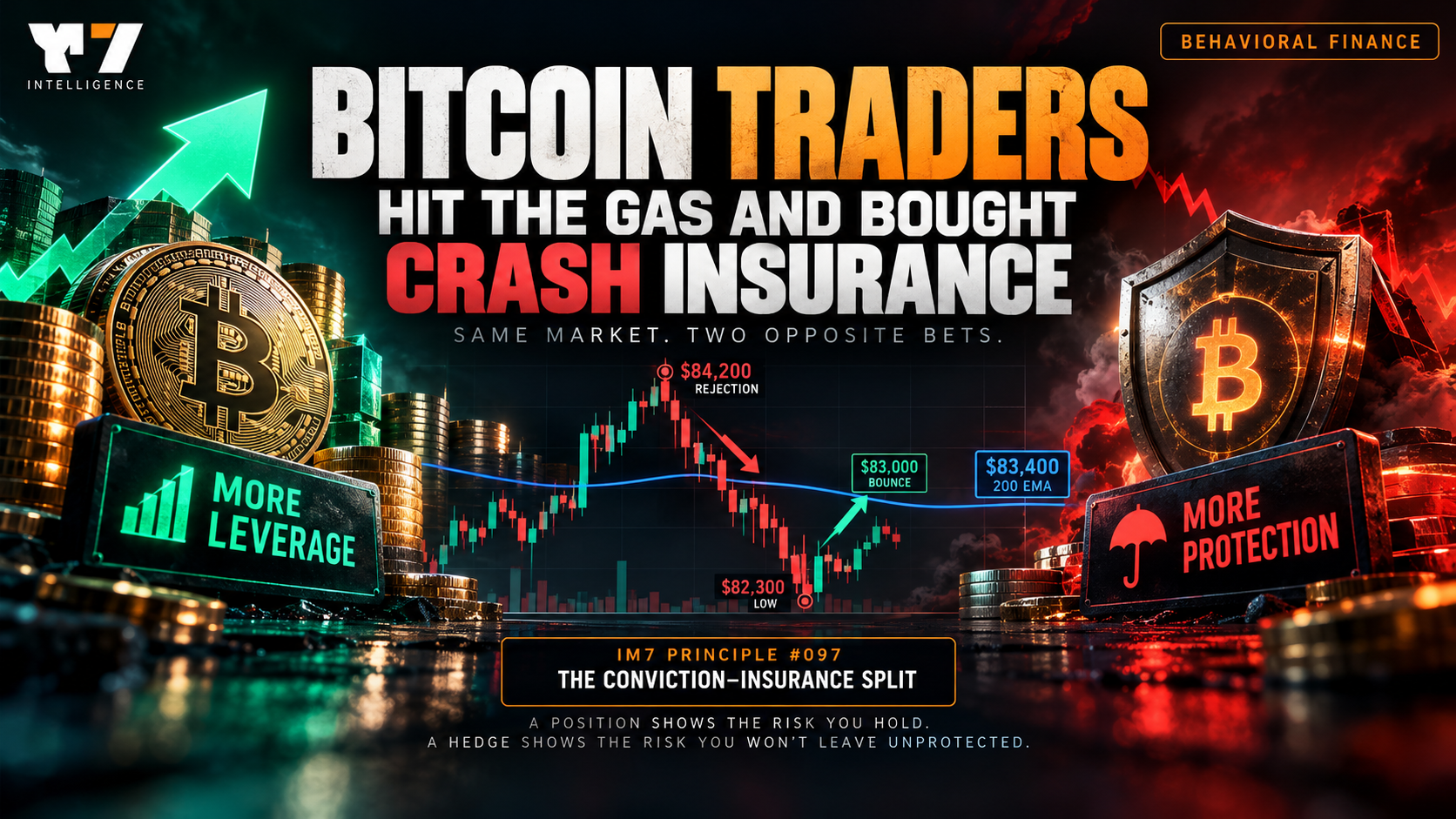
Bitcoin Traders Hit the Gas and Bought Crash Insurance
Bitcoin rejected $84K, dropped toward $82.3K, and bounced back near $83K. Meanwhile, a derivatives snapshot showed traders adding leveraged exposure as demand for downside protection increased. IM7 Intelligence examines the Conviction–Insurance Split—and why bullish positioning doesn't necessarily mean confidence without fear.
Latest
Bitcoin Bounced Again — Traders Called It Recovery
Bitcoin bounced from roughly $81.4K toward $83.2K, but the move stalled back near $82.5K before reclaiming the levels lost earlier in the week. The behavioral mistake is treating relief from selling as proof that buyers have regained control. Relief describes what stopped happening; recovery requires evidence of what buyers can actually accomplish.
$1B Came In. Bitcoin Still Dropped $2K.
Nearly $1 billion in recent Bitcoin ETF inflows did not prevent a sharp $2,000 decline. The behavioral trap is the Institutional Safety Illusion: visible institutional demand can make downside feel more protected than the evidence justifies.
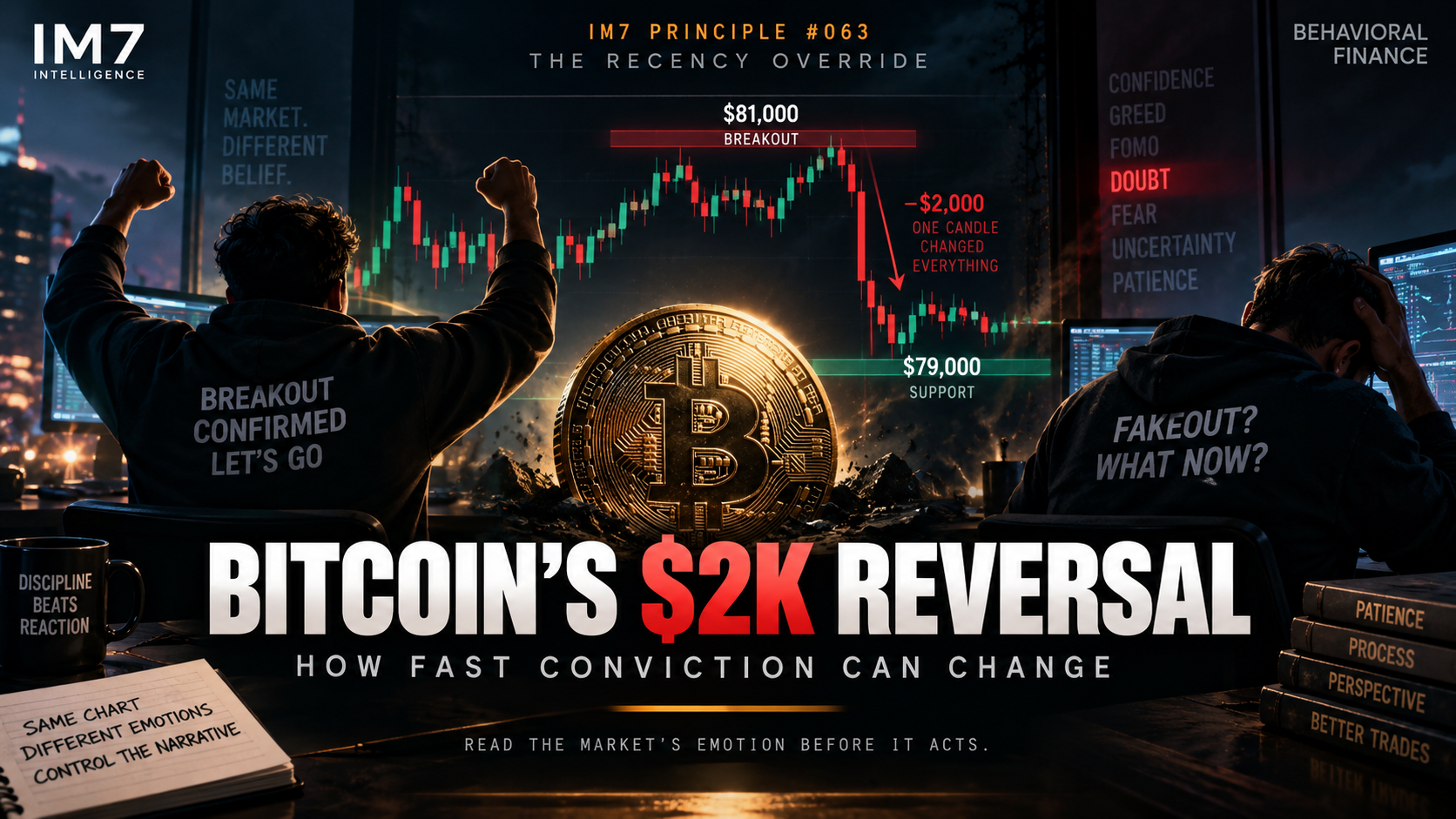
Bitcoin Changed $2,000. Trader Certainty Changed Everything.
Bitcoin went from “breakout confirmed” above $81K to “breakout failed” near $79K in less than a day. The deeper behavioral signal is how quickly one jobs report and one large red candle overrode the market thesis traders had just formed.
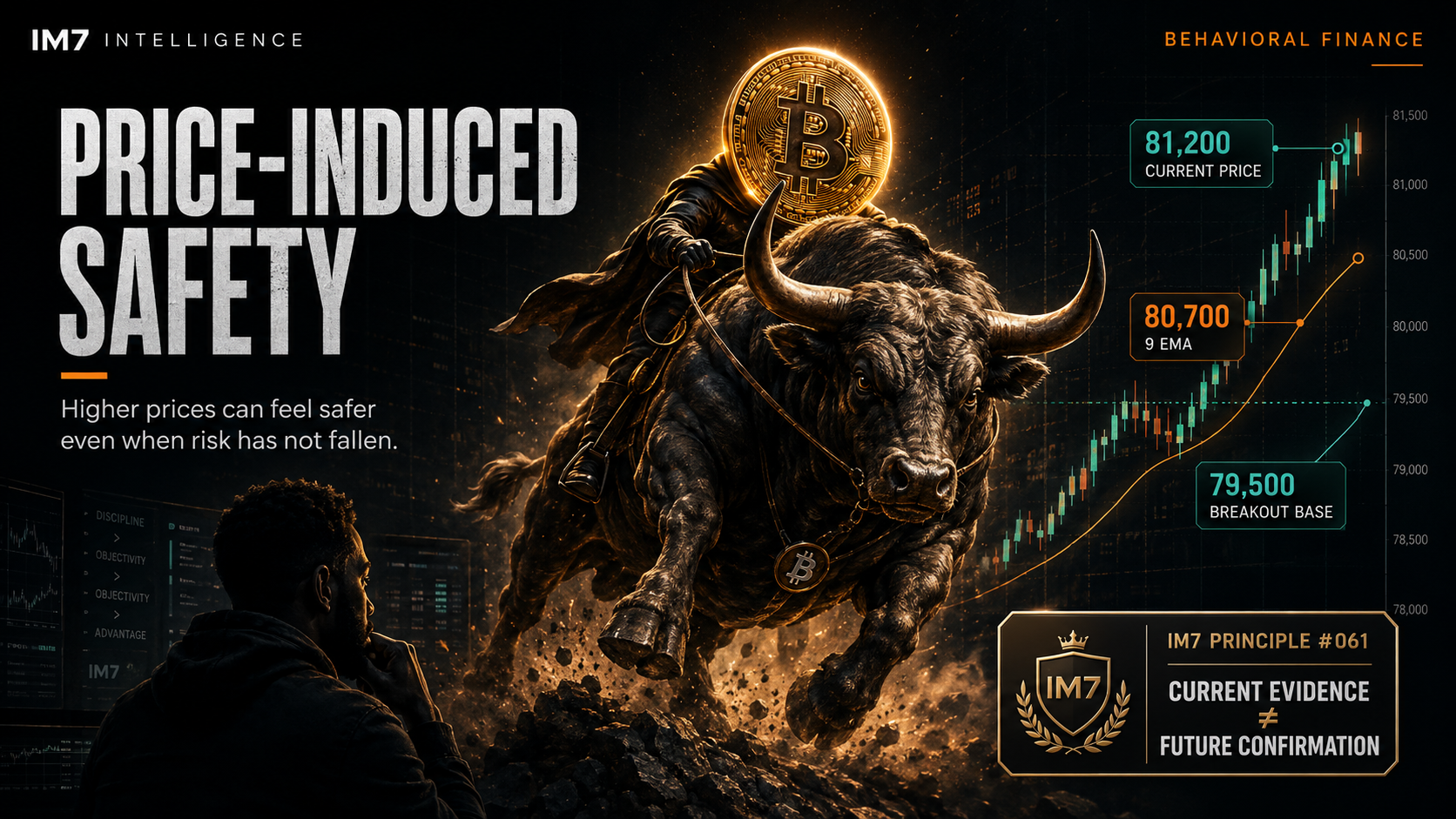
Why Bitcoin Feels Safer at $81K Than It Did at $76K
Bitcoin surged from the upper-$79K area toward $81.9K, and traders who felt uneasy near $76K now feel increasingly comfortable buying higher. The behavioral trap is Price-Induced Safety: rising price can reduce perceived risk even when actual market risk has not fallen.
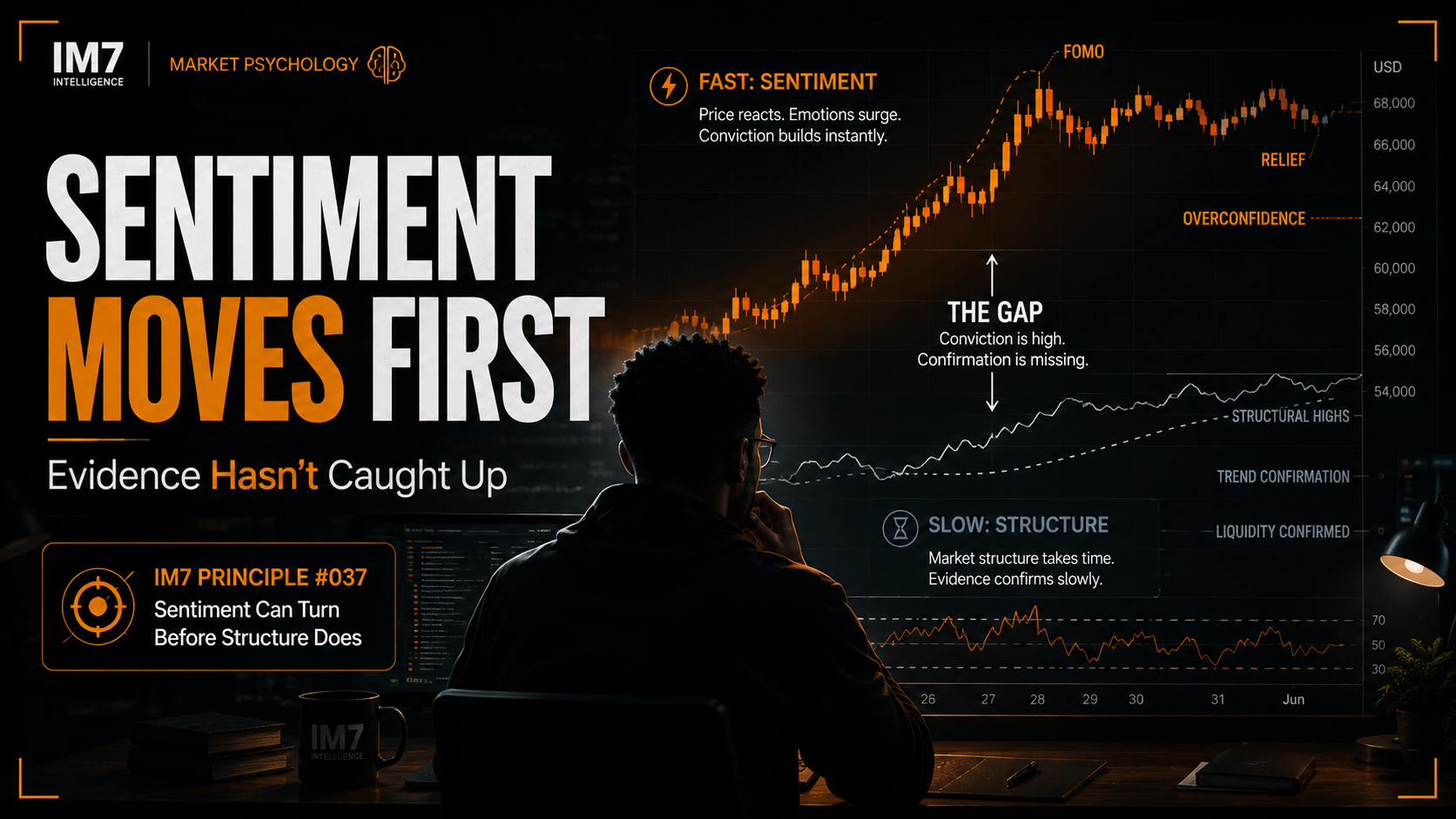
When Sentiment Flips Before Evidence: The Gap Between Feeling and Fact
A sharp market rally can flip sentiment faster than the underlying evidence changes. Traders may begin positioning for continuation while broader structural confirmation remains incomplete. That gap between feeling and fact reveals a core behavioral risk: sentiment can turn long before the evidence justifies conviction.

Emotional Certainty vs. Evidence: Why Traders Read the Same Bitcoin Chart Differently
Bitcoin is consolidating below resistance with mixed evidence, yet many traders have already committed to bullish or bearish conclusions. The disagreement does not come from different charts. It comes from confirmation bias, emotional certainty, and the tendency to interpret uncertain information through beliefs formed before the market has confirmed either outcome.

Why Traders Notice Opportunity Too Late
Markets often consolidate quietly for hours—or even days—while evidence steadily accumulates beneath the surface. Yet most traders remain disengaged until a single dramatic green candle captures their attention. This isn't a market phenomenon; it's a behavioral one. The first green candle rarely creates the opportunity—it simply makes it impossible for the crowd to ignore.

Why Most Traders Miss The Bottom: A Behavioral Finance Perspective on Market Reversals
Market bottoms are often clear in hindsight, but in real-time, they are shrouded in fear, uncertainty, and capitulation. This article explores the behavioral biases that prevent most traders from recognizing and capitalizing on these pivotal moments, using Bitcoin as a prime example. We delve into how emotional extremes create opportunities and why waiting for confirmation can lead to missing the biggest moves.

The Market Has Amnesia. So Do You.
Bitcoin bounced from 60k to 62.5k and sentiment changed almost instantly. The bigger story isn't the price move—it's how quickly investors forgot the fear that came before it.

Crowd Conviction and the Four Market Regimes
Markets do not have prices. They have regimes. A simple four-regime framework based on crowd conviction can clarify almost any chart.

Why Fear Creates Better Opportunities Than Euphoria in Bitcoin: A Behavioral Finance Perspective
In the volatile world of Bitcoin, emotions often drive market movements. This article deconstructs how fear, rather than euphoria, can present more compelling opportunities for savvy investors, drawing insights from behavioral finance and crowd psychology.