#Outcome Bias
7 articles on Outcome Bias — behavioral finance and market psychology from IM7 Intelligence.

Bitcoin Bounced From $82.6K—But a Correct Thesis Still Became a Bad Trade
Bitcoin’s bounce from $82.6K exposed a distinction traders often learn too late: a correct market thesis cannot rescue poor entry, excessive leverage, or weak position sizing. The first bounce showed relief. The retest will reveal whether buyers actually returned.
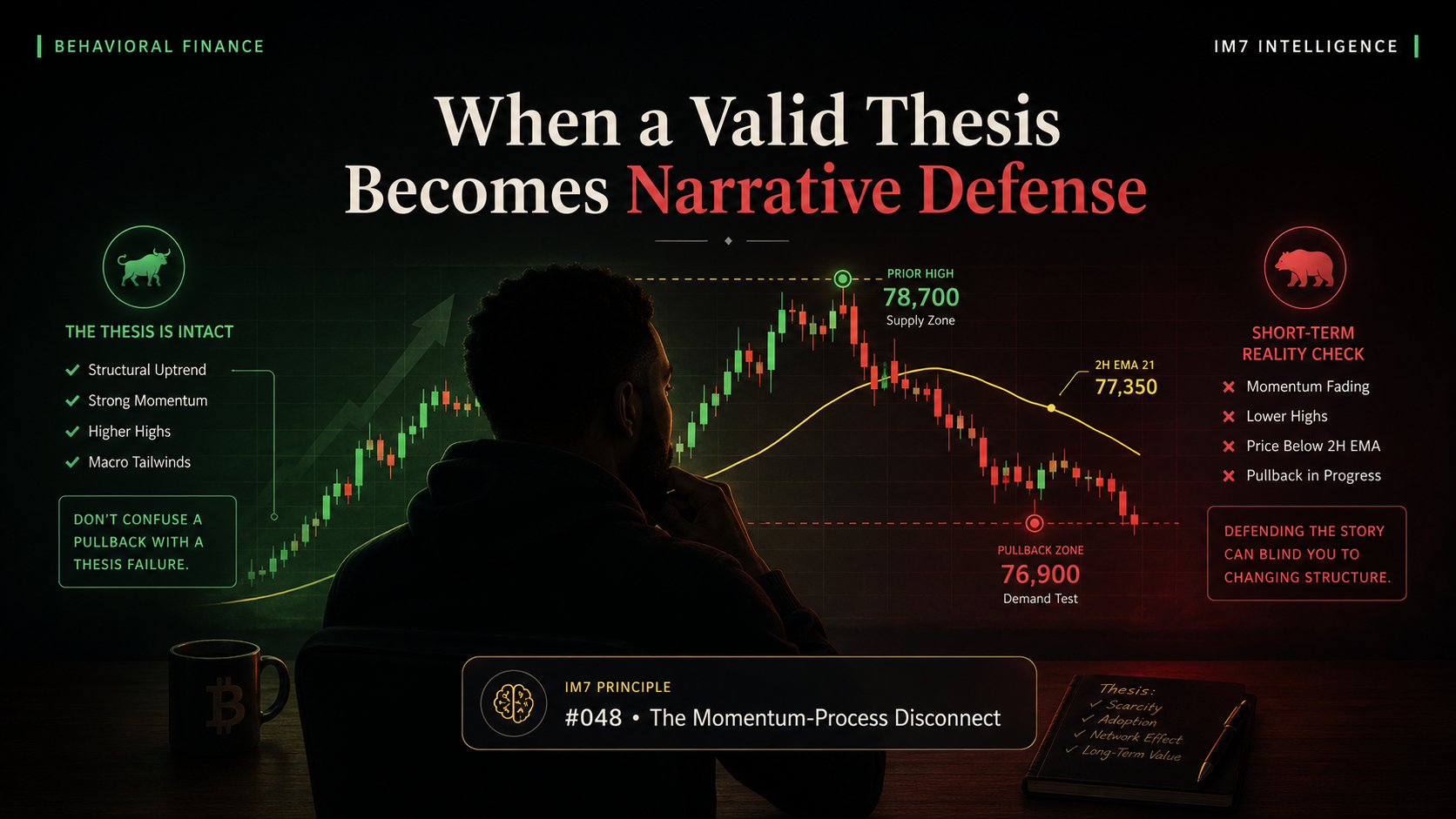
Yesterday’s Rally Was Real — Today’s Evidence Is Different
Bitcoin’s rally had real catalysts and genuine upside strength. But as price pulls back from recent highs, traders face a different behavioral test: whether they can update a previously rewarded thesis when new evidence begins to conflict with it.
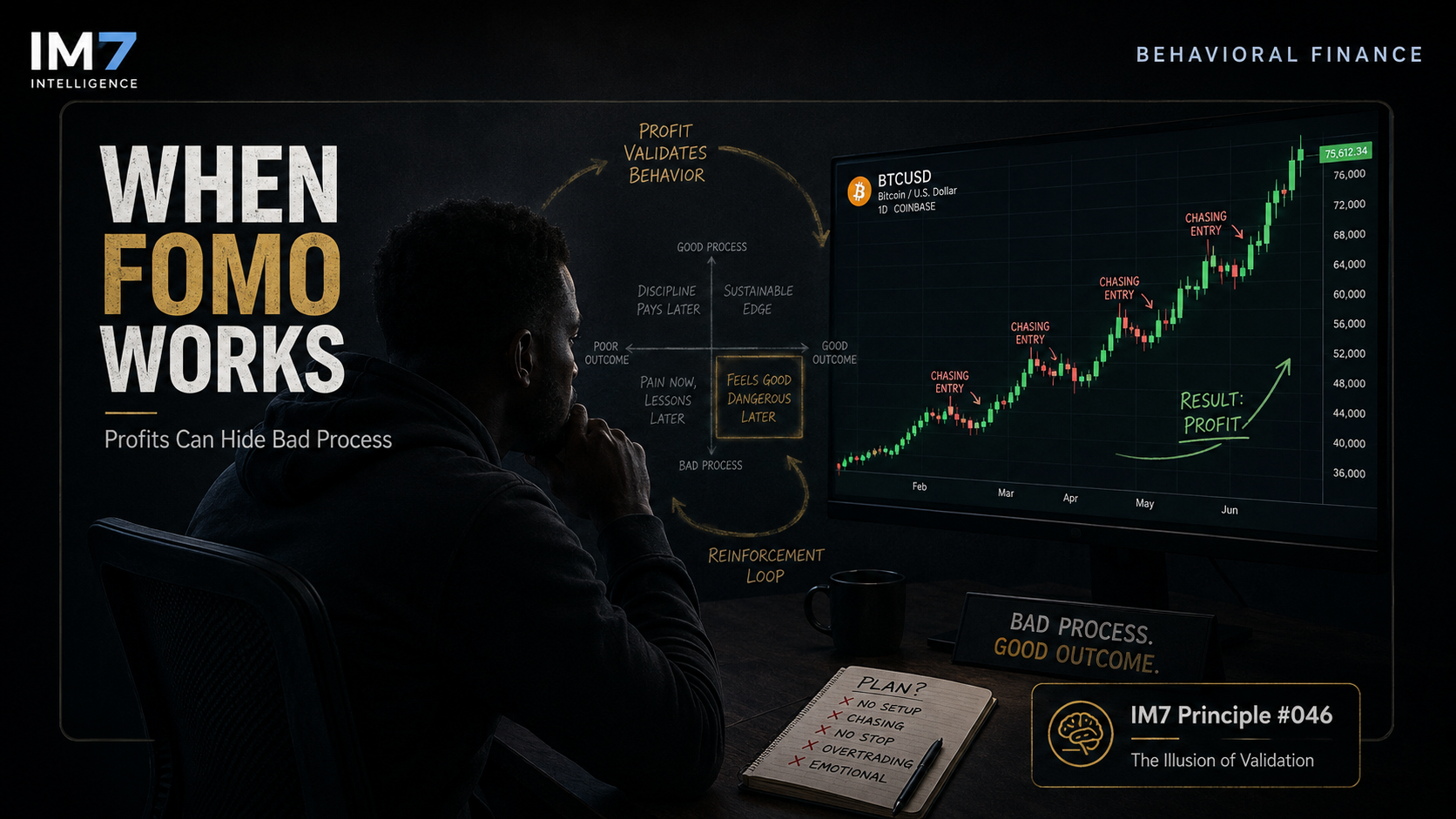
When FOMO Works: How Profitable Trades Reinforce Bad Process
When a rushed Bitcoin entry makes money, the profitable outcome can reinforce the wrong lesson. Outcome bias can turn an impulsive decision into a behavior the trader becomes more willing to repeat—even when the original process was weak.
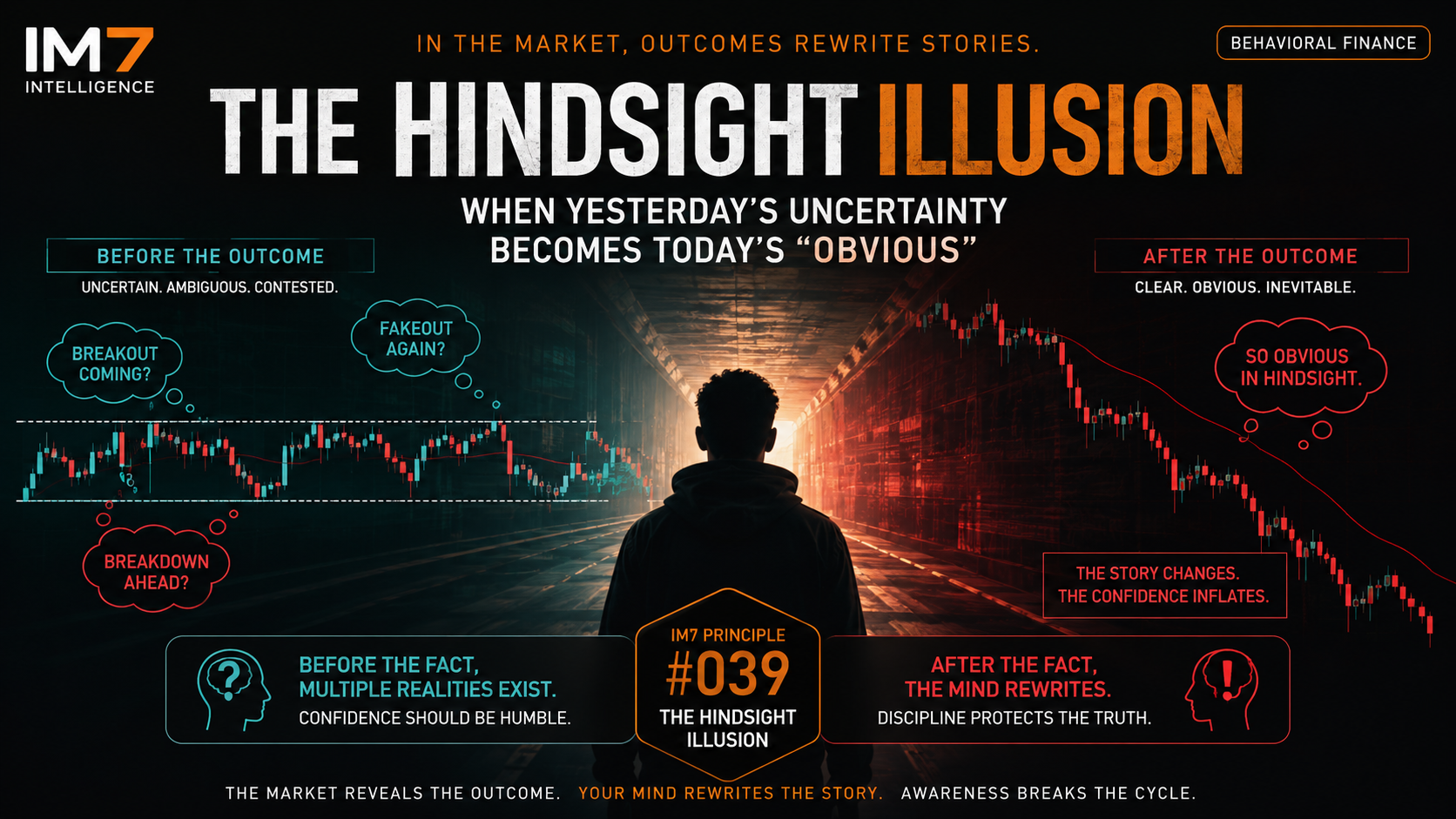
When the Range Breaks: Why Bitcoin Suddenly Looks Obvious
Bitcoin’s range looked ambiguous—until it broke. Then the warning signs suddenly seemed obvious. That shift is hindsight bias: once the outcome is known, traders rewrite uncertainty as predictability and mistake being right about the result for having had better evidence.

Outcome Bias: Why Good Outcomes Can Reward Bad Decisions
A profitable trade does not always reflect a sound decision. Outcome Bias causes traders to judge the quality of their process by the result instead of the evidence that supported it. When fortunate outcomes reinforce flawed decision-making, the next mistake often becomes larger, more confident, and more expensive.

When Relief Becomes Expensive: Why One Candle Isn't Confirmation
A singular, strong market movement frequently evokes immediate emotional relief, often preceding any genuine structural confirmation. Traders commonly conflate this feeling of being correct with objective evidence of a sustained trend. ThiOne strong market move can make traders feel right long before the market confirms they are. Relief arrives instantly. Confirmation takes time. This article explores why confusing those two emotions often leads to expensive trading decisions.s critical distinction between instantaneous relief and time-dependent confirmation holds profound implications for decision-making.

Why the Biggest Candle Isn't the Most Important: Relief vs. Confirmation in Trading
One explosive candle can change how traders feel without changing the market itself. Learn why relief is often mistaken for confirmation, how outcome bias shapes trading decisions, and why real conviction is measured by follow-through—not one impressive move.