#Action Bias
4 articles on Action Bias — behavioral finance and market psychology from IM7 Intelligence.
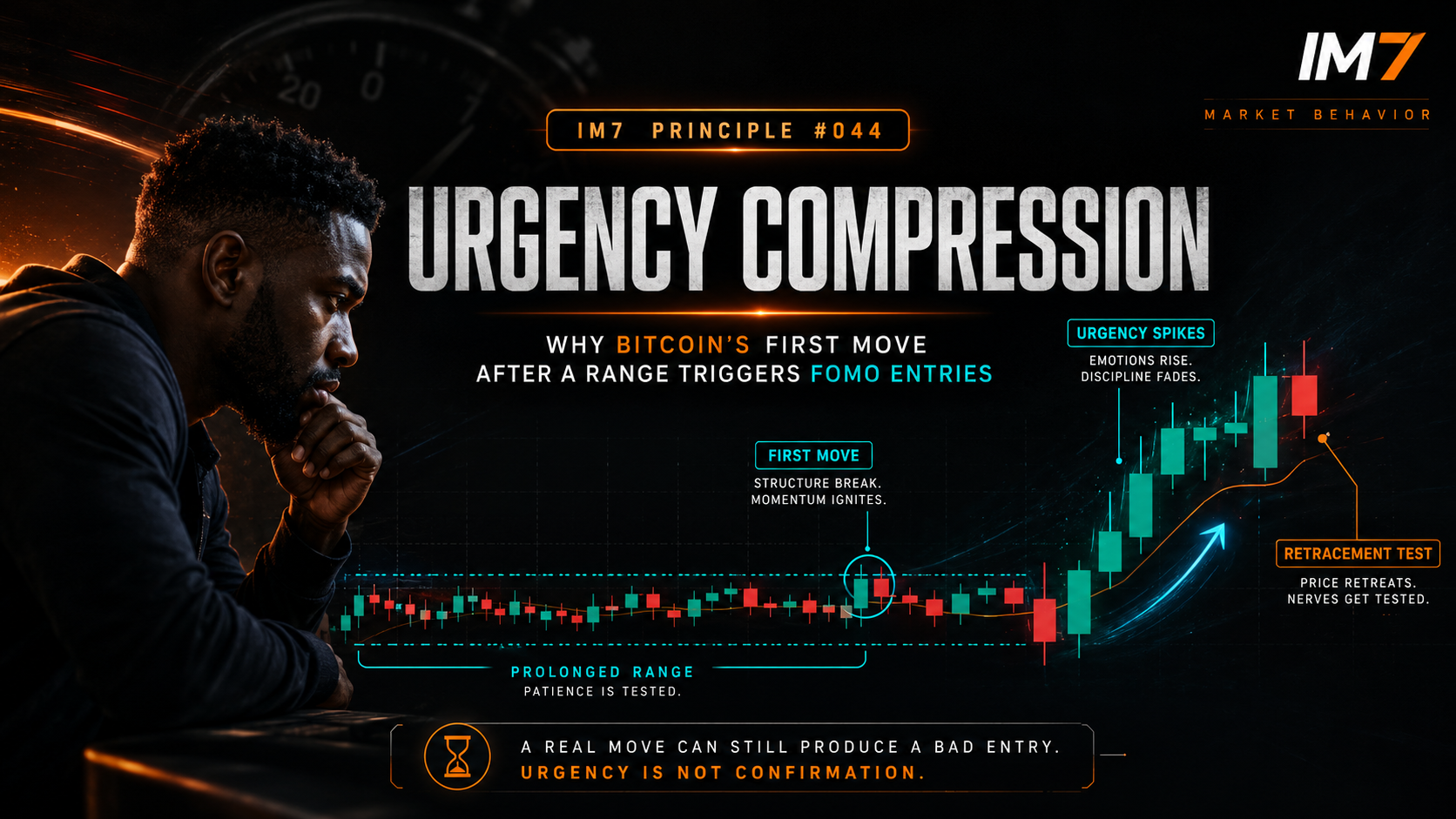
Urgency Compression: Why Bitcoin’s First Move After a Range Triggers FOMO Entries
After weeks of consolidation, a few green Bitcoin candles can make waiting feel unbearable. The move may be real, but urgency can still turn the first available entry into a poor one. A real move does not automatically make the first entry a good entry.
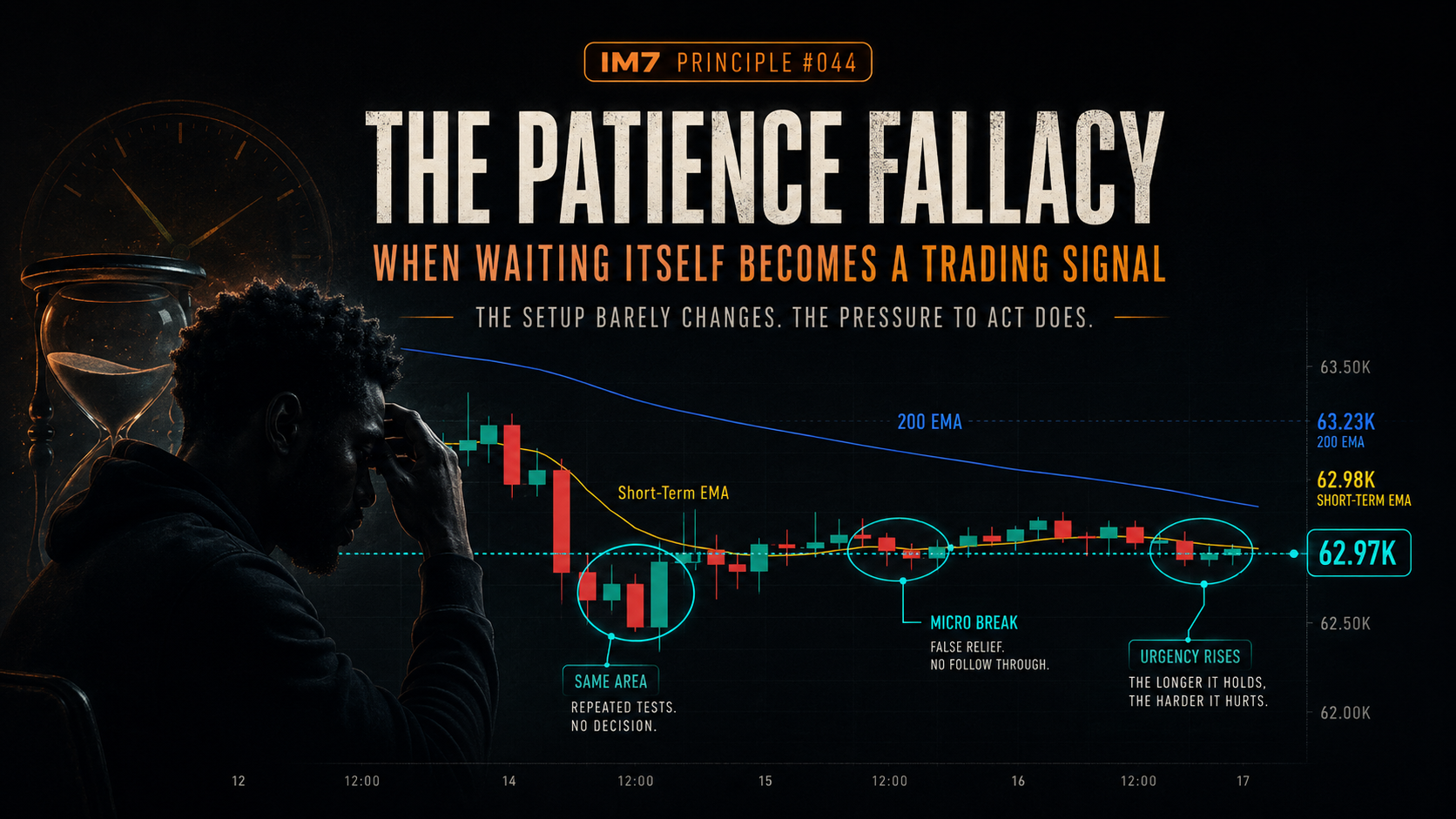
The Patience Fallacy: When Waiting Itself Becomes a Trading Signal
Week one: I’ll wait for confirmation. Week two: It has to move soon. Week three: That candle looks like a signal. The chart barely changed, but the urgency did. Prolonged Bitcoin consolidation can make waiting feel like evidence—and boredom feel like a trading signal.
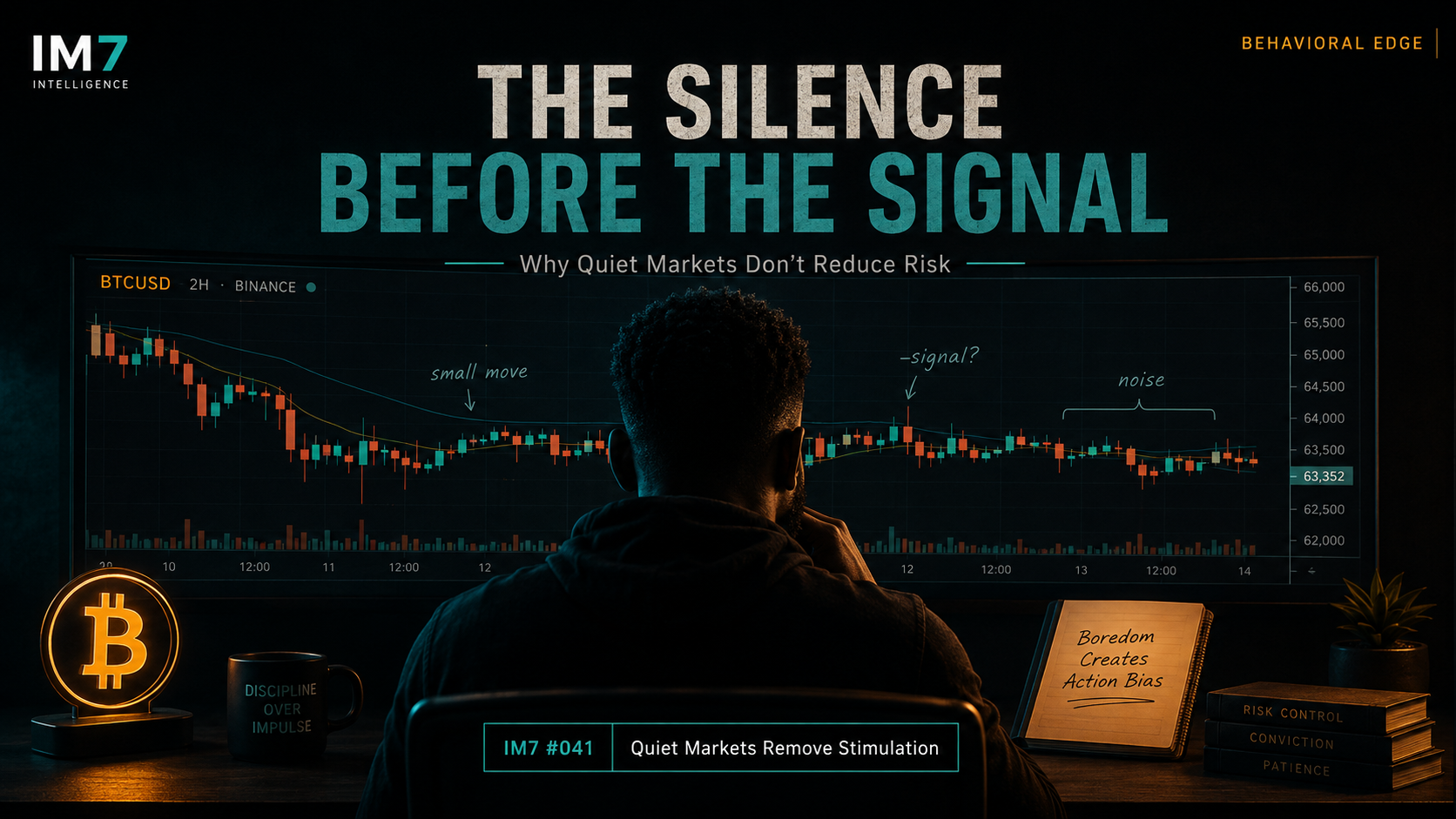
The Silence Before the Signal: Why Quiet Markets Don't Reduce Risk
Bitcoin perpetual trading activity recently fell to multi-year lows, creating an environment that can feel deceptively safe. But low stimulation changes trader behavior. Boredom, impatience, and action bias can lower setup standards and turn ordinary market noise into perceived opportunity. The professional challenge is not predicting what happens next, but recognizing when the urge to act is stronger than the evidence.

Why Traders Hate Boring Markets
Boring markets feel useless because they don’t give traders dopamine. But the quietest candles are often where patience gets rewarded and overtrading gets punished.