Recency Bias
Recent information receives disproportionate weight in judgment, causing traders to treat the latest price move as more representative of future conditions than the broader evidence supports.
Articles studying this principle
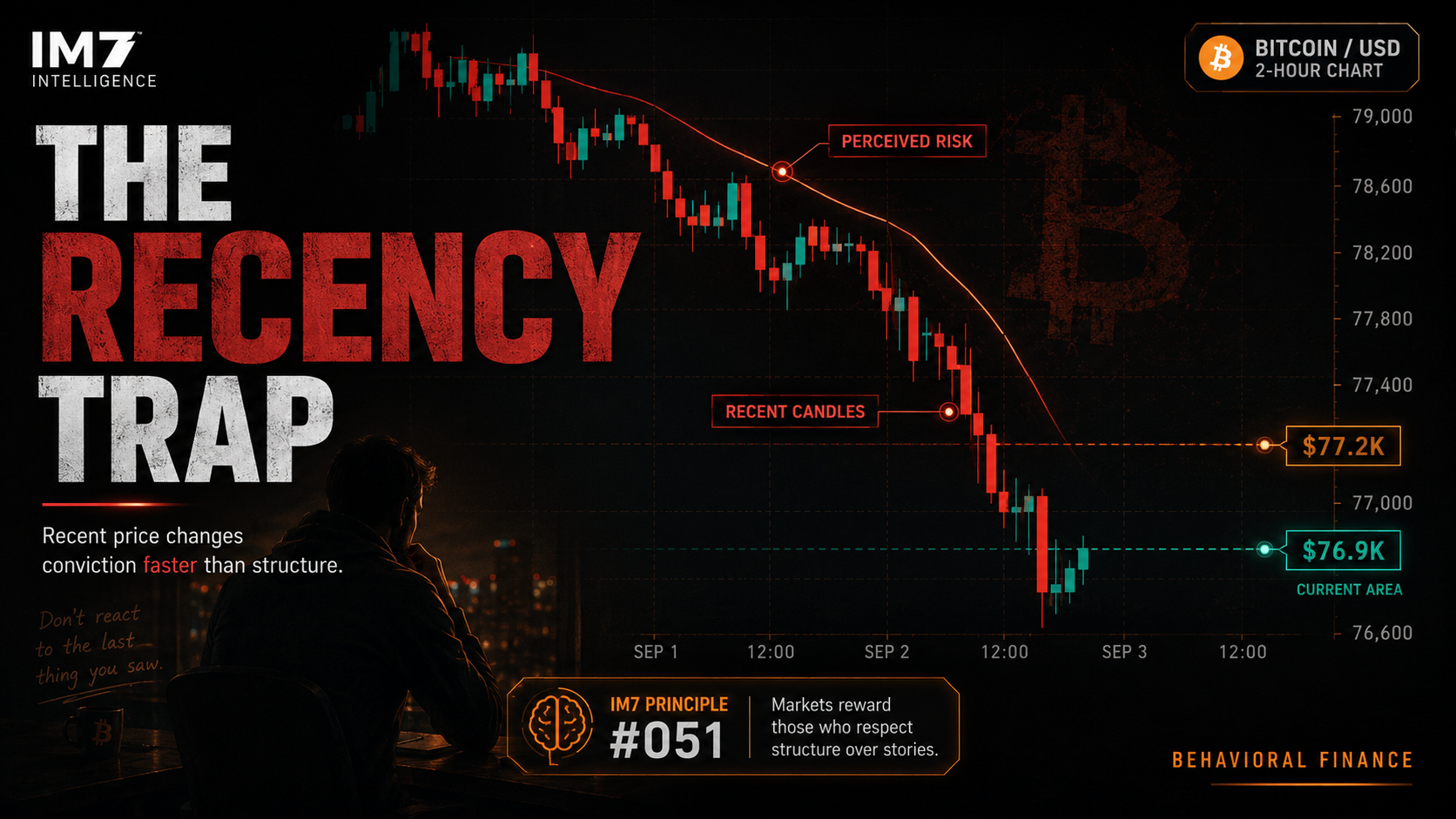
Why Bitcoin Felt Safe at $80K and Dangerous at $76K
Bitcoin fell from the upper-$78K range toward $76.9K, and trader perception shifted with it. IM7 examines the Bitcoin Recency Loop: how recent candles change perceived risk faster than market structure actually changes.
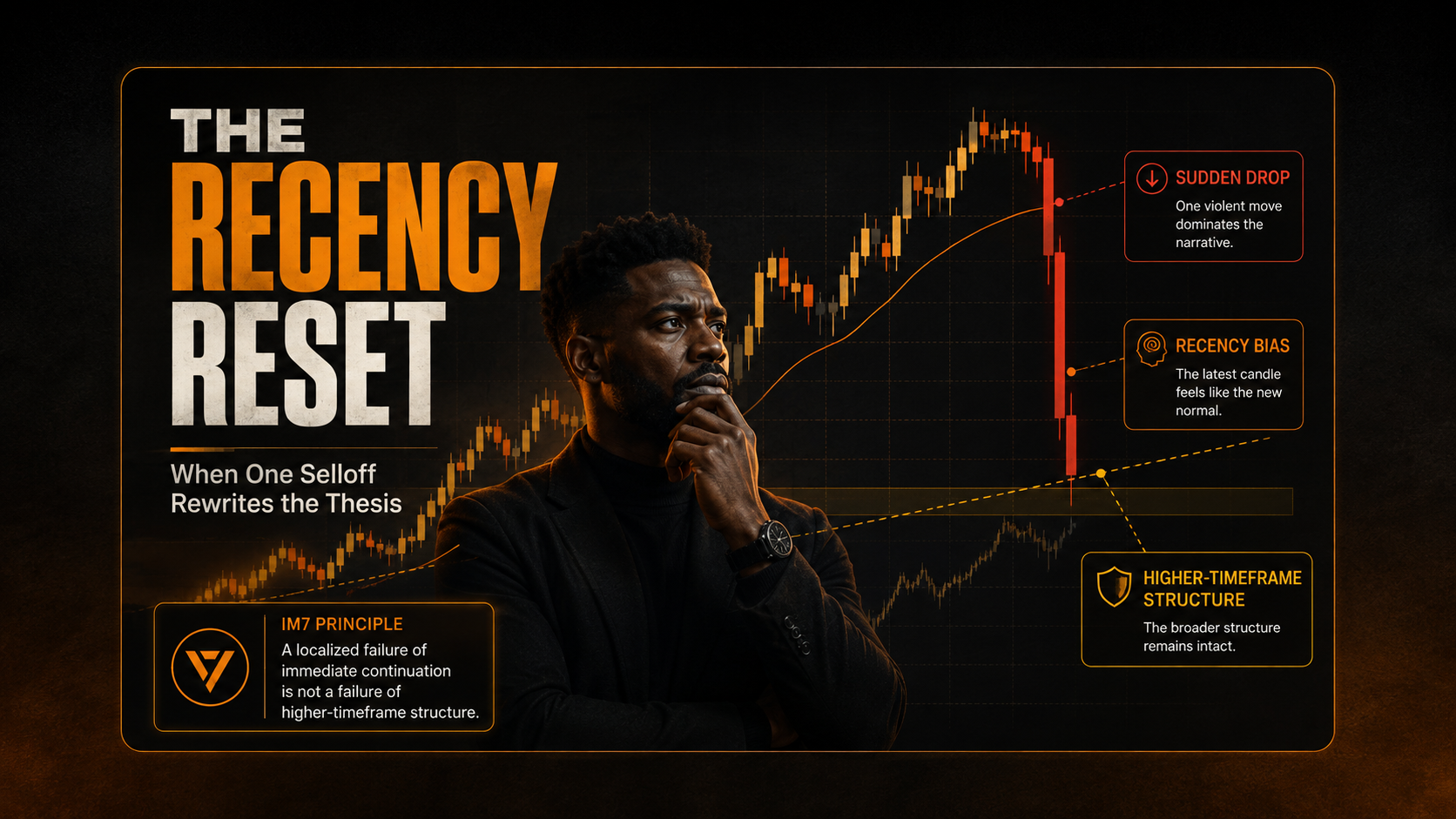
The Recency Reset: Why Bitcoin Traders Flip Their Entire Thesis After One Selloff
A single sharp adverse move can trigger a psychological shock that causes traders to abandon a higher-timeframe thesis too quickly. IM7 examines how recency bias turns one Bitcoin selloff into a complete rewrite of market conviction.
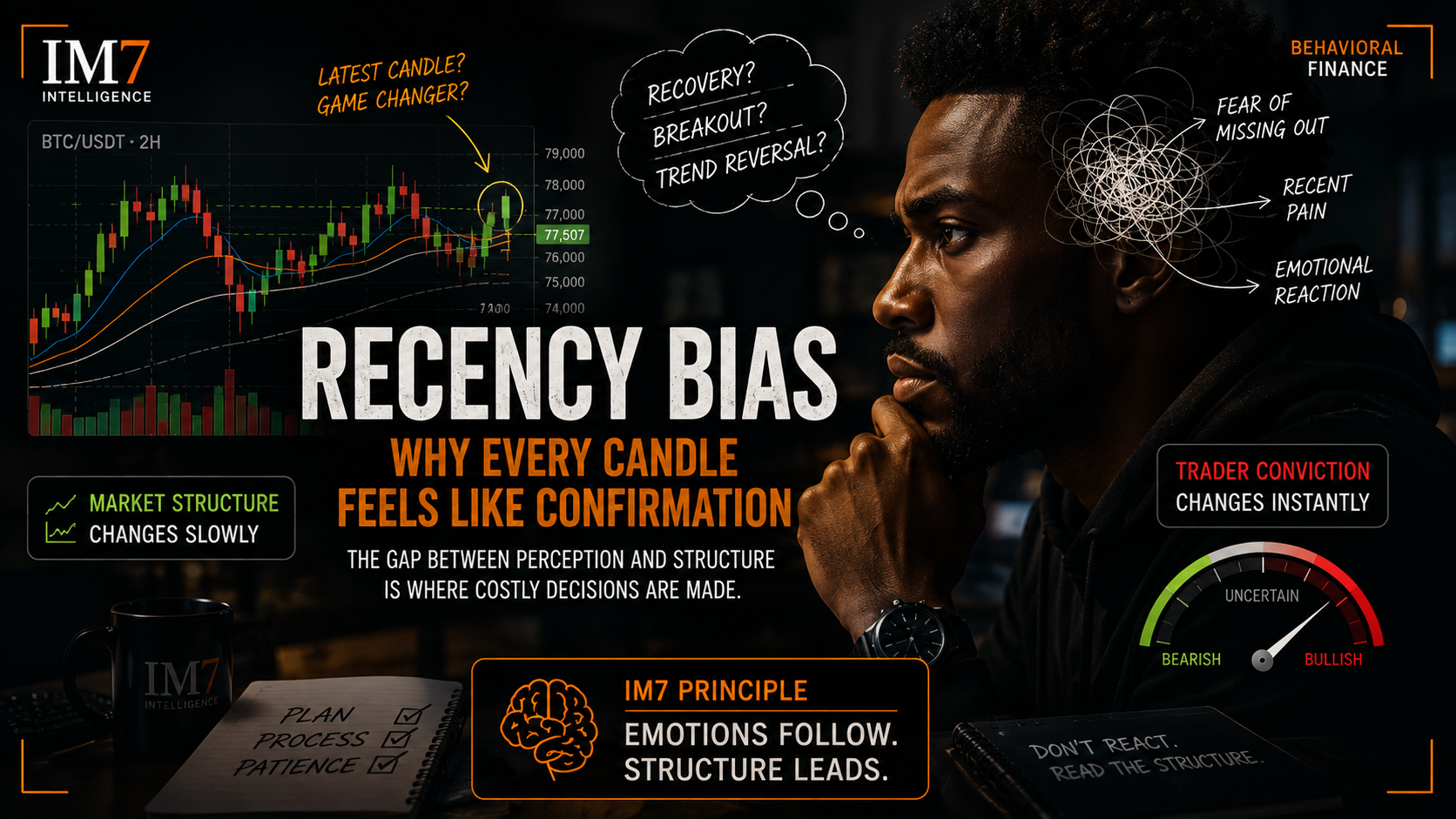
The Recency Trap: When Every Bitcoin Candle Feels Like Confirmation
Bitcoin’s volatile swings are making every new candle feel like confirmation. But when a trader’s conviction changes faster than the market structure, recency bias may be driving the interpretation.
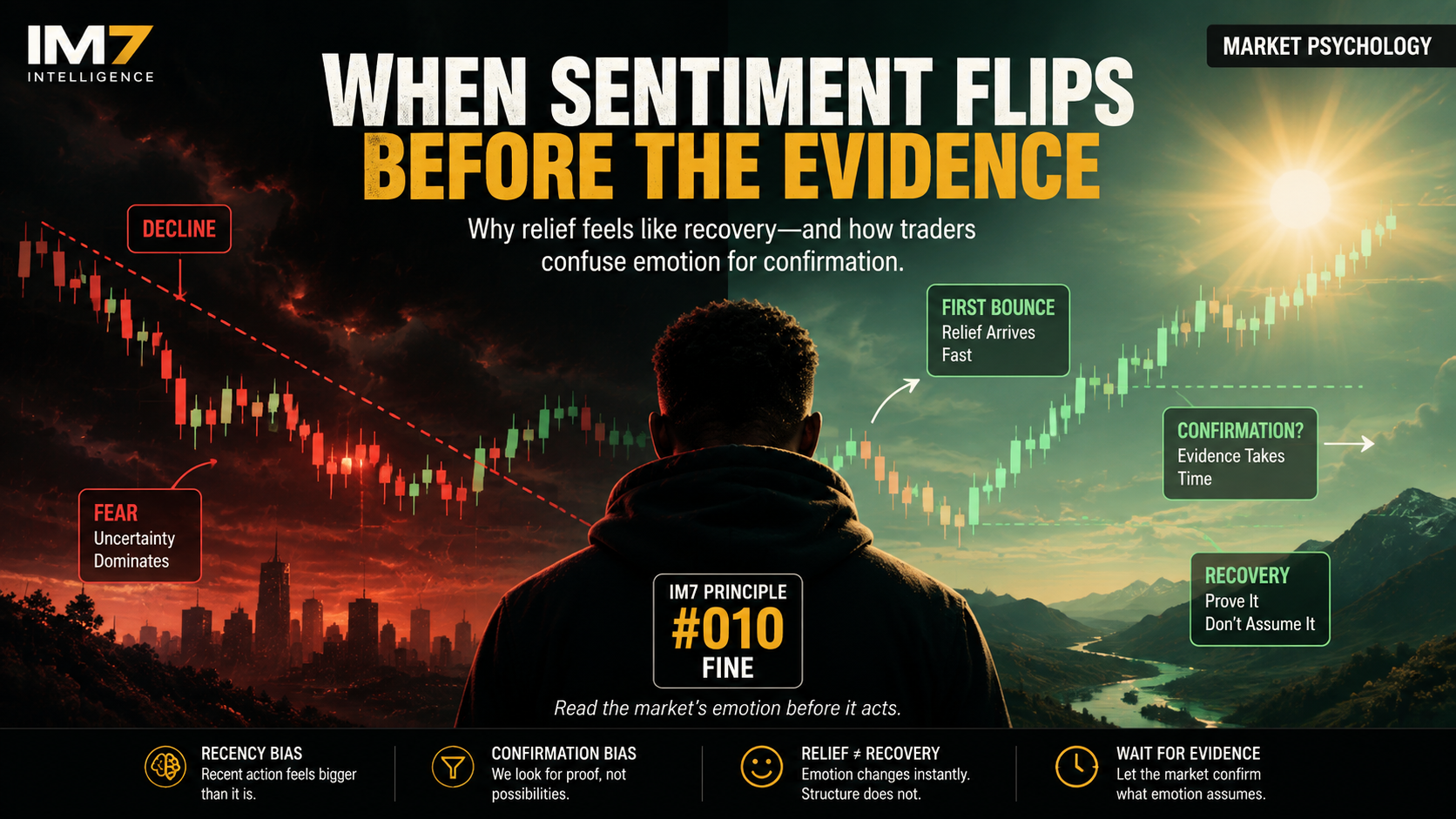
The First Bounce Fallacy: Why Bitcoin Traders Confuse Relief with Recovery
Bitcoin’s first bounce can feel like confirmation before the market has confirmed anything. Relief becomes conviction, and a temporary rebound becomes a recovery narrative. The danger isn’t the bounce—it’s how quickly traders decide what it means.