#Volatility
4 articles on Volatility — behavioral finance and market psychology from IM7 Intelligence.
Library TopicVolatility →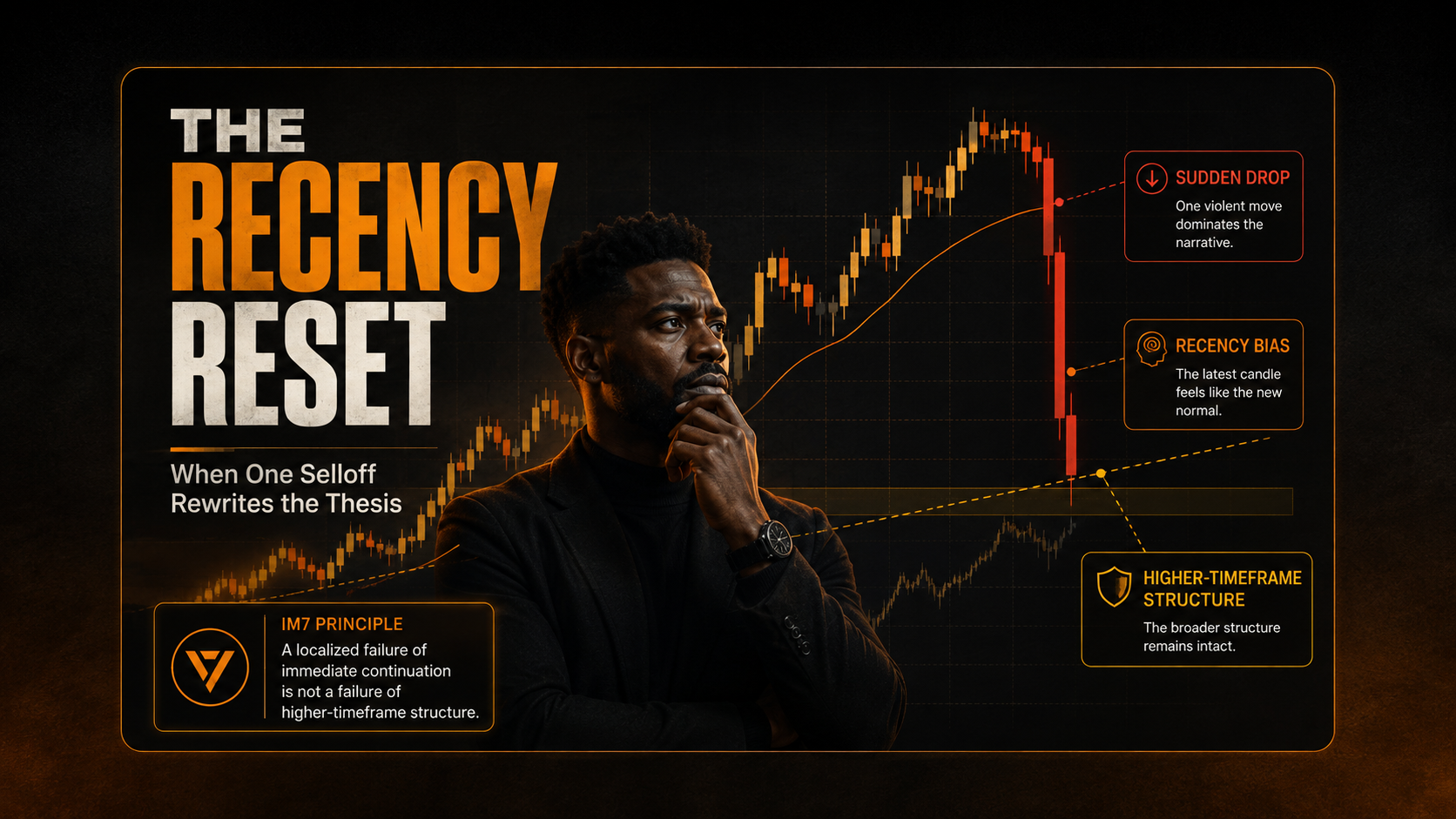
The Recency Reset: Why Bitcoin Traders Flip Their Entire Thesis After One Selloff
A single sharp adverse move can trigger a psychological shock that causes traders to abandon a higher-timeframe thesis too quickly. IM7 examines how recency bias turns one Bitcoin selloff into a complete rewrite of market conviction.
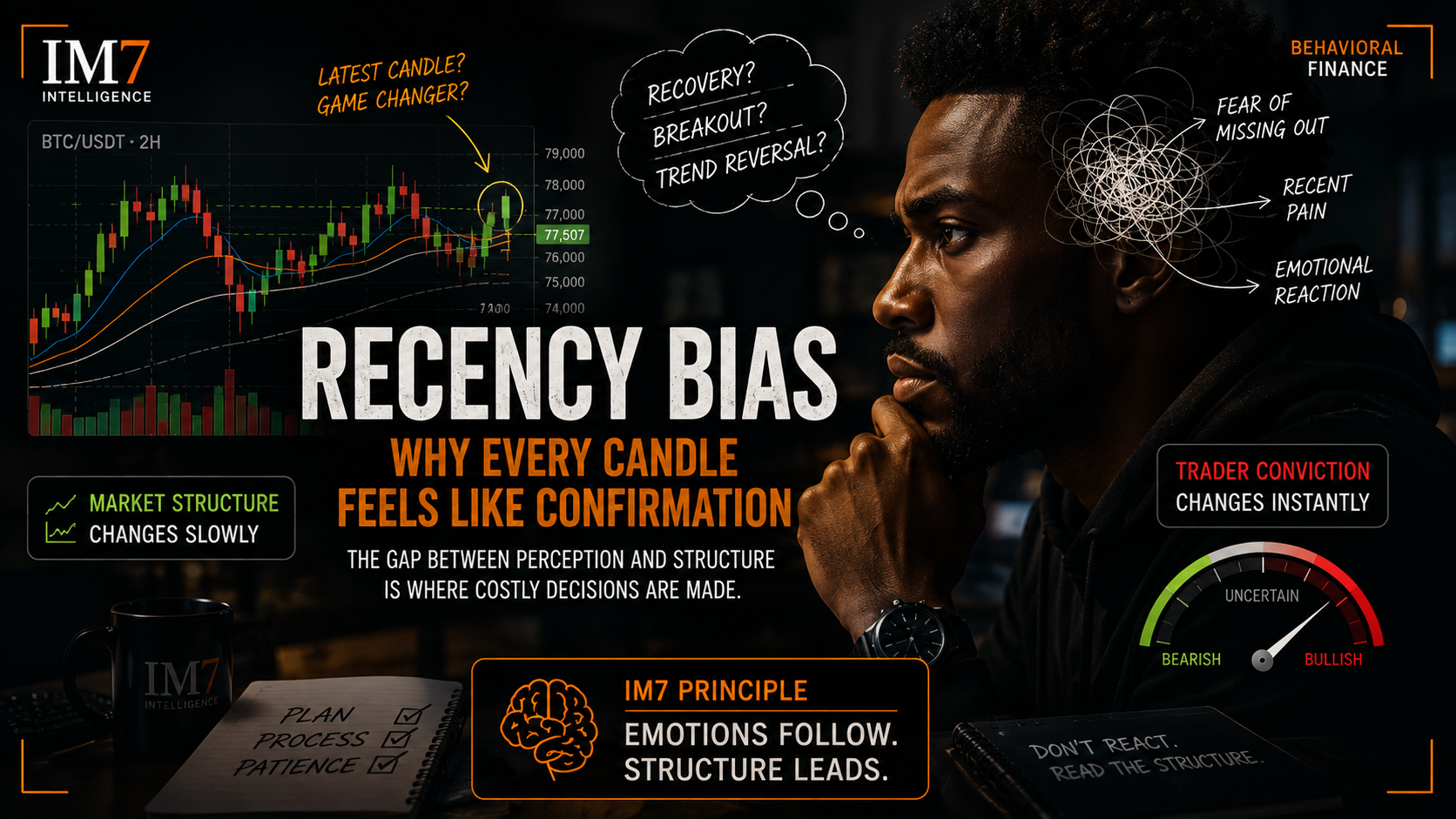
The Recency Trap: When Every Bitcoin Candle Feels Like Confirmation
Bitcoin’s volatile swings are making every new candle feel like confirmation. But when a trader’s conviction changes faster than the market structure, recency bias may be driving the interpretation.

Emotional Compression: The Quiet Phase Before Breakouts
Major crypto moves rarely start with noise. They start with silence. We unpack the behavioral signature of emotional compression.

Why Thin Liquidity Creates Violent Moves in Financial Markets
Most traders blame volatility on news. The market usually blames liquidity. When order books thin out and market depth disappears, even modest buying or selling pressure can trigger outsized price moves. Understanding liquidity voids, slippage, and market structure reveals why markets often move fastest when there is nobody left to absorb the pressure.