#Crypto Trading
11 articles on Crypto Trading — behavioral finance and market psychology from IM7 Intelligence.
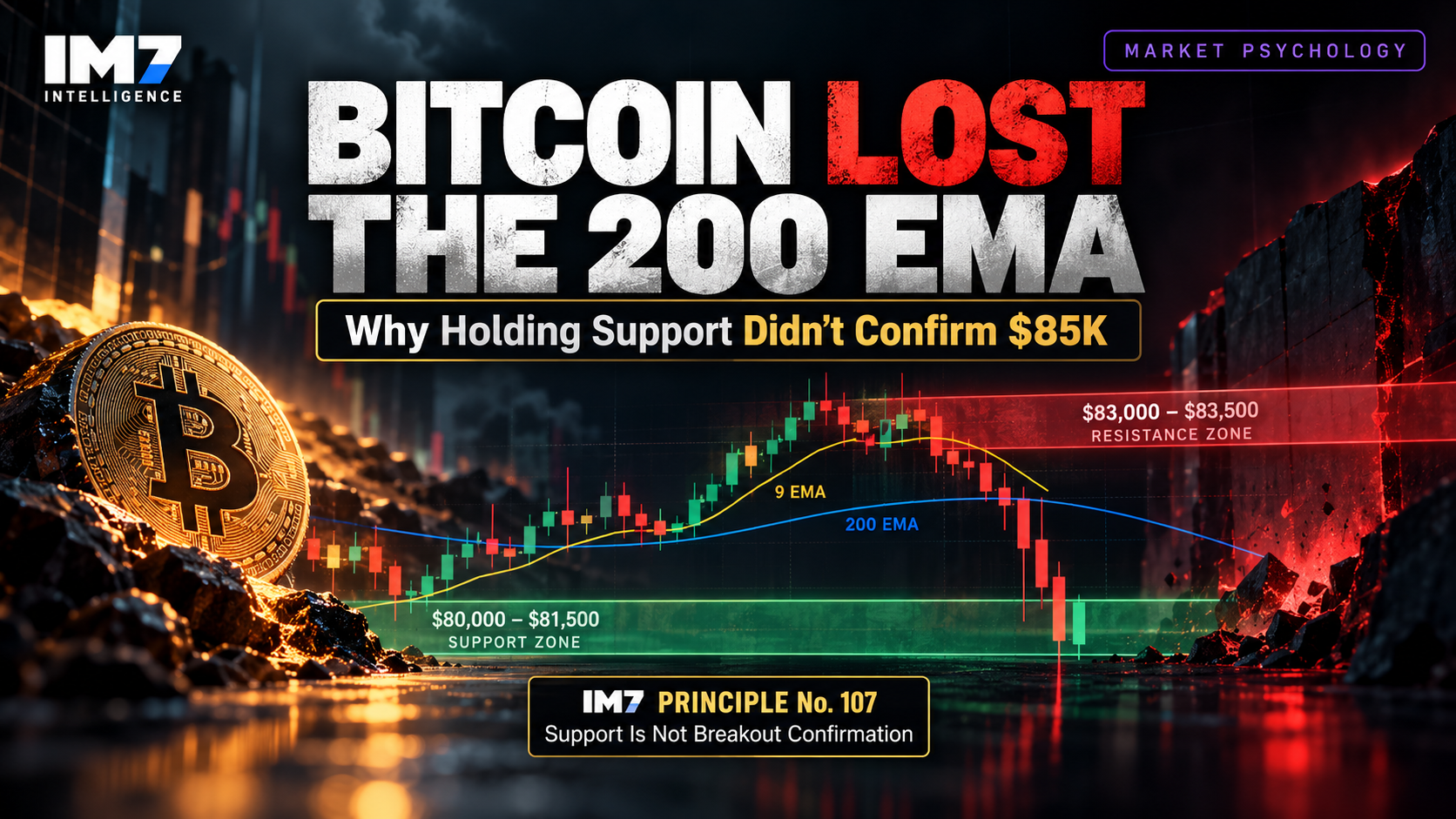
Bitcoin Lost the 200 EMA: Why Holding Support Didn't Confirm $85K
Bitcoin's bullish recovery reversed as BTC fell toward $82K and slipped below its 200-period EMA. The mistake wasn't recognizing improving support—it was assuming that holding support meant buyers could overcome resistance near $85K. Here's why those are two different market tests and what disciplined traders should watch next.
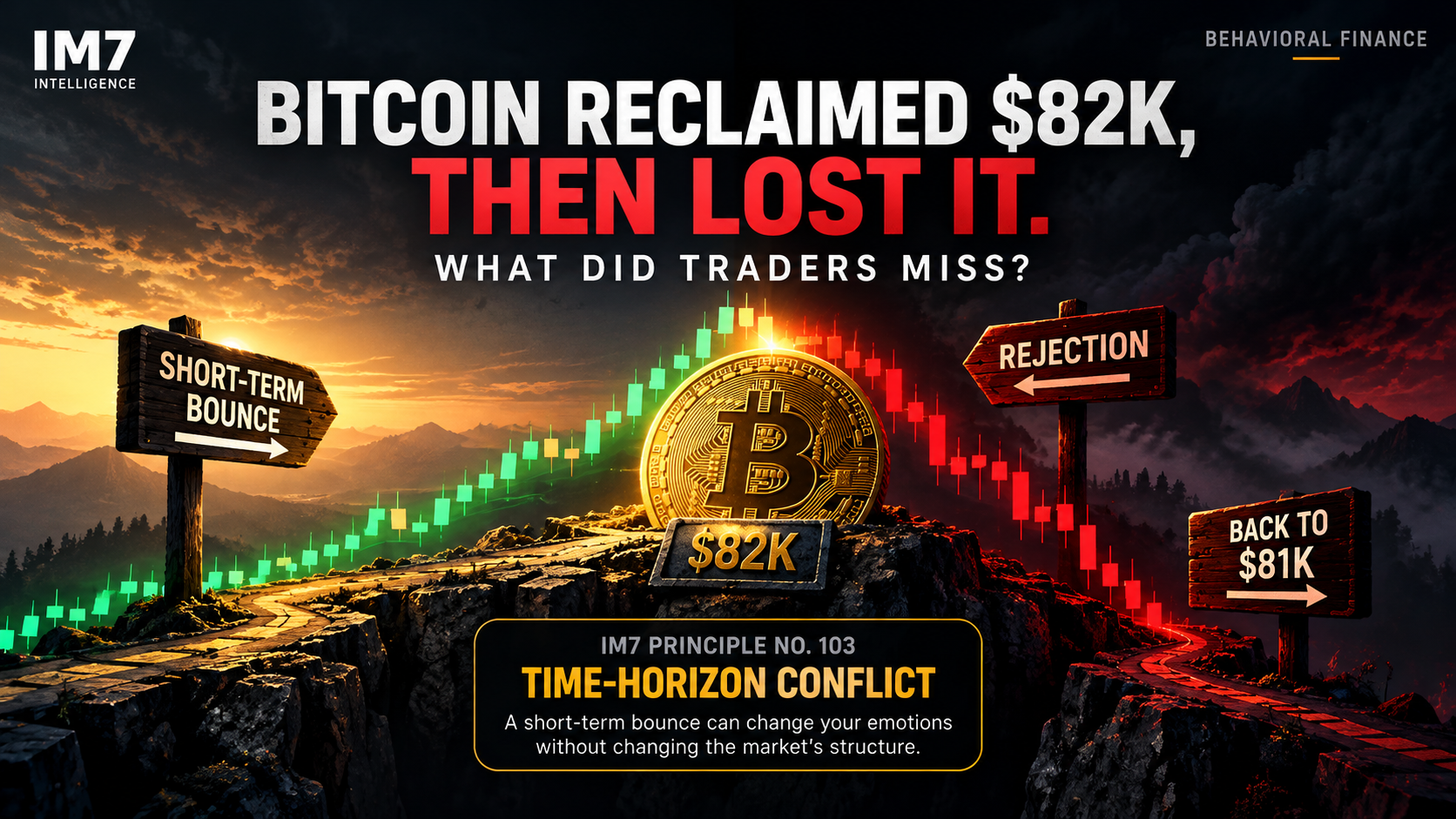
Bitcoin Reclaimed $82K, Then Lost It. What Did Traders Miss?
Bitcoin briefly climbed above $82K before reversing toward $81K, exposing the gap between short-term optimism and broader market structure. IM7 Principle No. 103 explores the Time-Horizon Conflict: why traders mistake a temporary bounce for meaningful recovery before sustained buying and structural confirmation emerge.
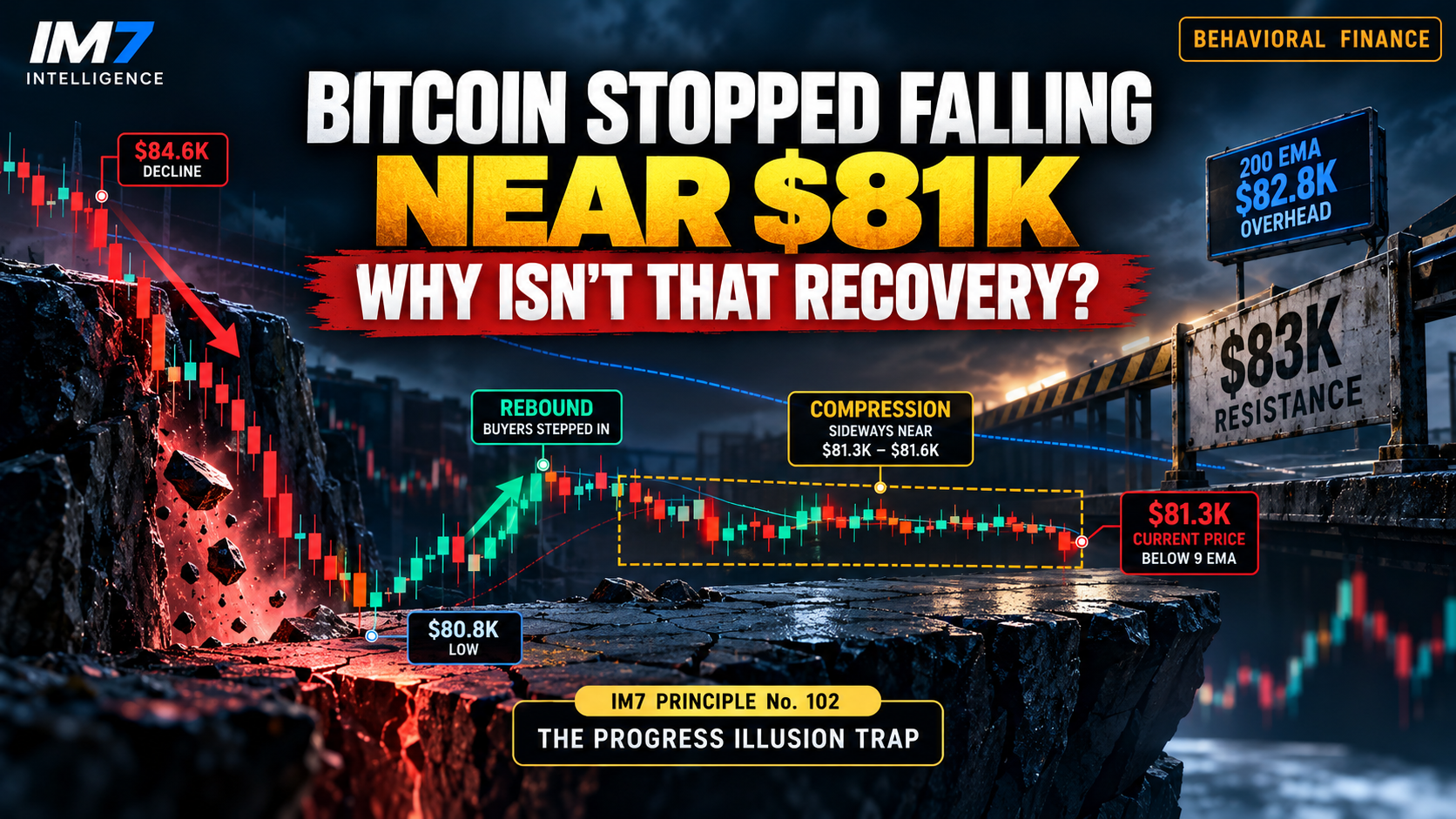
Bitcoin Stopped Falling Near $81K. Why Isn't That Recovery?
Bitcoin stabilized near $81K after a sharp selloff, but the two-hour chart still showed limited recovery progress beneath key moving averages. IM7 Principle No. 102 explores why traders mistake slowing losses for renewed buying strength—and how to distinguish stabilization from genuine recovery.
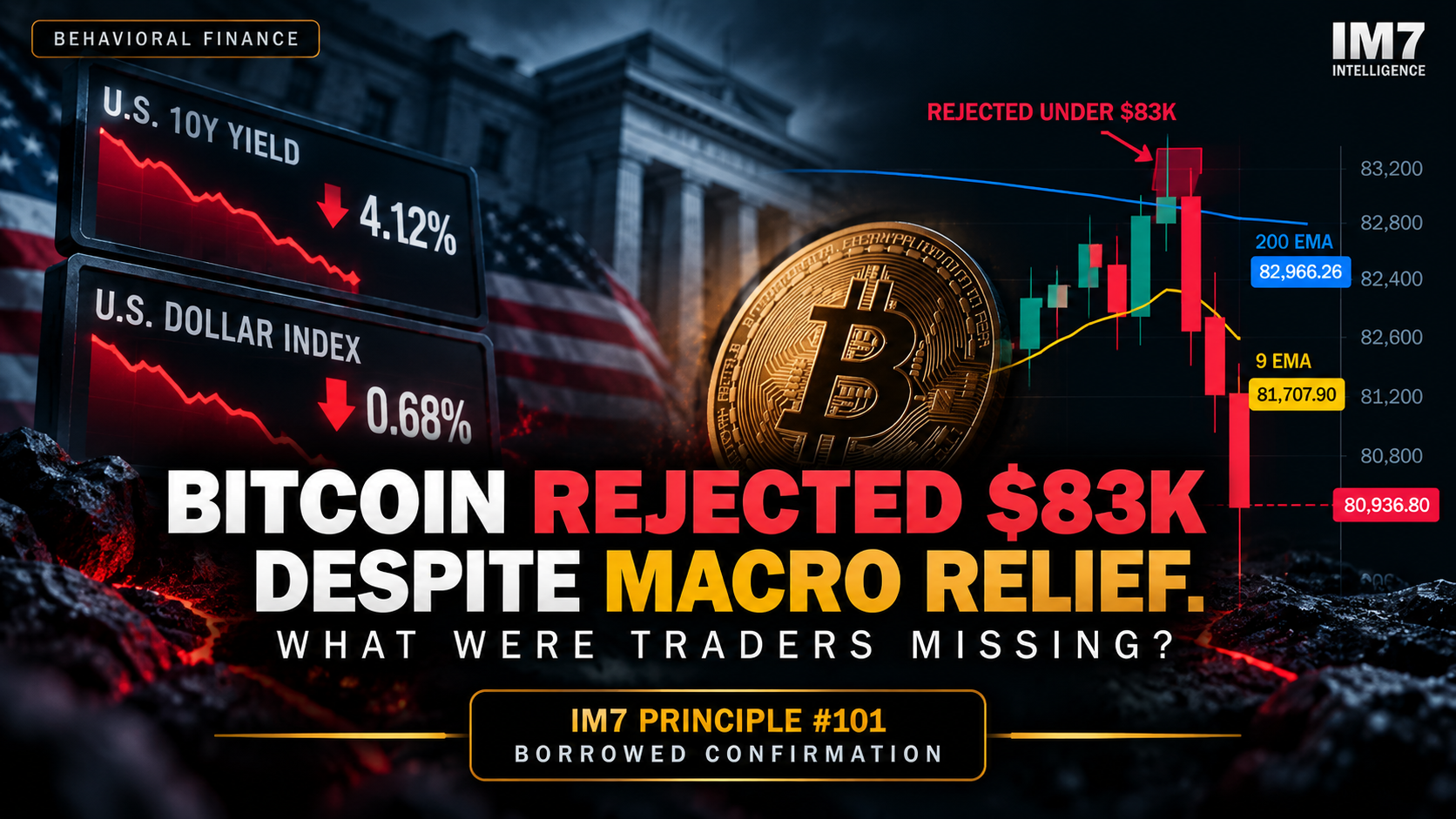
Bitcoin Rejected $83K Despite Macro Relief. What Were Traders Missing?
Treasury yields and the dollar weakened, yet Bitcoin's recovery stalled beneath $83K before price retreated toward $81K. IM7 Intelligence examines Borrowed Confirmation: the psychological trap of treating favorable signals in one market as proof of demand in another.
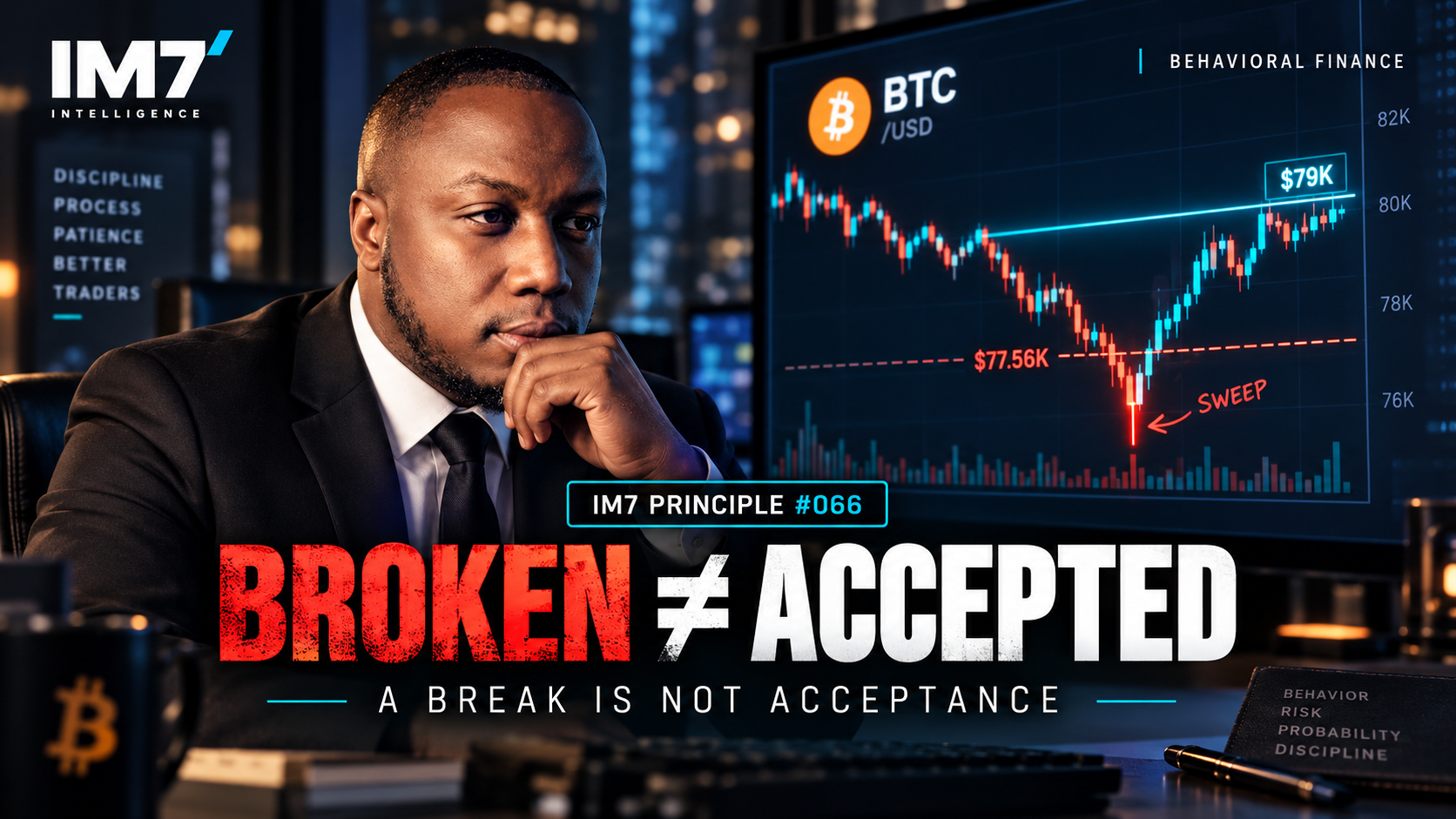
Broken Isn’t Accepted: How Bitcoin Trapped Breakdown Traders
Bitcoin swept below support near $77.56K, prompting traders to call for a deeper breakdown. When price reclaimed $79K, the move revealed a critical distinction: a level can be broken without being accepted. This is how certainty traps traders on both sides of a failed breakdown.
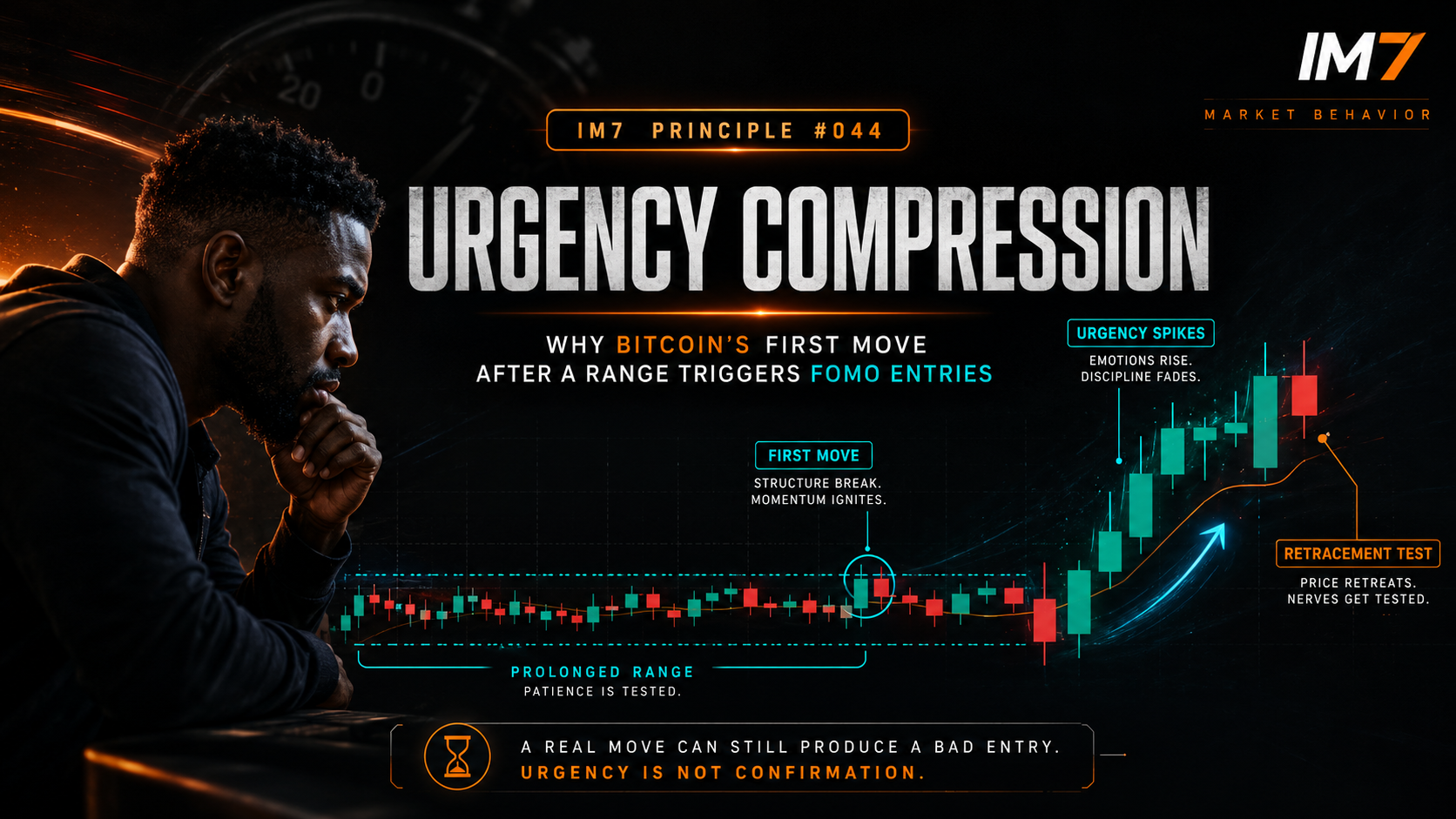
Urgency Compression: Why Bitcoin’s First Move After a Range Triggers FOMO Entries
After weeks of consolidation, a few green Bitcoin candles can make waiting feel unbearable. The move may be real, but urgency can still turn the first available entry into a poor one. A real move does not automatically make the first entry a good entry.
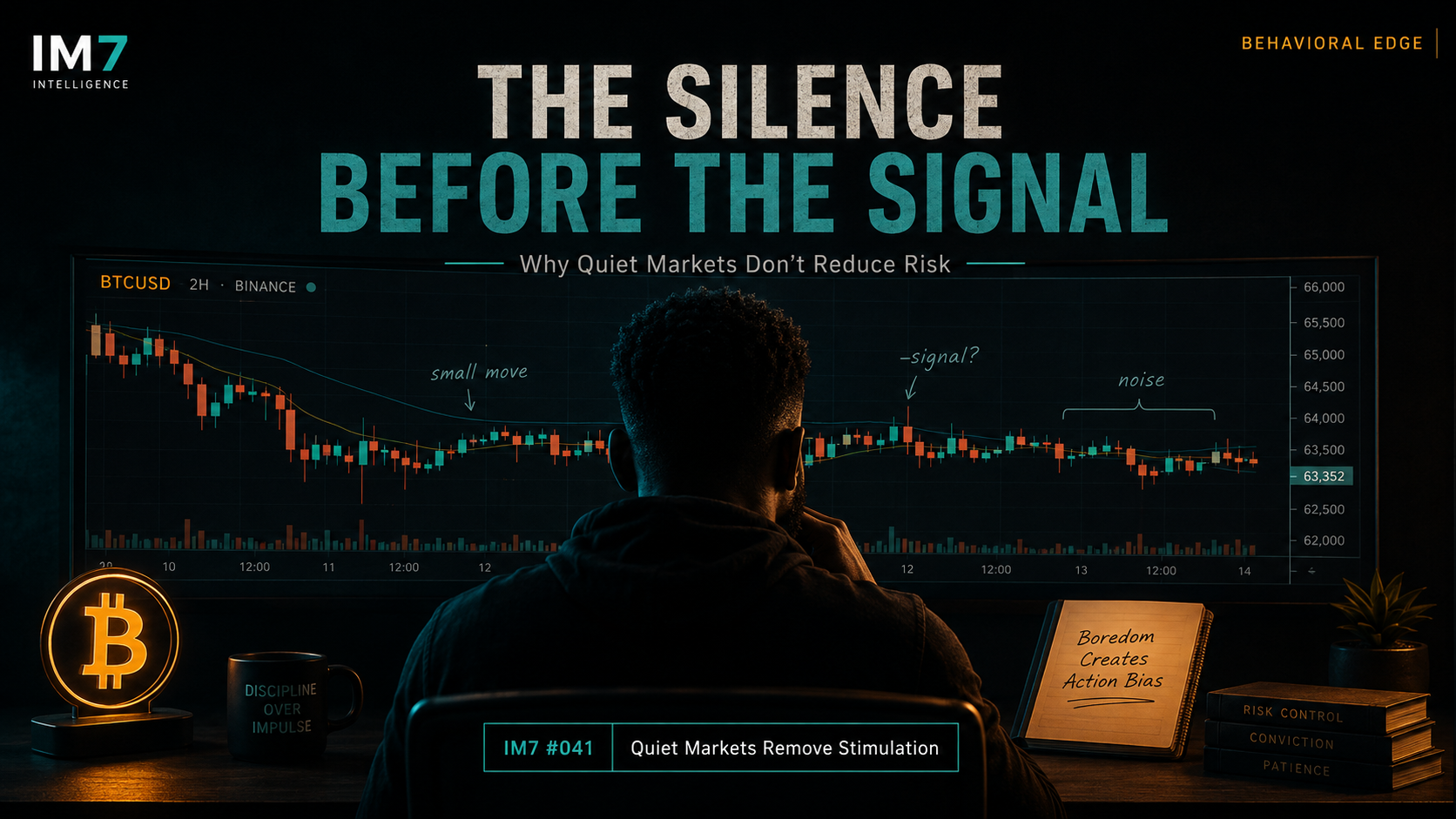
The Silence Before the Signal: Why Quiet Markets Don't Reduce Risk
Bitcoin perpetual trading activity recently fell to multi-year lows, creating an environment that can feel deceptively safe. But low stimulation changes trader behavior. Boredom, impatience, and action bias can lower setup standards and turn ordinary market noise into perceived opportunity. The professional challenge is not predicting what happens next, but recognizing when the urge to act is stronger than the evidence.

One Green Candle Doesn't Confirm a Recovery
One powerful green candle can change how traders feel long before it changes the market itself. Relief often arrives before confirmation, causing investors to mistake a temporary rebound for the beginning of a new trend. This article explores why our brains trust dramatic price moves more than the quieter evidence that follows.

Outcome Bias: Why Good Outcomes Can Reward Bad Decisions
A profitable trade does not always reflect a sound decision. Outcome Bias causes traders to judge the quality of their process by the result instead of the evidence that supported it. When fortunate outcomes reinforce flawed decision-making, the next mistake often becomes larger, more confident, and more expensive.

Flat Markets: Why Sideways Action Leads to Costly Trading Mistakes – A Behavioral Finance Perspective
During periods of low volatility and sideways price action, even experienced traders can fall prey to behavioral biases. Boredom, impatience, and the craving for certainty can lead to forced trades, unnecessary risks, and significant losses. This article explores the psychological traps of flat markets and offers strategies to navigate them effectively, particularly using Bitcoin as a prime example.

Why Fear Creates Better Opportunities Than Euphoria in Bitcoin: A Behavioral Finance Perspective
In the volatile world of Bitcoin, emotions often drive market movements. This article deconstructs how fear, rather than euphoria, can present more compelling opportunities for savvy investors, drawing insights from behavioral finance and crowd psychology.