Position Sizing
The only variable you fully control.
Sizing decides whether an idea becomes a career or a footnote. Most edges are destroyed not by wrong analysis but by wrong exposure. Position sizing is where behavior becomes math.
Most Read
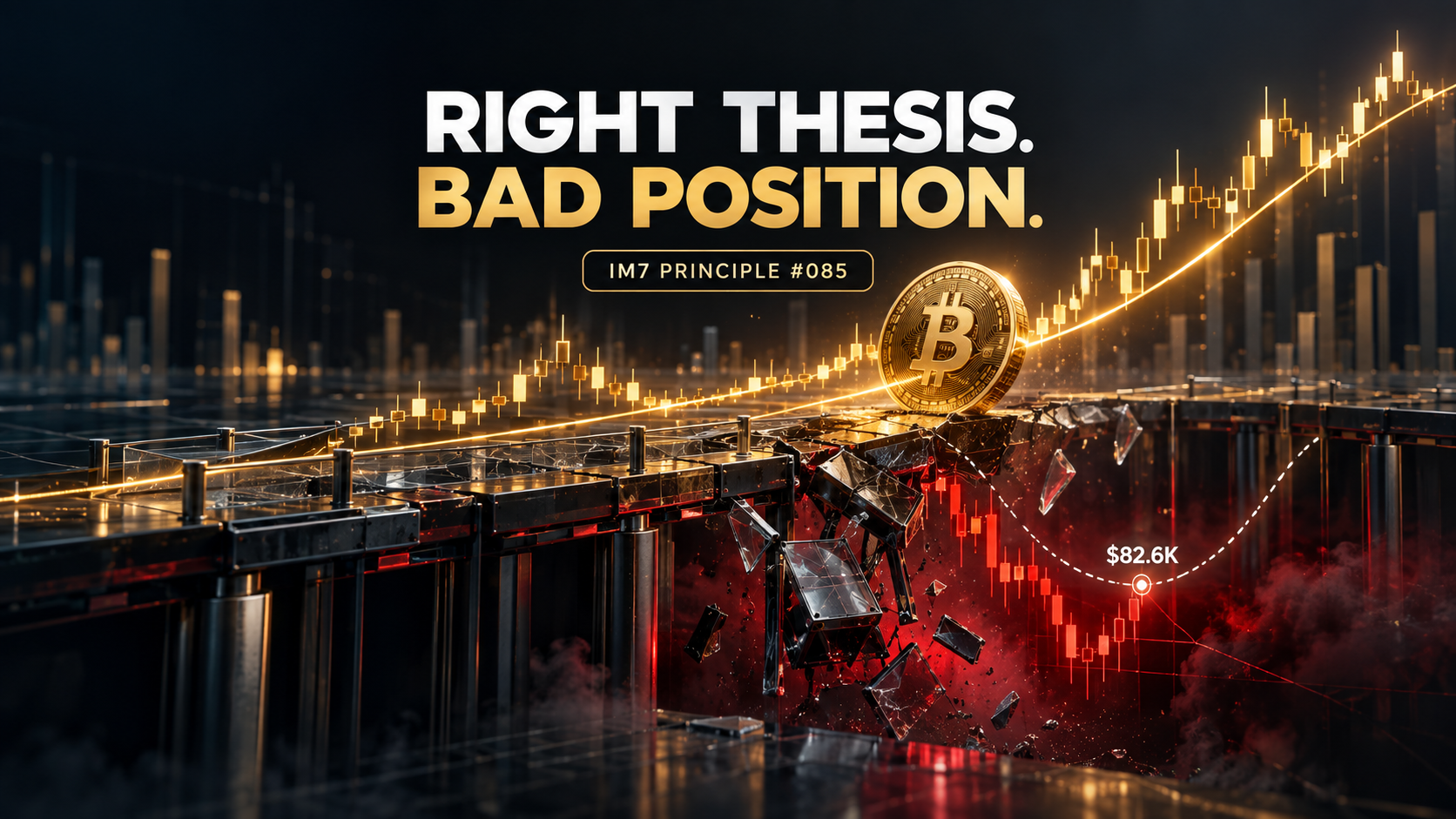
Bitcoin Bounced From $82.6K—But a Correct Thesis Still Became a Bad Trade
Bitcoin’s bounce from $82.6K exposed a distinction traders often learn too late: a correct market thesis cannot rescue poor entry, excessive leverage, or weak position sizing. The first bounce showed relief. The retest will reveal whether buyers actually returned.
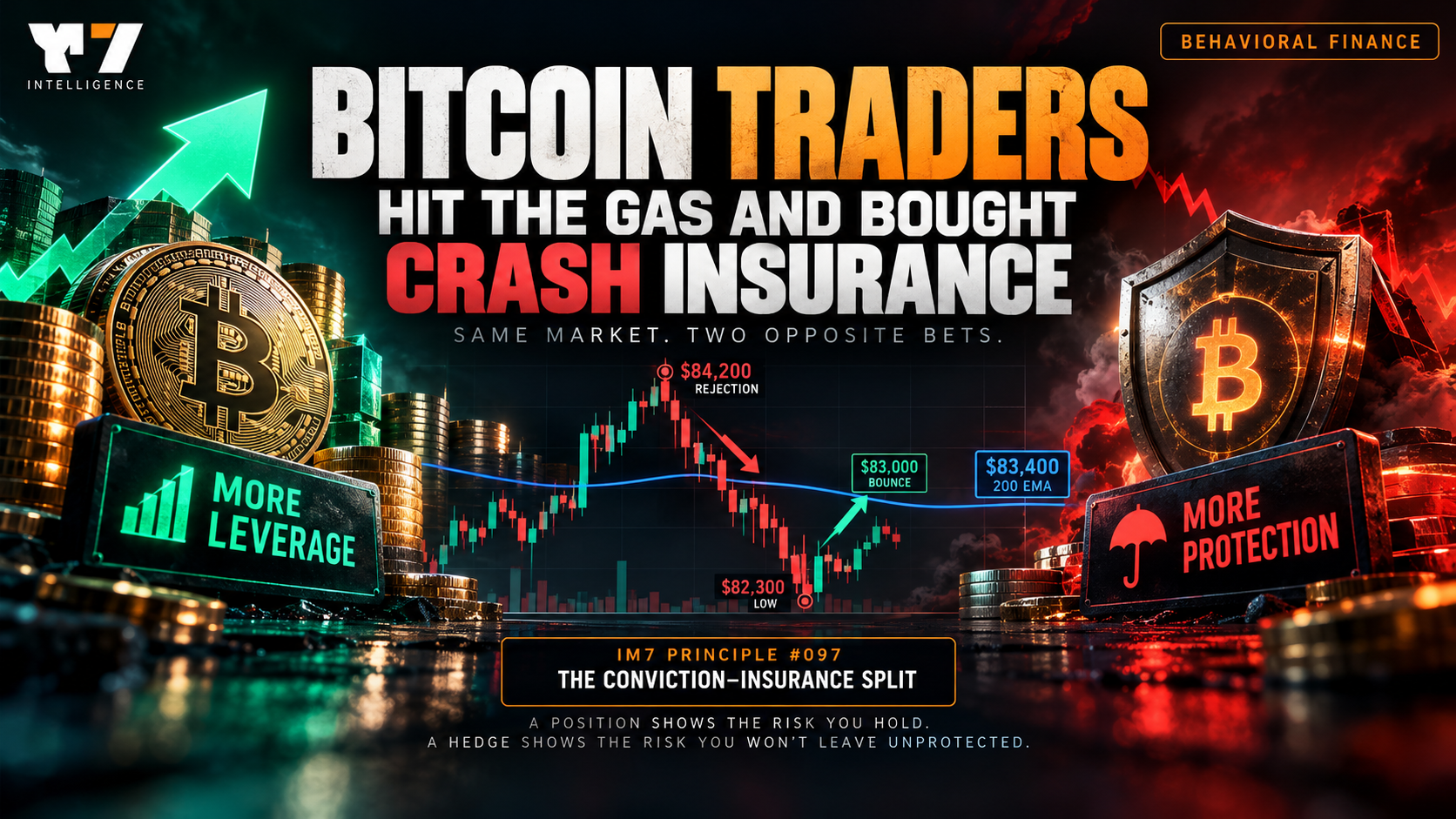
Bitcoin Traders Hit the Gas and Bought Crash Insurance
Bitcoin rejected $84K, dropped toward $82.3K, and bounced back near $83K. Meanwhile, a derivatives snapshot showed traders adding leveraged exposure as demand for downside protection increased. IM7 Intelligence examines the Conviction–Insurance Split—and why bullish positioning doesn't necessarily mean confidence without fear.
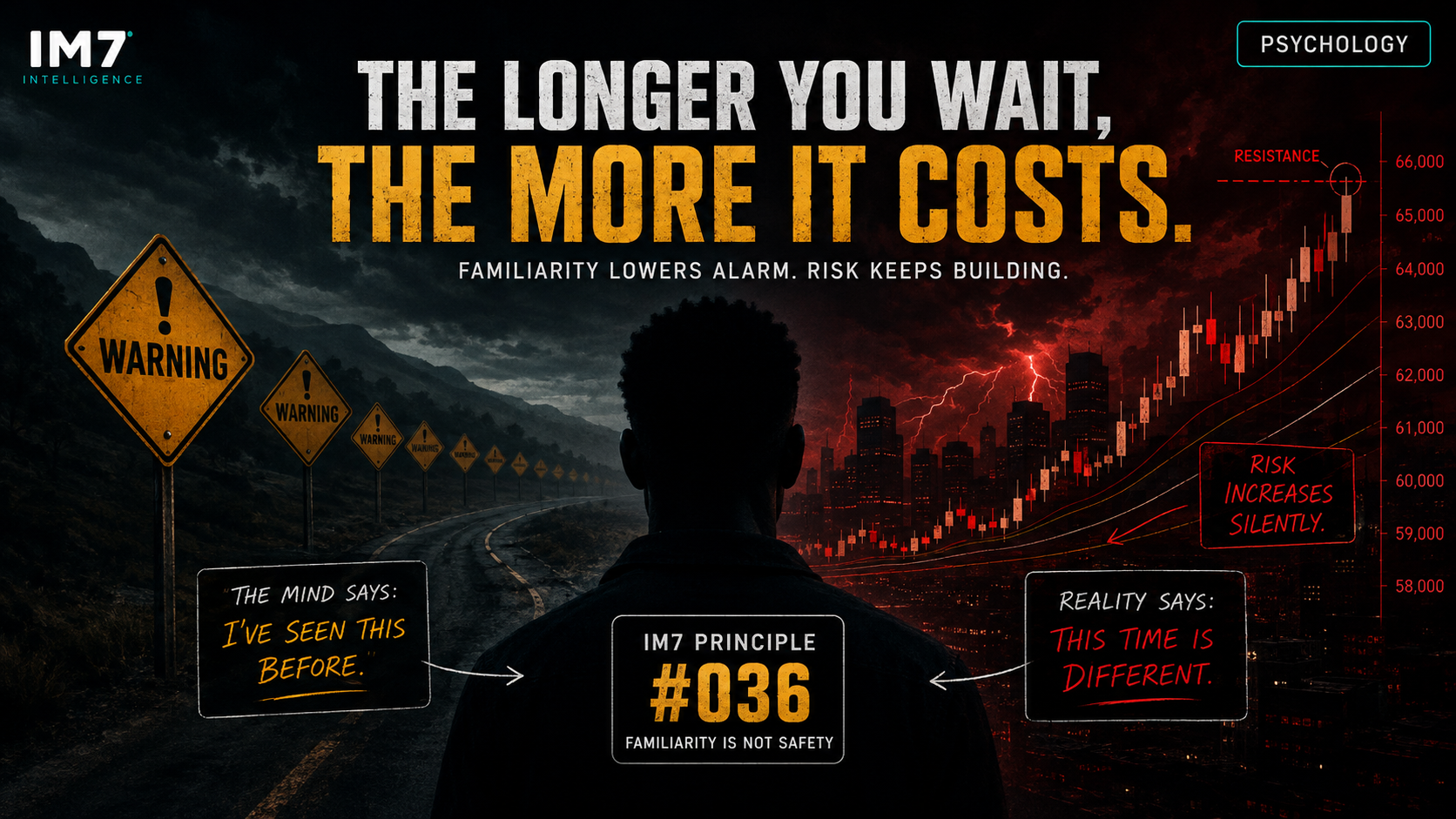
The Familiarity Trap: Why Smart Decisions Miss Obvious Red Flags
Repeated exposure doesn't make danger disappear—it makes it feel normal. The Familiarity Trap explains why intelligent people overlook obvious warning signs, not because they're incapable of seeing them, but because familiarity quietly replaces caution.
Latest
Bitcoin Bounced From $82.6K—But a Correct Thesis Still Became a Bad Trade
Bitcoin’s bounce from $82.6K exposed a distinction traders often learn too late: a correct market thesis cannot rescue poor entry, excessive leverage, or weak position sizing. The first bounce showed relief. The retest will reveal whether buyers actually returned.
The Familiarity Trap: Why Smart Decisions Miss Obvious Red Flags
Repeated exposure doesn't make danger disappear—it makes it feel normal. The Familiarity Trap explains why intelligent people overlook obvious warning signs, not because they're incapable of seeing them, but because familiarity quietly replaces caution.

The Peril of Compression: When Normalcy Bias Obscures Imminent Volatility
Perceptions of market stability, often arising from periods of suppressed volatility, frequently precede abrupt shifts in price dynamics. The quiet uniformity of recent trading sessions created an illusion of safety, a behavioral trap for those who mistook absence of movement for absence of risk. This observation highlights a common human tendency to extrapolate recent calm into future certainty, amplifying exposure to latent volatility.

The Overconfidence Delusion: Why Intelligence Doesn't Protect You from Bad Decisions
Intelligence doesn't eliminate cognitive bias—it often disguises it. Overconfidence can lead even experienced investors, entrepreneurs, and professionals to underestimate risk, overestimate their knowledge, and mistake confidence for competence. Understanding this psychological trap is essential for better decisions in markets and beyond.