Hindsight Bias
After an event occurs, people tend to perceive it as having been more predictable beforehand than it actually was, which distorts memory of prior uncertainty and decision quality.
Articles studying this principle
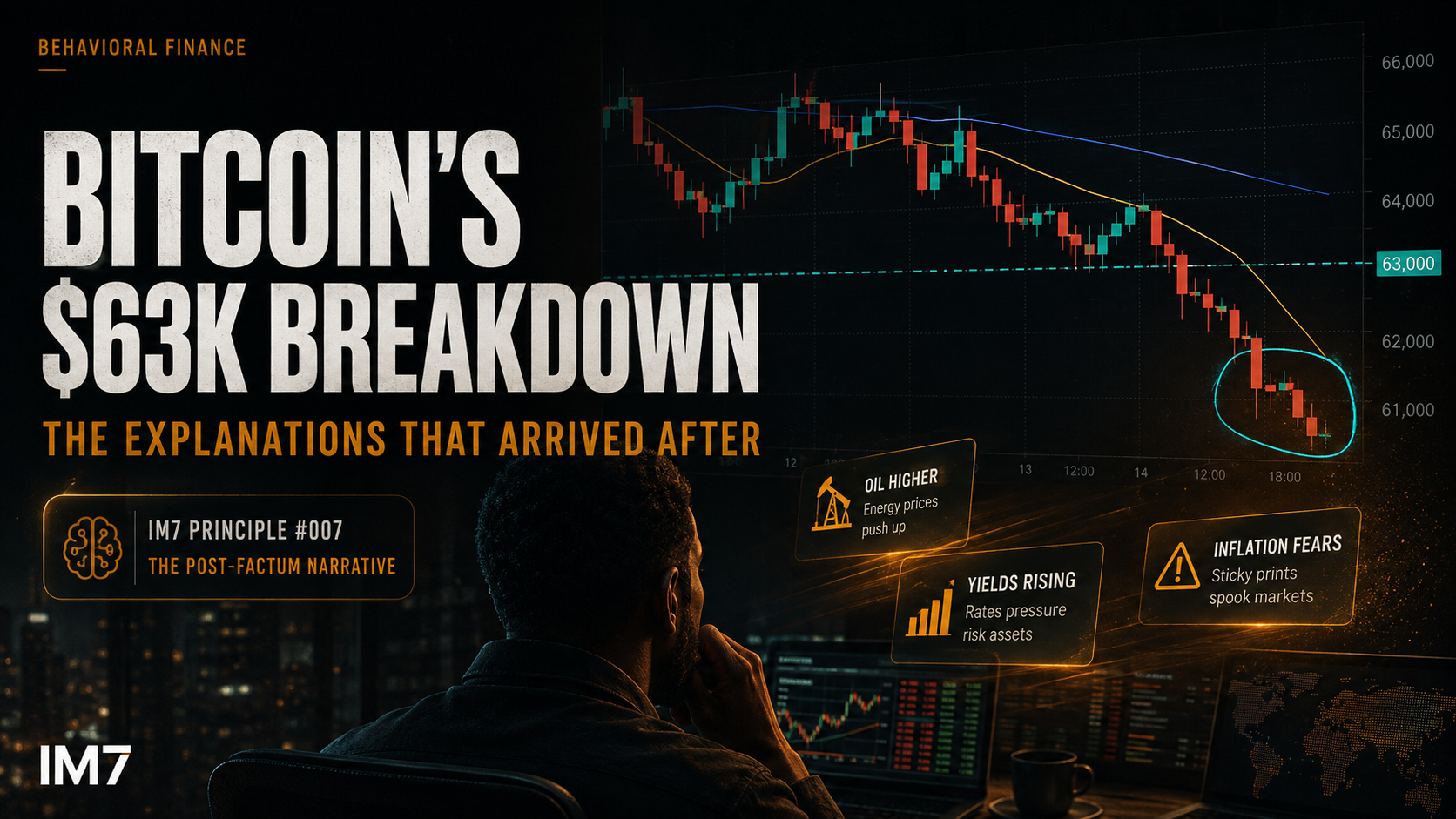
Bitcoin’s $63K Breakdown: Why the Explanations Came After
Bitcoin’s move below $63,000 triggered an immediate wave of explanations — macro pressure, yields, oil, market structure. The behavioral risk is that once the outcome is known, those explanations can feel more obvious and predictive than they actually were beforehand. The real test is separating post-move understanding from genuine pre-move edge.
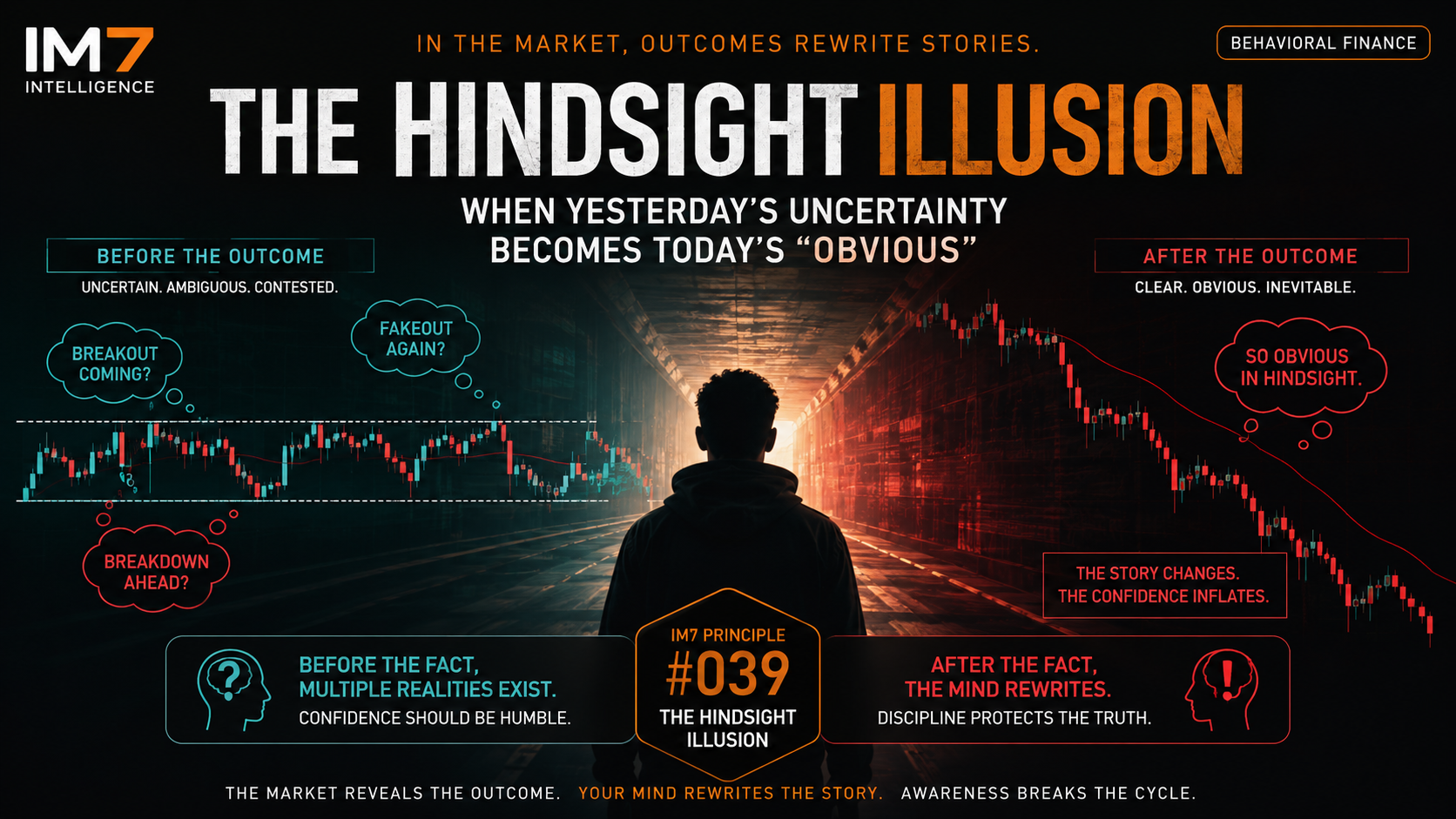
When the Range Breaks: Why Bitcoin Suddenly Looks Obvious
Bitcoin’s range looked ambiguous—until it broke. Then the warning signs suddenly seemed obvious. That shift is hindsight bias: once the outcome is known, traders rewrite uncertainty as predictability and mistake being right about the result for having had better evidence.