Confirmation Bias
Investors seek out and remember evidence that supports the position they already hold.
Canonical source: Wason, 1960
Articles studying this principle
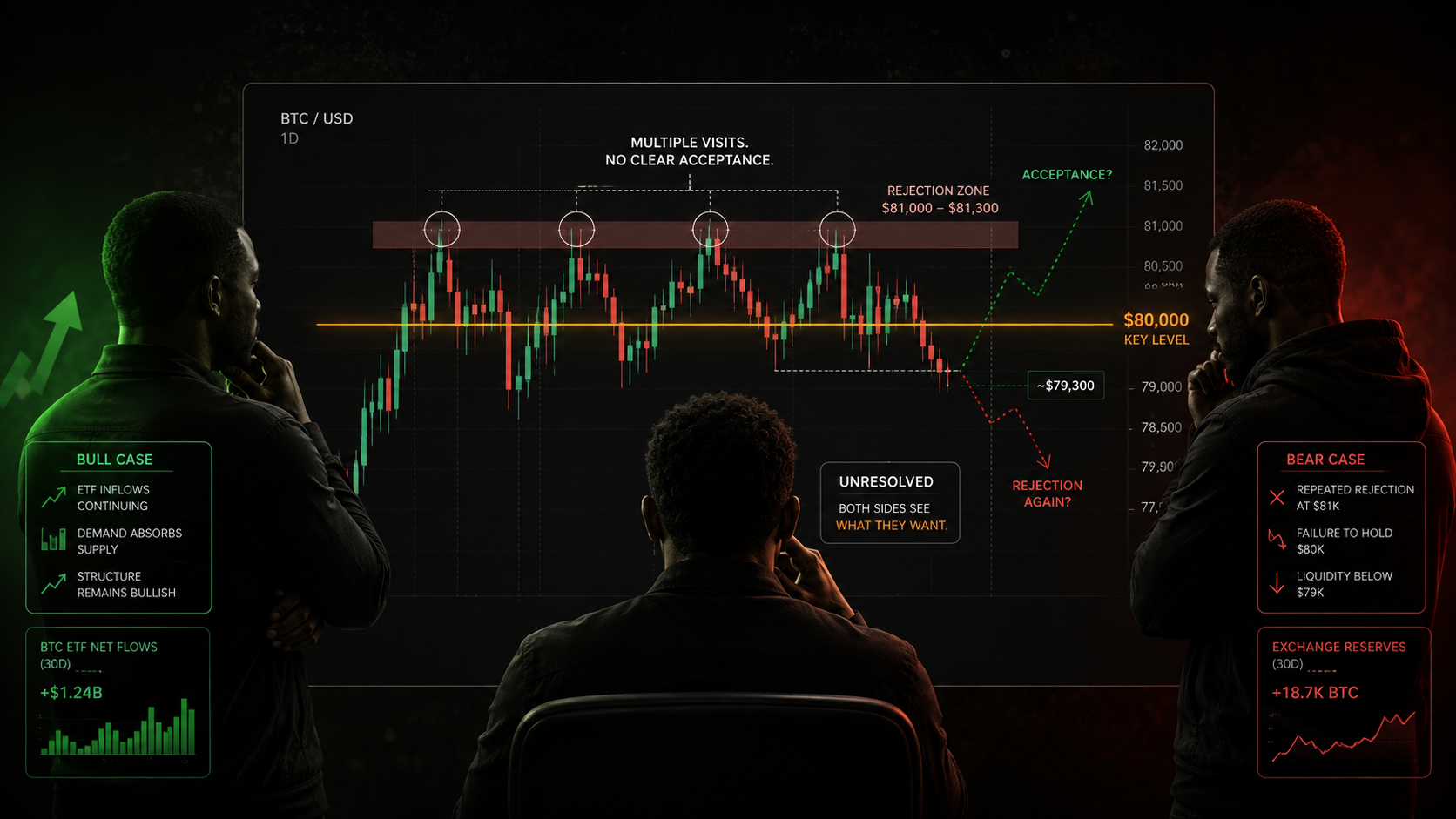
The Confirmation Bias Trap: Why Bulls and Bears See Different Bitcoin Markets
Bitcoin rejected near $81K again while ETF inflows remained strong, giving bulls and bears legitimate evidence for opposite conclusions. IM7 examines how confirmation bias turns an unresolved market into two completely different realities.
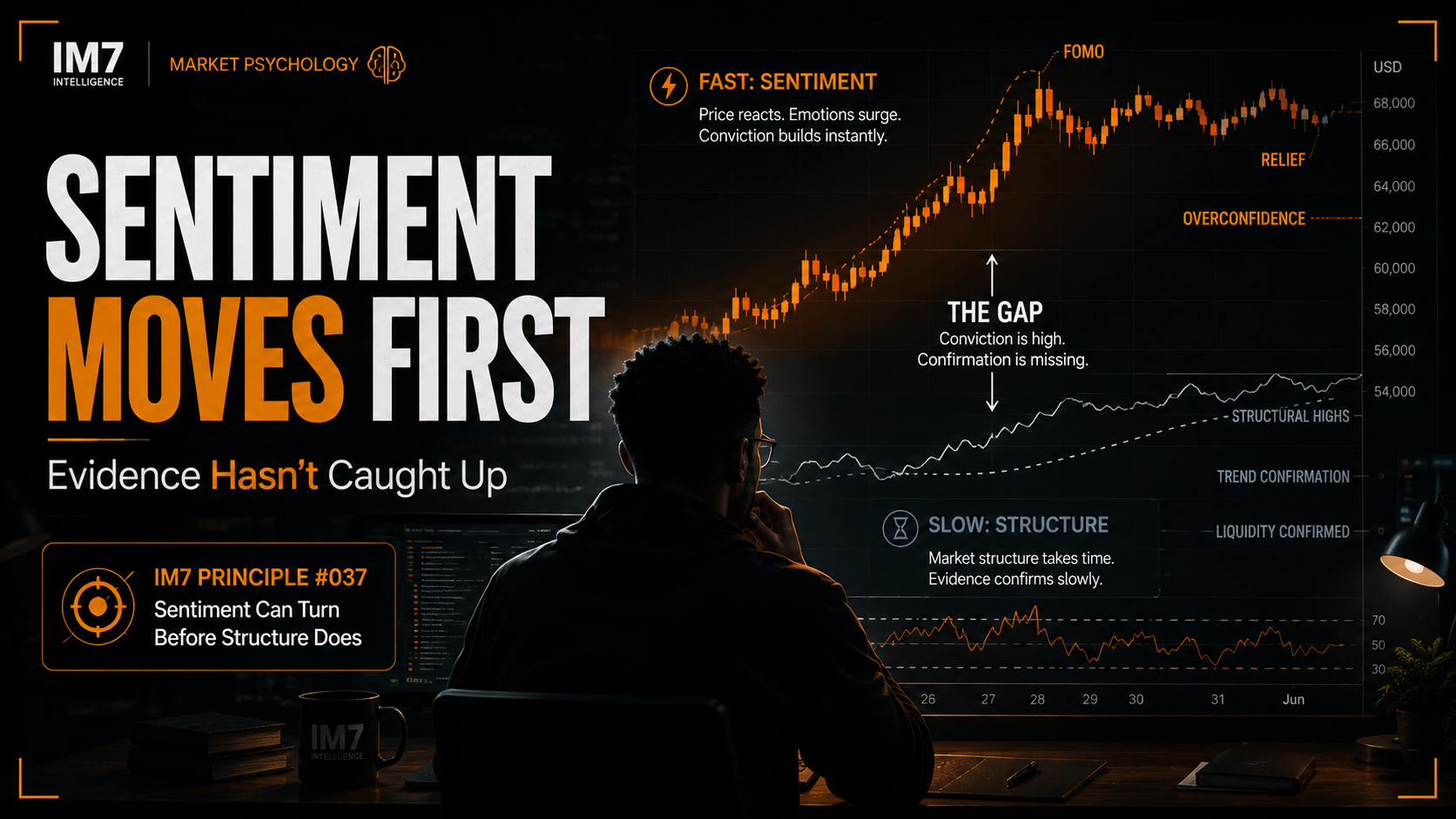
When Sentiment Flips Before Evidence: The Gap Between Feeling and Fact
A sharp market rally can flip sentiment faster than the underlying evidence changes. Traders may begin positioning for continuation while broader structural confirmation remains incomplete. That gap between feeling and fact reveals a core behavioral risk: sentiment can turn long before the evidence justifies conviction.

Emotional Certainty vs. Evidence: Why Traders Read the Same Bitcoin Chart Differently
Bitcoin is consolidating below resistance with mixed evidence, yet many traders have already committed to bullish or bearish conclusions. The disagreement does not come from different charts. It comes from confirmation bias, emotional certainty, and the tendency to interpret uncertain information through beliefs formed before the market has confirmed either outcome.

When Relief Becomes Expensive: Why One Candle Isn't Confirmation
A singular, strong market movement frequently evokes immediate emotional relief, often preceding any genuine structural confirmation. Traders commonly conflate this feeling of being correct with objective evidence of a sustained trend. ThiOne strong market move can make traders feel right long before the market confirms they are. Relief arrives instantly. Confirmation takes time. This article explores why confusing those two emotions often leads to expensive trading decisions.s critical distinction between instantaneous relief and time-dependent confirmation holds profound implications for decision-making.

Stabilization Bias: Why Sideways Markets Feel Safer Than They Are
After a sharp decline, markets often move sideways before making their next major decision. Traders mistake the absence of selling for the presence of buying, creating a dangerous sense of stability. Stabilization Bias explains why quiet markets frequently produce the most expensive decisions—not because the trend has changed, but because confidence has.

The Safest-Looking Chart Is Sometimes the Most Dangerous
Three indicators agreed. The structure looked healthy. Confidence returned. Then one candle erased everything traders thought they knew. False certainty doesn't happen because indicators fail. It happens because traders stop questioning them.