Behavioral Finance
The sunk cost effect is the tendency to continue a course of action because resources have already been invested in it, even when those past costs cannot be recovered and should not determine the best decision from the present moment forward.
Canonical source: Arkes & Blumer, 1985
Articles studying this principle

Support Felt Certain: How Repeated Tests Trapped Bitcoin Bulls
Bitcoin repeatedly defended $78K until traders began treating support as inevitable. When oil approached $100 and macro pressure intensified, that confidence became vulnerable—revealing how repetition creates false certainty before structure actually confirms it.

$1B Came In. Bitcoin Still Dropped $2K.
Nearly $1 billion in recent Bitcoin ETF inflows did not prevent a sharp $2,000 decline. The behavioral trap is the Institutional Safety Illusion: visible institutional demand can make downside feel more protected than the evidence justifies.
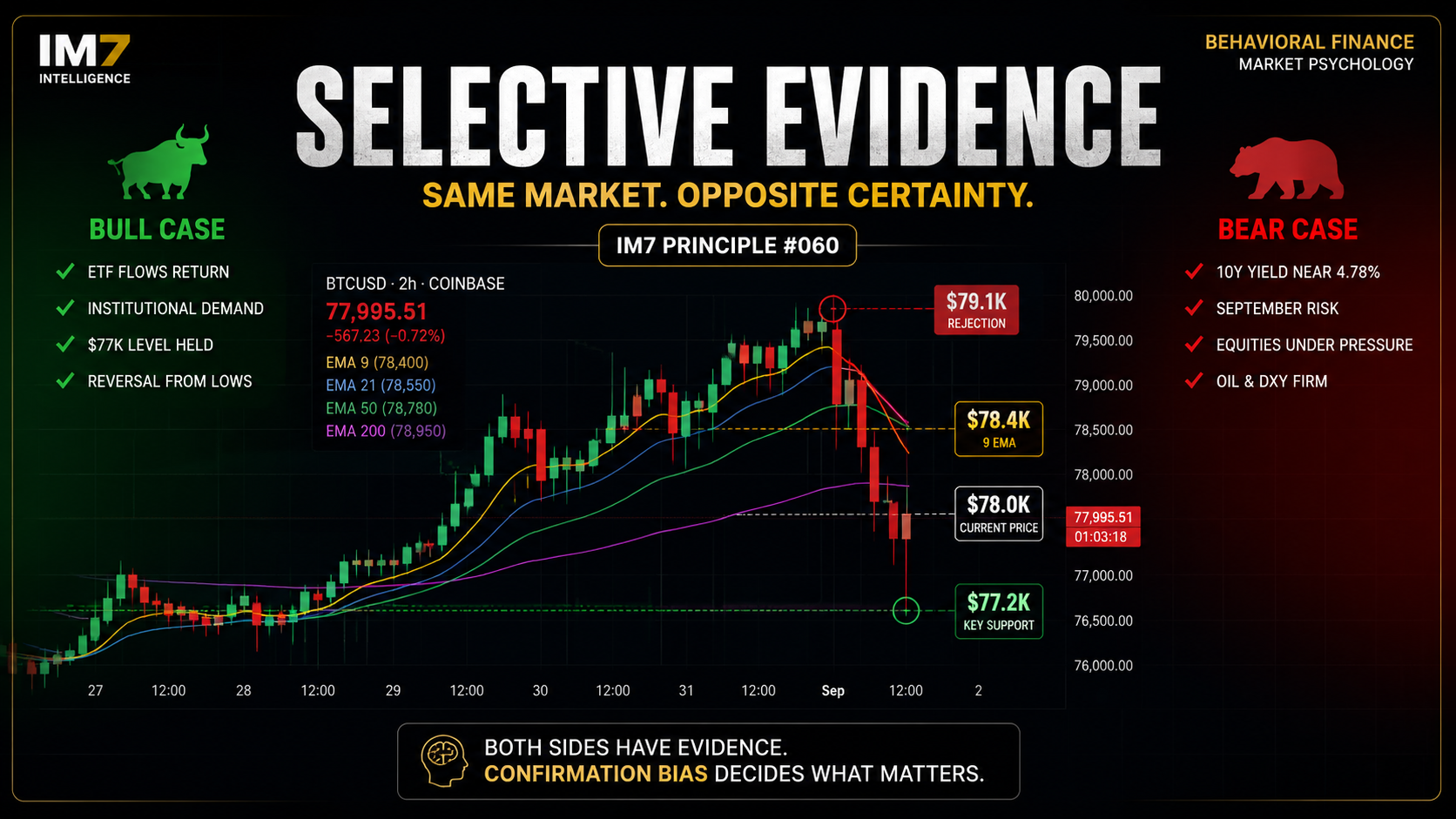
Bitcoin Gave Bulls and Bears Evidence. Both Used It Wrong.
Bitcoin is caught between bullish ETF demand and a worsening macro backdrop. The bigger behavioral risk is not choosing the wrong side — it is selectively using evidence to defend the side you already believe.
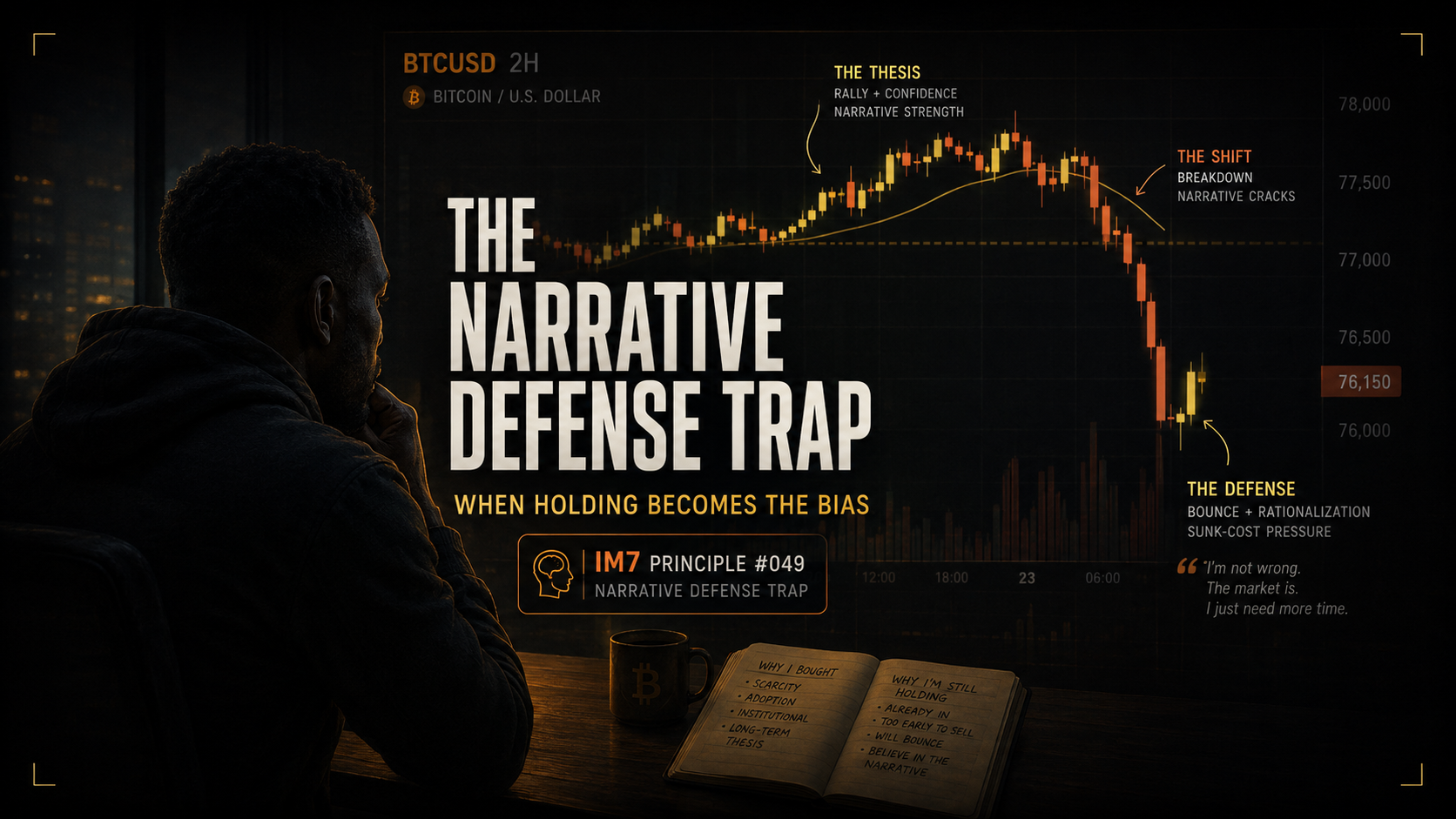
The Cost of Narrative Defense: When Holding Becomes the Bias
Bitcoin’s sharp pullback has turned yesterday’s narrative defense into a more expensive behavioral problem. When traders hold because exiting would make the loss feel real, sunk cost can replace objective reassessment.