#Investor Behavior
5 articles on Investor Behavior — behavioral finance and market psychology from IM7 Intelligence.

$1B Came In. Bitcoin Still Dropped $2K.
Nearly $1 billion in recent Bitcoin ETF inflows did not prevent a sharp $2,000 decline. The behavioral trap is the Institutional Safety Illusion: visible institutional demand can make downside feel more protected than the evidence justifies.
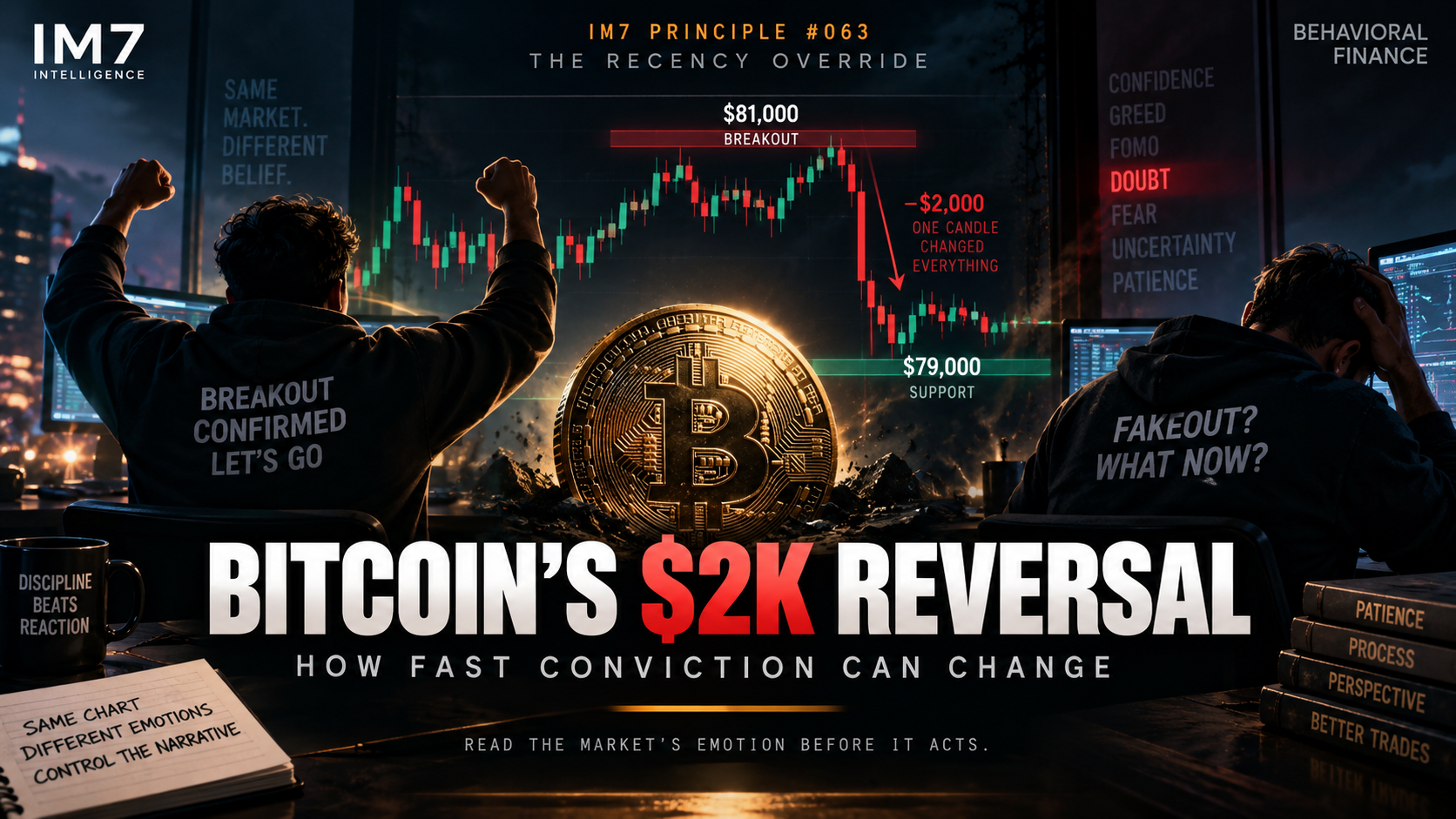
Bitcoin Changed $2,000. Trader Certainty Changed Everything.
Bitcoin went from “breakout confirmed” above $81K to “breakout failed” near $79K in less than a day. The deeper behavioral signal is how quickly one jobs report and one large red candle overrode the market thesis traders had just formed.
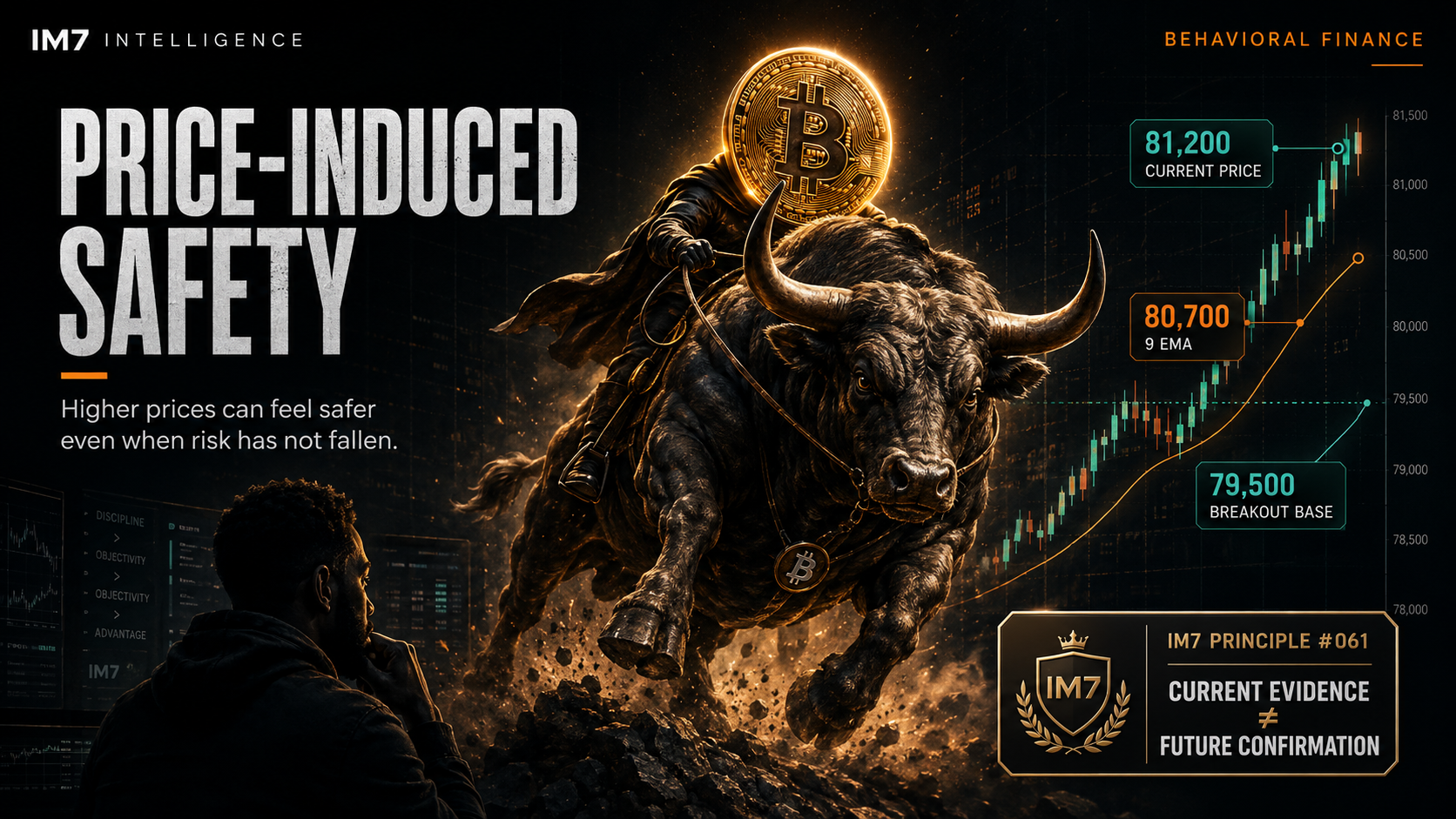
Why Bitcoin Feels Safer at $81K Than It Did at $76K
Bitcoin surged from the upper-$79K area toward $81.9K, and traders who felt uneasy near $76K now feel increasingly comfortable buying higher. The behavioral trap is Price-Induced Safety: rising price can reduce perceived risk even when actual market risk has not fallen.
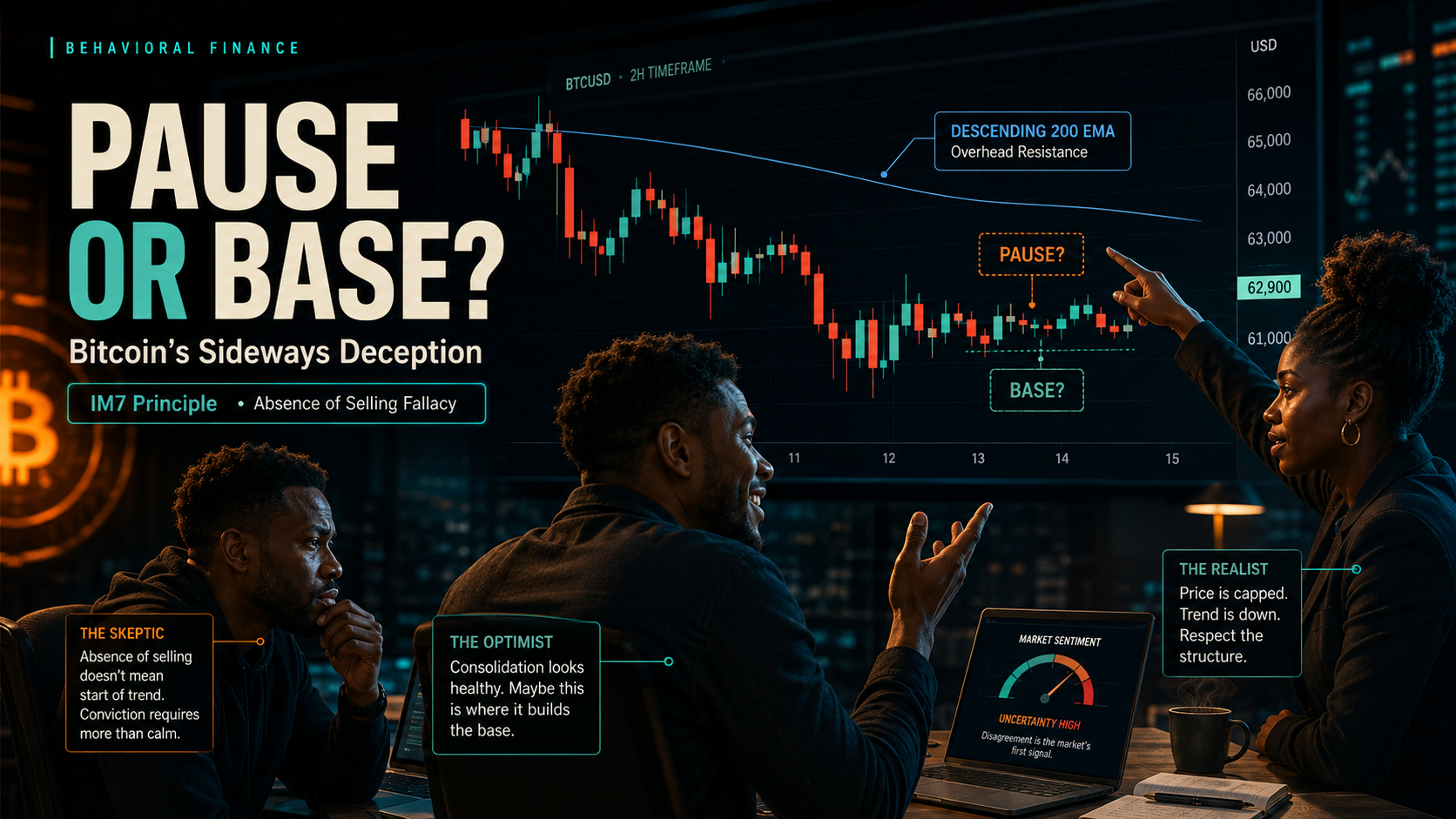
Bitcoin's Sideways Deception: Why a Pause Feels Like a Base
After a recent decline, Bitcoin stabilized near $62.9K, creating the appearance of a developing base. But the absence of aggressive selling is not the same as evidence that buyers have taken control. Sideways price action can create premature confidence before the market has actually confirmed direction.

The Paradox of Prudence: Why Retail Traders Wait for Confirmation and Often Miss the Big Moves
Retail traders often wait for confirmation before entering a position, believing certainty reduces risk. In reality, markets often charge a premium for certainty, turning caution into missed opportunity. This article explores how confirmation bias, loss aversion, and herd behavior can cause investors to arrive late to the very moves they hoped to capture.