#False Certainty
4 articles on False Certainty — behavioral finance and market psychology from IM7 Intelligence.
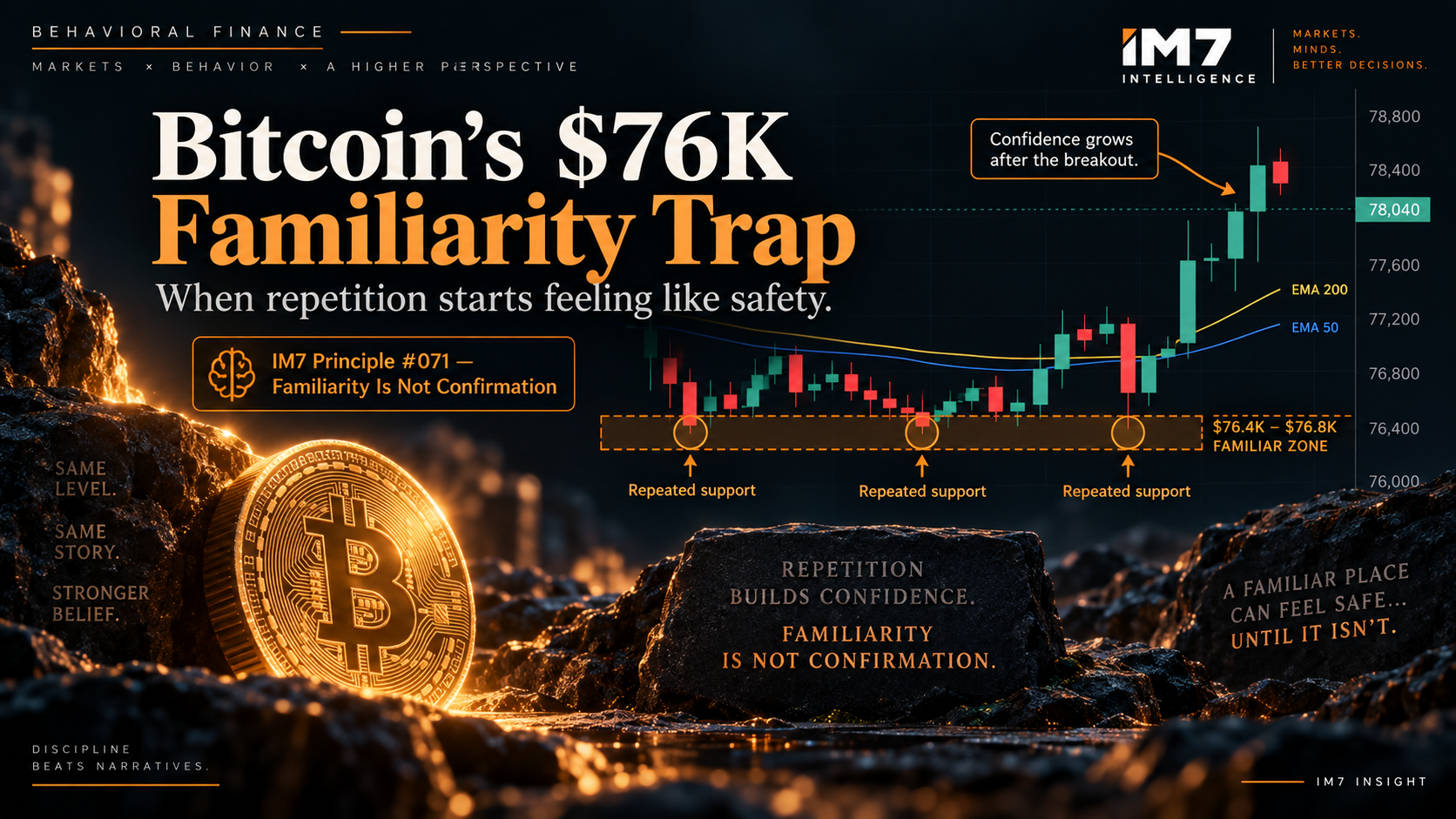
Bitcoin’s $76K Familiarity Trap: When Repetition Starts Feeling Like Safety
Bitcoin has defended the $76K area repeatedly, and each successful bounce makes traders more confident that the level is “safe.” But repetition can create false certainty. This article breaks down the familiarity trap behind repeated support tests and why a streak should never be mistaken for a rule.

Support Felt Certain: How Repeated Tests Trapped Bitcoin Bulls
Bitcoin repeatedly defended $78K until traders began treating support as inevitable. When oil approached $100 and macro pressure intensified, that confidence became vulnerable—revealing how repetition creates false certainty before structure actually confirms it.

Selective Attention: How Bitcoin Traders Find False Certainty in Ranges
A narrow Bitcoin range around $65,000 gave bulls and bears enough evidence to support opposite conclusions. Bulls focused on rising lows, bears on rejected highs. The chart stayed the same; selective attention changed what each trader believed it was saying.

The Safest-Looking Chart Is Sometimes the Most Dangerous
Three indicators agreed. The structure looked healthy. Confidence returned. Then one candle erased everything traders thought they knew. False certainty doesn't happen because indicators fail. It happens because traders stop questioning them.