#Technical Analysis
13 articles on Technical Analysis — behavioral finance and market psychology from IM7 Intelligence.
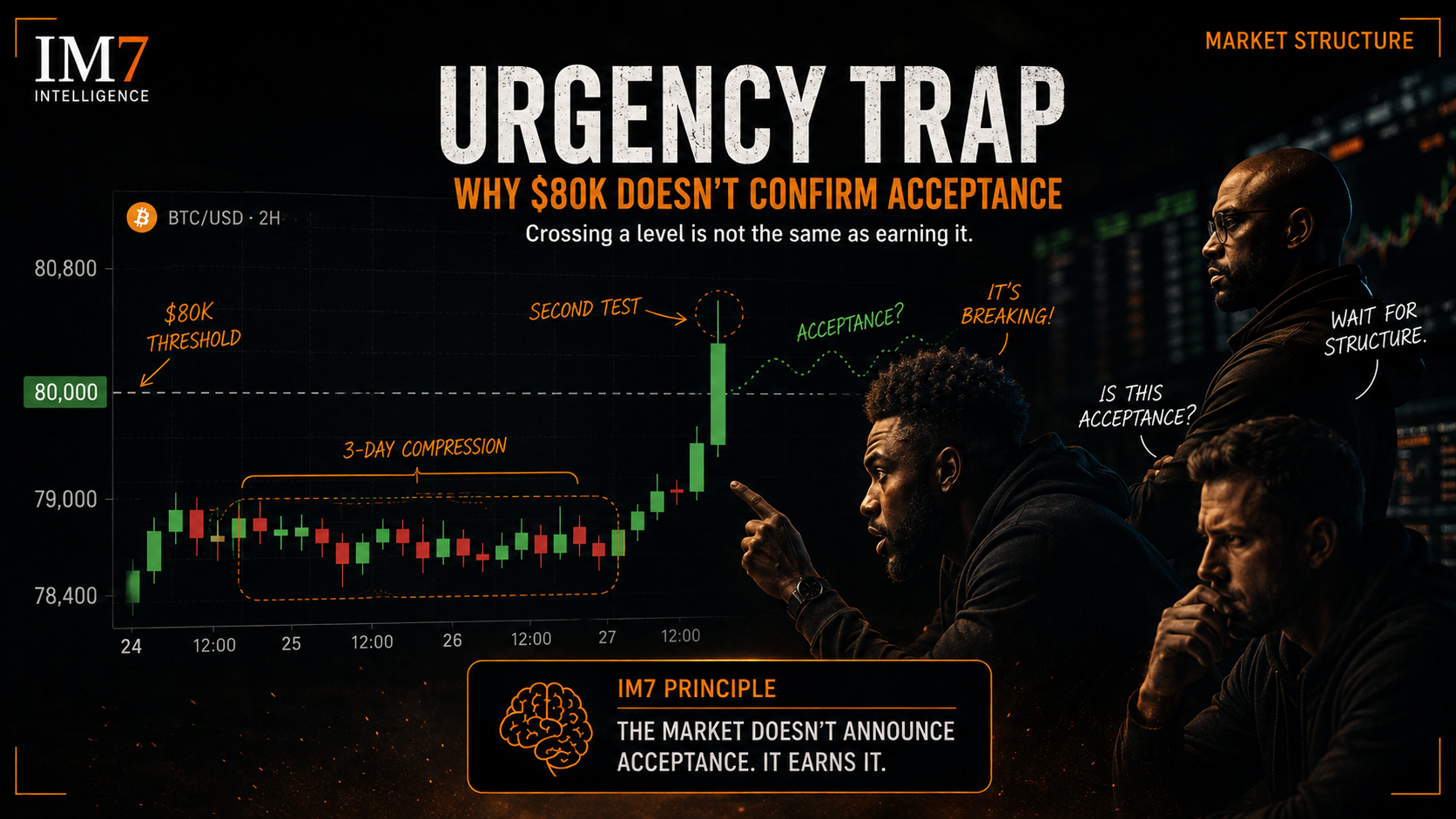
The Urgency Trap: Why Bitcoin Crossing $80K Does Not Confirm Acceptance
Bitcoin pushed back through $80,000 after days of compression, but the behavioral risk is shifting from impatience to urgency. IM7 examines why crossing a level is not the same as establishing acceptance above it.
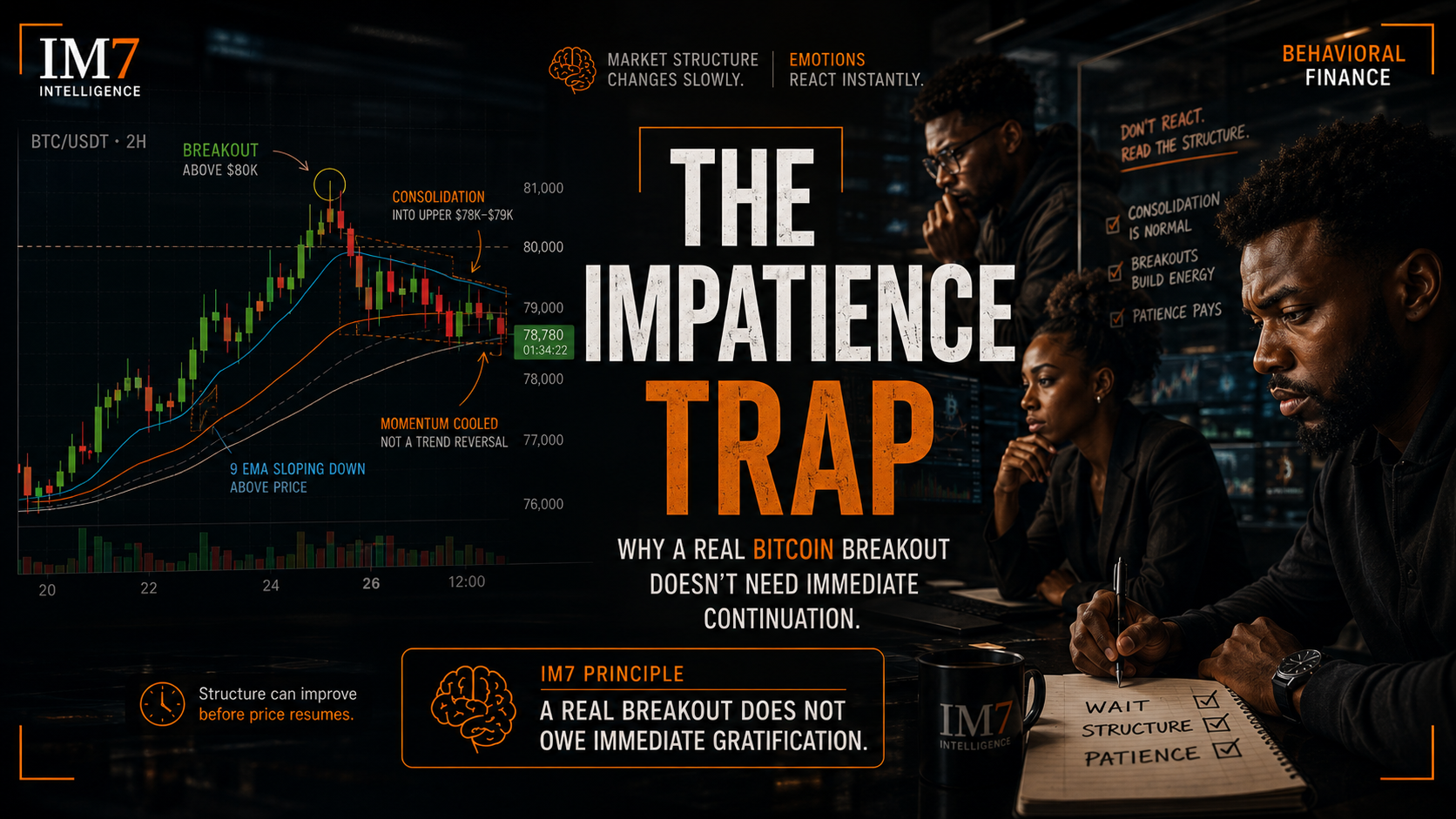
The Impatience Trap: Why a Real Bitcoin Breakout Doesn't Need Immediate Continuation
Bitcoin broke above major structure and briefly cleared $80K, but the pause that followed exposed a new behavioral trap: traders often mistake the absence of immediate continuation for evidence that the breakout failed.

One Green Candle Doesn't Confirm a Recovery
One powerful green candle can change how traders feel long before it changes the market itself. Relief often arrives before confirmation, causing investors to mistake a temporary rebound for the beginning of a new trend. This article explores why our brains trust dramatic price moves more than the quieter evidence that follows.

The Recovery Reached Resistance: Confidence Before Confirmation
Three green candles after a sharp decline can create a powerful sense of relief, but relief is not confirmation. Traders often mistake arriving at resistance for breaking through it, allowing emotions to outrun market structure. The recovery may feel convincing, yet the real test often begins where confidence returns.

When Lower Highs Whisper: The Anchoring Bias Traders Miss.
Markets often reveal a change in character through small structural shifts long before a reversal becomes obvious. Traders miss those signals when they judge each candle separately, anchor to the previous high, and fail to recognize the sequence forming in front of them.

The Allure of the Oracle: Why We Over-rely on Technical Indicators
Despite frequent evidence of their fallibility, market participants often exhibit profound trust in technical indicators. This persistent belief in predictive patterns, even when statistically tenuous, reveals deep-seated cognitive biases. Understanding the subconscious mechanisms driving this over-reliance is crucial for disciplined decision-making.

The Behavioral Misconception: Why Relief Rallies Aren't Structural Recovery
A bounce can restore confidence long before it restores market structure. After Bitcoin defended the $62,000 support level, many traders interpreted relief as recovery. This research examines why temporary rebounds often create false optimism, how cognitive biases distort decision-making during relief rallies, and why rebuilding structure requires far more evidence than surviving a single level.

The Safest-Looking Chart Is Sometimes the Most Dangerous
Three indicators agreed. The structure looked healthy. Confidence returned. Then one candle erased everything traders thought they knew. False certainty doesn't happen because indicators fail. It happens because traders stop questioning them.

The Silent Erosion: How Sideways Bitcoin Markets Quietly Destroy Trader Confidence
After a strong breakout, traders often expect momentum to continue. But when Bitcoin begins moving sideways, confidence slowly gives way to doubt. This behavioral analysis explores how quiet consolidation erodes conviction, why traders mistake inactivity for safety, and how psychological biases—not price alone—shape decision-making during periods of uncertainty.

Why Clean Trends Create Dangerous Confidence: The Psychology Behind Chasing Bitcoin Breakouts
When Bitcoin exhibits a 'clean' trend, breaking out from a period of moving average compression, it often triggers a powerful, yet potentially dangerous, psychological shift in traders. This article explores how such clear price action can lead to overconfidence, fueled by FOMO, recency bias, and confirmation bias, diverting focus from disciplined entry strategies to emotional decision-making.

Why EMA Compression Creates Maximum Uncertainty: The Behavioral Psychology Behind Bitcoin's Decision Points
While technical indicators like Exponential Moving Averages (EMAs) are often used to identify trends, their compression can indicate something far more profound: concentrated market uncertainty. This article explores the psychological underpinnings of why traders often misinterpret EMA compression as a signal for impending price movement, rather than a reflection of deep indecision.

Why the Biggest Candle Isn't the Most Important: Relief vs. Confirmation in Trading
One explosive candle can change how traders feel without changing the market itself. Learn why relief is often mistaken for confirmation, how outcome bias shapes trading decisions, and why real conviction is measured by follow-through—not one impressive move.

Why Most Traders Miss The Bottom: A Behavioral Finance Perspective on Market Reversals
Market bottoms are often clear in hindsight, but in real-time, they are shrouded in fear, uncertainty, and capitulation. This article explores the behavioral biases that prevent most traders from recognizing and capitalizing on these pivotal moments, using Bitcoin as a prime example. We delve into how emotional extremes create opportunities and why waiting for confirmation can lead to missing the biggest moves.