#Confirmation Bias
48 articles on Confirmation Bias — behavioral finance and market psychology from IM7 Intelligence.
Library TopicConfirmation Bias →
Bitcoin Got Macro Relief. Why Didn't Buyers Take Control?
Bitcoin rebounded from the $81K area but stalled near $84K despite easing macro pressure. IM7 Intelligence explores the Relief–Proof Inversion: why reduced selling pressure doesn't automatically create sustained buying demand.

Bitcoin Traders Hit the Gas and Bought Crash Insurance
Bitcoin rejected $84K, dropped toward $82.3K, and bounced back near $83K. Meanwhile, a derivatives snapshot showed traders adding leveraged exposure as demand for downside protection increased. IM7 Intelligence examines the Conviction–Insurance Split—and why bullish positioning doesn't necessarily mean confidence without fear.
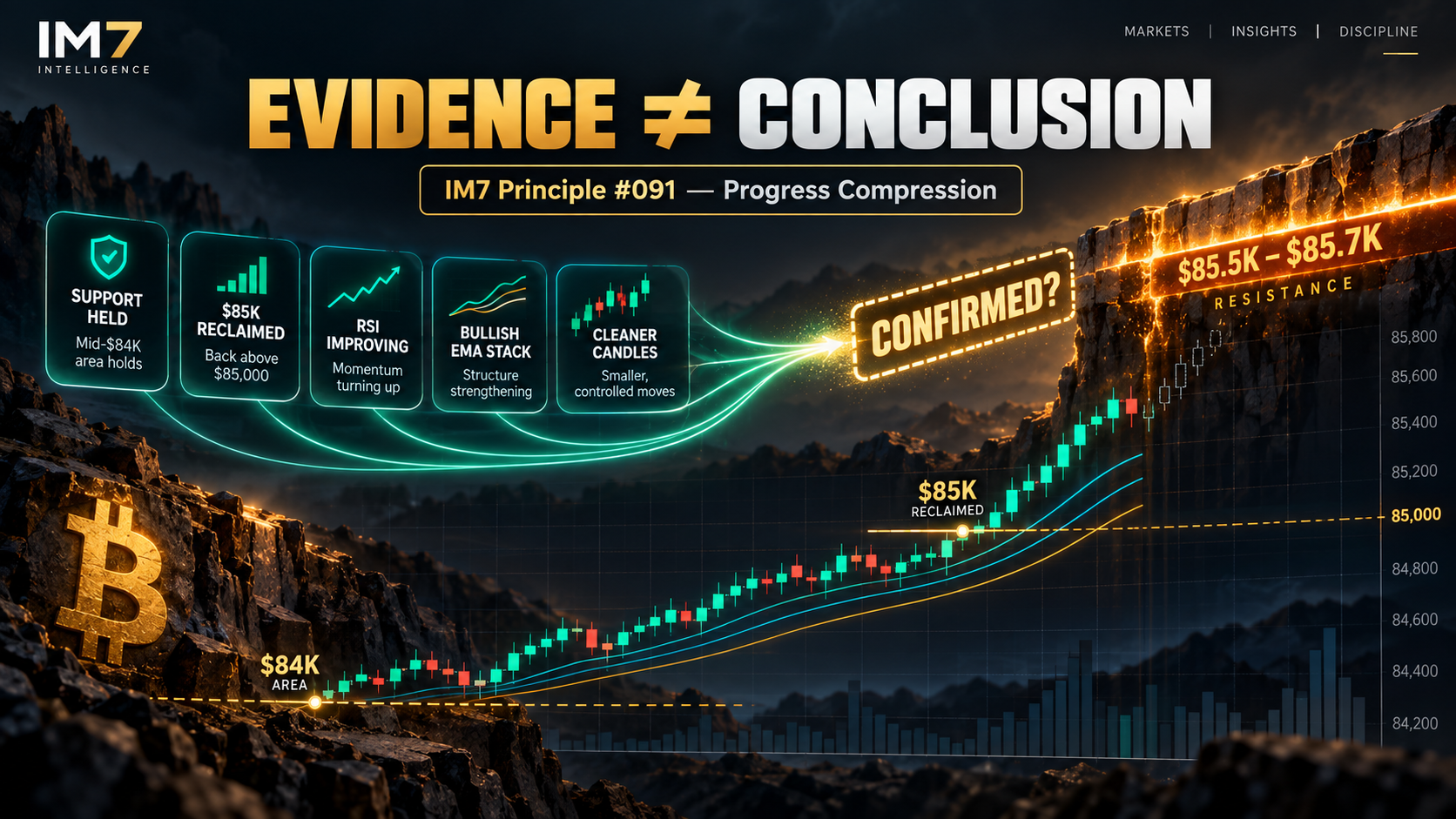
Bitcoin Improved Everywhere — Except Where It Mattered
Bitcoin reclaimed $85K and continued a controlled recovery, but the prior $85.5K–$85.7K rejection zone remained unresolved. The behavioral trap is Progress Compression: combining several legitimate improvements into one conclusion that the market has not actually earned. Progress can accumulate without confirmation.
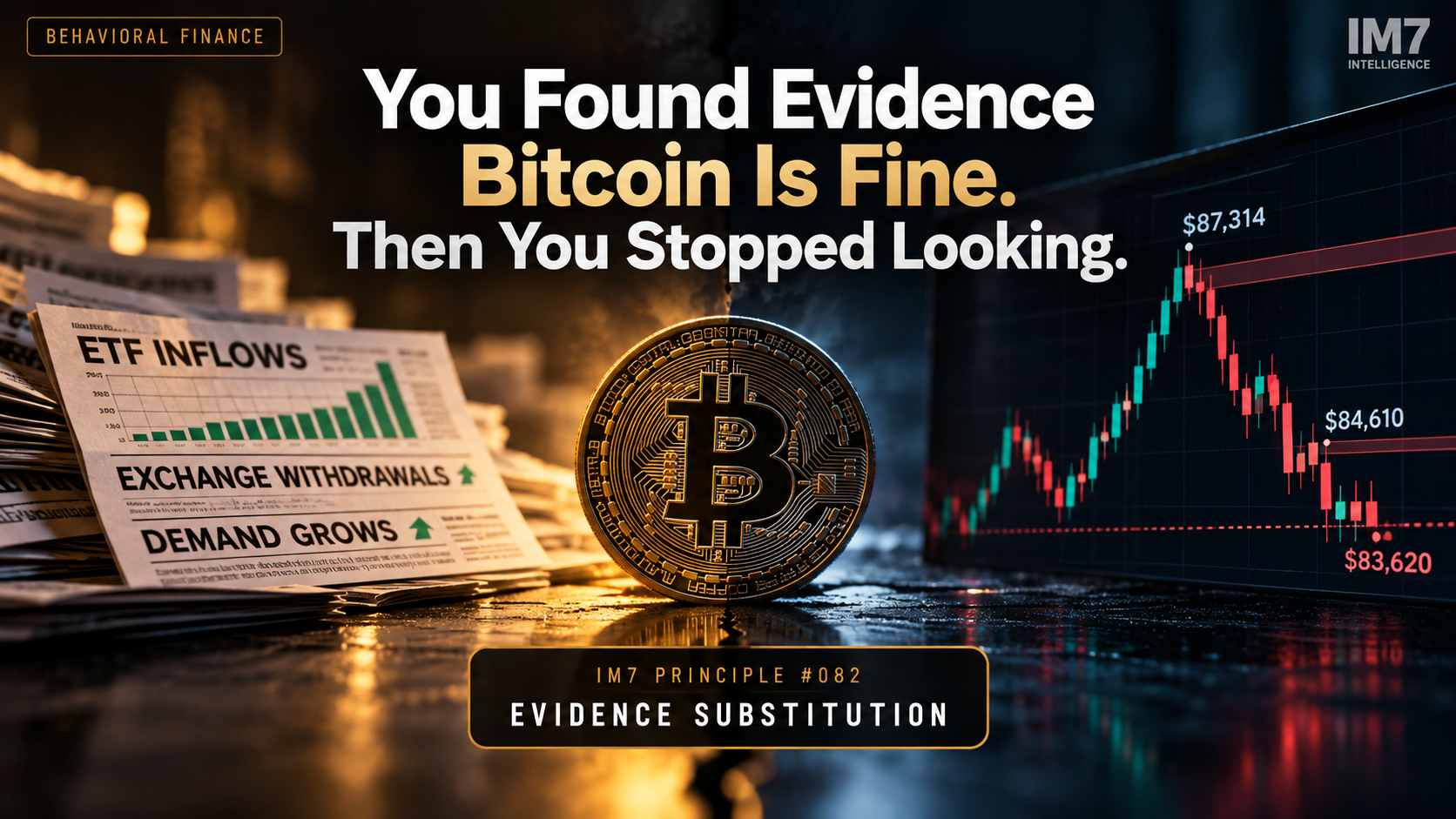
You Found Evidence Bitcoin Is Fine. Then You Stopped Looking.
Bitcoin traders have real evidence supporting both sides of the current debate. The behavioral mistake begins when supporting evidence becomes a reason to stop looking. Evidence Substitution explains why evidence that agrees with your position is not the same as evidence that the market has confirmed it.
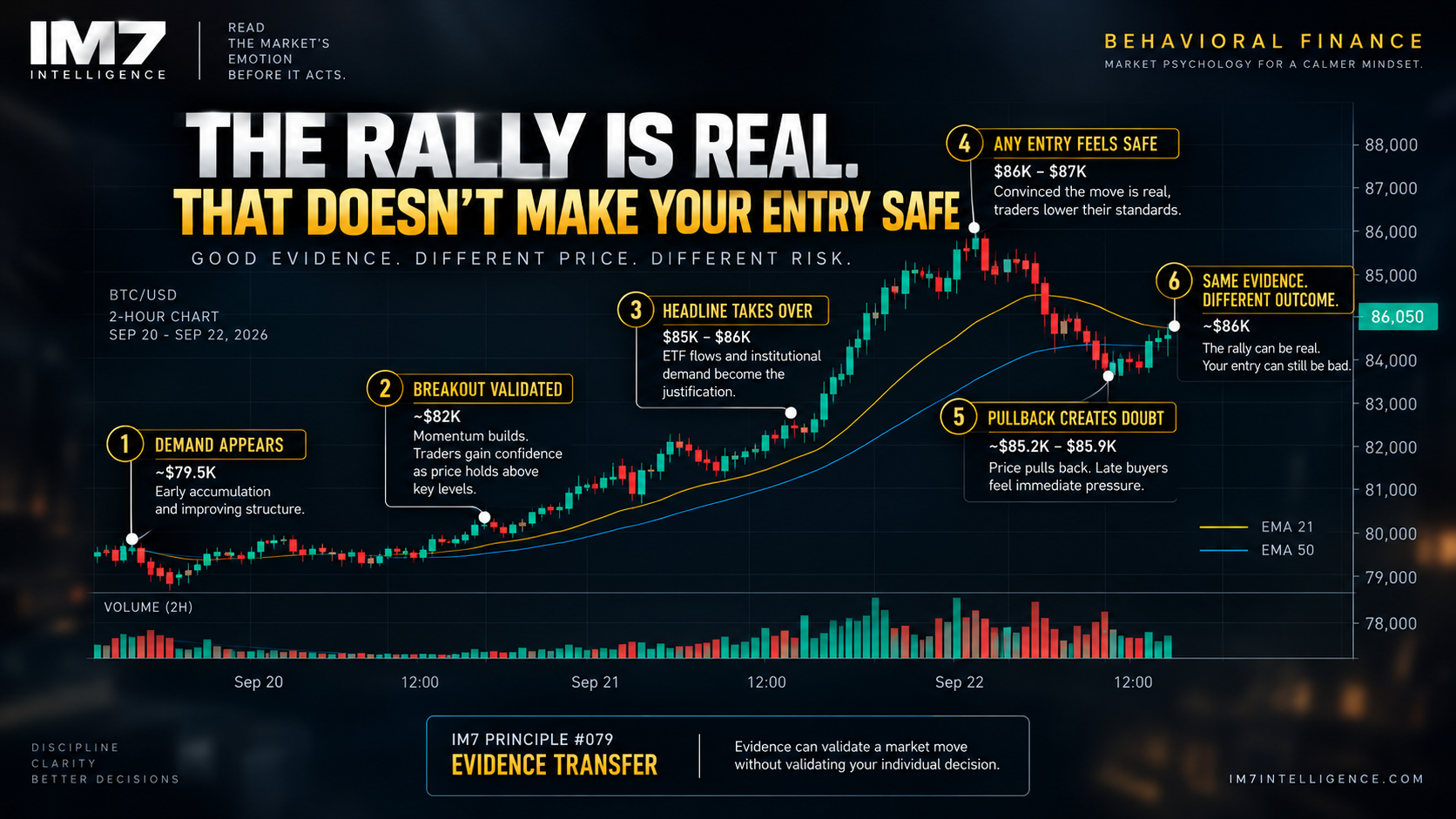
The Rally Is Real. That Doesn’t Make Your $86K Entry Safe.
Bitcoin’s rally has real evidence behind it, including strong ETF demand. But evidence that validates the move does not automatically validate a late entry. Traders get into trouble when they transfer confidence in the market to confidence in the price they are paying.

You Needed Proof at $76K. At $86K, You Stopped Asking.
Bitcoin climbed from $76K toward $86K, but something changed faster than price: traders’ standards for confirmation. The higher Bitcoin went, the less proof they demanded. That isn’t greater certainty. It’s confirmation giving way to fear of missing out.
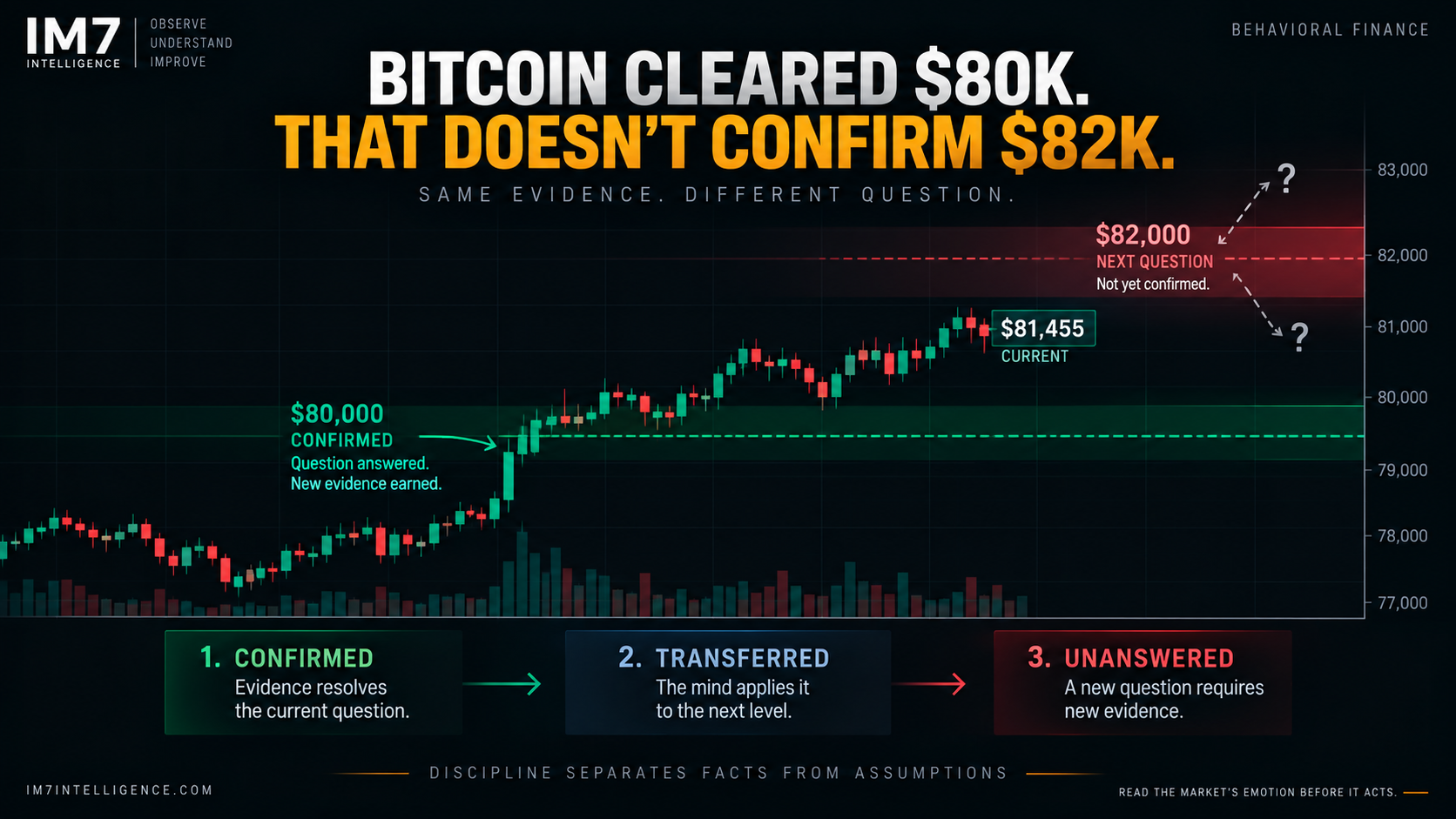
Bitcoin Cleared $80K. That Doesn't Confirm $82K.
Bitcoin cleared $80K and continued toward $81.5K, giving traders meaningful new evidence. But confirmation at one level does not automatically confirm the next. Confirmation Transfer occurs when traders take evidence that resolved yesterday’s uncertainty and mistakenly apply it to tomorrow’s unanswered question.

Bitcoin Rallied After Hot CPI: When Bad News Stops Working
Hot CPI, rising yields, and higher rate-hike odds appeared bearish for Bitcoin—yet BTC reversed its initial flush and reclaimed $79K. The reaction exposed the danger of trading a headline without watching whether price continues to obey it.
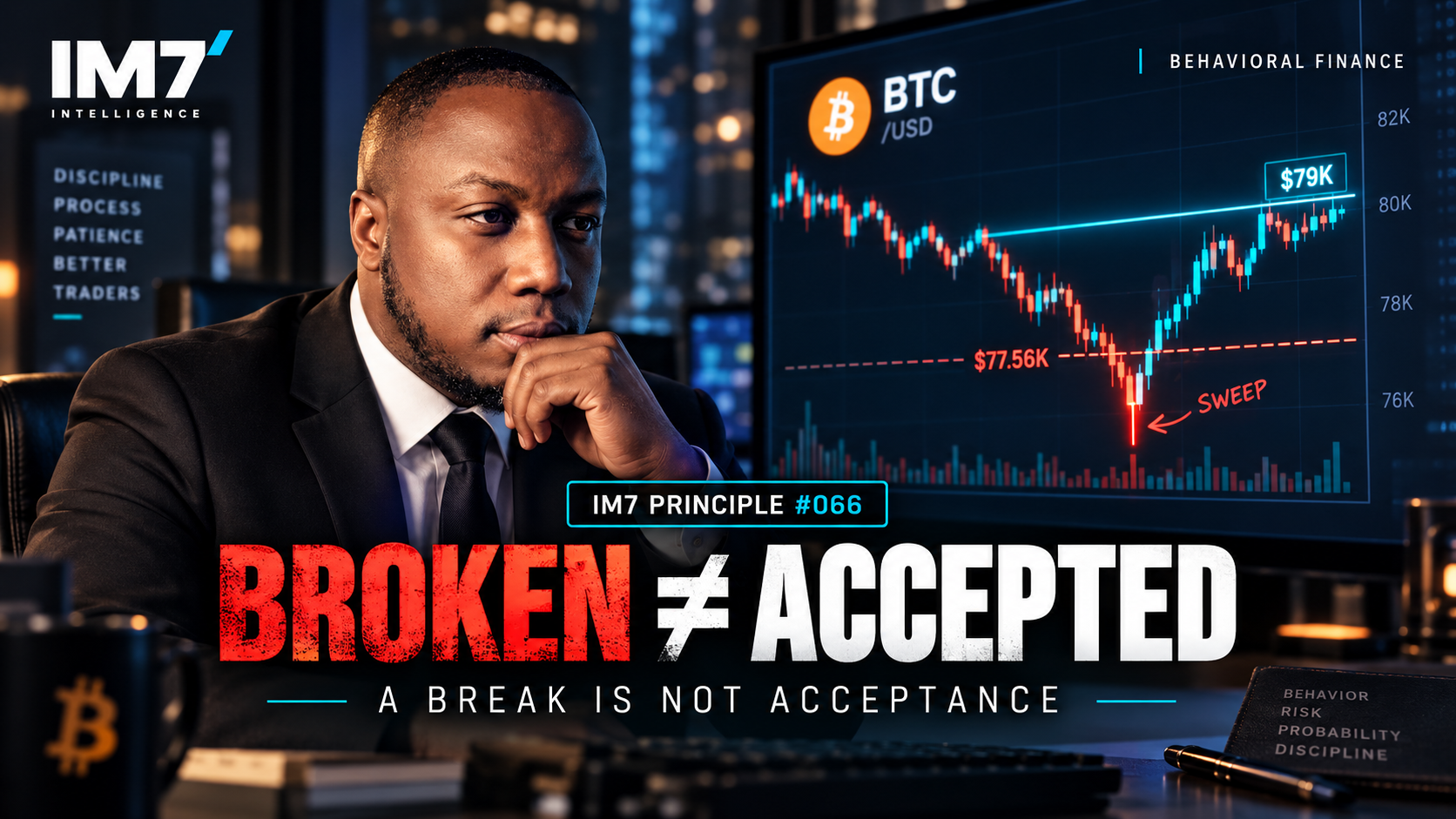
Broken Isn’t Accepted: How Bitcoin Trapped Breakdown Traders
Bitcoin swept below support near $77.56K, prompting traders to call for a deeper breakdown. When price reclaimed $79K, the move revealed a critical distinction: a level can be broken without being accepted. This is how certainty traps traders on both sides of a failed breakdown.
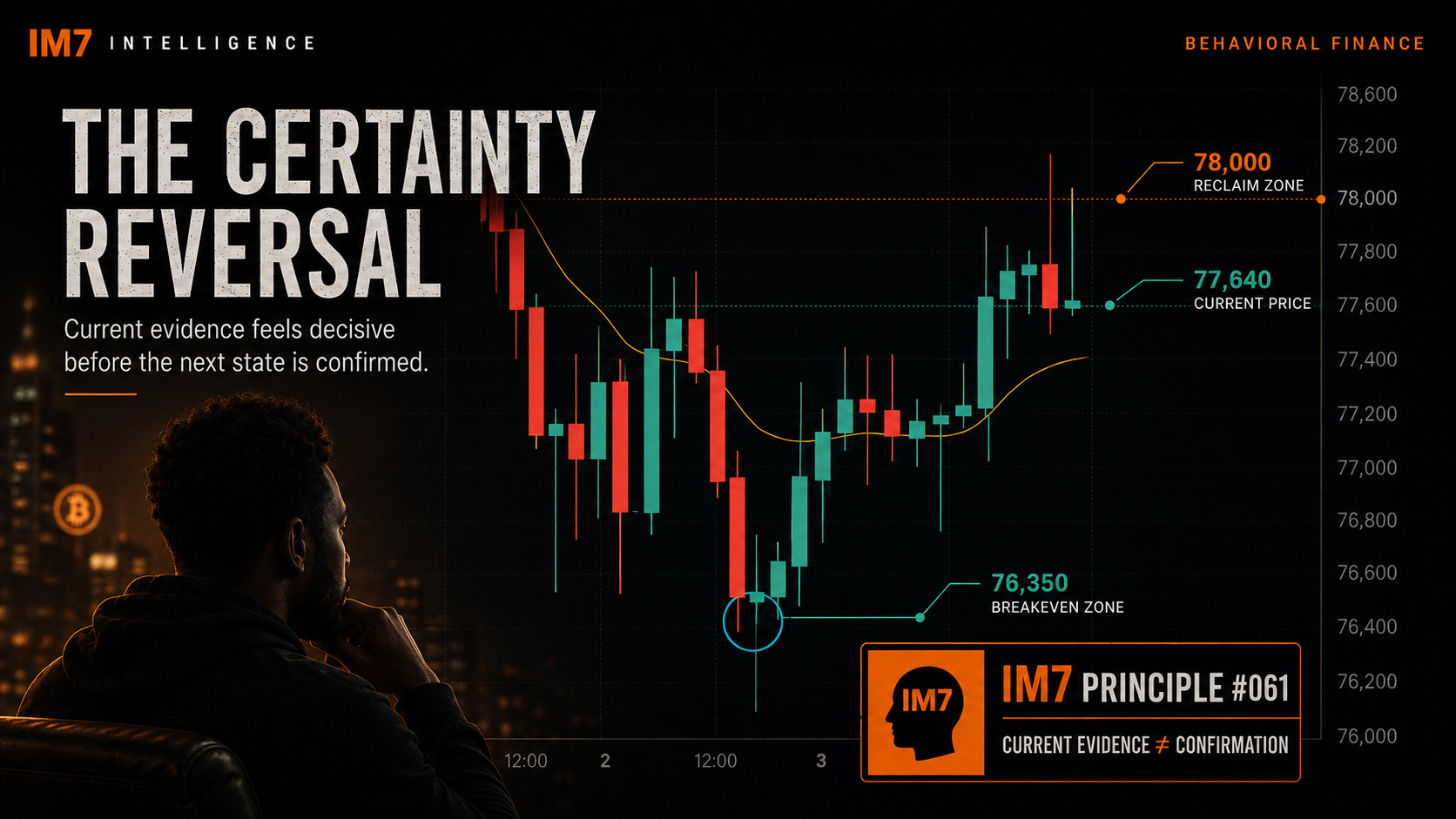
Yesterday Bears Were Certain. Today Bulls Are.
Bitcoin bounced from roughly $76.35K toward $77.64K after yesterday’s breakdown. The bigger behavioral risk is how quickly traders convert each new move into certainty about what comes next.
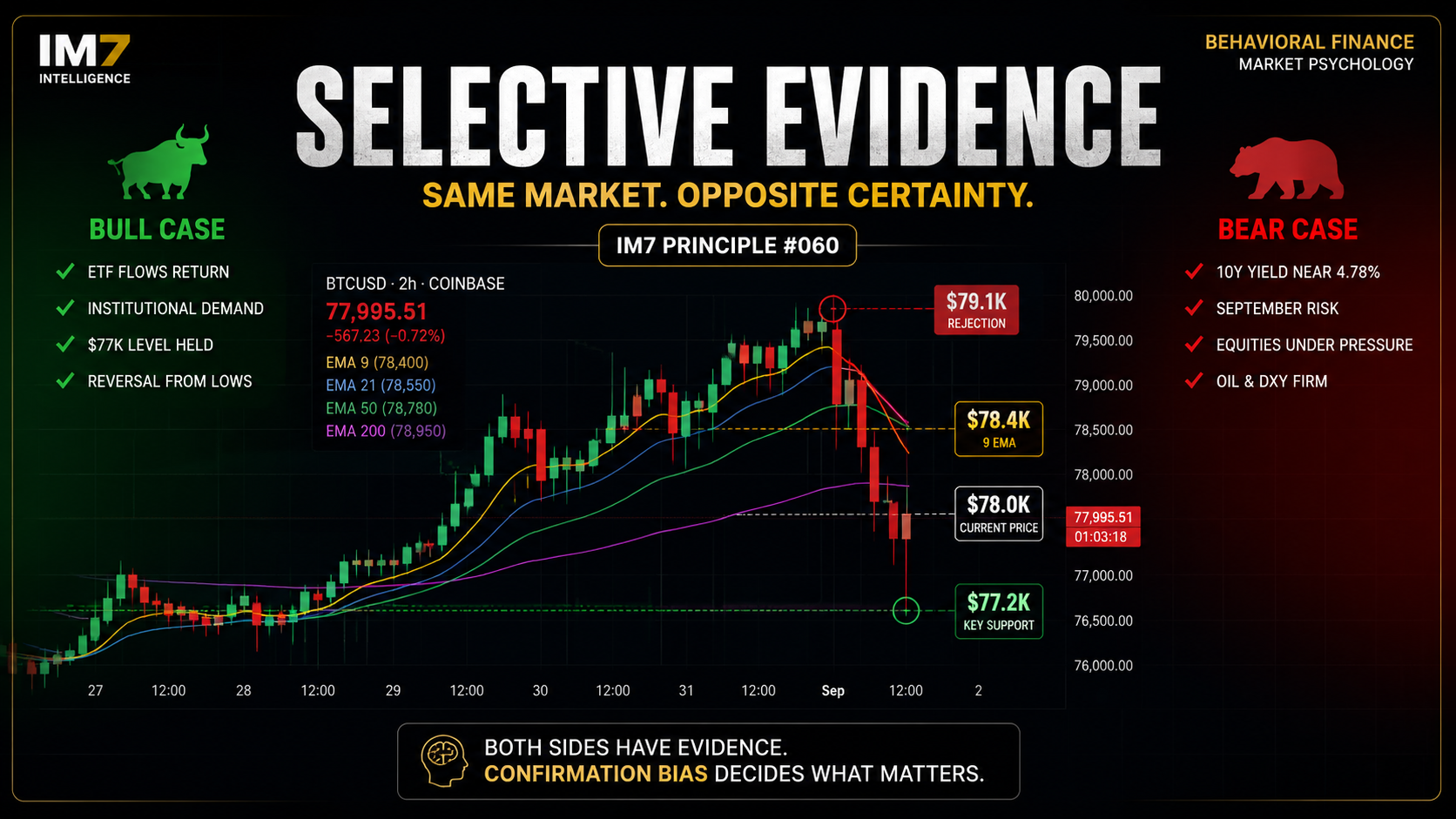
Bitcoin Gave Bulls and Bears Evidence. Both Used It Wrong.
Bitcoin is caught between bullish ETF demand and a worsening macro backdrop. The bigger behavioral risk is not choosing the wrong side — it is selectively using evidence to defend the side you already believe.
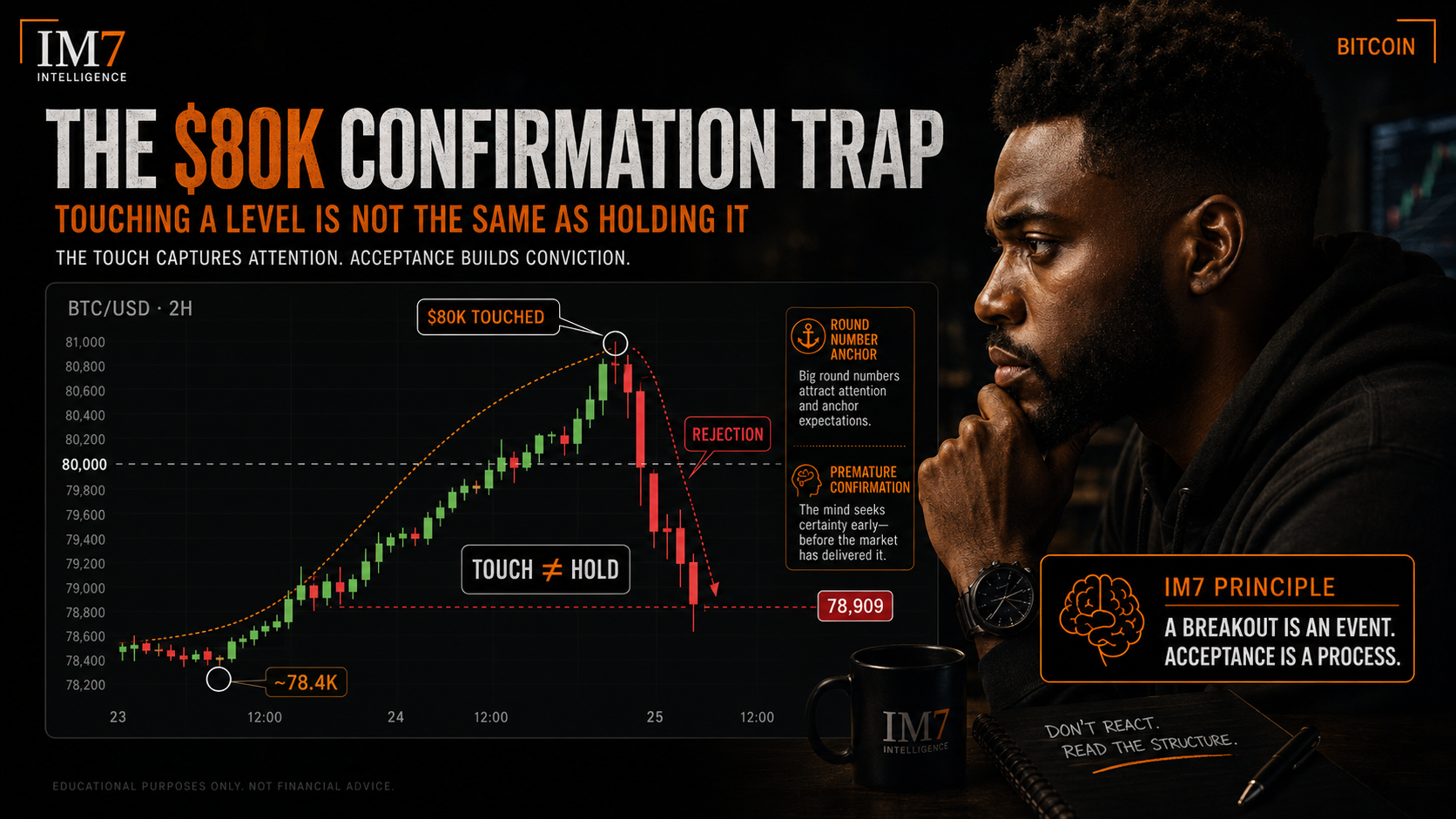
The $80K Confirmation Trap: Why Touching a Level Is Not the Same as Holding It
Bitcoin touched the $80K milestone, but the sharp rejection that followed exposed a behavioral trap: traders often confuse reaching a level with proving acceptance above it. A breakout is an event. Acceptance is a process.
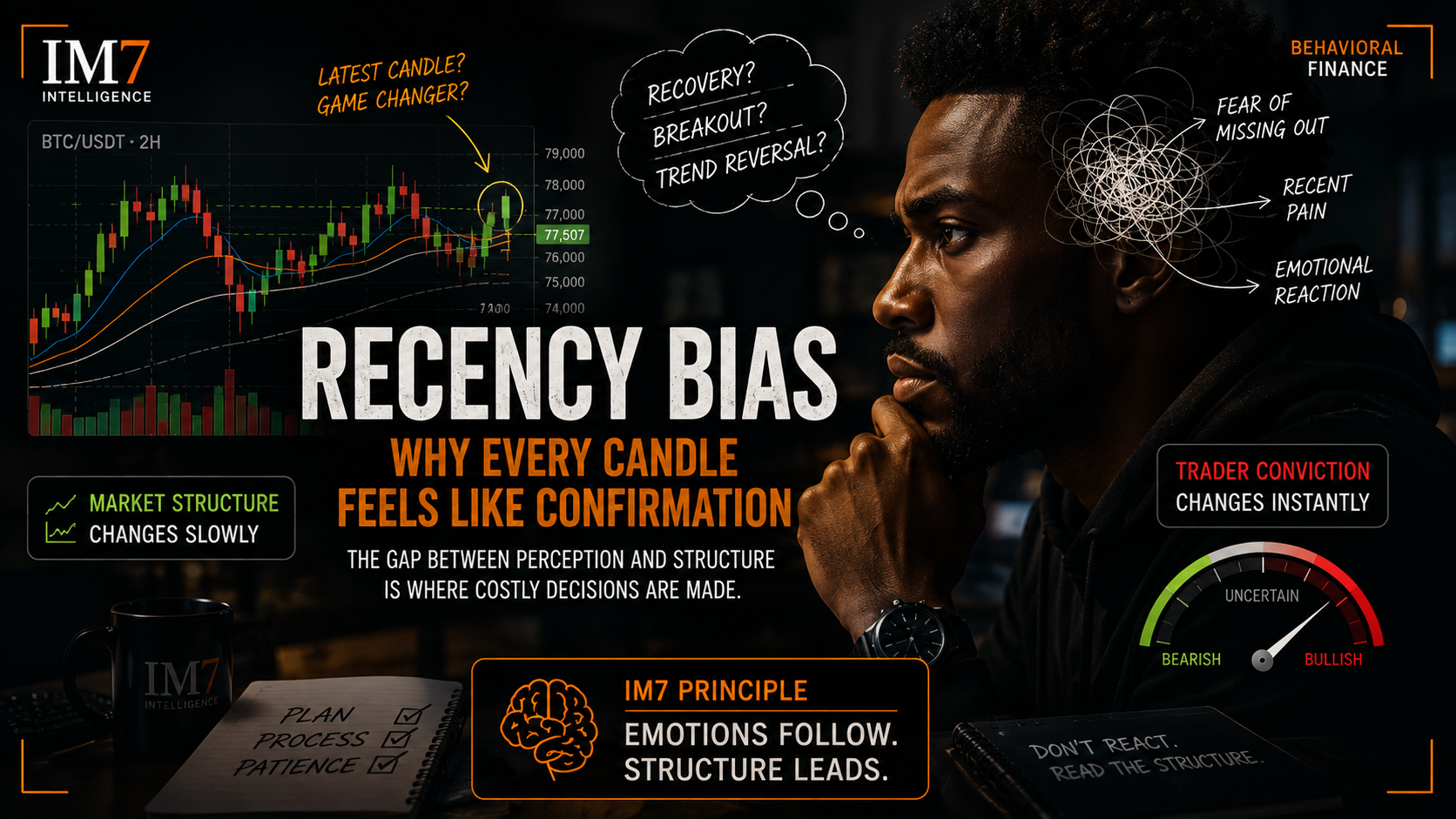
The Recency Trap: When Every Bitcoin Candle Feels Like Confirmation
Bitcoin’s volatile swings are making every new candle feel like confirmation. But when a trader’s conviction changes faster than the market structure, recency bias may be driving the interpretation.
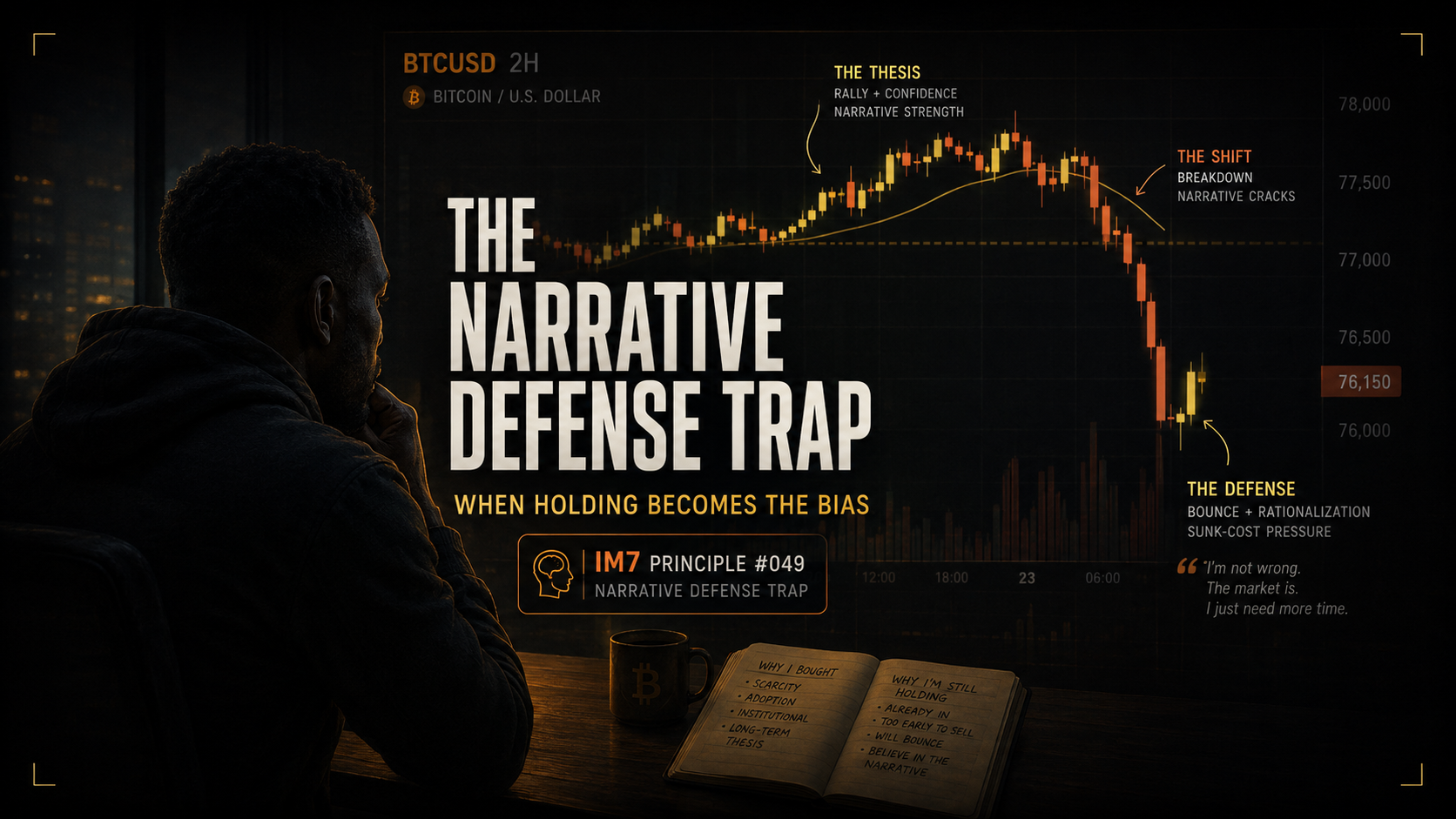
The Cost of Narrative Defense: When Holding Becomes the Bias
Bitcoin’s sharp pullback has turned yesterday’s narrative defense into a more expensive behavioral problem. When traders hold because exiting would make the loss feel real, sunk cost can replace objective reassessment.
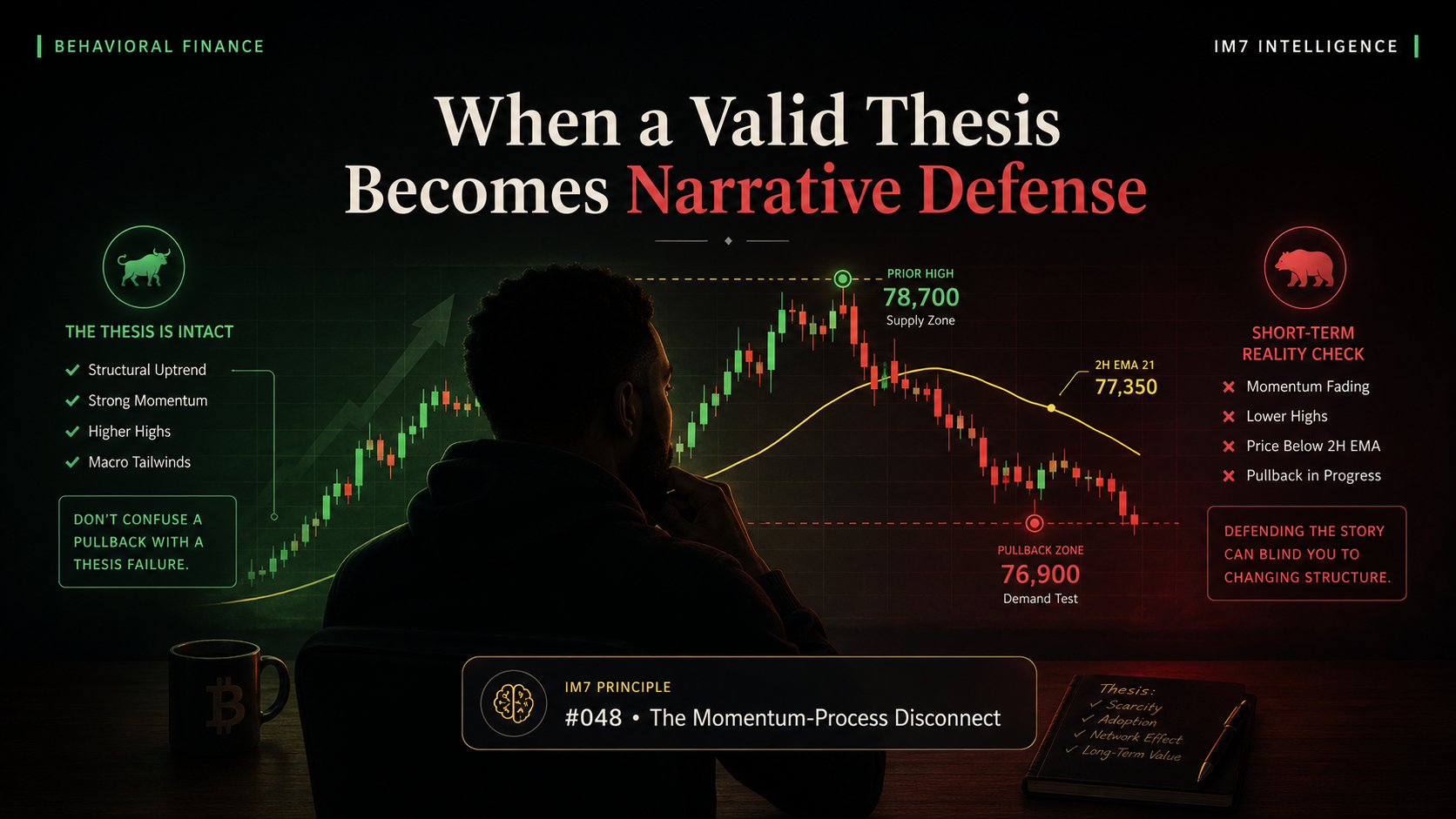
Yesterday’s Rally Was Real — Today’s Evidence Is Different
Bitcoin’s rally had real catalysts and genuine upside strength. But as price pulls back from recent highs, traders face a different behavioral test: whether they can update a previously rewarded thesis when new evidence begins to conflict with it.
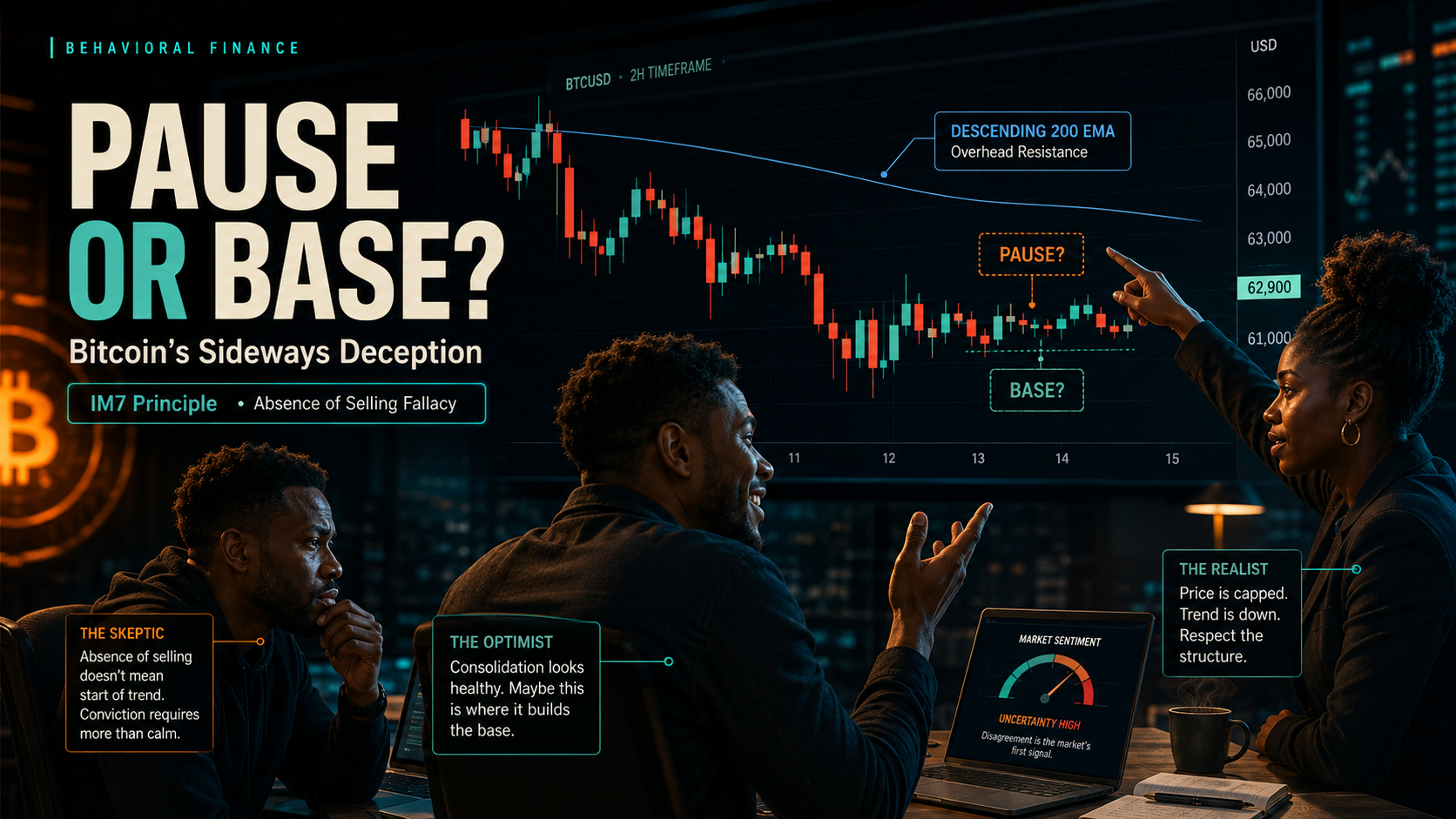
Bitcoin's Sideways Deception: Why a Pause Feels Like a Base
After a recent decline, Bitcoin stabilized near $62.9K, creating the appearance of a developing base. But the absence of aggressive selling is not the same as evidence that buyers have taken control. Sideways price action can create premature confidence before the market has actually confirmed direction.
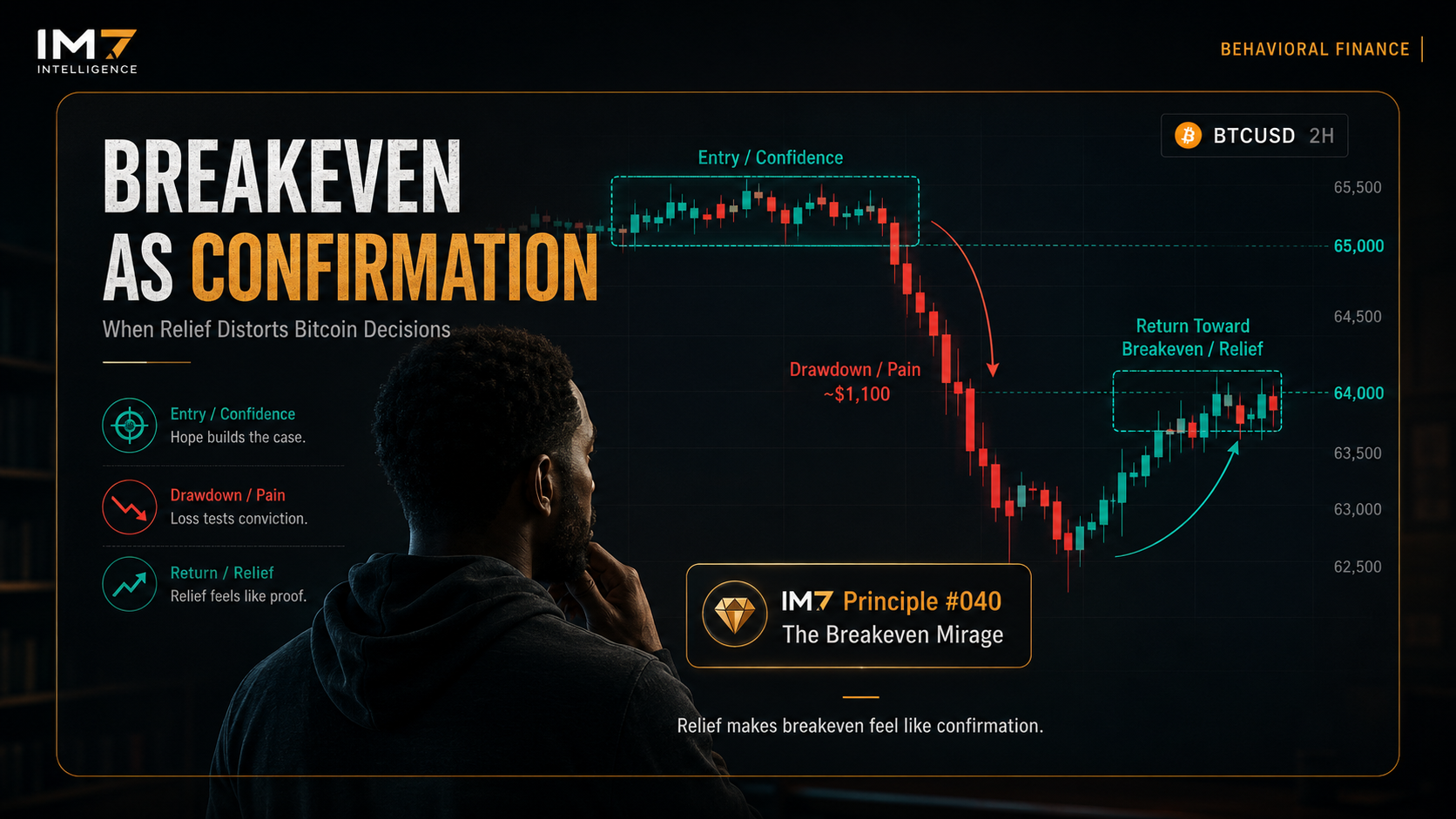
Breakeven as Confirmation: When Relief Distorts Bitcoin Decisions
Bitcoin's recent price action presented a classic behavioral dilemma: after a significant drop, price returned near prior consolidation levels. This return often generates 'relief,' yet traders frequently misinterpret this emotional state as validation of their initial market view.
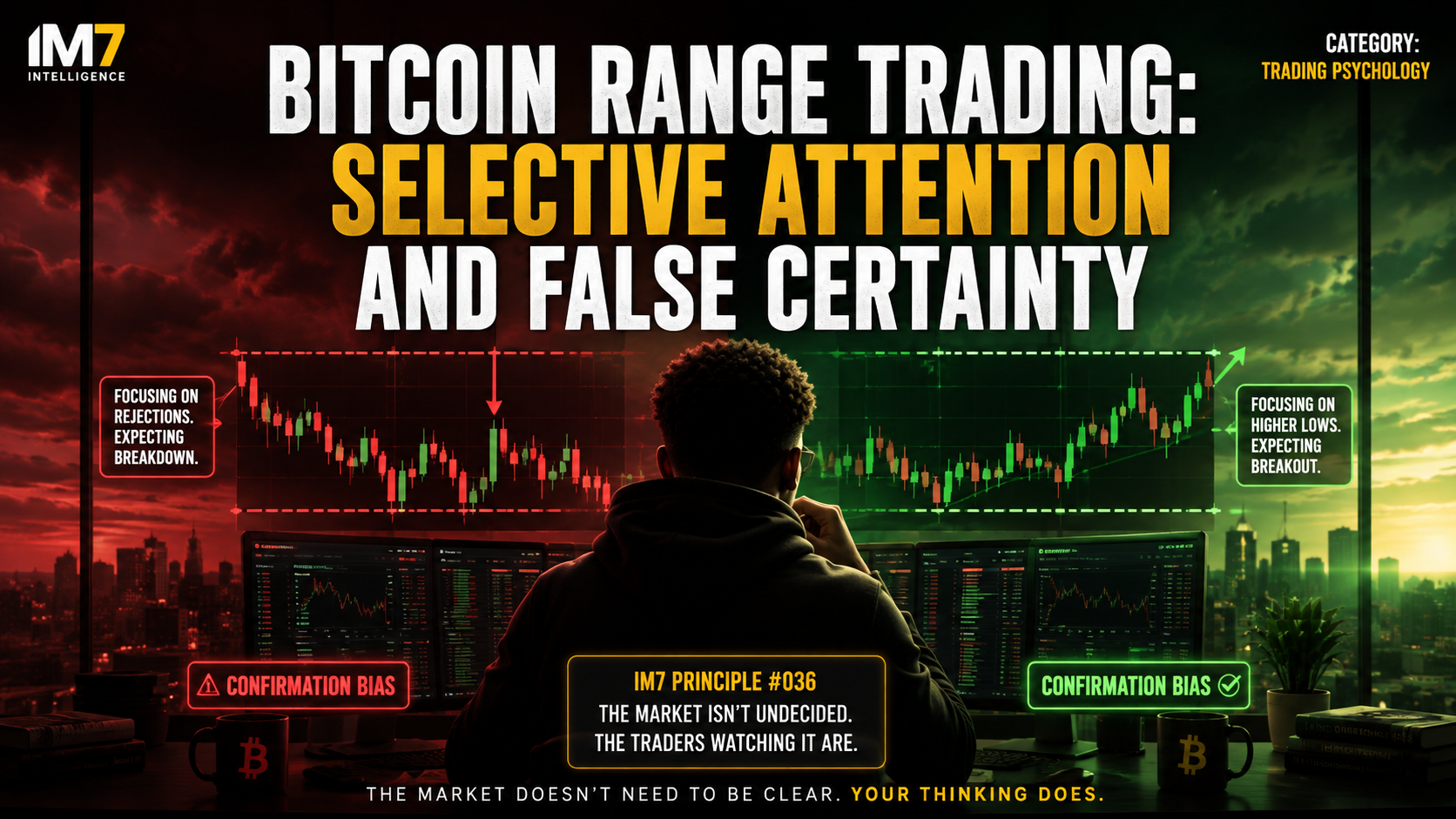
Selective Attention: How Bitcoin Traders Find False Certainty in Ranges
A narrow Bitcoin range around $65,000 gave bulls and bears enough evidence to support opposite conclusions. Bulls focused on rising lows, bears on rejected highs. The chart stayed the same; selective attention changed what each trader believed it was saying.
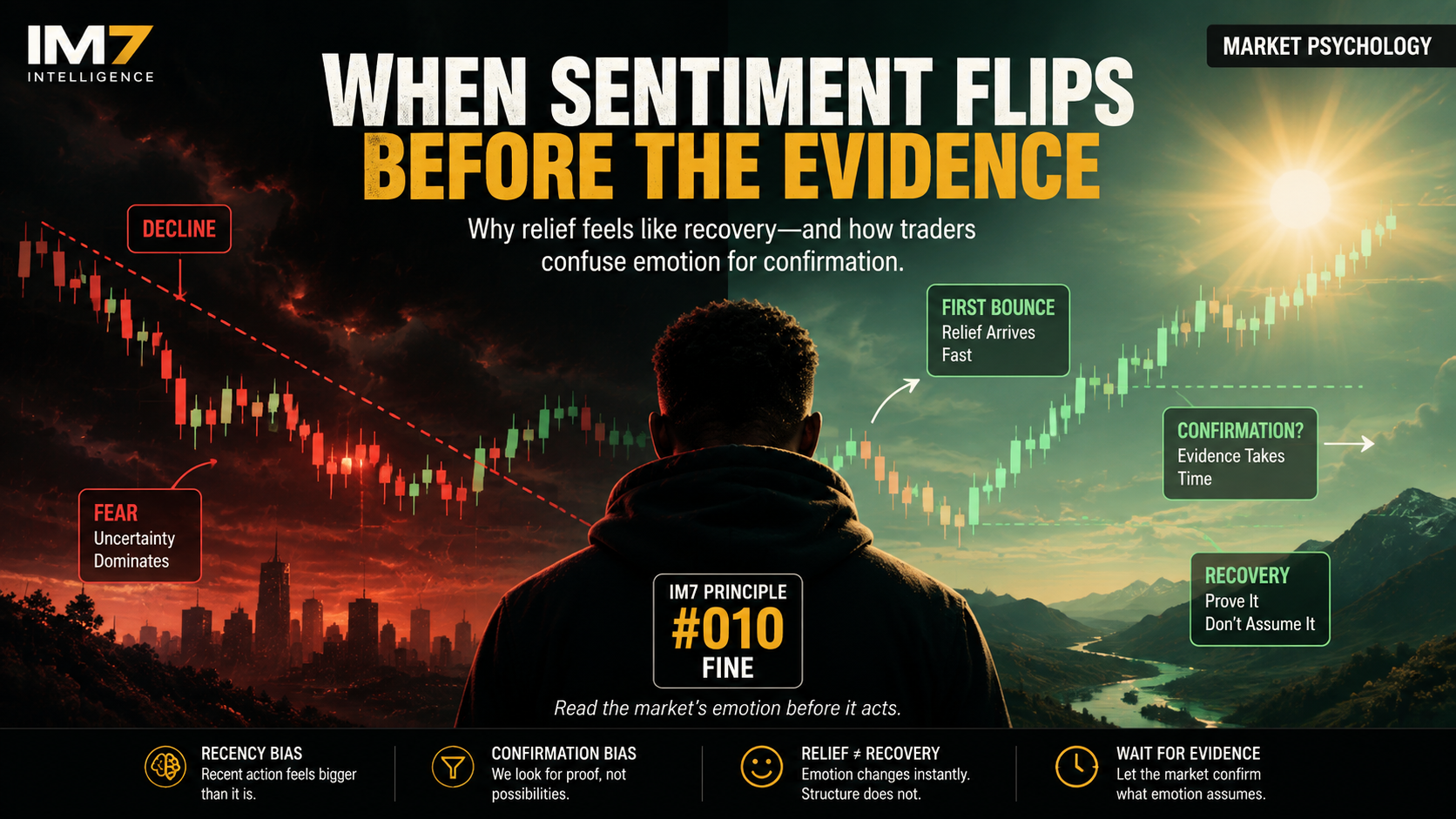
The First Bounce Fallacy: Why Bitcoin Traders Confuse Relief with Recovery
Bitcoin’s first bounce can feel like confirmation before the market has confirmed anything. Relief becomes conviction, and a temporary rebound becomes a recovery narrative. The danger isn’t the bounce—it’s how quickly traders decide what it means.
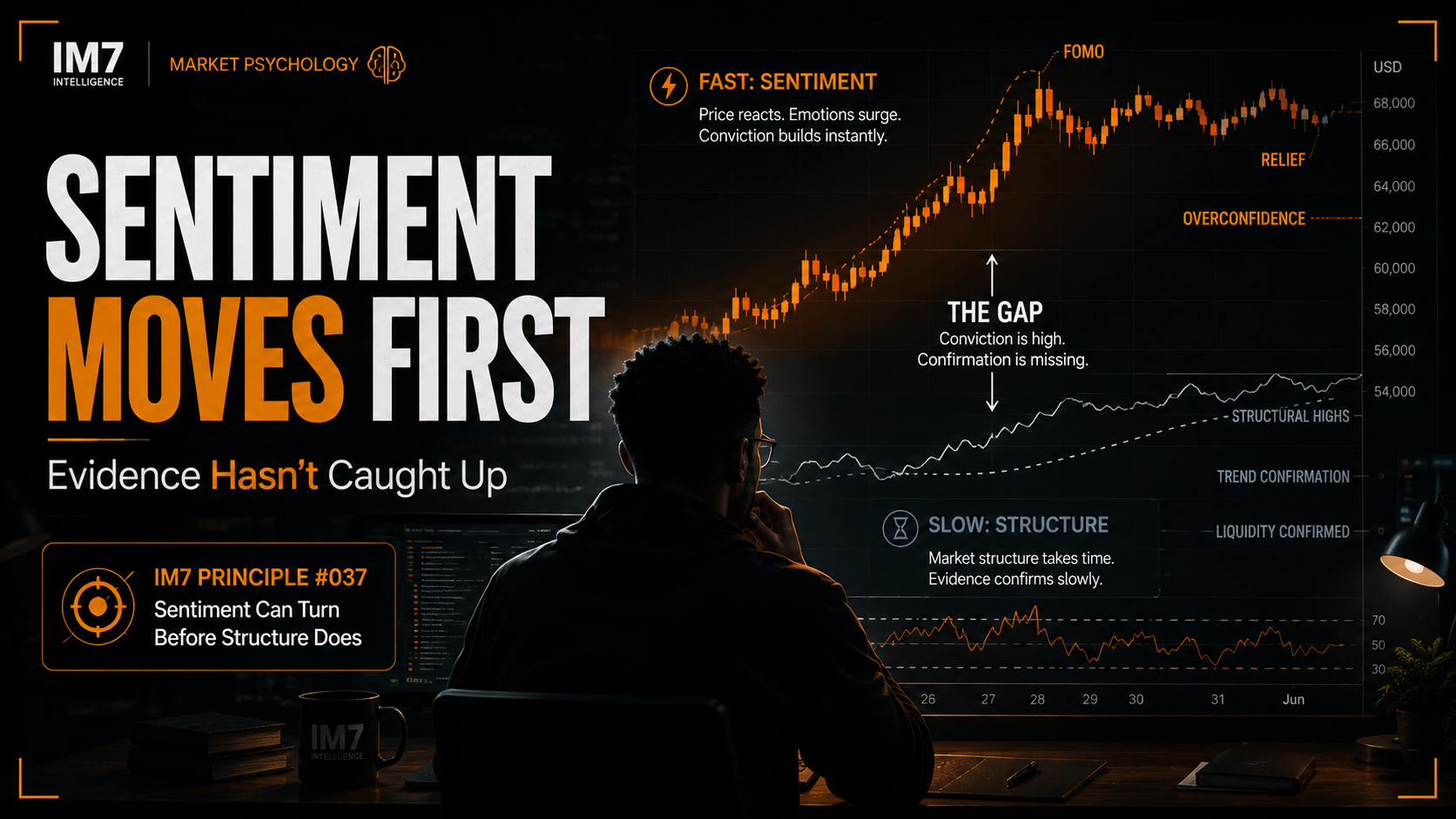
When Sentiment Flips Before Evidence: The Gap Between Feeling and Fact
A sharp market rally can flip sentiment faster than the underlying evidence changes. Traders may begin positioning for continuation while broader structural confirmation remains incomplete. That gap between feeling and fact reveals a core behavioral risk: sentiment can turn long before the evidence justifies conviction.

Emotional Certainty vs. Evidence: Why Traders Read the Same Bitcoin Chart Differently
Bitcoin is consolidating below resistance with mixed evidence, yet many traders have already committed to bullish or bearish conclusions. The disagreement does not come from different charts. It comes from confirmation bias, emotional certainty, and the tendency to interpret uncertain information through beliefs formed before the market has confirmed either outcome.

One Green Candle Doesn't Confirm a Recovery
One powerful green candle can change how traders feel long before it changes the market itself. Relief often arrives before confirmation, causing investors to mistake a temporary rebound for the beginning of a new trend. This article explores why our brains trust dramatic price moves more than the quieter evidence that follows.

When Relief Becomes Expensive: Why One Candle Isn't Confirmation
A singular, strong market movement frequently evokes immediate emotional relief, often preceding any genuine structural confirmation. Traders commonly conflate this feeling of being correct with objective evidence of a sustained trend. ThiOne strong market move can make traders feel right long before the market confirms they are. Relief arrives instantly. Confirmation takes time. This article explores why confusing those two emotions often leads to expensive trading decisions.s critical distinction between instantaneous relief and time-dependent confirmation holds profound implications for decision-making.

The Recovery Reached Resistance: Confidence Before Confirmation
Three green candles after a sharp decline can create a powerful sense of relief, but relief is not confirmation. Traders often mistake arriving at resistance for breaking through it, allowing emotions to outrun market structure. The recovery may feel convincing, yet the real test often begins where confidence returns.

ETF Flows: Conviction, Not Price, Moves Markets
Most traders watch price. Professional capital leaves clues through ETF flows. While headlines explain yesterday's move, persistent inflows and outflows often reveal changing conviction before market psychology fully shifts. Learning to read capital—not just candles—helps traders understand the behavior driving market structure.

When Waiting Becomes the Decision
Most losses don't begin with panic—they begin with waiting. This article explores why uncertainty paralysis keeps traders frozen while markets quietly evolve, and how delaying decisions often becomes a decision itself.

When Lower Highs Whisper: The Anchoring Bias Traders Miss.
Markets often reveal a change in character through small structural shifts long before a reversal becomes obvious. Traders miss those signals when they judge each candle separately, anchor to the previous high, and fail to recognize the sequence forming in front of them.

When Recovery Becomes the Risk: Why Relief Can Lead to Overconfidence
A sharp recovery often changes market psychology faster than market structure. Relief becomes confidence, confidence becomes certainty, and traders begin taking larger risks before objective confirmation arrives. The recovery doesn't erase the risk—it simply makes it harder to see.

Patience or Paralysis? When Waiting Helps—and When It Costs You
Patience is one of the most celebrated virtues in trading—but not every delay is discipline. Learn how to distinguish evidence-based patience from fear-driven hesitation before missed opportunities become expensive lessons.

Commitment Bias: When Holding On Becomes More Expensive Than Letting Go
Commitment Bias causes traders to defend yesterday's decisions with today's evidence. Learn why investors hold losing positions, ignore changing market conditions, and how disciplined decision frameworks help protect capital.

Stabilization Bias: Why Sideways Markets Feel Safer Than They Are
After a sharp decline, markets often move sideways before making their next major decision. Traders mistake the absence of selling for the presence of buying, creating a dangerous sense of stability. Stabilization Bias explains why quiet markets frequently produce the most expensive decisions—not because the trend has changed, but because confidence has.

The Allure of the Oracle: Why We Over-rely on Technical Indicators
Despite frequent evidence of their fallibility, market participants often exhibit profound trust in technical indicators. This persistent belief in predictive patterns, even when statistically tenuous, reveals deep-seated cognitive biases. Understanding the subconscious mechanisms driving this over-reliance is crucial for disciplined decision-making.

The Safest-Looking Chart Is Sometimes the Most Dangerous
Three indicators agreed. The structure looked healthy. Confidence returned. Then one candle erased everything traders thought they knew. False certainty doesn't happen because indicators fail. It happens because traders stop questioning them.

The Silent Erosion: How Sideways Bitcoin Markets Quietly Destroy Trader Confidence
After a strong breakout, traders often expect momentum to continue. But when Bitcoin begins moving sideways, confidence slowly gives way to doubt. This behavioral analysis explores how quiet consolidation erodes conviction, why traders mistake inactivity for safety, and how psychological biases—not price alone—shape decision-making during periods of uncertainty.

Why Clean Trends Create Dangerous Confidence: The Psychology Behind Chasing Bitcoin Breakouts
When Bitcoin exhibits a 'clean' trend, breaking out from a period of moving average compression, it often triggers a powerful, yet potentially dangerous, psychological shift in traders. This article explores how such clear price action can lead to overconfidence, fueled by FOMO, recency bias, and confirmation bias, diverting focus from disciplined entry strategies to emotional decision-making.

The Price is Right... or is it? The Psychological Pull of a Single Number in Trading
Traders often find themselves fixated on a single price point, overlooking broader market dynamics. This phenomenon, known as mental anchoring, offers a false sense of clarity in volatile markets. We delve into how psychological biases contribute to this obsession and how to overcome it.

Why Traders Freeze After a Rally: The Psychology of Anchoring and Decision Paralysis
After a rally, most traders think the hard part is over. It isn't. The real trap begins when price stops moving, traders anchor to the recent high, and hesitation disguises itself as patience.

The Price of Waiting for Certainty: Why the Market Charges You for Confirmation
We all crave certainty, especially when money is involved. But in the fast-paced world of markets, waiting for that 'sure thing' often comes at a steep price. This article explores how our natural desire for confirmation can lead to costly delays, using a Bitcoin chart as a vivid example.

One Winning Trade Can Teach You the Wrong Lesson: The Perils of Overgeneralization in Markets
A single successful trade often feels like a revelation, teaching us a powerful lesson about market behavior. But what if that 'lesson' is actually a trap, leading to overconfidence and rigid strategies that eventually backfire? This article explores how our minds overgeneralize from limited data, using a dramatic Bitcoin chart example to illustrate how one profitable decision can implant a false conviction in trading.

The Most Dangerous Candle Is the One That Feels Safe: Why Calm Markets Can Be Deceptive
In the world of finance, danger rarely announces itself with a trumpet blast. Instead, major shifts often begin with quiet, unassuming moments, making them particularly difficult for investors to recognize. This article explores why seemingly safe periods can be the riskiest, examining the psychological biases that lull us into a false sense of security.

The First Red Candle: Why We Often Miss the Turn
It's a familiar scenario: a market that has been rallying suddenly prints a small red candle after an extended climb. In hindsight, this candle often marks the beginning of a significant pullback. But in real-time, why do traders so frequently dismiss these early warning signs? This article explores the behavioral biases that prevent us from recognizing a market turn as it unfolds, using a recent Bitcoin example to illustrate these psychological traps.

The Unassuming Peak: Why the Most Dangerous Candle Never Looks Dangerous
In the volatile world of finance, market tops often manifest not with dramatic crashes, but with small, ordinary-looking candles on a chart. This article explores the psychological reasons why these subtle signals are consistently missed by even experienced investors and traders. We delve into hindsight bias, confirmation bias, and the emotional biases that cloud our judgment at critical junctures.

The Premium for Certainty: Why Waiting for Confirmation Costs Investors Dearly
In the volatile world of markets, from Bitcoin to established equities, a common behavioral trap ensnares countless participants: the quest for certainty. Many believe that by waiting for confirmation, they are reducing risk, when in fact, they are often paying a steep premium for reassurance. This psychological dynamic, rooted in our innate aversion to uncertainty, reveals a fundamental truth about human decision-making and market behavior.

THE BREAKDOWN WAS THE TRAP.
A superficial market breakdown can often give way to a deeper psychological trap, where reinforced confidence, rather than the initial dip, becomes the true pitfall for traders. This phenomenon, particularly evident in volatile markets like Bitcoin, highlights crucial behavioral finance principles. Understanding the distinction between observation and reaction is key to navigating such complex emotional landscapes in trading.

Why Bitcoin's Biggest Rallies Create The Most Uncertainty
It's a common misconception that market clarity follows a significant price move. In reality, a strong rally, such as those often seen in Bitcoin, can paradoxically ignite greater uncertainty among traders. This article delves into the psychological underpinnings of why opportunity, once visible, frequently becomes a source of anxiety rather than assurance.

The Illusion of Certainty: Why Traders Feel Smart Again Before the Market Decides
A modest market rebound often triggers a disproportionate surge in trader confidence, a phenomenon we recently observed with Bitcoin. This article explores the psychological underpinnings of this 'false certainty' and how it can lead to vulnerability, especially after a rally, rather than during a downturn. We delve into confirmation bias and emotional decision-making, highlighting how a small price movement can be misinterpreted as definitive proof of one's foresight.

The Peril of Confirmation Bias: Why Traders Mistake Validation for Opportunity
Many traders, driven by a natural human need for certainty, wait for definitive 'confirmation' before entering a trade. This psychological safeguard, however, often leads them to miss the most lucrative risk-reward setups. This article explores the behavioral underpinnings of this phenomenon, particularly in volatile markets like Bitcoin.

The Paradox of Prudence: Why Retail Traders Wait for Confirmation and Often Miss the Big Moves
Retail traders often wait for confirmation before entering a position, believing certainty reduces risk. In reality, markets often charge a premium for certainty, turning caution into missed opportunity. This article explores how confirmation bias, loss aversion, and herd behavior can cause investors to arrive late to the very moves they hoped to capture.