#Uncertainty
5 articles on Uncertainty — behavioral finance and market psychology from IM7 Intelligence.
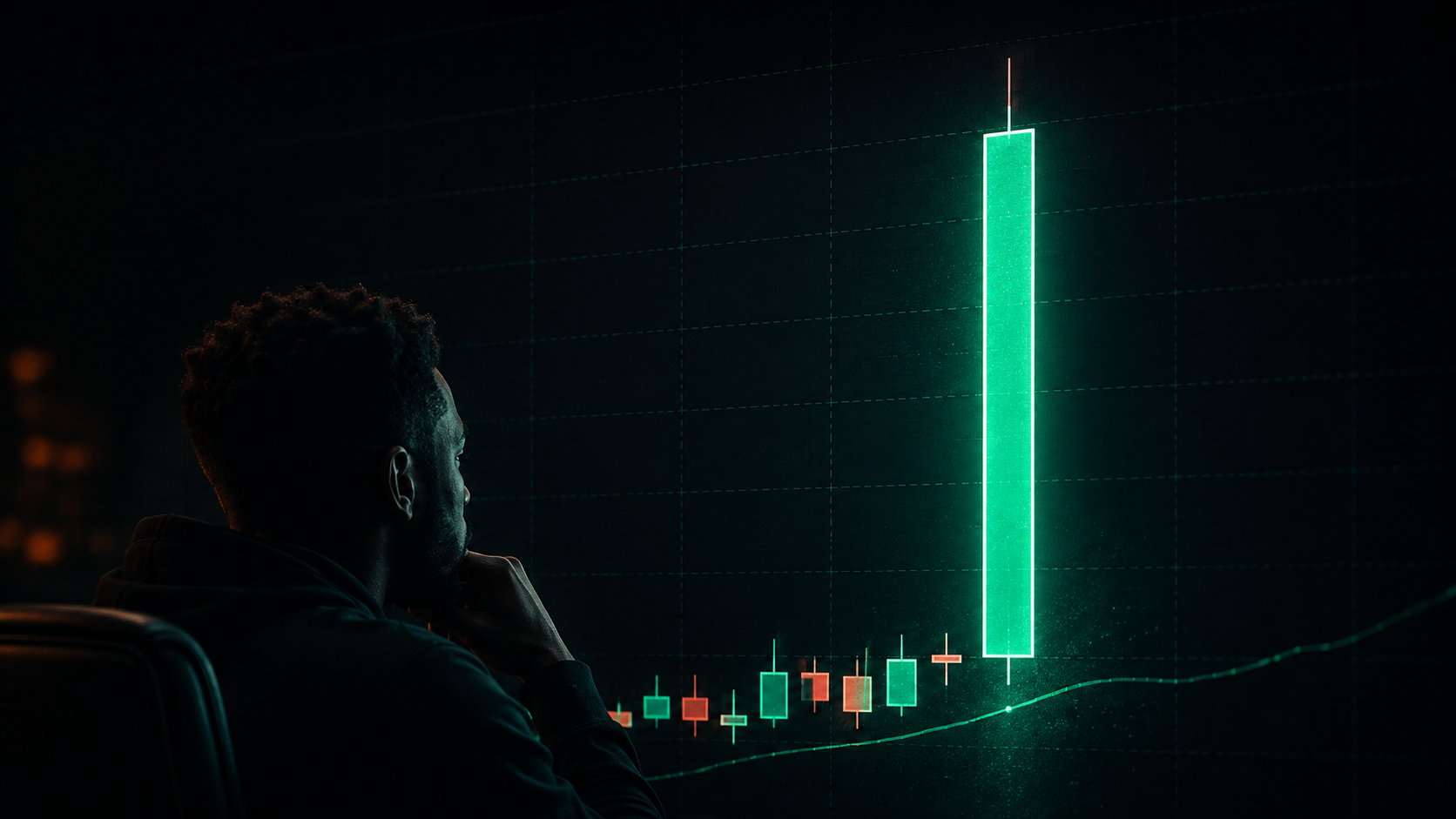
The Salience Trap: Why One Giant Bitcoin Candle Feels Like Certainty
A recent Bitcoin candle surged from below $70,000 to above $71,000 and visually dominated the surrounding chart. Large moves like this can become psychologically dominant, increasing salience, urgency, and the temptation to mistake visual magnitude for confirmation.
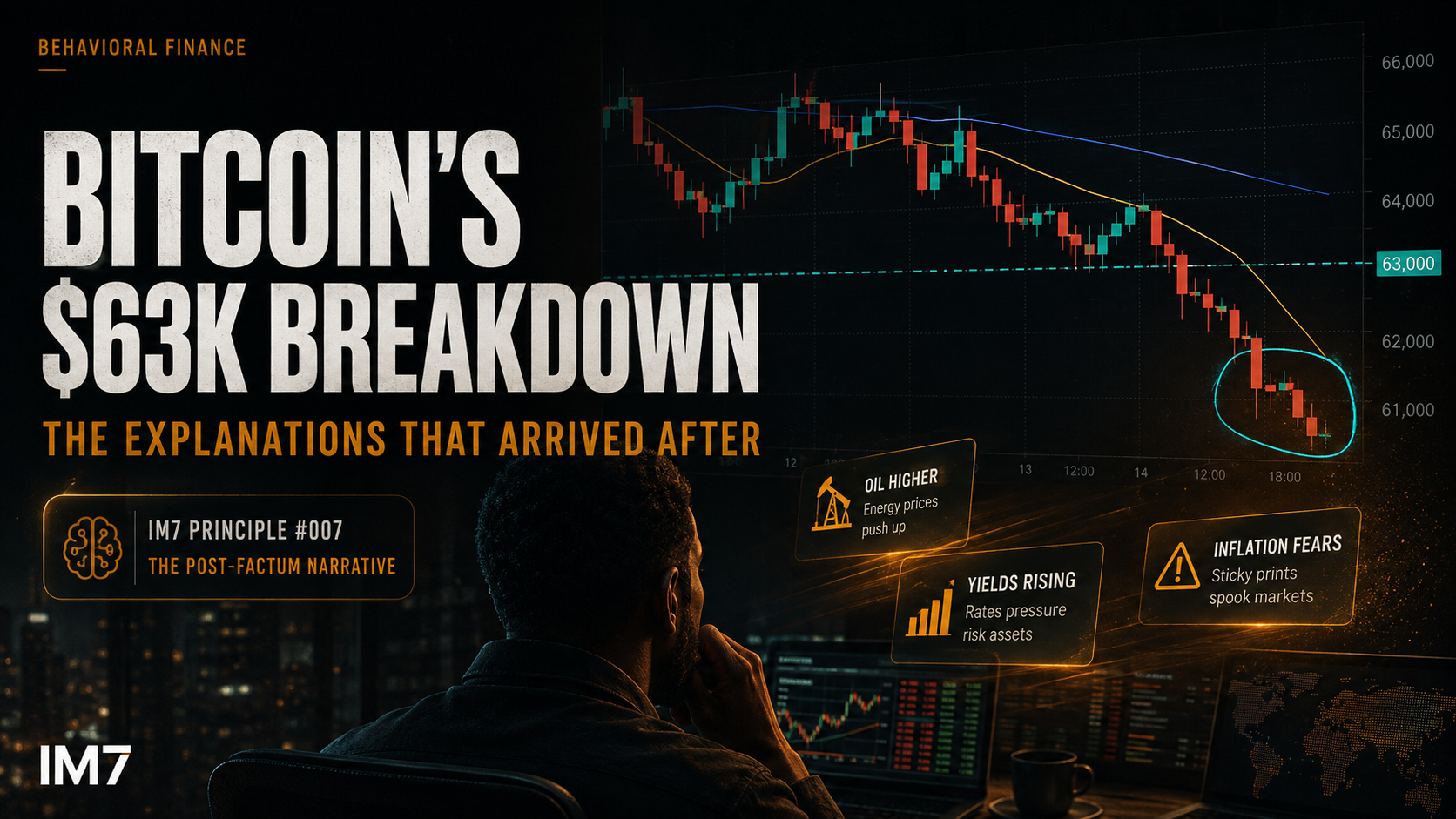
Bitcoin’s $63K Breakdown: Why the Explanations Came After
Bitcoin’s move below $63,000 triggered an immediate wave of explanations — macro pressure, yields, oil, market structure. The behavioral risk is that once the outcome is known, those explanations can feel more obvious and predictive than they actually were beforehand. The real test is separating post-move understanding from genuine pre-move edge.

Emotional Certainty vs. Evidence: Why Traders Read the Same Bitcoin Chart Differently
Bitcoin is consolidating below resistance with mixed evidence, yet many traders have already committed to bullish or bearish conclusions. The disagreement does not come from different charts. It comes from confirmation bias, emotional certainty, and the tendency to interpret uncertain information through beliefs formed before the market has confirmed either outcome.

Why EMA Compression Creates Maximum Uncertainty: The Behavioral Psychology Behind Bitcoin's Decision Points
While technical indicators like Exponential Moving Averages (EMAs) are often used to identify trends, their compression can indicate something far more profound: concentrated market uncertainty. This article explores the psychological underpinnings of why traders often misinterpret EMA compression as a signal for impending price movement, rather than a reflection of deep indecision.

The Premium for Certainty: Why Waiting for Confirmation Costs Investors Dearly
In the volatile world of markets, from Bitcoin to established equities, a common behavioral trap ensnares countless participants: the quest for certainty. Many believe that by waiting for confirmation, they are reducing risk, when in fact, they are often paying a steep premium for reassurance. This psychological dynamic, rooted in our innate aversion to uncertainty, reveals a fundamental truth about human decision-making and market behavior.