#Trading Discipline
9 articles on Trading Discipline — behavioral finance and market psychology from IM7 Intelligence.
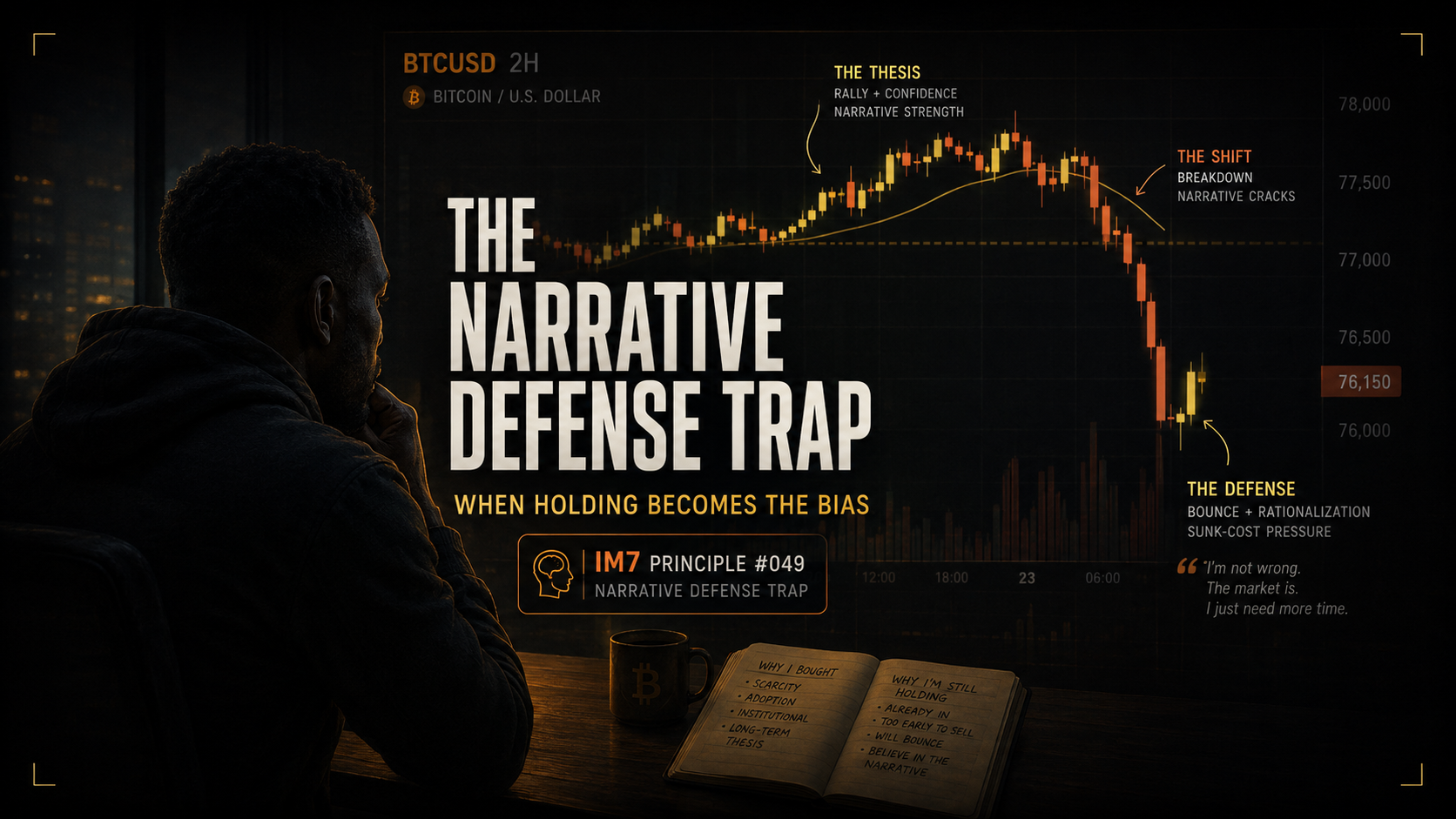
The Cost of Narrative Defense: When Holding Becomes the Bias
Bitcoin’s sharp pullback has turned yesterday’s narrative defense into a more expensive behavioral problem. When traders hold because exiting would make the loss feel real, sunk cost can replace objective reassessment.
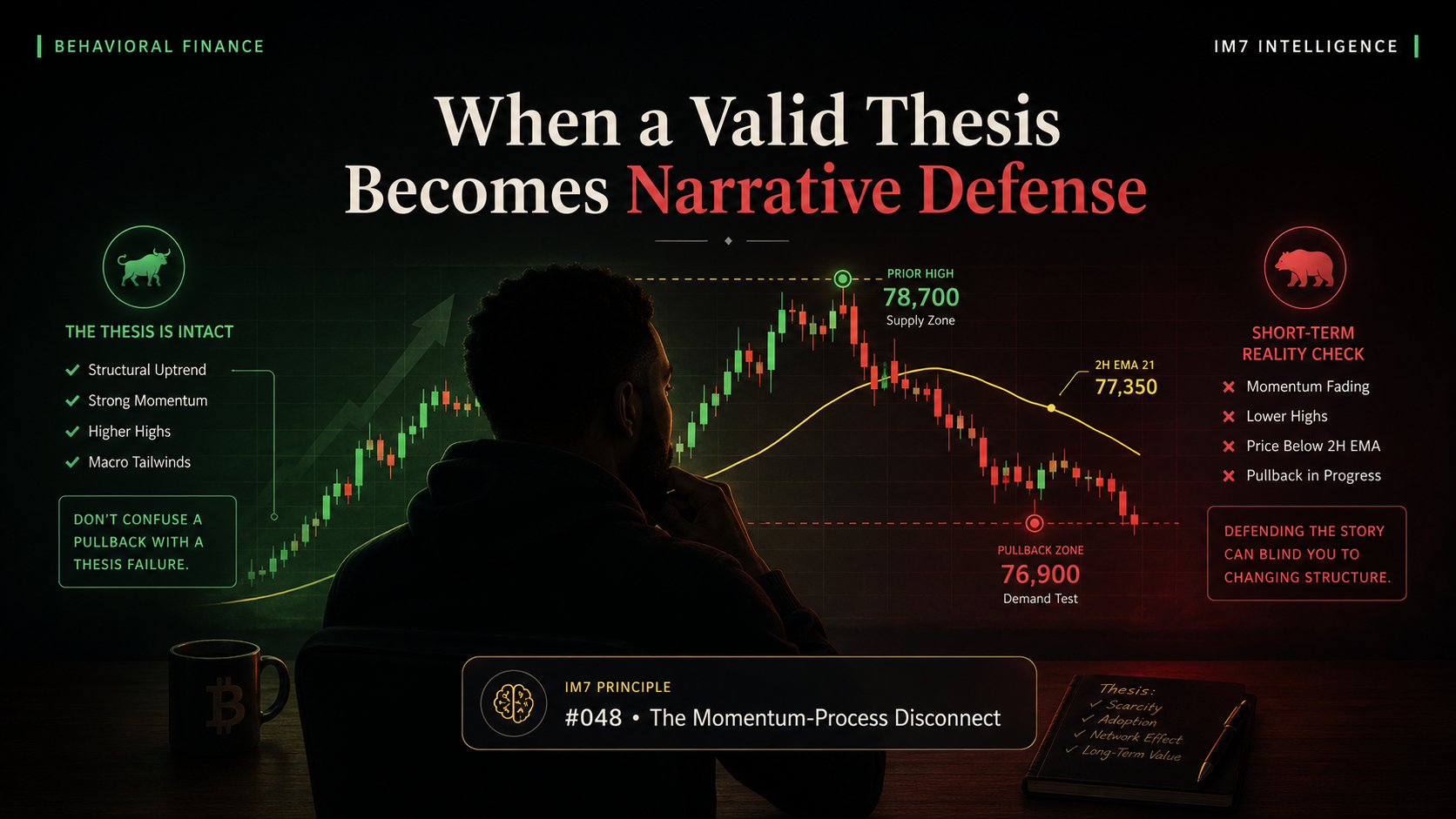
Yesterday’s Rally Was Real — Today’s Evidence Is Different
Bitcoin’s rally had real catalysts and genuine upside strength. But as price pulls back from recent highs, traders face a different behavioral test: whether they can update a previously rewarded thesis when new evidence begins to conflict with it.

Bitcoin's Strength: When Momentum Tests Process Discipline
Bitcoin is exhibiting considerable upside strength. That observable momentum can create psychological pressure for traders, especially when a strong move begins to feel like permission to loosen entry standards. The critical distinction is between acknowledging market strength and allowing that strength to dictate execution quality.
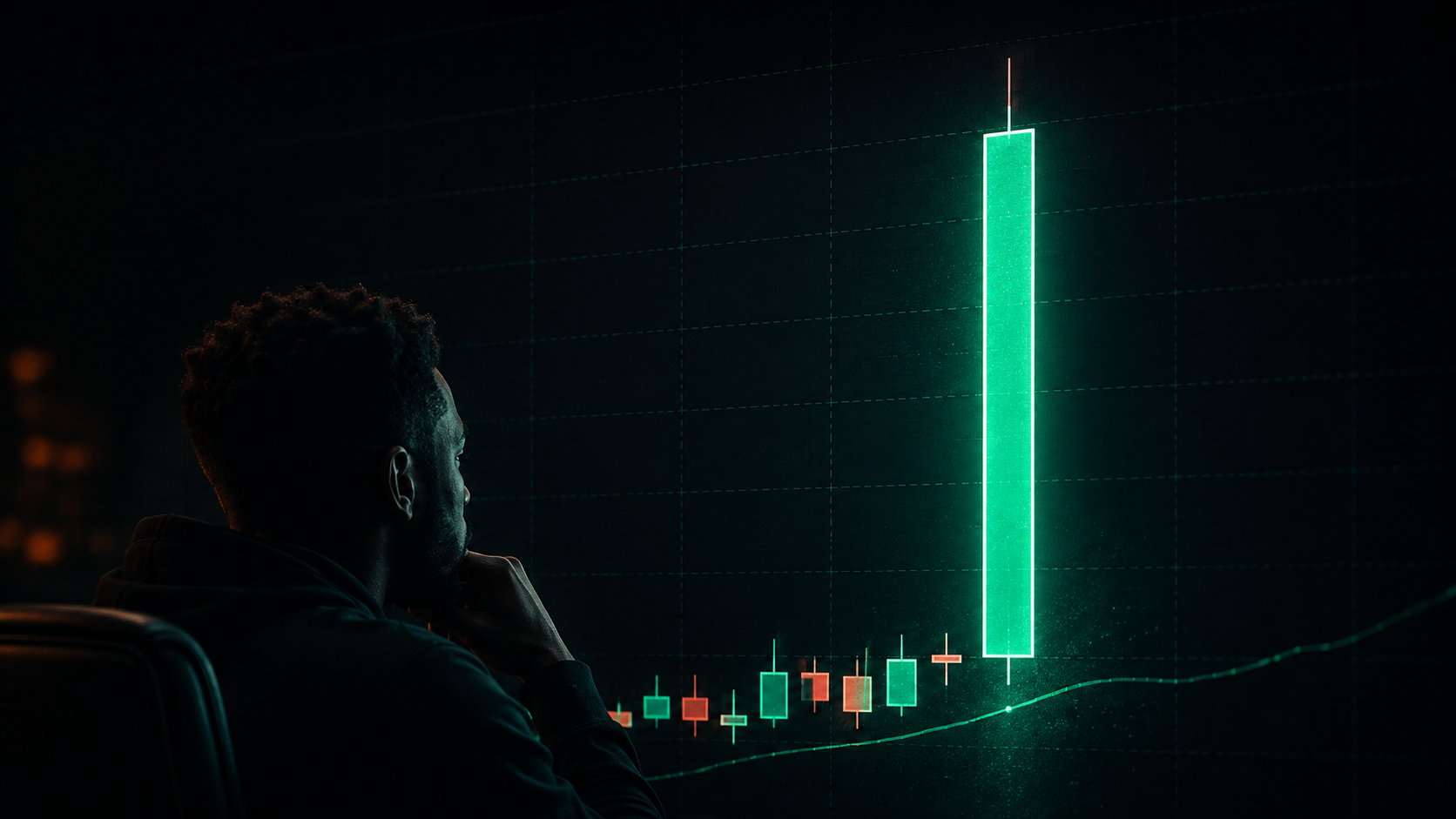
The Salience Trap: Why One Giant Bitcoin Candle Feels Like Certainty
A recent Bitcoin candle surged from below $70,000 to above $71,000 and visually dominated the surrounding chart. Large moves like this can become psychologically dominant, increasing salience, urgency, and the temptation to mistake visual magnitude for confirmation.
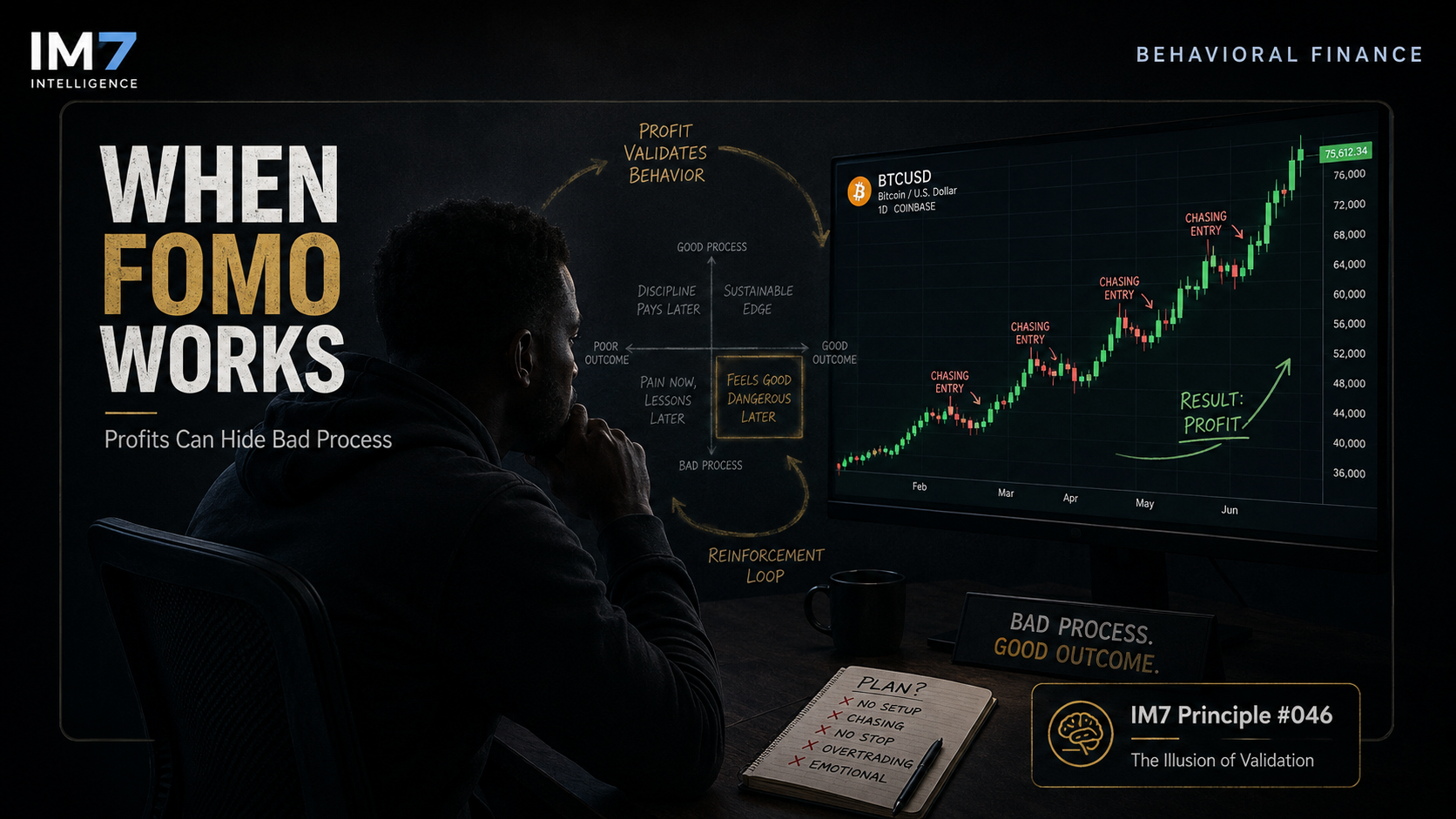
When FOMO Works: How Profitable Trades Reinforce Bad Process
When a rushed Bitcoin entry makes money, the profitable outcome can reinforce the wrong lesson. Outcome bias can turn an impulsive decision into a behavior the trader becomes more willing to repeat—even when the original process was weak.

When Relief Becomes Expensive: Why One Candle Isn't Confirmation
A singular, strong market movement frequently evokes immediate emotional relief, often preceding any genuine structural confirmation. Traders commonly conflate this feeling of being correct with objective evidence of a sustained trend. ThiOne strong market move can make traders feel right long before the market confirms they are. Relief arrives instantly. Confirmation takes time. This article explores why confusing those two emotions often leads to expensive trading decisions.s critical distinction between instantaneous relief and time-dependent confirmation holds profound implications for decision-making.

When Lower Highs Whisper: The Anchoring Bias Traders Miss.
Markets often reveal a change in character through small structural shifts long before a reversal becomes obvious. Traders miss those signals when they judge each candle separately, anchor to the previous high, and fail to recognize the sequence forming in front of them.

Why Clean Trends Create Dangerous Confidence: The Psychology Behind Chasing Bitcoin Breakouts
When Bitcoin exhibits a 'clean' trend, breaking out from a period of moving average compression, it often triggers a powerful, yet potentially dangerous, psychological shift in traders. This article explores how such clear price action can lead to overconfidence, fueled by FOMO, recency bias, and confirmation bias, diverting focus from disciplined entry strategies to emotional decision-making.

Flat Markets: Why Sideways Action Leads to Costly Trading Mistakes – A Behavioral Finance Perspective
During periods of low volatility and sideways price action, even experienced traders can fall prey to behavioral biases. Boredom, impatience, and the craving for certainty can lead to forced trades, unnecessary risks, and significant losses. This article explores the psychological traps of flat markets and offers strategies to navigate them effectively, particularly using Bitcoin as a prime example.