#Price Action
17 articles on Price Action — behavioral finance and market psychology from IM7 Intelligence.
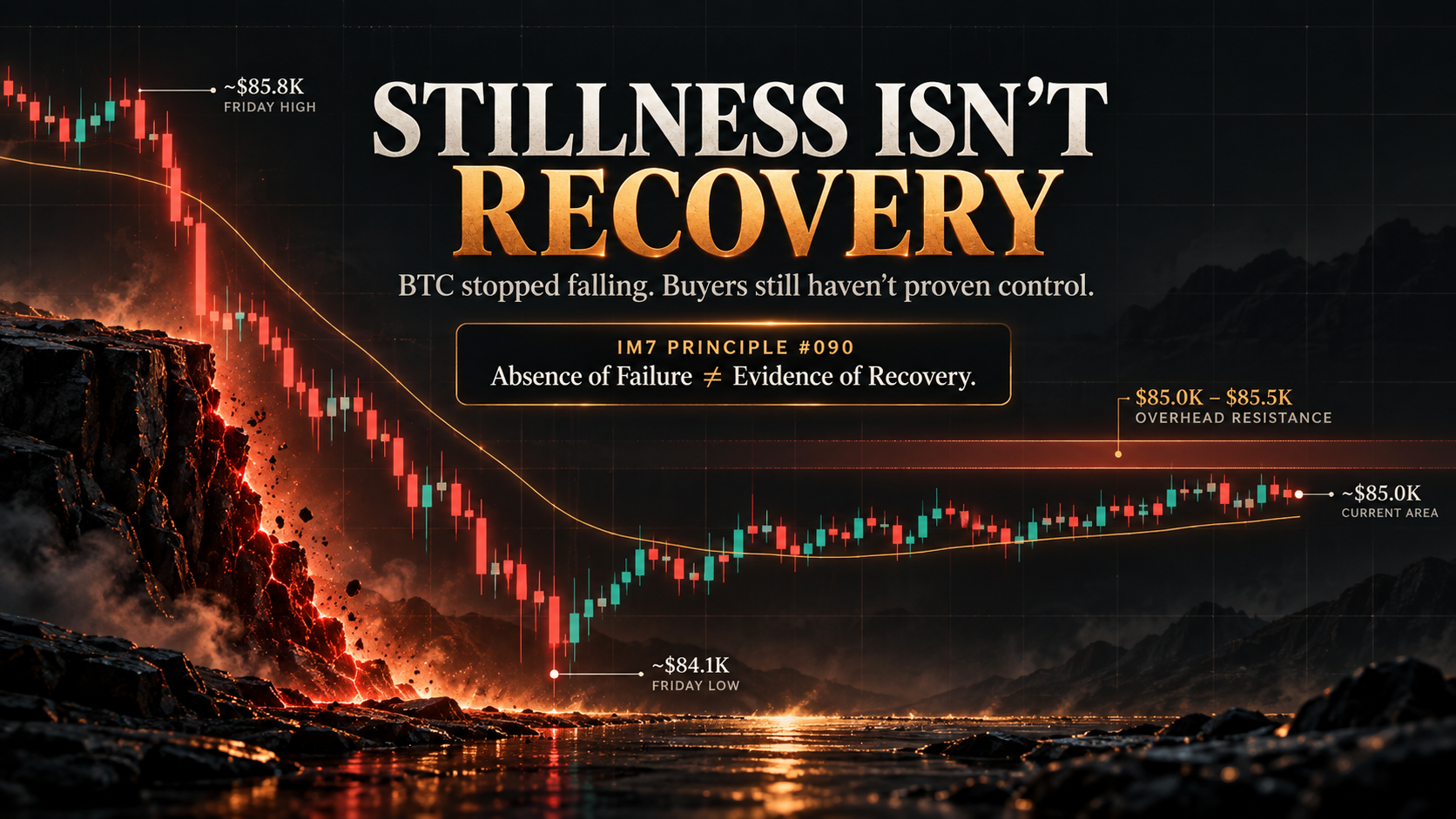
Bitcoin Stopped Falling — Traders Called It Bullish
Bitcoin stopped falling after Friday’s sharp flush and spent hours stabilizing around the mid-$84K area. The behavioral trap is treating the absence of further downside as proof that buyers have regained control. Calm can reduce uncertainty without confirming recovery.
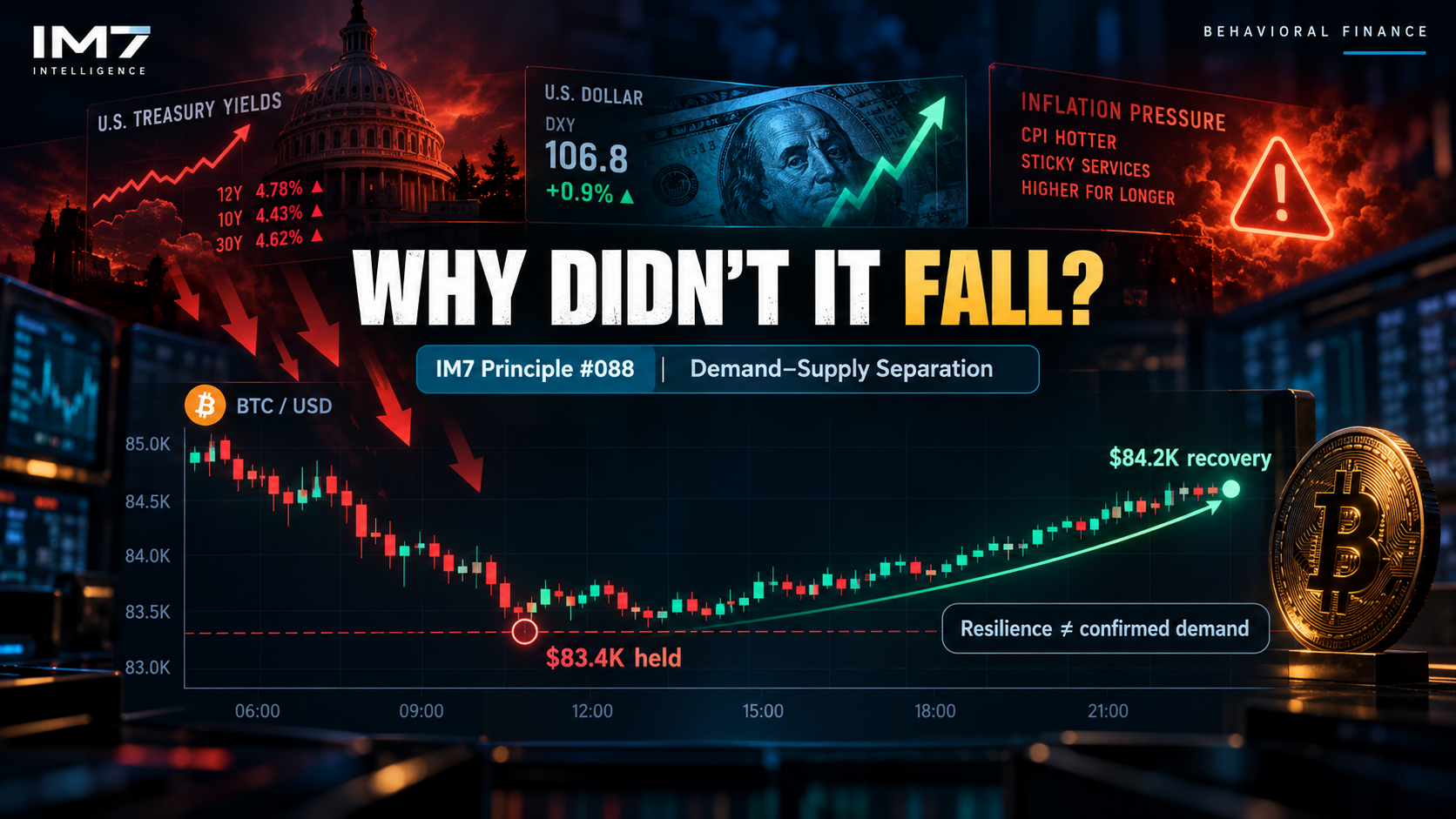
Bitcoin Had Every Reason to Fall — So Why Didn’t It?
Bitcoin faced a hostile macro backdrop — higher Treasury yields, stronger economic data, and a firmer dollar — yet price refused to break lower. The behavioral trap is assuming that “not falling” automatically means buyers are in control. Sometimes resilience reflects real demand; other times it simply means sellers are absent.

Bitcoin Got Good News — Then Gave Half the Move Back
Bitcoin broke higher after cooler PCE data, then quickly gave back a large part of the move. The behavioral mistake was treating one resolved uncertainty as full confirmation. Good news can justify a breakout without proving the market will accept higher prices.
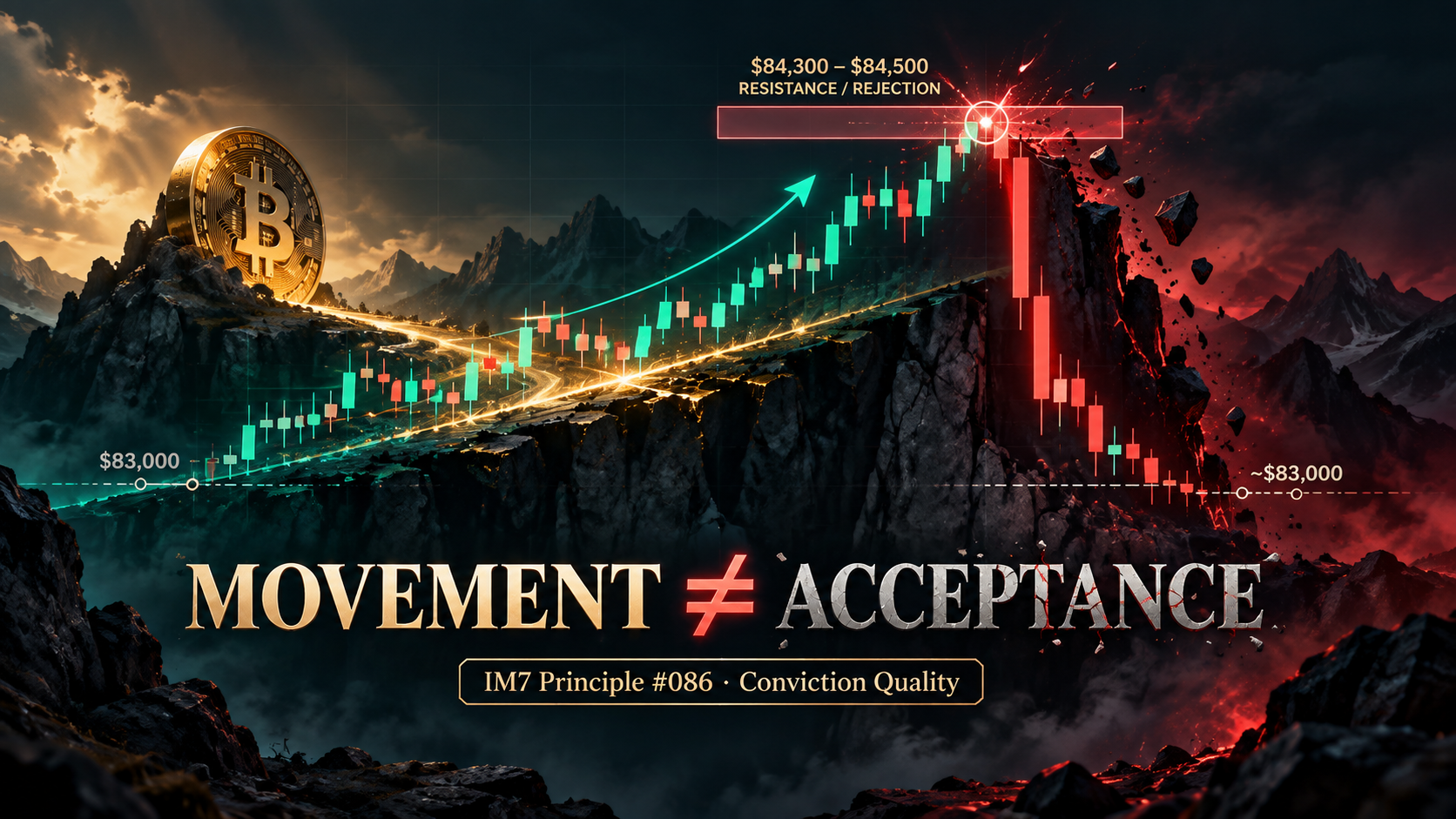
Bitcoin Spent Hours Rallying — One Candle Erased Almost All of It
Bitcoin rallied above $84K, then gave back nearly the entire move in one 2-hour candle. The lesson wasn’t about direction — it was about conviction quality. Traders often let fast price movement strengthen their confidence before the evidence actually improves.

Bitcoin Breaks $80K as ETF Flows Flip Positive
Bitcoin surged through $80K as U.S. spot Bitcoin ETF flows flipped from $295.9 million of net outflows to $159.5 million of net inflows. The move matters because the evidence around price changed too: institutional demand improved while Bitcoin pushed into a new short-term range. The behavioral lesson is simple — when the evidence changes, the market story should be allowed to change with it.
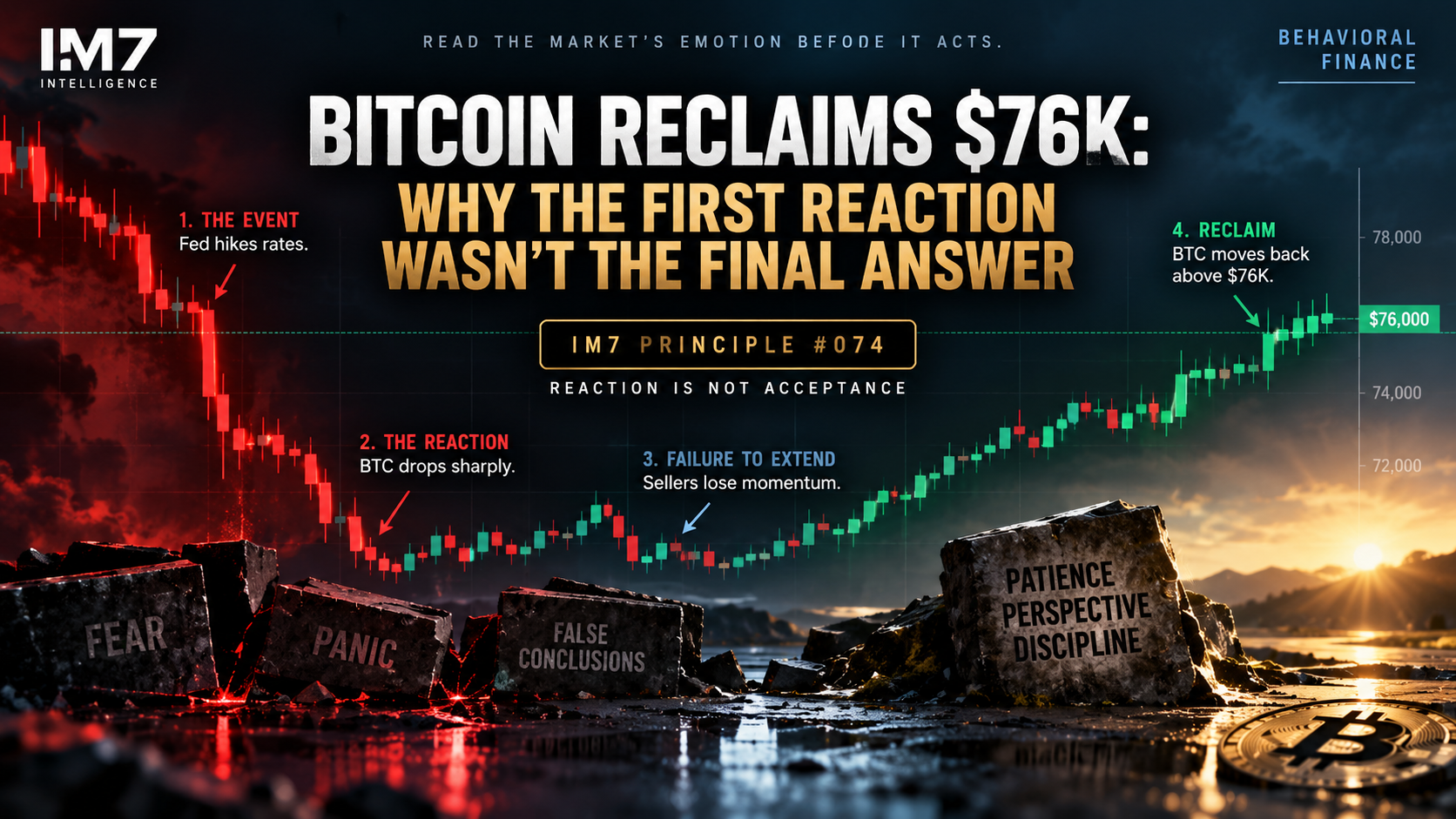
Bitcoin Reclaims $76K: Why the First Reaction Wasn't the Final Answer
Bitcoin dropped after the Fed decision, giving traders an immediate bearish story to believe. But price later reclaimed the $76K area. The behavioral mistake isn't reacting to new information — it's treating the first reaction as the market's final conclusion. This is why reaction should never be confused with acceptance.
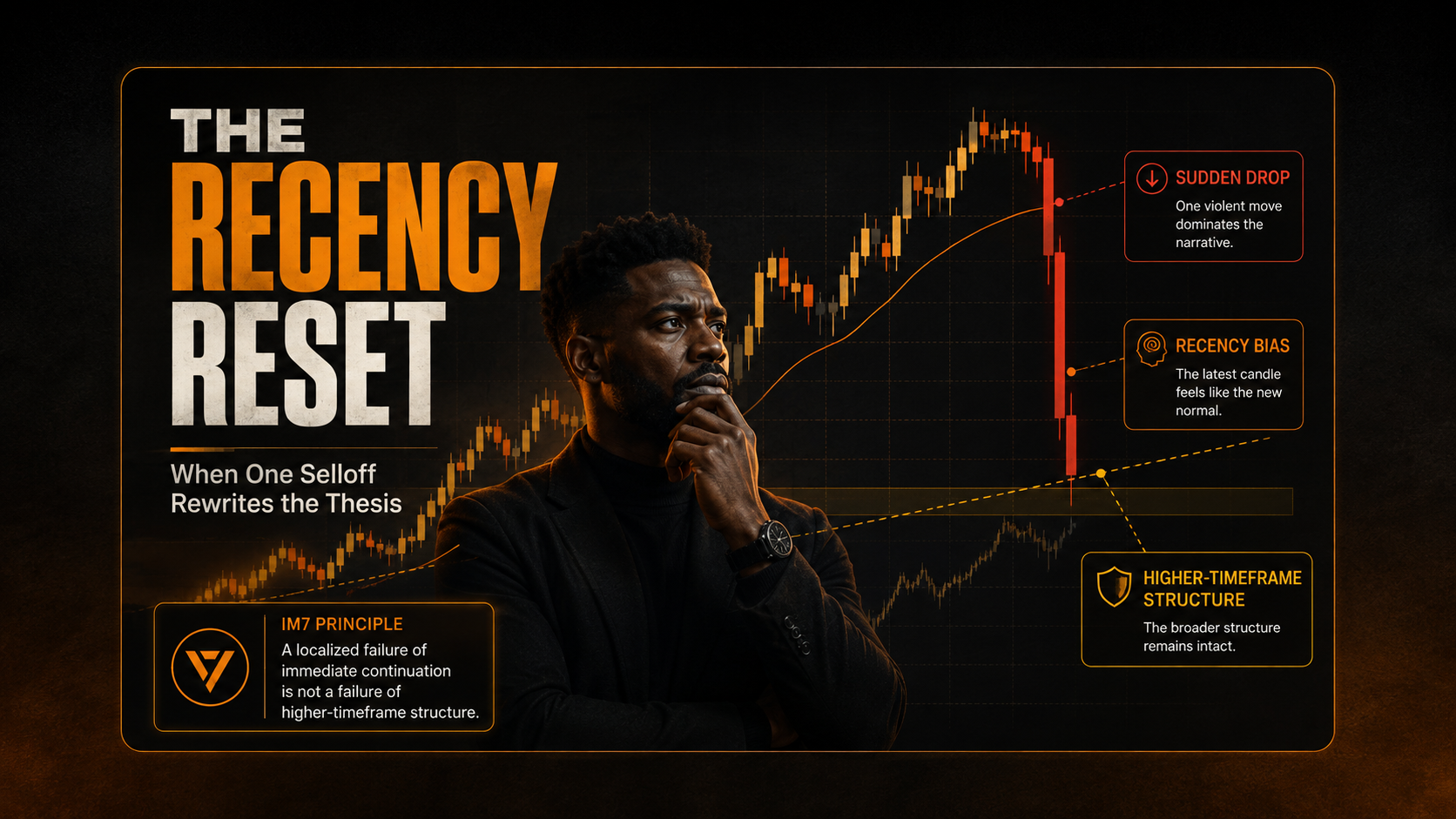
The Recency Reset: Why Bitcoin Traders Flip Their Entire Thesis After One Selloff
A single sharp adverse move can trigger a psychological shock that causes traders to abandon a higher-timeframe thesis too quickly. IM7 examines how recency bias turns one Bitcoin selloff into a complete rewrite of market conviction.
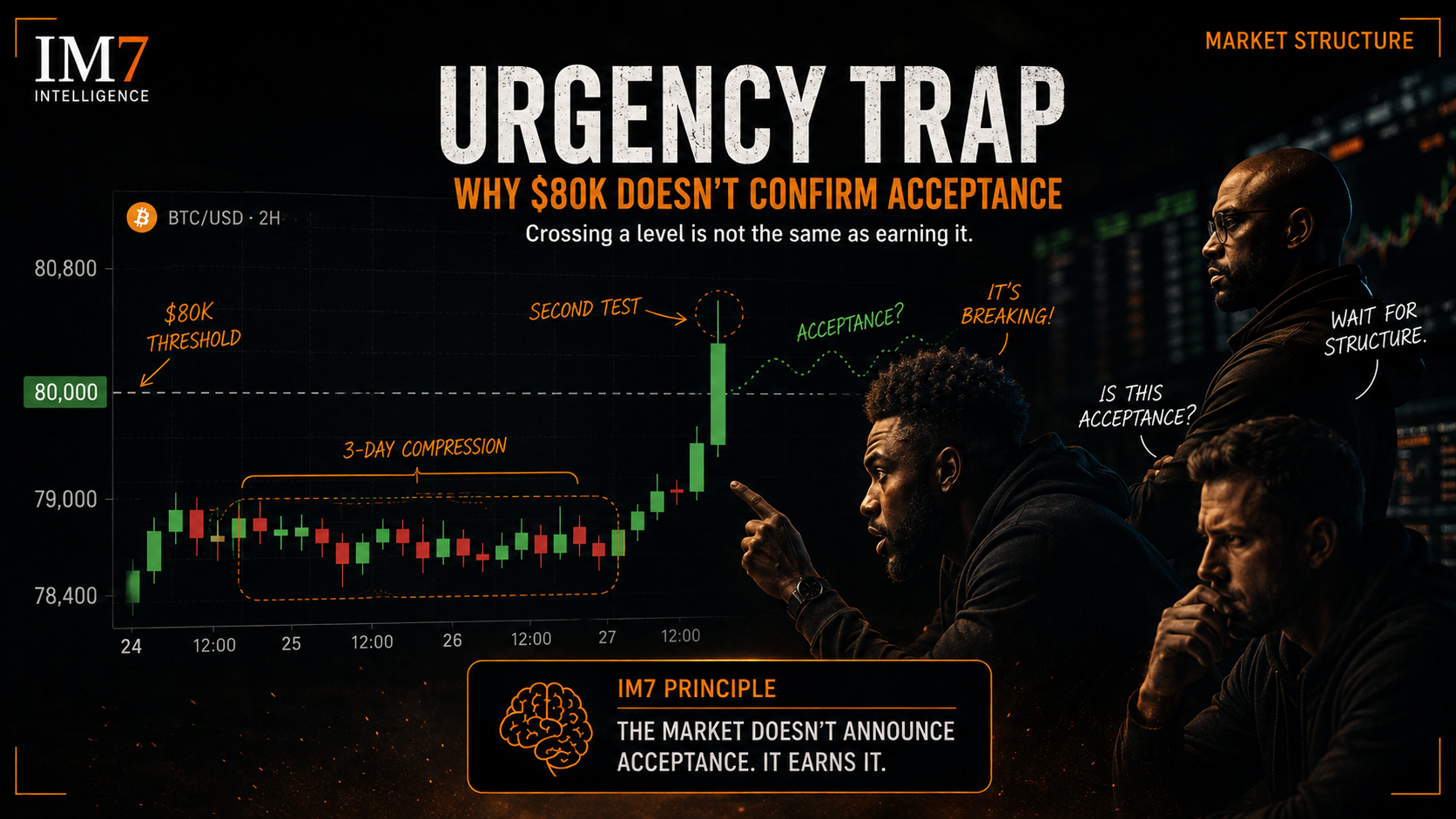
The Urgency Trap: Why Bitcoin Crossing $80K Does Not Confirm Acceptance
Bitcoin pushed back through $80,000 after days of compression, but the behavioral risk is shifting from impatience to urgency. IM7 examines why crossing a level is not the same as establishing acceptance above it.
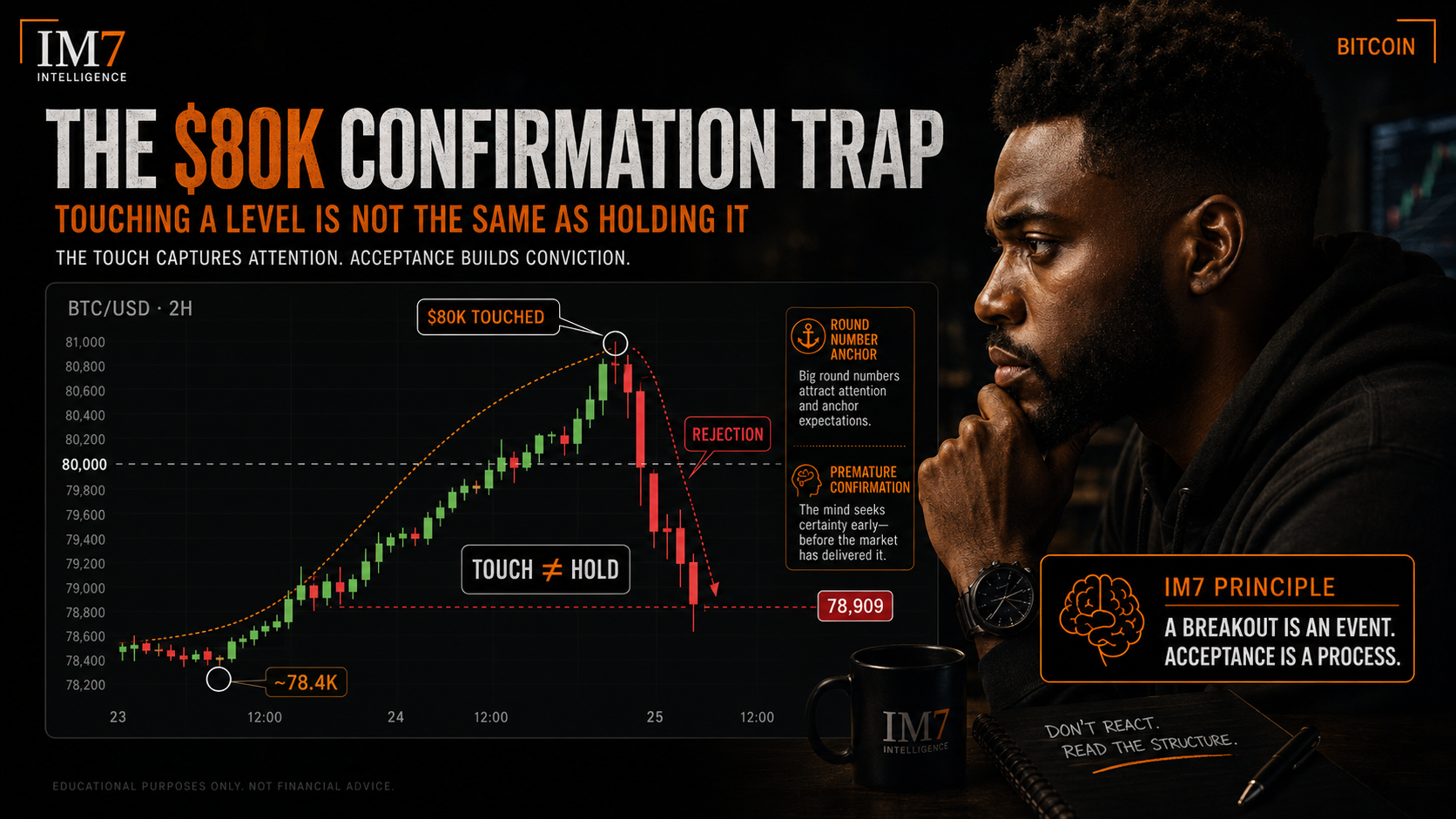
The $80K Confirmation Trap: Why Touching a Level Is Not the Same as Holding It
Bitcoin touched the $80K milestone, but the sharp rejection that followed exposed a behavioral trap: traders often confuse reaching a level with proving acceptance above it. A breakout is an event. Acceptance is a process.
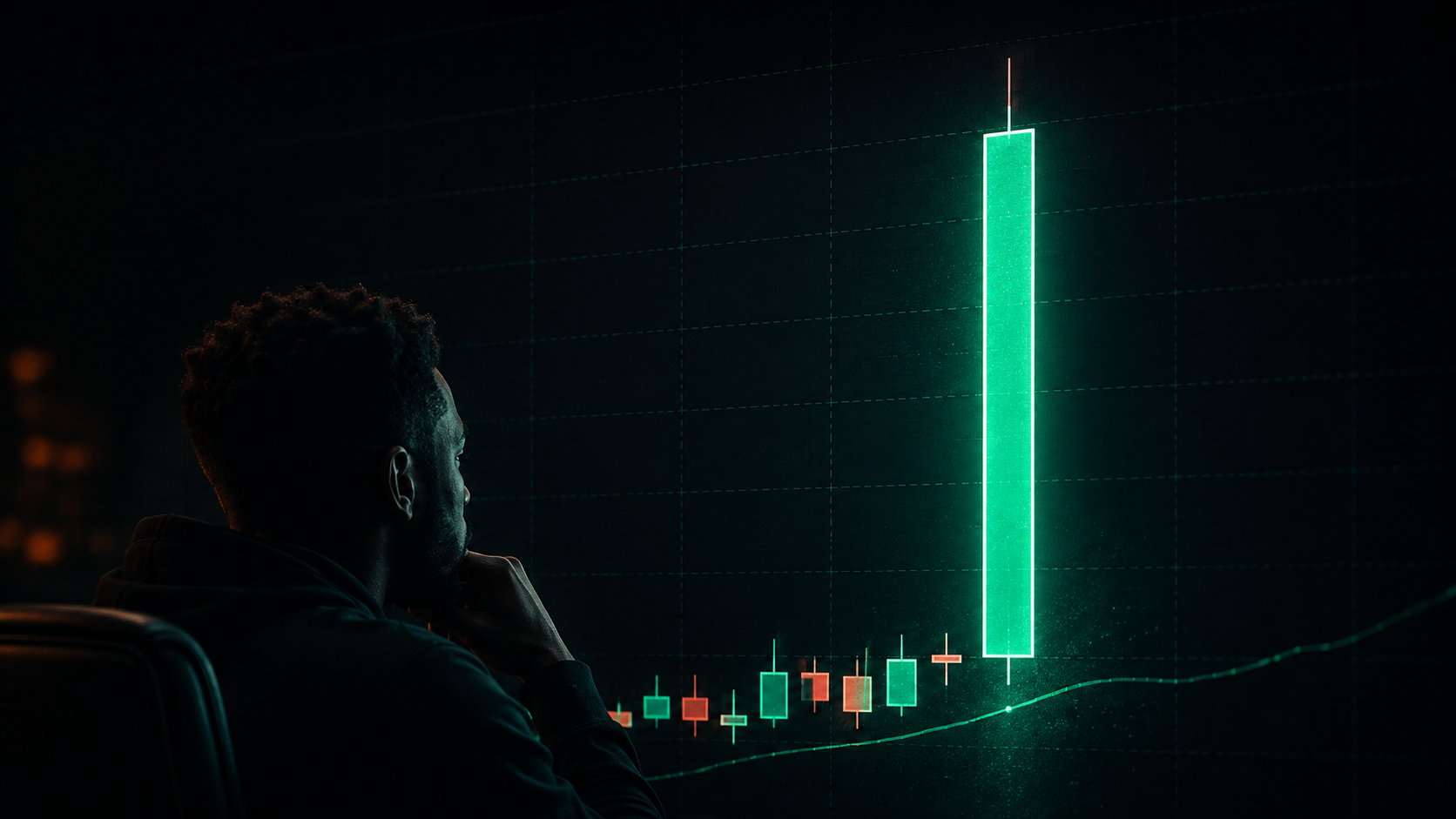
The Salience Trap: Why One Giant Bitcoin Candle Feels Like Certainty
A recent Bitcoin candle surged from below $70,000 to above $71,000 and visually dominated the surrounding chart. Large moves like this can become psychologically dominant, increasing salience, urgency, and the temptation to mistake visual magnitude for confirmation.
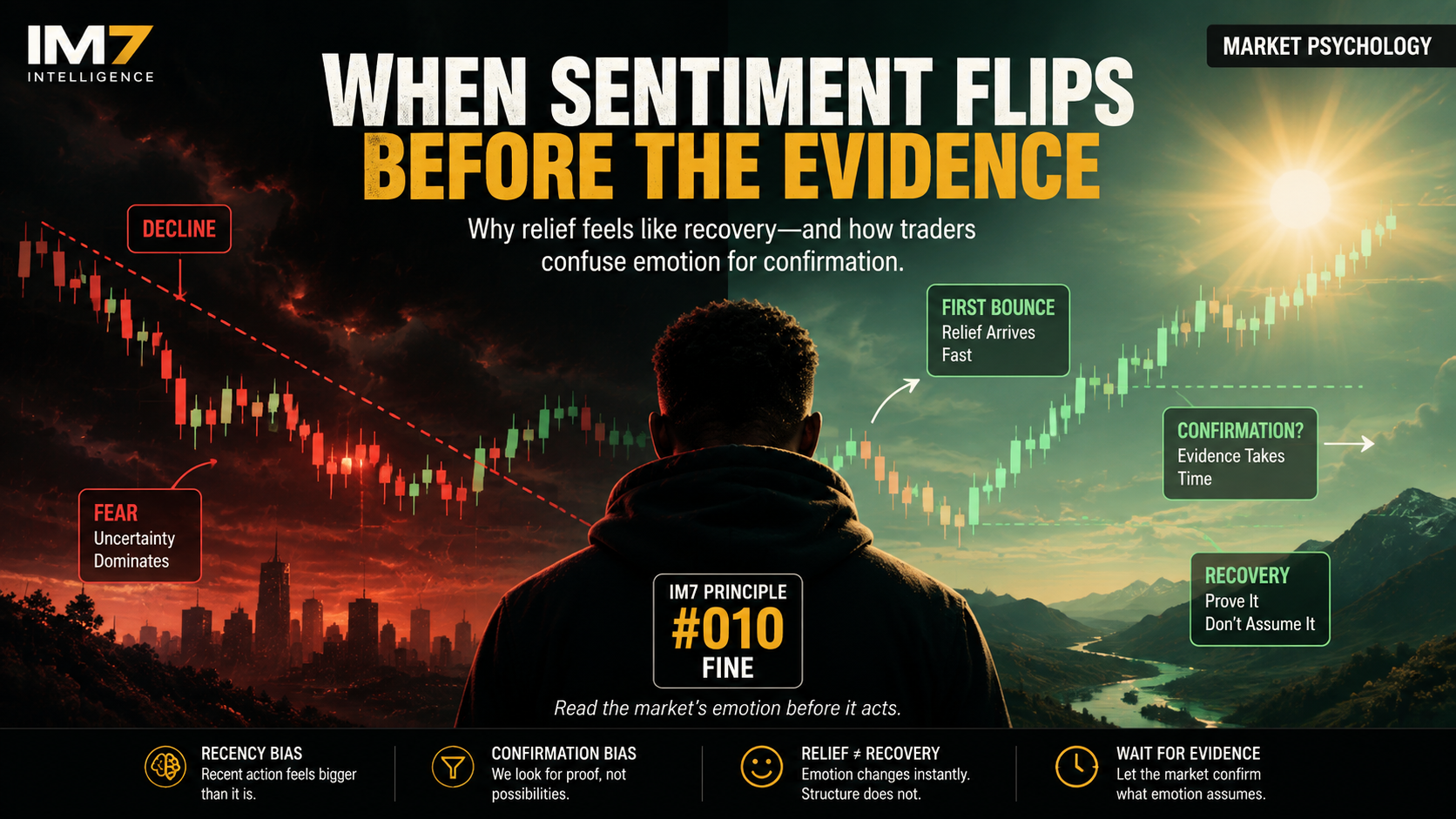
The First Bounce Fallacy: Why Bitcoin Traders Confuse Relief with Recovery
Bitcoin’s first bounce can feel like confirmation before the market has confirmed anything. Relief becomes conviction, and a temporary rebound becomes a recovery narrative. The danger isn’t the bounce—it’s how quickly traders decide what it means.

Emotional Certainty vs. Evidence: Why Traders Read the Same Bitcoin Chart Differently
Bitcoin is consolidating below resistance with mixed evidence, yet many traders have already committed to bullish or bearish conclusions. The disagreement does not come from different charts. It comes from confirmation bias, emotional certainty, and the tendency to interpret uncertain information through beliefs formed before the market has confirmed either outcome.

One Green Candle Doesn't Confirm a Recovery
One powerful green candle can change how traders feel long before it changes the market itself. Relief often arrives before confirmation, causing investors to mistake a temporary rebound for the beginning of a new trend. This article explores why our brains trust dramatic price moves more than the quieter evidence that follows.

When Waiting Becomes the Decision
Most losses don't begin with panic—they begin with waiting. This article explores why uncertainty paralysis keeps traders frozen while markets quietly evolve, and how delaying decisions often becomes a decision itself.

When Lower Highs Whisper: The Anchoring Bias Traders Miss.
Markets often reveal a change in character through small structural shifts long before a reversal becomes obvious. Traders miss those signals when they judge each candle separately, anchor to the previous high, and fail to recognize the sequence forming in front of them.

Why the Biggest Candle Isn't the Most Important: Relief vs. Confirmation in Trading
One explosive candle can change how traders feel without changing the market itself. Learn why relief is often mistaken for confirmation, how outcome bias shapes trading decisions, and why real conviction is measured by follow-through—not one impressive move.

Flat Markets: Why Sideways Action Leads to Costly Trading Mistakes – A Behavioral Finance Perspective
During periods of low volatility and sideways price action, even experienced traders can fall prey to behavioral biases. Boredom, impatience, and the craving for certainty can lead to forced trades, unnecessary risks, and significant losses. This article explores the psychological traps of flat markets and offers strategies to navigate them effectively, particularly using Bitcoin as a prime example.