#Loss Aversion
17 articles on Loss Aversion — behavioral finance and market psychology from IM7 Intelligence.
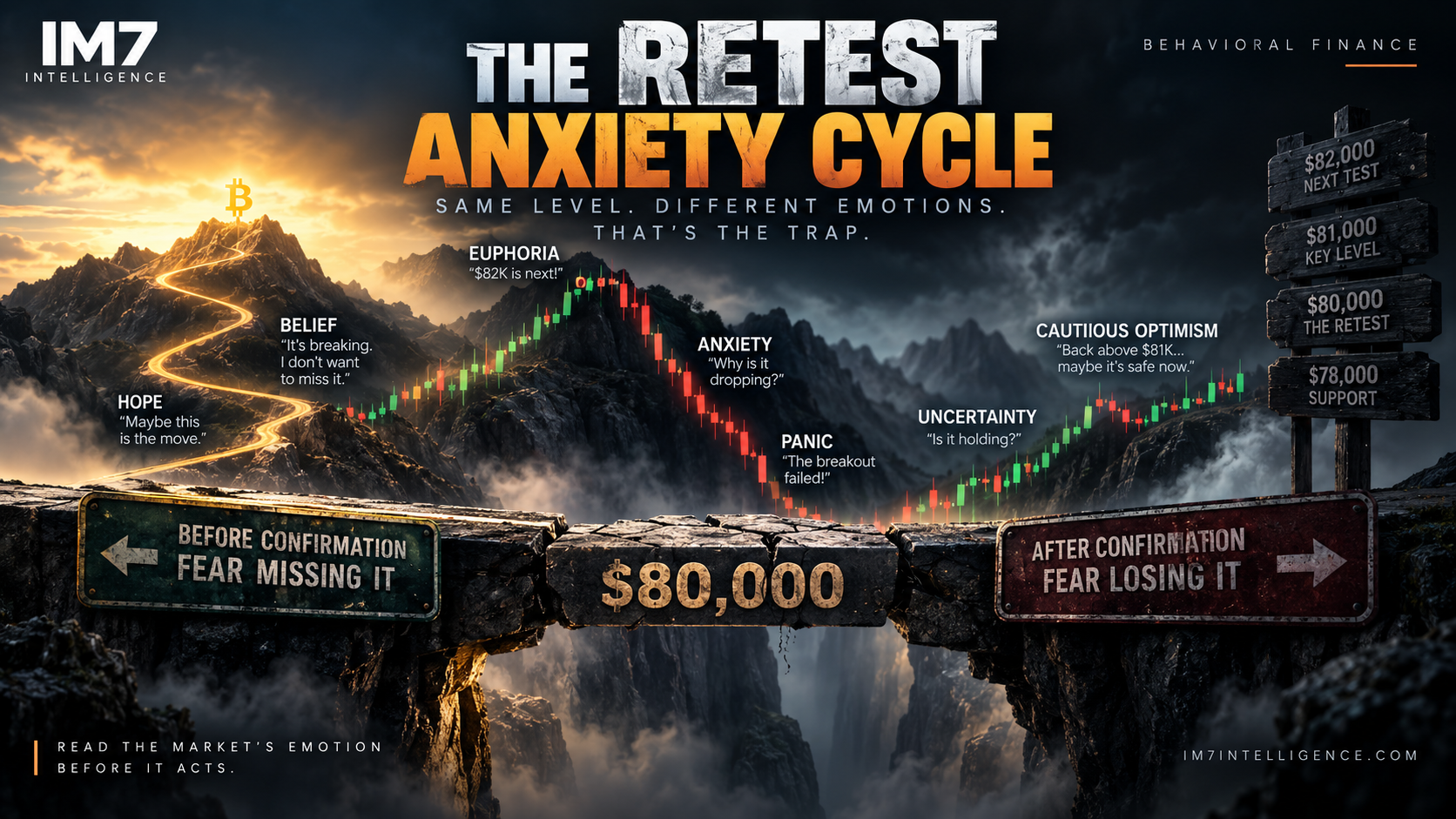
Bitcoin Retests $80K: When Discomfort Feels Like Invalidation
Bitcoin pulled back toward $80K after advancing toward $82K, then recovered above $81K. The Retest Anxiety Trap begins when traders mistake the discomfort of renewed uncertainty for evidence that the breakout has failed.
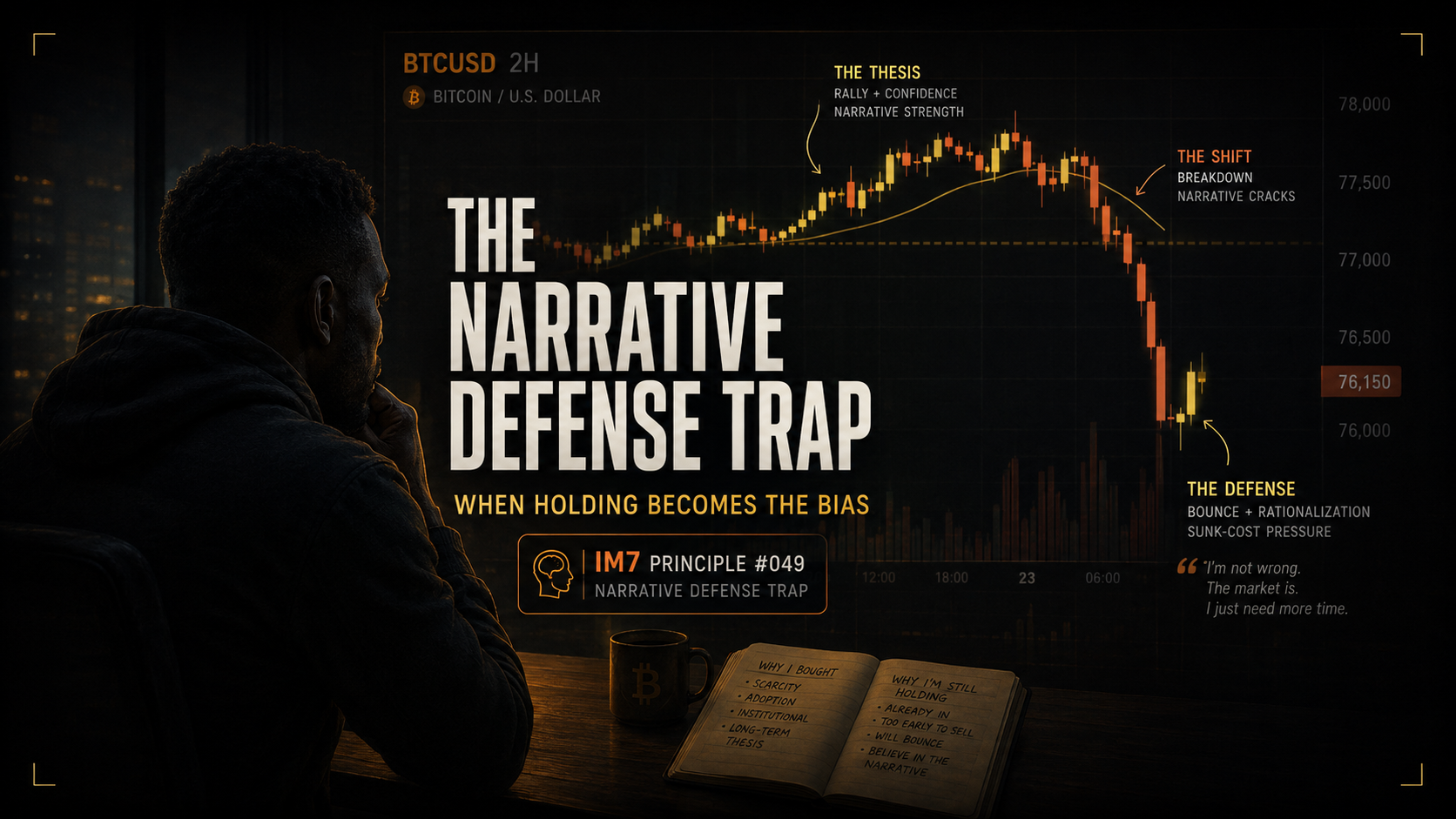
The Cost of Narrative Defense: When Holding Becomes the Bias
Bitcoin’s sharp pullback has turned yesterday’s narrative defense into a more expensive behavioral problem. When traders hold because exiting would make the loss feel real, sunk cost can replace objective reassessment.
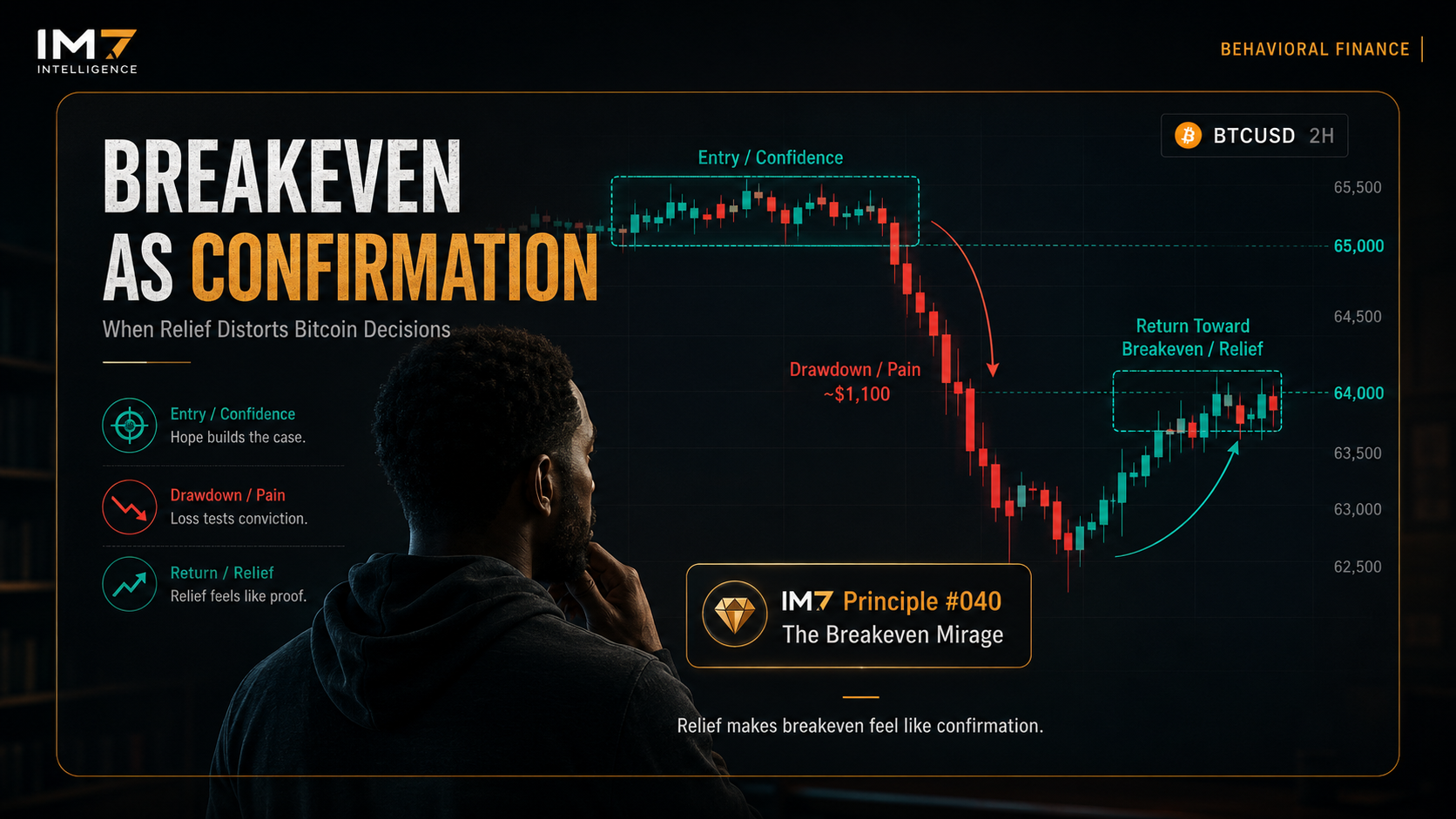
Breakeven as Confirmation: When Relief Distorts Bitcoin Decisions
Bitcoin's recent price action presented a classic behavioral dilemma: after a significant drop, price returned near prior consolidation levels. This return often generates 'relief,' yet traders frequently misinterpret this emotional state as validation of their initial market view.

When Liquidity Disappears: Why Markets Move Faster Than Emotions
Markets don't move because emotions suddenly change. More often, emotions change because liquidity disappears first. When buyers and sellers step away, even small orders can trigger outsized price movements, creating the fear, urgency, and volatility most traders mistakenly believe caused the move.

When Waiting Becomes the Decision
Most losses don't begin with panic—they begin with waiting. This article explores why uncertainty paralysis keeps traders frozen while markets quietly evolve, and how delaying decisions often becomes a decision itself.

Patience or Paralysis? When Waiting Helps—and When It Costs You
Patience is one of the most celebrated virtues in trading—but not every delay is discipline. Learn how to distinguish evidence-based patience from fear-driven hesitation before missed opportunities become expensive lessons.

Disposition Effect: Why Investors Sell Winners Too Soon and Hold Losers Too Long
Most investors do the opposite of what long-term success requires. They sell winning investments too early, hold losing positions too long, and mistake emotional relief for disciplined investing. Learn how the Disposition Effect influences decision-making—and how to overcome it.

Stabilization Bias: Why Sideways Markets Feel Safer Than They Are
After a sharp decline, markets often move sideways before making their next major decision. Traders mistake the absence of selling for the presence of buying, creating a dangerous sense of stability. Stabilization Bias explains why quiet markets frequently produce the most expensive decisions—not because the trend has changed, but because confidence has.

When "Fine" Becomes Expensive: How Status Quo Bias Traps Bitcoin Traders After Support Breaks
This article explores how status quo bias and other cognitive pitfalls can lead Bitcoin traders to cling to outdated theses, even after critical technical support breaks. We examine the psychological journey from comfort to re-evaluation, using a recent Bitcoin price action as a case study. Understanding these biases is crucial for effective risk management and adaptive decision-making in volatile markets.

Why Relief Bounces Fail: What Bitcoin's $62,000 Breakdown Is Really Telling Traders
Often, what looks like a potential market reversal is merely a temporary reprieve – a "relief bounce" that ultimately fizzles out. This article delves into the psychological traps that lead traders to misinterpret these bounces, using a recent Bitcoin price action example to illustrate core behavioral finance principles. We'll explore how anchoring, confirmation bias, and other cognitive biases cloud judgment, turning fleeting optimism into financial frustration.

The Price is Right... or is it? The Psychological Pull of a Single Number in Trading
Traders often find themselves fixated on a single price point, overlooking broader market dynamics. This phenomenon, known as mental anchoring, offers a false sense of clarity in volatile markets. We delve into how psychological biases contribute to this obsession and how to overcome it.

Why Sideways Markets Feel Harder Than Crashes: The Psychology of Waiting and Expectation Bias
Sideways markets can often feel more emotionally taxing than sharp crashes, despite the absence of dramatic losses. This article explores the psychological underpinnings of why periods of consolidation, exemplified by Bitcoin's recent price action, challenge traders' emotional resilience more than volatile downturns. We delve into expectation bias, impatience, and the urge to overtrade when the market goes quiet.

Why Traders Freeze After a Rally: The Psychology of Anchoring and Decision Paralysis
After a rally, most traders think the hard part is over. It isn't. The real trap begins when price stops moving, traders anchor to the recent high, and hesitation disguises itself as patience.

The Price of Waiting for Certainty: Why the Market Charges You for Confirmation
We all crave certainty, especially when money is involved. But in the fast-paced world of markets, waiting for that 'sure thing' often comes at a steep price. This article explores how our natural desire for confirmation can lead to costly delays, using a Bitcoin chart as a vivid example.

The Most Dangerous Candle Is the One That Feels Safe: Why Calm Markets Can Be Deceptive
In the world of finance, danger rarely announces itself with a trumpet blast. Instead, major shifts often begin with quiet, unassuming moments, making them particularly difficult for investors to recognize. This article explores why seemingly safe periods can be the riskiest, examining the psychological biases that lull us into a false sense of security.

Panic Wicks: Why Short-Lived Crashes Lead to Long-Lasting Regret in Trading
Temporary price volatility, often seen as 'panic wicks' on charts, can trigger a flood of emotional decisions leading to significant losses. This article explores the psychological mechanisms behind these reactions, using a recent Bitcoin price movement as a case study. Understanding these behaviors is crucial for making more rational trading choices.

The Paradox of Prudence: Why Retail Traders Wait for Confirmation and Often Miss the Big Moves
Retail traders often wait for confirmation before entering a position, believing certainty reduces risk. In reality, markets often charge a premium for certainty, turning caution into missed opportunity. This article explores how confirmation bias, loss aversion, and herd behavior can cause investors to arrive late to the very moves they hoped to capture.