#Investor Psychology
13 articles on Investor Psychology — behavioral finance and market psychology from IM7 Intelligence.
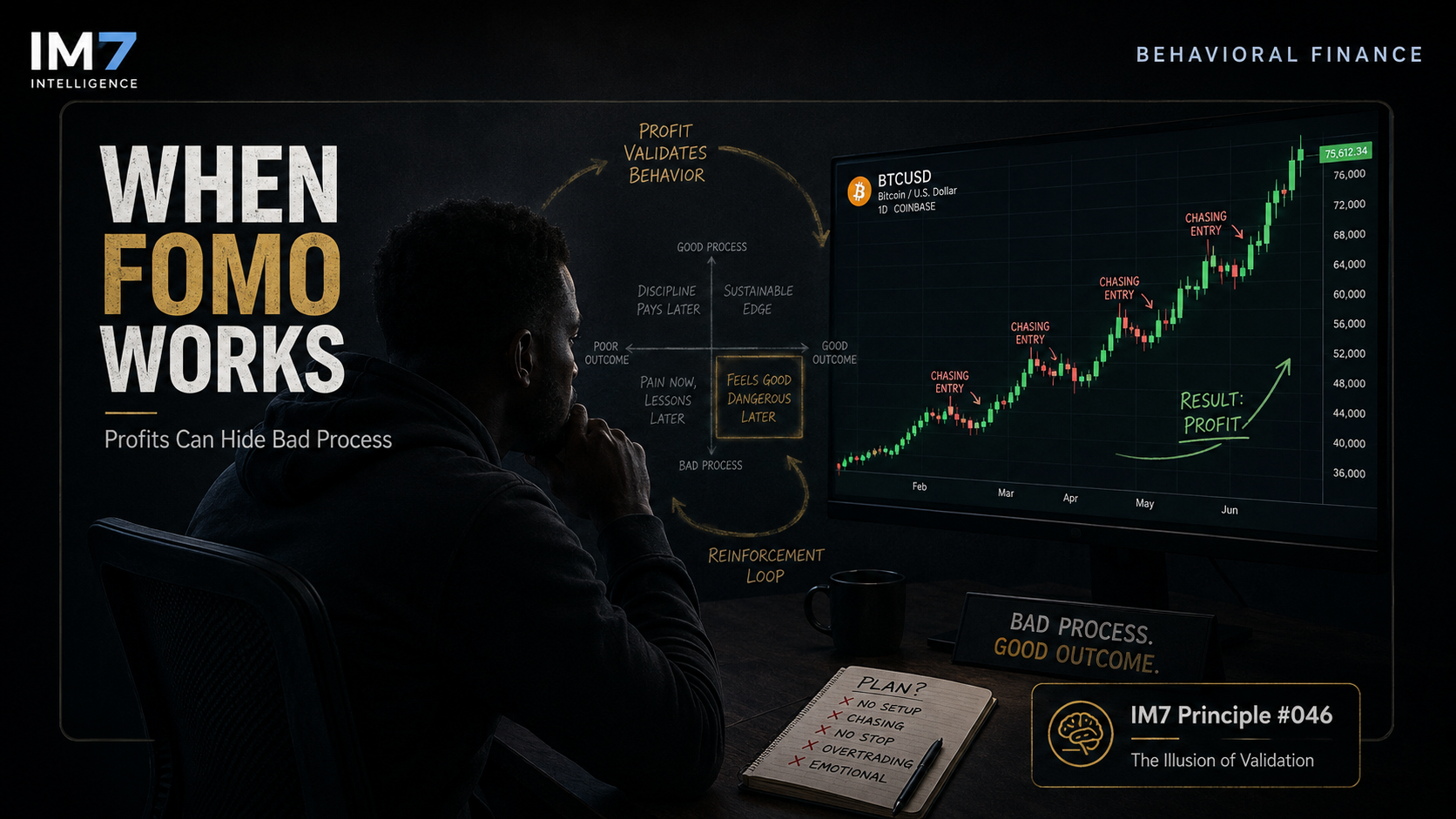
When FOMO Works: How Profitable Trades Reinforce Bad Process
When a rushed Bitcoin entry makes money, the profitable outcome can reinforce the wrong lesson. Outcome bias can turn an impulsive decision into a behavior the trader becomes more willing to repeat—even when the original process was weak.
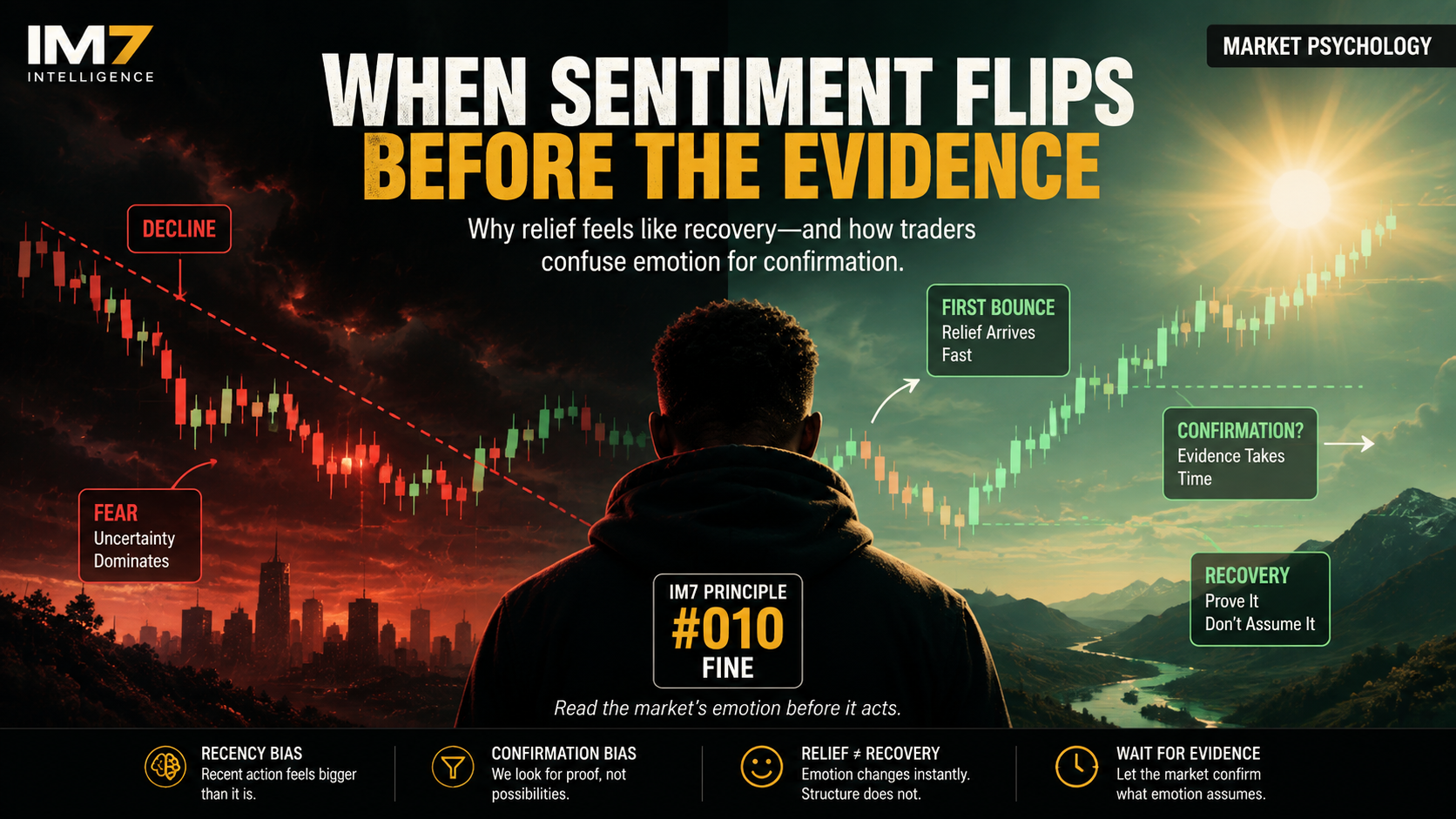
The First Bounce Fallacy: Why Bitcoin Traders Confuse Relief with Recovery
Bitcoin’s first bounce can feel like confirmation before the market has confirmed anything. Relief becomes conviction, and a temporary rebound becomes a recovery narrative. The danger isn’t the bounce—it’s how quickly traders decide what it means.

Emotional Certainty vs. Evidence: Why Traders Read the Same Bitcoin Chart Differently
Bitcoin is consolidating below resistance with mixed evidence, yet many traders have already committed to bullish or bearish conclusions. The disagreement does not come from different charts. It comes from confirmation bias, emotional certainty, and the tendency to interpret uncertain information through beliefs formed before the market has confirmed either outcome.

One Green Candle Doesn't Confirm a Recovery
One powerful green candle can change how traders feel long before it changes the market itself. Relief often arrives before confirmation, causing investors to mistake a temporary rebound for the beginning of a new trend. This article explores why our brains trust dramatic price moves more than the quieter evidence that follows.

Outcome Bias: Why Good Outcomes Can Reward Bad Decisions
A profitable trade does not always reflect a sound decision. Outcome Bias causes traders to judge the quality of their process by the result instead of the evidence that supported it. When fortunate outcomes reinforce flawed decision-making, the next mistake often becomes larger, more confident, and more expensive.

ETF Flows: Conviction, Not Price, Moves Markets
Most traders watch price. Professional capital leaves clues through ETF flows. While headlines explain yesterday's move, persistent inflows and outflows often reveal changing conviction before market psychology fully shifts. Learning to read capital—not just candles—helps traders understand the behavior driving market structure.

When Lower Highs Whisper: The Anchoring Bias Traders Miss.
Markets often reveal a change in character through small structural shifts long before a reversal becomes obvious. Traders miss those signals when they judge each candle separately, anchor to the previous high, and fail to recognize the sequence forming in front of them.

When Recovery Becomes the Risk: Why Relief Can Lead to Overconfidence
A sharp recovery often changes market psychology faster than market structure. Relief becomes confidence, confidence becomes certainty, and traders begin taking larger risks before objective confirmation arrives. The recovery doesn't erase the risk—it simply makes it harder to see.

Patience or Paralysis? When Waiting Helps—and When It Costs You
Patience is one of the most celebrated virtues in trading—but not every delay is discipline. Learn how to distinguish evidence-based patience from fear-driven hesitation before missed opportunities become expensive lessons.

Disposition Effect: Why Investors Sell Winners Too Soon and Hold Losers Too Long
Most investors do the opposite of what long-term success requires. They sell winning investments too early, hold losing positions too long, and mistake emotional relief for disciplined investing. Learn how the Disposition Effect influences decision-making—and how to overcome it.

Commitment Bias: When Holding On Becomes More Expensive Than Letting Go
Commitment Bias causes traders to defend yesterday's decisions with today's evidence. Learn why investors hold losing positions, ignore changing market conditions, and how disciplined decision frameworks help protect capital.

The Premium for Certainty: Why Waiting for Confirmation Costs Investors Dearly
In the volatile world of markets, from Bitcoin to established equities, a common behavioral trap ensnares countless participants: the quest for certainty. Many believe that by waiting for confirmation, they are reducing risk, when in fact, they are often paying a steep premium for reassurance. This psychological dynamic, rooted in our innate aversion to uncertainty, reveals a fundamental truth about human decision-making and market behavior.

The Market Has Amnesia. So Do You.
Bitcoin bounced from 60k to 62.5k and sentiment changed almost instantly. The bigger story isn't the price move—it's how quickly investors forgot the fear that came before it.