#Fomo
11 articles on Fomo — behavioral finance and market psychology from IM7 Intelligence.
Library TopicFOMO →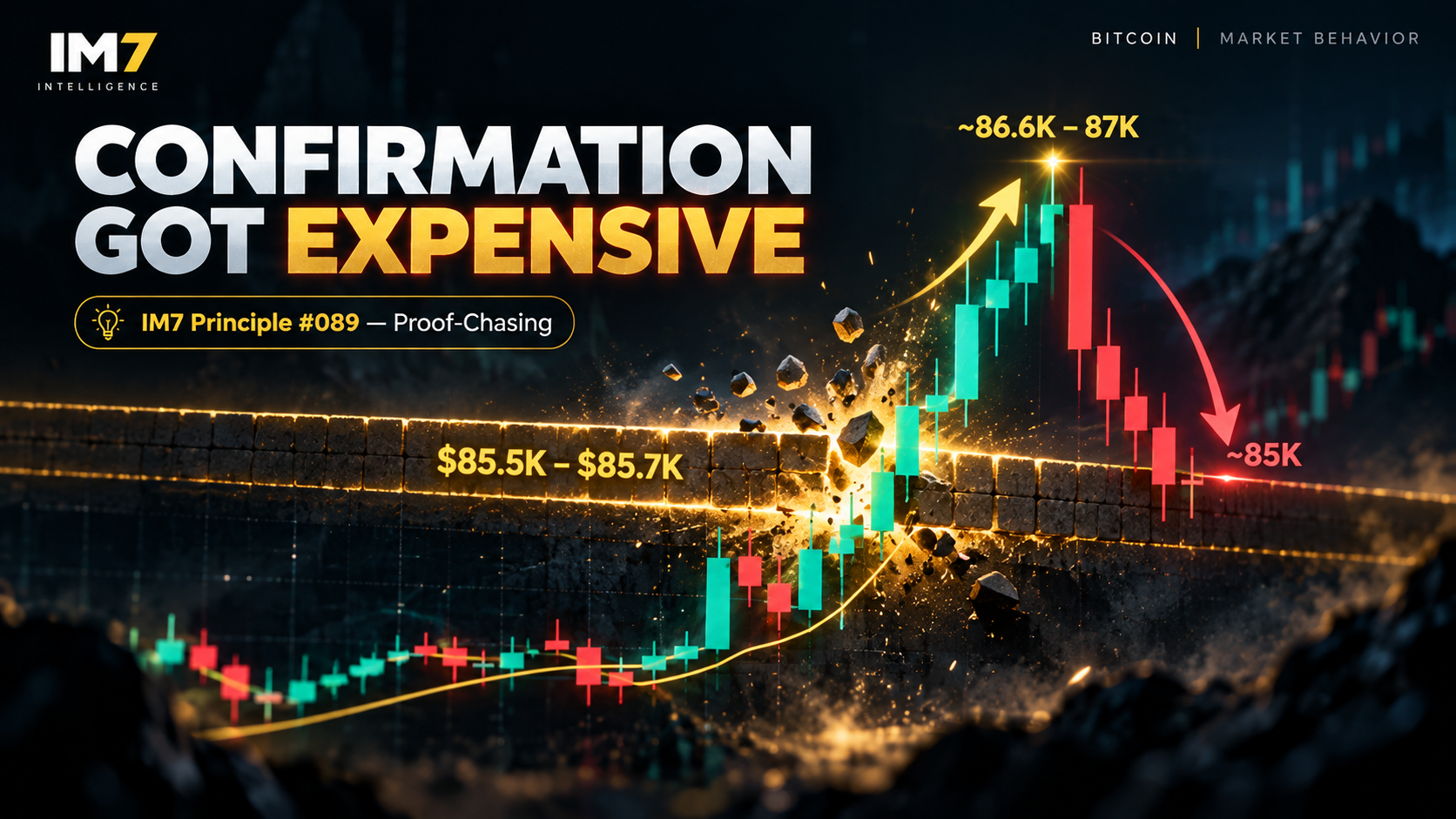
Bitcoin Finally Gave Traders Proof — Then Made Them Pay for It
Bitcoin broke through the level traders had been watching and pushed toward $87K, only to pull back sharply afterward. The behavioral trap is Proof-Chasing: traders often wait for the market to look obvious before acting, then confuse confirmation with urgency. Proof should improve confidence — not make the decision more expensive.
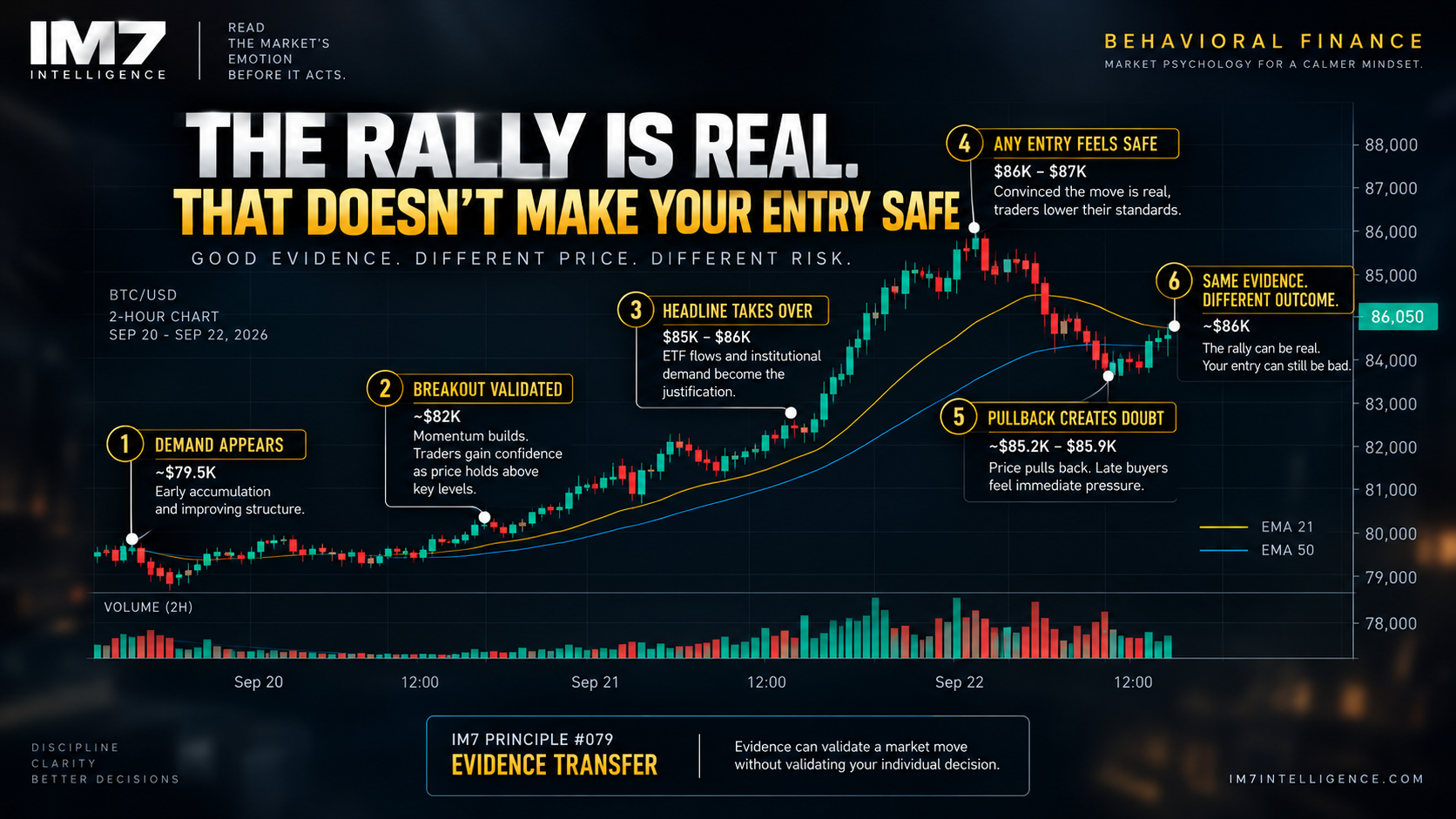
The Rally Is Real. That Doesn’t Make Your $86K Entry Safe.
Bitcoin’s rally has real evidence behind it, including strong ETF demand. But evidence that validates the move does not automatically validate a late entry. Traders get into trouble when they transfer confidence in the market to confidence in the price they are paying.
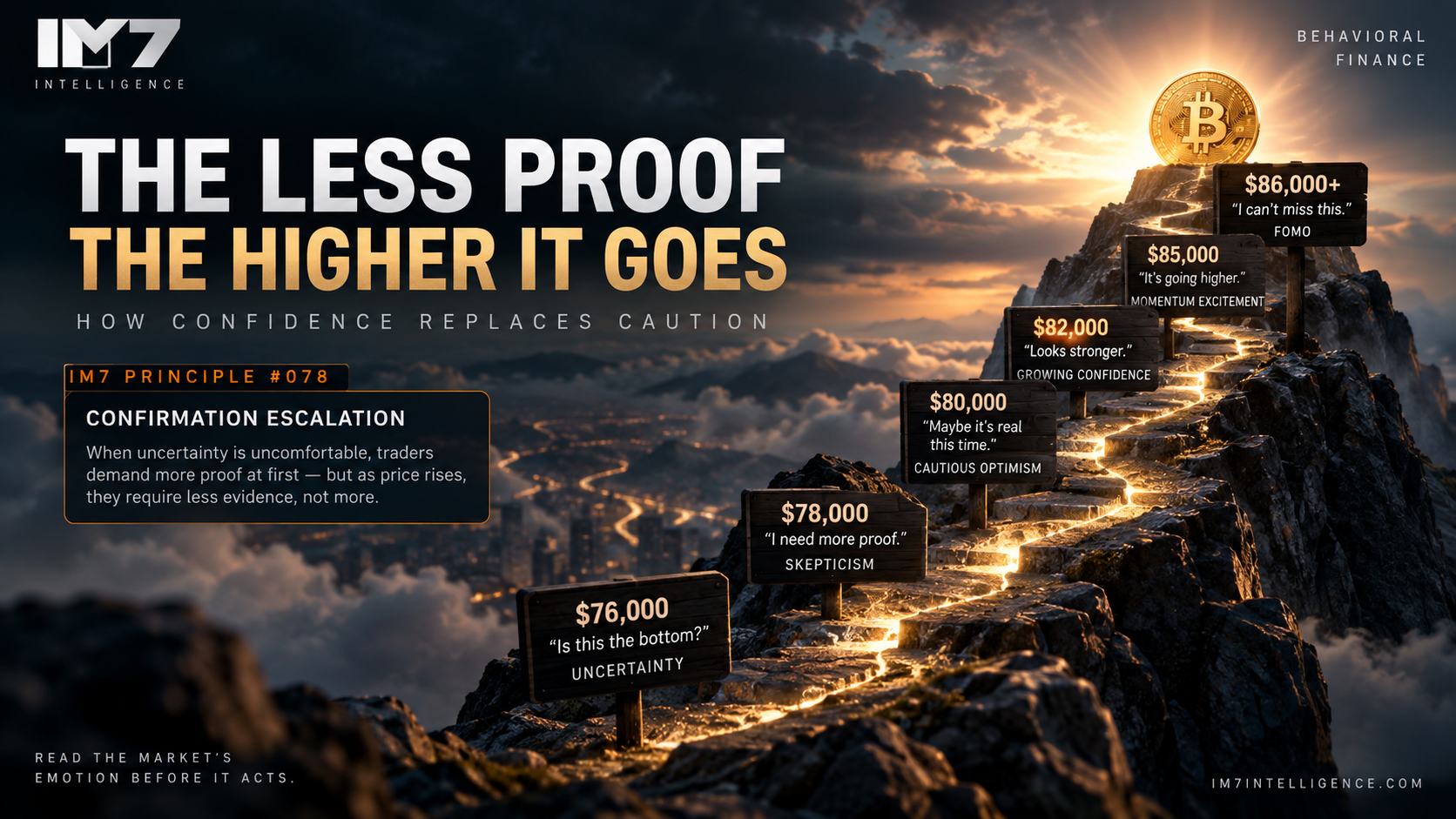
You Needed Proof at $76K. At $86K, You Stopped Asking.
Bitcoin climbed from $76K toward $86K, but something changed faster than price: traders’ standards for confirmation. The higher Bitcoin went, the less proof they demanded. That isn’t greater certainty. It’s confirmation giving way to fear of missing out.
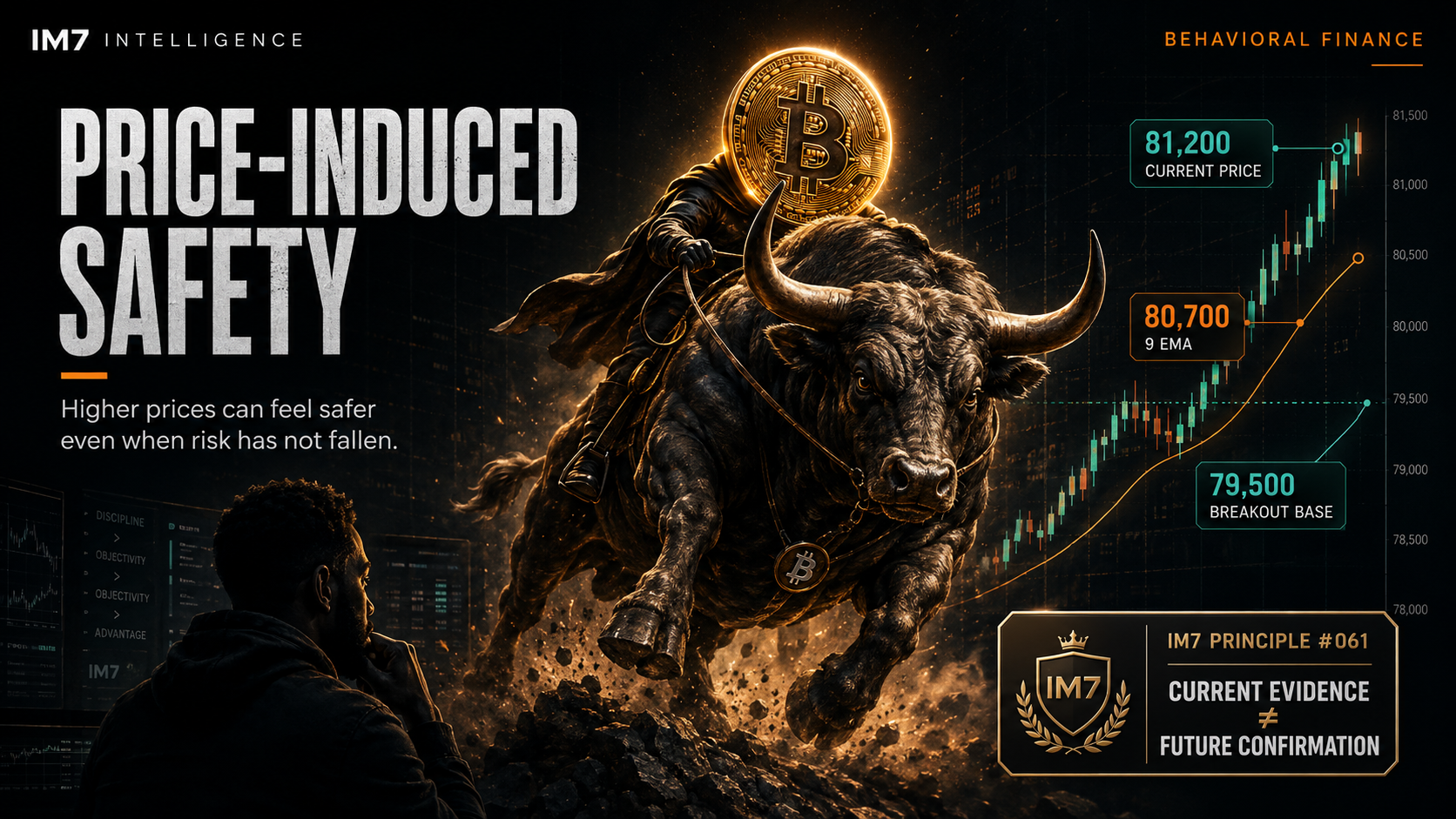
Why Bitcoin Feels Safer at $81K Than It Did at $76K
Bitcoin surged from the upper-$79K area toward $81.9K, and traders who felt uneasy near $76K now feel increasingly comfortable buying higher. The behavioral trap is Price-Induced Safety: rising price can reduce perceived risk even when actual market risk has not fallen.

Bitcoin's Strength: When Momentum Tests Process Discipline
Bitcoin is exhibiting considerable upside strength. That observable momentum can create psychological pressure for traders, especially when a strong move begins to feel like permission to loosen entry standards. The critical distinction is between acknowledging market strength and allowing that strength to dictate execution quality.
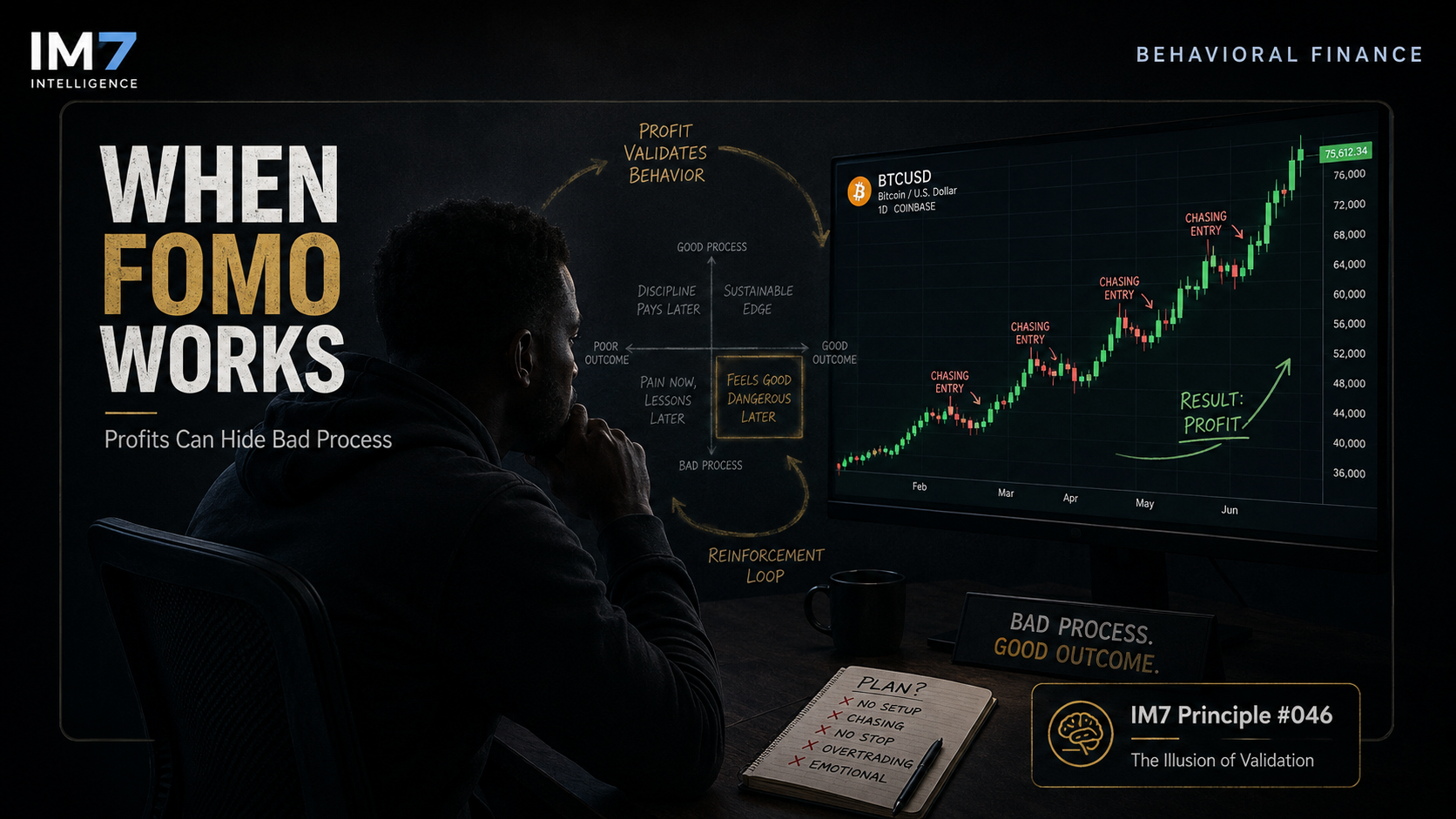
When FOMO Works: How Profitable Trades Reinforce Bad Process
When a rushed Bitcoin entry makes money, the profitable outcome can reinforce the wrong lesson. Outcome bias can turn an impulsive decision into a behavior the trader becomes more willing to repeat—even when the original process was weak.
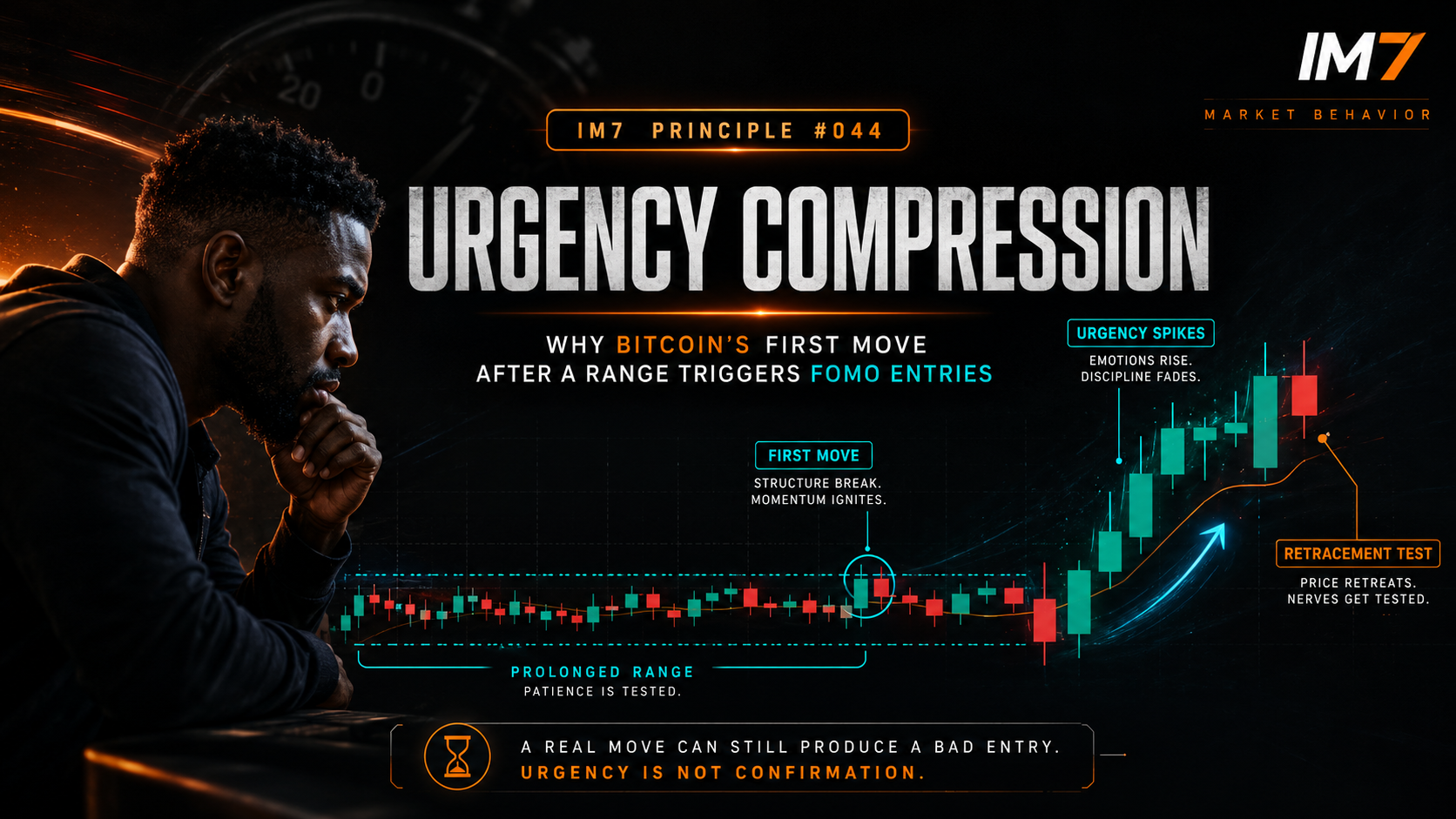
Urgency Compression: Why Bitcoin’s First Move After a Range Triggers FOMO Entries
After weeks of consolidation, a few green Bitcoin candles can make waiting feel unbearable. The move may be real, but urgency can still turn the first available entry into a poor one. A real move does not automatically make the first entry a good entry.

Why Clean Trends Create Dangerous Confidence: The Psychology Behind Chasing Bitcoin Breakouts
When Bitcoin exhibits a 'clean' trend, breaking out from a period of moving average compression, it often triggers a powerful, yet potentially dangerous, psychological shift in traders. This article explores how such clear price action can lead to overconfidence, fueled by FOMO, recency bias, and confirmation bias, diverting focus from disciplined entry strategies to emotional decision-making.

The Unassuming Peak: Why the Most Dangerous Candle Never Looks Dangerous
In the volatile world of finance, market tops often manifest not with dramatic crashes, but with small, ordinary-looking candles on a chart. This article explores the psychological reasons why these subtle signals are consistently missed by even experienced investors and traders. We delve into hindsight bias, confirmation bias, and the emotional biases that cloud our judgment at critical junctures.

Why Bitcoin's Biggest Rallies Create The Most Uncertainty
It's a common misconception that market clarity follows a significant price move. In reality, a strong rally, such as those often seen in Bitcoin, can paradoxically ignite greater uncertainty among traders. This article delves into the psychological underpinnings of why opportunity, once visible, frequently becomes a source of anxiety rather than assurance.

The Peril of Confirmation Bias: Why Traders Mistake Validation for Opportunity
Many traders, driven by a natural human need for certainty, wait for definitive 'confirmation' before entering a trade. This psychological safeguard, however, often leads them to miss the most lucrative risk-reward setups. This article explores the behavioral underpinnings of this phenomenon, particularly in volatile markets like Bitcoin.