#Consolidation
10 articles on Consolidation — behavioral finance and market psychology from IM7 Intelligence.
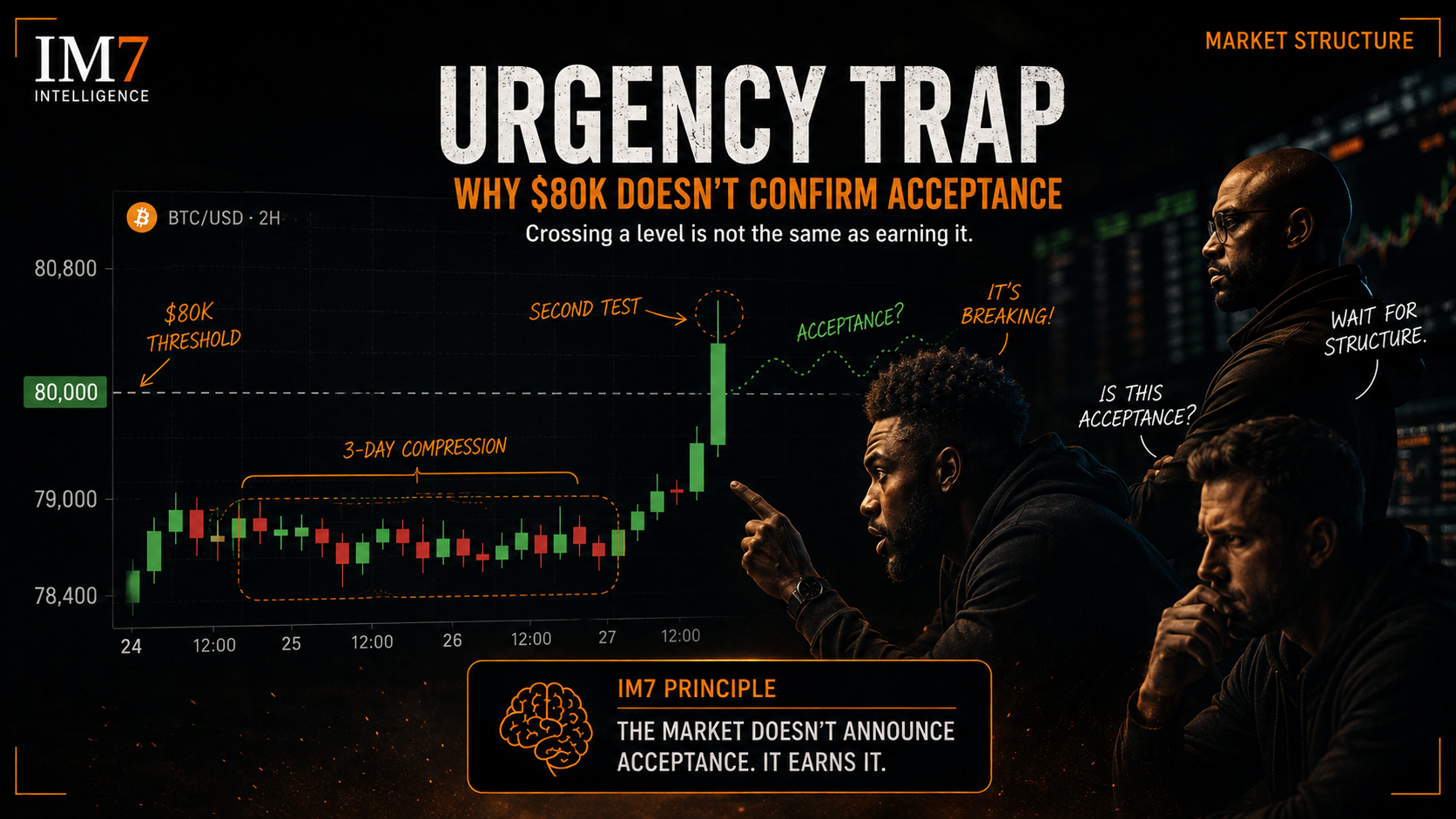
The Urgency Trap: Why Bitcoin Crossing $80K Does Not Confirm Acceptance
Bitcoin pushed back through $80,000 after days of compression, but the behavioral risk is shifting from impatience to urgency. IM7 examines why crossing a level is not the same as establishing acceptance above it.
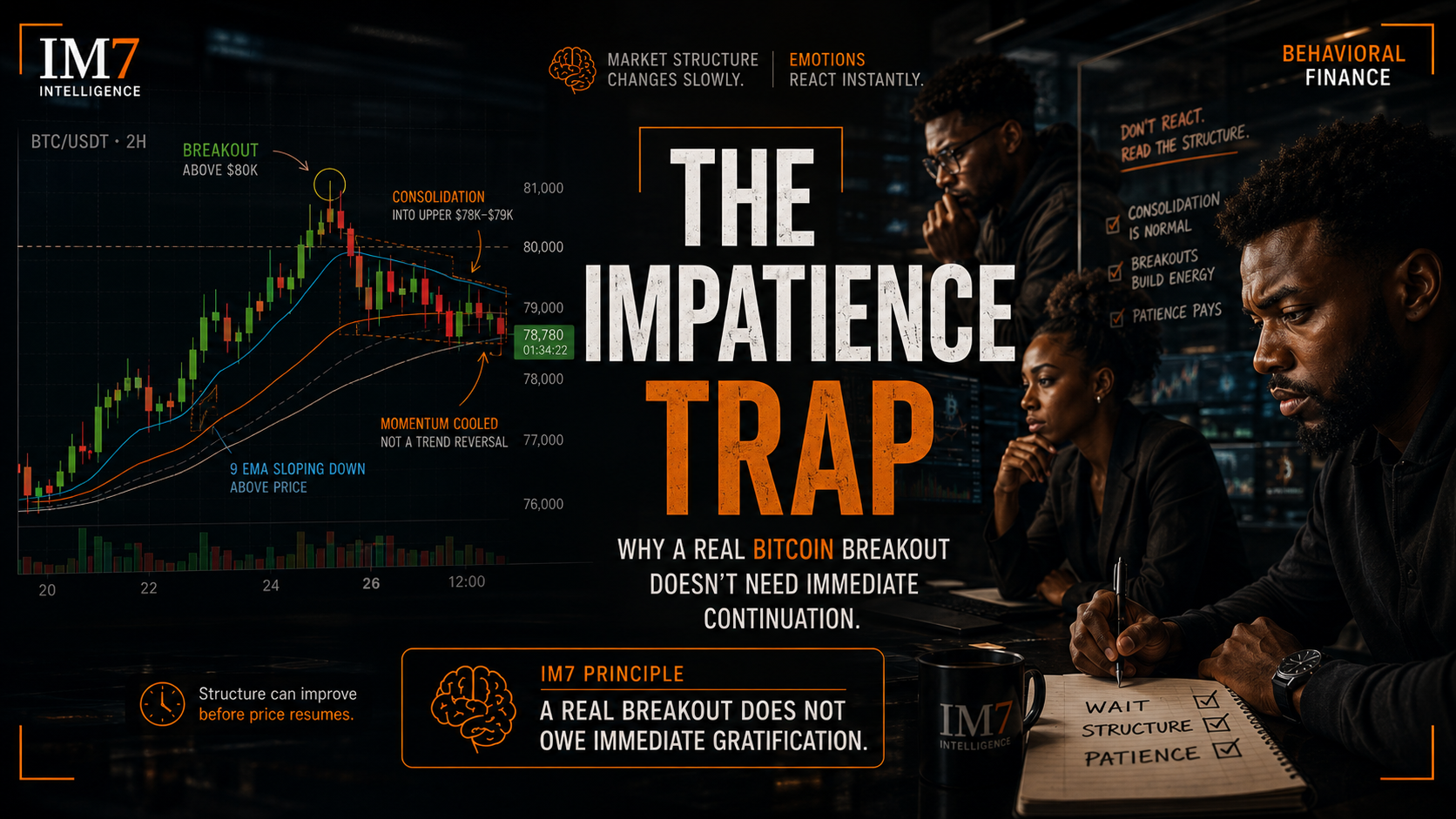
The Impatience Trap: Why a Real Bitcoin Breakout Doesn't Need Immediate Continuation
Bitcoin broke above major structure and briefly cleared $80K, but the pause that followed exposed a new behavioral trap: traders often mistake the absence of immediate continuation for evidence that the breakout failed.
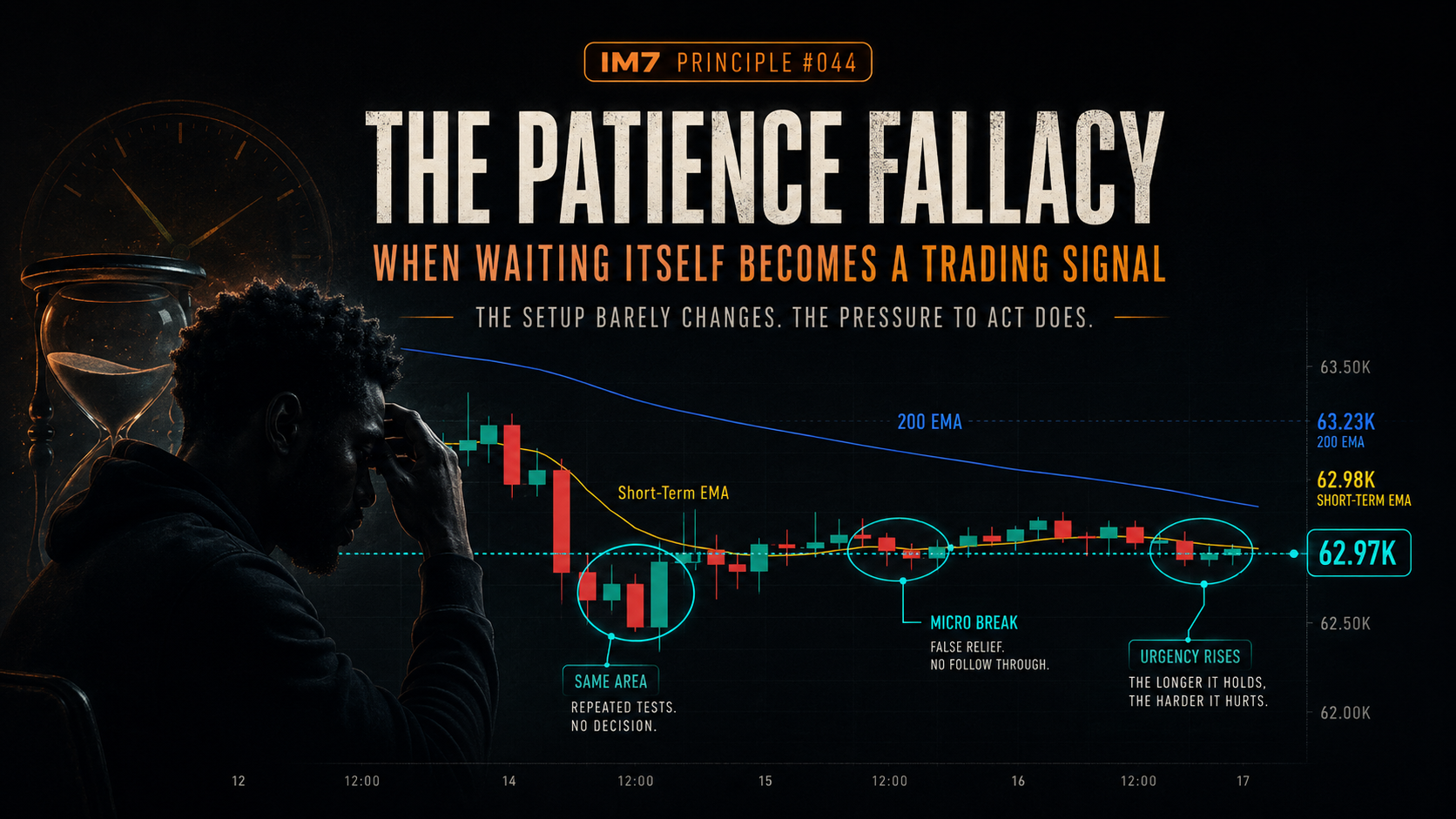
The Patience Fallacy: When Waiting Itself Becomes a Trading Signal
Week one: I’ll wait for confirmation. Week two: It has to move soon. Week three: That candle looks like a signal. The chart barely changed, but the urgency did. Prolonged Bitcoin consolidation can make waiting feel like evidence—and boredom feel like a trading signal.
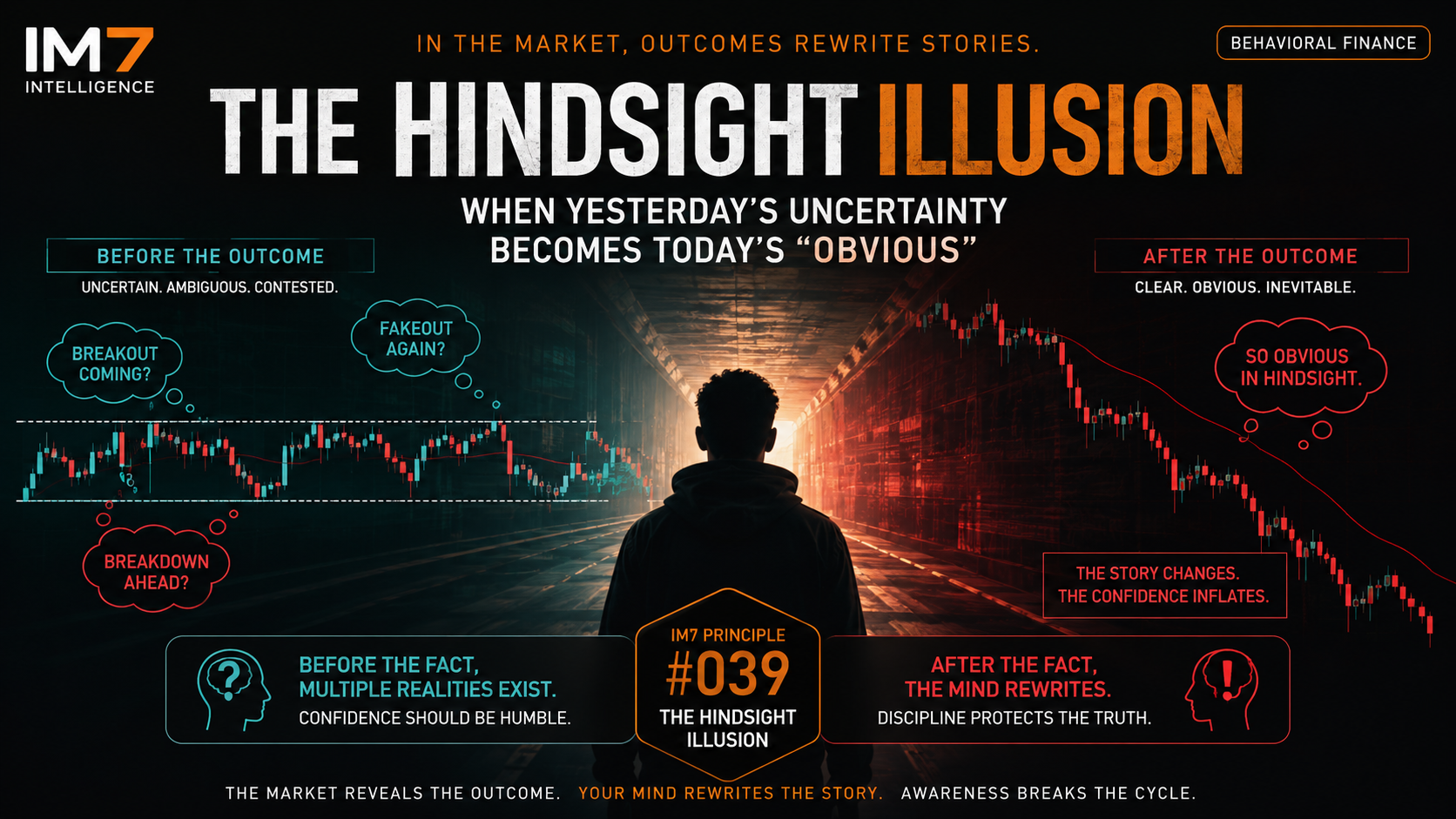
When the Range Breaks: Why Bitcoin Suddenly Looks Obvious
Bitcoin’s range looked ambiguous—until it broke. Then the warning signs suddenly seemed obvious. That shift is hindsight bias: once the outcome is known, traders rewrite uncertainty as predictability and mistake being right about the result for having had better evidence.

Why Traders Notice Opportunity Too Late
Markets often consolidate quietly for hours—or even days—while evidence steadily accumulates beneath the surface. Yet most traders remain disengaged until a single dramatic green candle captures their attention. This isn't a market phenomenon; it's a behavioral one. The first green candle rarely creates the opportunity—it simply makes it impossible for the crowd to ignore.

Stabilization Bias: Why Sideways Markets Feel Safer Than They Are
After a sharp decline, markets often move sideways before making their next major decision. Traders mistake the absence of selling for the presence of buying, creating a dangerous sense of stability. Stabilization Bias explains why quiet markets frequently produce the most expensive decisions—not because the trend has changed, but because confidence has.

The Silent Erosion: How Sideways Bitcoin Markets Quietly Destroy Trader Confidence
After a strong breakout, traders often expect momentum to continue. But when Bitcoin begins moving sideways, confidence slowly gives way to doubt. This behavioral analysis explores how quiet consolidation erodes conviction, why traders mistake inactivity for safety, and how psychological biases—not price alone—shape decision-making during periods of uncertainty.

Why Sideways Markets Feel Harder Than Crashes: The Psychology of Waiting and Expectation Bias
Sideways markets can often feel more emotionally taxing than sharp crashes, despite the absence of dramatic losses. This article explores the psychological underpinnings of why periods of consolidation, exemplified by Bitcoin's recent price action, challenge traders' emotional resilience more than volatile downturns. We delve into expectation bias, impatience, and the urge to overtrade when the market goes quiet.

The Silent Trap: Why Traders Lose the Most Money in Boring Markets
Sideways markets, often perceived as safe, can be fertile ground for significant trading errors. This article unpacks the psychological traps of boredom and impatience that lead traders to overtrade and abandon positions right before major market moves.

Why the Biggest Bitcoin Moves Often Begin During Boring Markets: A Behavioral Finance Perspective
Investors often anticipate major market shifts to be heralded by dramatic price action. However, a deeper look into market psychology reveals that some of the most significant moves in assets like Bitcoin frequently germinate during periods of apparent calm and widespread disengagement. This phenomenon stems from a confluence of behavioral biases and subtle shifts in market dynamics.